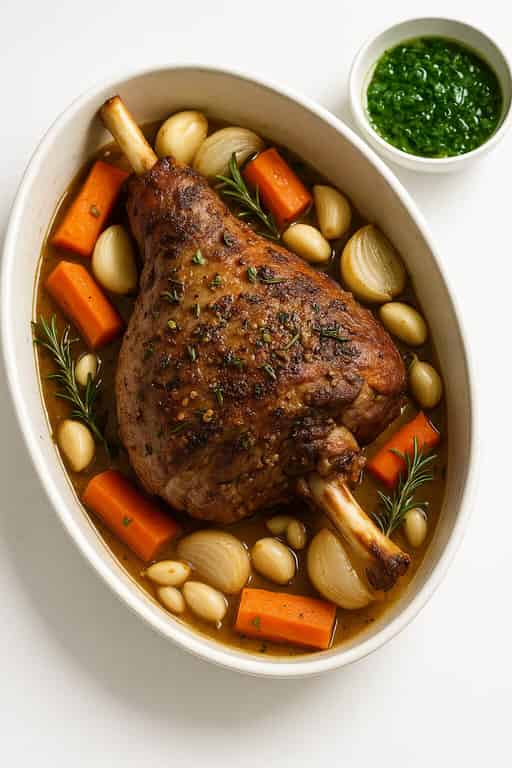
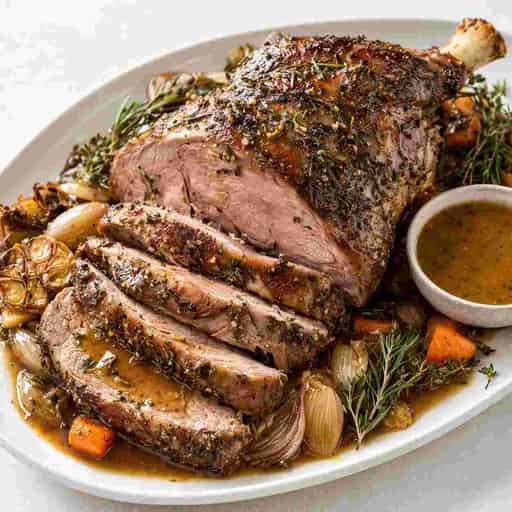
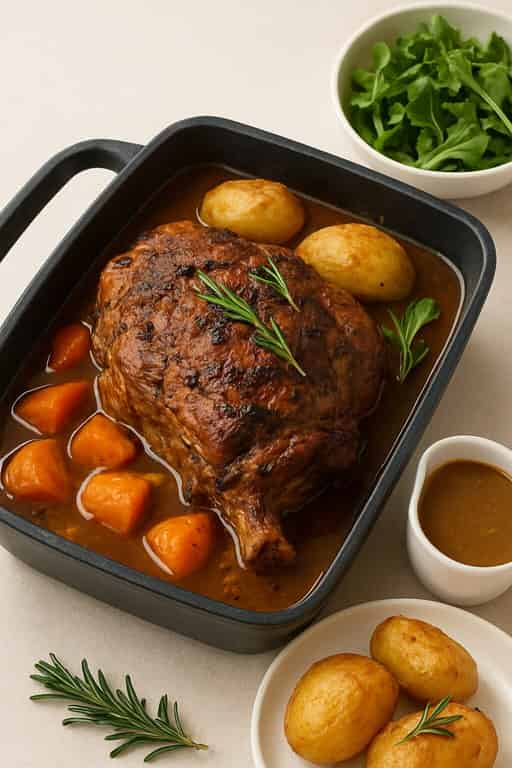
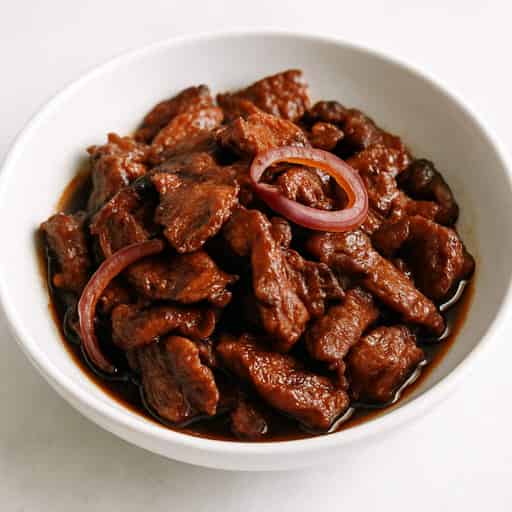
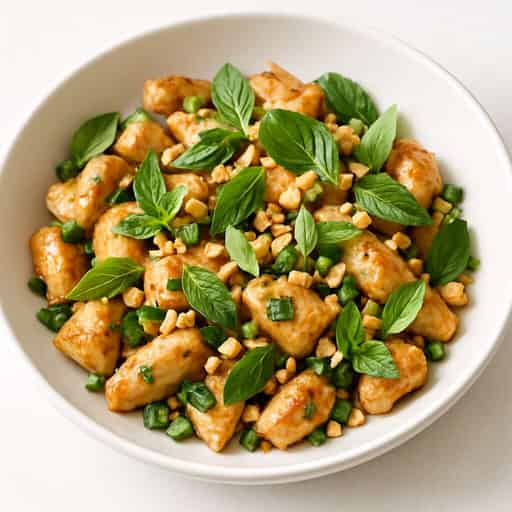
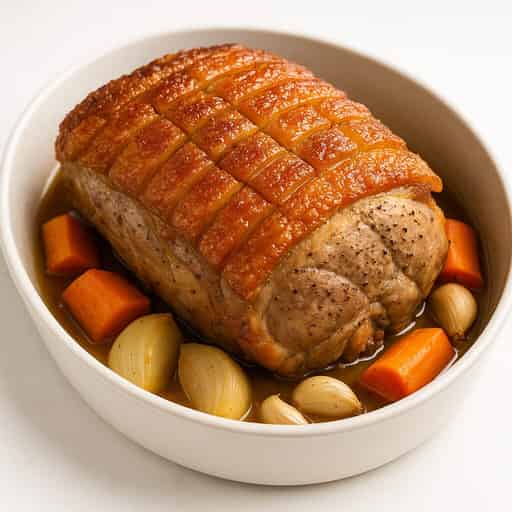
Honey-mustard leg of lamb with Dijon, garlic, and thyme, roasted until tender for an easy centerpiece lamb dinner with a sweet-savory crust.
Prep time
10 min
Cook time
1 hr 5 min
Total time
1 hr 15 min
Servings
8
Chef's Tips
Let the lamb sit at room temperature for 30 minutes before roasting if time allows.
Sear by heat at the start, then finish more gently so the glaze colors without burning.
Start checking the internal temperature early because leg size and shape can vary.
Resting the lamb before carving is essential if you want the slices to stay juicy.
Tools Used
We use affiliate links, which may earn us a small commission at no extra cost to you.
Ingredients
Ingredients
Servings
8 servings1×
Scale
Ingredient amounts update instantly.
Honey-Mustard Glaze
Leg Of Lamb
Instructions
Prepare the Lamb
- 1
Preheat the oven to 450°F (232°C).
- 2
In a small bowl, add honey, mustard, thyme, garlic, salt, and pepper. Mix well to combine.
- 3
Place the lamb on a rack in a roasting pan. Rub the honey-mustard mixture onto the lamb.
Roast the Lamb
- 1
Roast in the oven for 20 minutes.
- 2
Reduce the heat to 400°F (204°C) and roast the lamb for an additional 45 minutes. For medium-rare doneness, the internal temperature should be at least 140°F (60°C).
- 3
Let the lamb rest for 10 minutes before carving.
Plan This Recipe
Save this recipe to one of your meal plans or browse your existing plans.
Learn More
Everything you want to know about this recipe.
Easy Honey-Mustard Leg of Lamb
Easy Honey-Mustard Leg of Lamb
Honey-mustard leg of lamb is a straightforward roast that still feels proper enough for a Sunday lunch or holiday table. The glaze is simple, but the mix of mustard, honey, garlic, and thyme gives the outside enough flavor to carry the whole roast without needing a more complicated marinade.
The key is treating the lamb like a roast rather than a quick glaze-and-bake piece of meat. High heat at the start gives the outside color, then the lower roast finishes the center more gently.
Why This Recipe Works
Why This Recipe Works
Lamb can take assertive flavors well, so Dijon, garlic, and thyme are strong enough to season the roast without burying it. The honey softens the sharpness of the mustard and helps the exterior brown.
Because leg of lamb is larger and less forgiving than smaller cuts, using a thermometer matters. That is what keeps it from drifting from juicy to dry while the glaze darkens on the outside.
Ingredients Overview
Ingredients Overview
Dijon mustard gives the glaze its backbone. Honey rounds it out, and fresh thyme keeps the flavor closer to a classic roast than a sweeter sticky glaze.
Garlic helps the coating feel fuller, but it stays in the background rather than making the roast taste aggressively garlicky.
How to Make Honey-Mustard Leg of Lamb
How to Make Honey-Mustard Leg of Lamb
Mix the glaze first, then rub it over the lamb before roasting. Starting at a higher oven temperature helps the outside set and color before the longer roast finishes the middle.
Once the lamb reaches your target temperature, rest it before carving. That rest is part of the cooking process and is what helps the slices stay juicier.
Tips, Variations, and Storage
Tips, Variations, and Storage
If you want a more herbal finish, add rosemary alongside the thyme. If you want the glaze less sweet, reduce the honey slightly and let the mustard lead more.
Leftover lamb keeps well for a few days and can be used in sandwiches, grain bowls, wraps, or salads. Reheat it gently so the slices do not toughen.
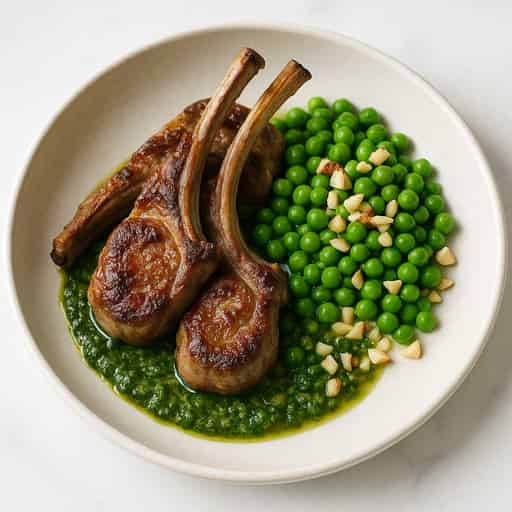
This roast works well with potatoes, carrots, green beans, peas, or a crisp salad if you want something lighter beside it.
Serving & Goal Fit
Serving & Goal Fit
One serving is a slice or portion of the roast, about one-eighth of the lamb. Because lamb is richer than chicken or white fish, this dish works best with a clear side structure rather than extra sauce or added richness.
On training days, add a generous potato, rice, or bread portion if you want more carbohydrate around the meal. On rest days, keep the starch a little smaller and add more vegetables.
Good vegetable pairings include green beans, broccoli, carrots, mushrooms, or a simple cucumber and tomato salad to cut through the richness.
Nutrition Facts
Nutrition Facts
Serving Size: 1 slice
Calories 44122%
% Reference Intake*
Total Fat 35g50%
Saturated Fat 14g70%
Trans Fat 0g
Cholesterol 165mg
Sodium 260mg
Total Carbohydrates 12g5%
Dietary Fiber g
Sugars 10g11%
Protein 54g108%
* Reference intakes are based on an average adult's 8,400 kJ / 2,000 kcal diet. Your needs may be higher or lower.
FAQs
Can I prepare the honey-mustard glaze in advance?
Yes. You can mix the glaze up to 2 days ahead and keep it chilled, then bring it closer to room temperature before rubbing it onto the lamb.
What temperature should leg of lamb reach?
Around 60C for medium-rare and around 65C for medium is a practical guide, but always rest the lamb after roasting because the temperature will keep rising slightly.
Can I use lamb shoulder instead of leg?
Yes, but shoulder usually needs longer cooking and often benefits from a lower, slower roast if you want it very tender.
Community Reviews
See how other home cooks made this recipe, then share your own experience.
4.5
4 ratings
5
50%
4
50%
3
0%
2
0%
1
0%
How would you rate this recipe?
Share your experience and help others.
Rajiv
· 27 May 2026Easy to follow and great flavor. Might reduce the mustard slightly next time, but overall very tasty.
Emily
· 27 Feb 2026I used shoulder instead of leg and adjusted the cooking time—still came out amazing. The glaze is a keeper!
Greg
· 26 Oct 2025Loved the simplicity of this recipe. The lamb came out juicy and tender. I added some rosemary too, and it worked really well.
Sarah
· 25 Sept 2025This was a total hit at Sunday lunch! The honey-mustard glaze was a perfect balance of sweet and tangy. Will definitely make again.
Create Your Own Recipe
Add your personal creations and build your own recipe collection.