02 September 2026
Vegetarian Bibimbap (Korean Rice Bowl with Vegetables)
RecipeShare Test Kitchen
4.6(5 ratings)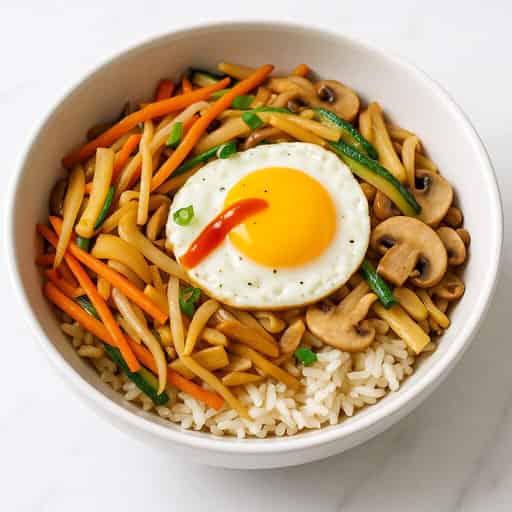
A colourful vegetarian bibimbap with sautéed carrots, courgette, bean sprouts, bamboo shoots, mushrooms, seasoned rice, and sunny-side-up eggs.
Prep time
30 min
Cook time
20 min
Total time
50 min
Servings
4
Recipe Snapshot
DifficultyMedium
MealLunch / Dinner
Meal PrepExcellent
Family FriendlyYes
CuisineKorean
Chef's Tips
Use day-old rice for better texture.
Add kimchi for an extra layer of flavor if desired.
Adjust the spice level with more or less Sriracha.
Tools Used
We use affiliate links, which may earn us a small commission at no extra cost to you.
Ingredients
Ingredients
Servings
4 servings1×
Scale
Ingredient amounts update instantly.
Vegetables And Rice
Toppings
Instructions
Prepare Vegetables
- 1
Warm sesame oil in a large skillet over medium heat.
- 2
Sauté carrots and zucchini until they begin to soften, about 5 minutes.
- 3
Stir in bean sprouts, bamboo shoots, and mushrooms; cook until carrots are tender, about 5 more minutes.
- 4
Season with salt and pepper to taste. Transfer vegetables to a bowl.
Prepare Rice
- 1
In the same skillet, add cooked rice, scallions, soy sauce, and ground black pepper.
- 2
Stir and cook over medium heat until the rice is hot. Remove from heat.
Prepare Eggs
- 1
In a separate nonstick skillet, cook eggs sunny-side up, turning once until firm, about 3 minutes.
Assemble
- 1
Divide the rice mixture among 4 bowls.
- 2
Top each bowl with a portion of the vegetable mixture and one egg.
- 3
Serve with Sriracha on the side for mixing into the bibimbap.
Plan This Recipe
Save this recipe to one of your meal plans or browse your existing plans.
Learn More
Everything you want to know about this recipe.
Korean Vegetarian Bibimbap with Sautéed Vegetables
Korean Vegetarian Bibimbap with Sautéed Vegetables
Bibimbap means “mixed rice,” and this vegetarian version is built around hot seasoned rice, separately sautéed vegetables, and a fried egg. Carrots, courgette, bean sprouts, bamboo shoots, and mushrooms give the bowl contrasting textures, while Sriracha adds a simple spicy finish.
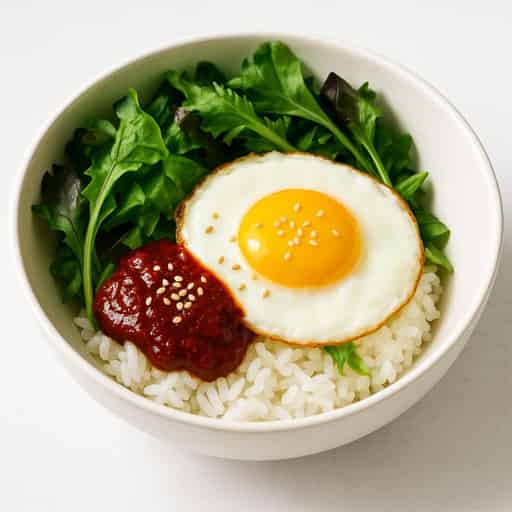
Unlike the quicker Korean bibimbap bowl with gochujang sauce, this recipe is designed for four servings and uses a larger vegetable mix rather than salad leaves. It is a practical way to use day-old rice and works well for a prepare-ahead lunch or dinner.
Why This Recipe Works
Why This Recipe Works
Cooking the vegetables before the rice keeps them from releasing excess water into the pan. Carrots and courgette need a little longer, while bean sprouts, bamboo shoots, and mushrooms are added later so they stay distinct rather than becoming soft and watery.
Using the same skillet for the rice picks up the sesame oil and vegetable flavour. Day-old rice is especially useful because its drier surface becomes seasoned without turning sticky. The egg supplies richness and a little extra protein, while Sriracha is served separately so each person can control the heat.
Cooking and Assembly Tips
Cooking and Assembly Tips
- Use fully cooled day-old rice if possible. If using freshly cooked rice, spread it on a tray and cool it before stir-frying.
- Cut the carrots and courgette into similar matchsticks so they cook evenly.
- Drain the canned bean sprouts and bamboo shoots thoroughly. Excess liquid will steam the vegetables instead of helping them sauté.
- Cook the vegetables until just tender, then transfer them out of the skillet before heating the rice.
- Keep the egg yolks soft if you want them to become part of the sauce when the bowls are mixed.
- Bibimbap is assembled rather than layered for eating: mix the rice, vegetables, egg, and hot sauce together just before serving.
Make It a More Filling Meal
Make It a More Filling Meal
For a higher-protein vegetarian bowl, add marinated tofu or edamame. Kimchi, pickled radish, or a small serving of cucumber salad adds acidity and freshness. If serving four hungry adults, add extra rice or another vegetable side rather than substantially increasing the oil.
Storage and Meal Prep
Storage and Meal Prep
Store the rice and vegetables separately in airtight containers for up to 3 days. Reheat them thoroughly, then cook the eggs fresh for the best texture. Keep Sriracha and any kimchi or pickles separate until serving so the rice does not become wet.
The nutrition values are estimates per bowl and include the egg, rice, vegetables, sesame oil, and soy sauce. They will vary with the rice type, egg size, soy sauce brand, and the amount of Sriracha used.
Nutrition Facts
Nutrition Facts
Serving Size: 1 bowl
Calories 47324%
% Reference Intake*
Total Fat 10g14%
Saturated Fat 4g20%
Trans Fat 0g
Cholesterol 186mg
Sodium 700mg
Total Carbohydrates 80g31%
Dietary Fiber 5g
Sugars 7g8%
Protein 16g32%
* Reference intakes are based on an average adult's 8,400 kJ / 2,000 kcal diet. Your needs may be higher or lower.
Community Reviews
See how other home cooks made this recipe, then share your own experience.
4.6
5 ratings
5
60%
4
40%
3
0%
2
0%
1
0%
How would you rate this recipe?
Share your experience and help others.
Tomiko S.
· 5 Jul 2026As someone who grew up on bibimbap, I think this vegetarian version keeps the spirit of the dish. It is easy to adapt and still satisfying.
Jordan R.
· 4 Apr 2026I added marinated tofu for more protein and it was delicious. The balance of vegetables, rice, and flavour was spot on.
Marco T.
· 2 Aug 2025Easy to make and full of flavour. Day-old jasmine rice gave it a lovely texture, and it was a great weeknight dinner.
Lily P.
· 1 Jun 2025Loved this recipe! The sunny-side-up egg added just the right richness. I added kimchi as suggested, and it made the bowl even better.
Anika D.
· Invalid DateI’m not usually a fan of bamboo shoots, but they worked really well here. I’ll make this again with extra Sriracha.
Create Your Own Recipe
Add your personal creations and build your own recipe collection.