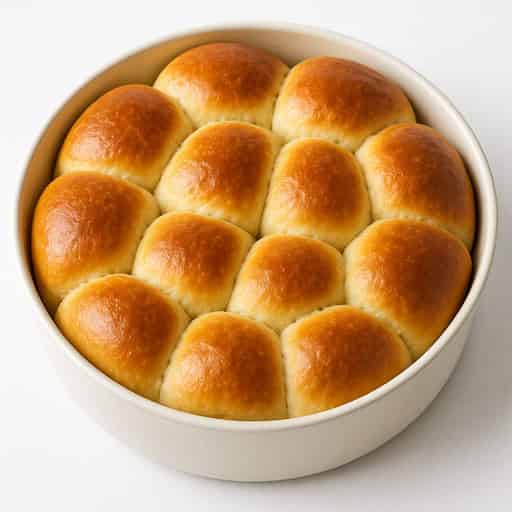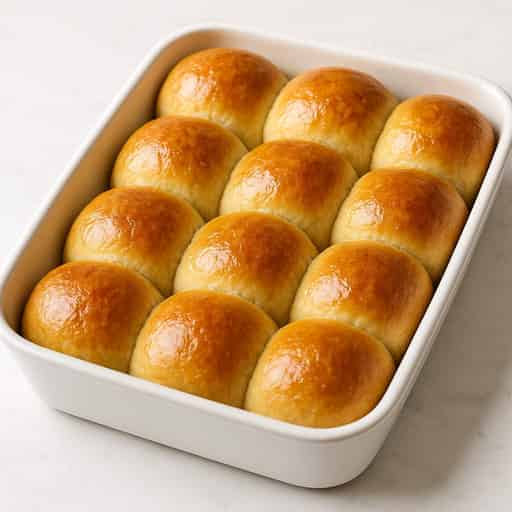
Soft honey dinner rolls with a tender, buttery crumb and a lightly sweet finish. This beginner-friendly yeast roll recipe includes stand-mixer and make-ahead guidance for family dinners and holiday tables.
Prep time
20 min
Cook time
20 min
Total time
2 hr
Servings
12
Recipe Snapshot
DifficultyEasy
MealDinner
Meal PrepExcellent
Freezer FriendlyYes
Family FriendlyYes
Chef's Tips
Use warm (not hot) milk and water to activate the yeast properly.
For ultra-soft rolls, the dough should be slightly sticky before the first rise.
You can refrigerate shaped rolls overnight and bake the next day after letting them rise again.
Tools Used
Mixing Bowl(opens in a new tab)Stand Mixer(opens in a new tab)Kitchen Scale(opens in a new tab)Pastry Brush
We use affiliate links, which may earn us a small commission at no extra cost to you.
Ingredients
Ingredients
Servings
12 servings1×
Scale
Ingredient amounts update instantly.
Dough
Brushing
Instructions
Make the Dough
- 1
In a large bowl or stand mixer, mix flour, salt, and yeast.
- 2
In another bowl, whisk together warm milk, warm water, honey, melted butter, and egg.
- 3
Add wet ingredients to dry and mix until a shaggy dough forms.
Kneading and First Rise
- 1
Knead the dough for 6–10 minutes until smooth and elastic.
- 2
Transfer to a greased bowl, cover, and let rise in a warm place until doubled, about 1 to 1.5 hours.
Shaping and Second Rise
- 1
Divide the risen dough into 12 equal pieces for evenly sized rolls.
- 2
Shape each into a ball and place in a greased 9x13" pan.
- 3
Cover and let rise for 30–45 minutes until puffy.
Baking
- 1
Preheat oven to 180°C (350°F).
- 2
Bake rolls for 18–22 minutes, or until golden on top and cooked through.
Finishing Touch
- 1
Brush warm rolls with melted butter or a honey-butter glaze.
- 2
Serve warm or store in an airtight container.
Plan This Recipe
Save this recipe to one of your meal plans or browse your existing plans.
Learn More
Everything you want to know about this recipe.
Soft Honey Dinner Rolls
Soft Honey Dinner Rolls
These honey dinner rolls have a tender, buttery crumb, a light sweetness, and a glossy finish from melted butter or honey butter. The dough is forgiving enough for a first yeast bake, while the overnight shaping option makes it practical for a family dinner or holiday meal.
Why This Recipe Works
Why This Recipe Works
Milk and butter enrich the dough, helping the rolls stay soft after baking. Honey adds sweetness and encourages a golden crust, while the small amount of water keeps the dough hydrated without making it heavy. The dough should remain slightly sticky before the first rise; adding too much flour is the fastest way to produce dry, firm rolls.
The rolls pair well with soups, stews, roast dinners, and sliders. Serve them warm with butter, or use the optional honey-butter glaze when you want a sweeter finish.
Mixing, Kneading And Proofing
Mixing, Kneading And Proofing
Use liquids that feel warm but not hot, around 38–40°C. Hot liquid can weaken or kill the yeast. Knead until the dough is smooth and elastic, but do not judge it by dryness: a soft dough may still cling slightly to the bowl or work surface.
The first rise is complete when the dough has roughly doubled, not simply when the timer ends. In a cool kitchen this may take longer. After shaping, the rolls should look visibly puffy and spring back slowly when pressed lightly with a fingertip.
Common Problems
Common Problems
Why are the rolls dense? The yeast may be inactive, the dough may not have risen fully, or too much flour may have been added. Check the expiry date of the yeast and allow the dough to rise until visibly doubled.
Why did the dough not rise? A cold room slows fermentation, while very hot milk can damage the yeast. Move the covered bowl to a comfortably warm, draft-free place rather than placing it on direct heat.
Why are the rolls dry? Overbaking and excess flour are the usual causes. Stop baking when the tops are golden and the centres are cooked, and weigh the flour where possible.
Why did the rolls spread? The dough may be too warm or the shaped rolls may have been left to overproof. Shape them firmly, leave a little space between them, and bake once they are puffy but still spring back slowly.
Serving Ideas
Serving Ideas
Serve these rolls with soups, stews, roast dinners, or sliders. They are also good warm with butter.
Storage And Reheating
Storage And Reheating
Store cooled rolls in an airtight container for up to two days. Rewarm them, loosely covered with foil, in a low oven for 8–10 minutes.
The baked rolls can be frozen for up to two months. Cool them fully, wrap them well, and thaw at room temperature before reheating.
Finishing Touch
Finishing Touch
Brush the warm rolls with melted butter or the optional honey-butter glaze. The glaze adds a softer crust and extra sweetness, while melted butter alone keeps the finish more savoury.
Portion Guidance
Portion Guidance
One roll is a practical serving alongside a main meal. Because the rolls contain butter, milk, egg, and honey, the nutrition values are estimates and vary with the final roll size and whether the honey-butter glaze is used.
Nutrition Facts
Nutrition Facts
Serving Size: 1 roll (1/12 batch; estimated)
Calories 23512%
% Reference Intake*
Total Fat 8g11%
Saturated Fat 5g25%
Trans Fat 0g
Cholesterol 45mg
Sodium 210mg
Total Carbohydrates 40g15%
Dietary Fiber 1g
Sugars 7g8%
Protein 6g12%
* Reference intakes are based on an average adult's 8,400 kJ / 2,000 kcal diet. Your needs may be higher or lower.
Community Reviews
See how other home cooks made this recipe, then share your own experience.
5.0
5 ratings
5
100%
4
0%
3
0%
2
0%
1
0%
How would you rate this recipe?
Share your experience and help others.
James R.
· 27 Aug 2026I shaped them the night before and baked them the next day. They rose well after coming out of the fridge and browned evenly.
Sophie T.
· 19 Aug 2026The dough was soft but manageable, and the rolls stayed tender after dinner. The honey butter finish made them feel special without being too sweet.
Aileen M.
· 13 Jul 2025They were still soft the next day. Will definitely be making these for Thanksgiving.
Marco B.
· 13 Jul 2025My first time making bread and they came out perfect. Great beginner recipe!
Rachel K.
· 13 Jul 2025Turned out soft and golden! I used whole milk and brushed with honey butter—delicious.
Create Your Own Recipe
Add your personal creations and build your own recipe collection.