07 September 2026
Citrus-Marinated Dorade Carpaccio with Mint
RecipeShare Test Kitchen
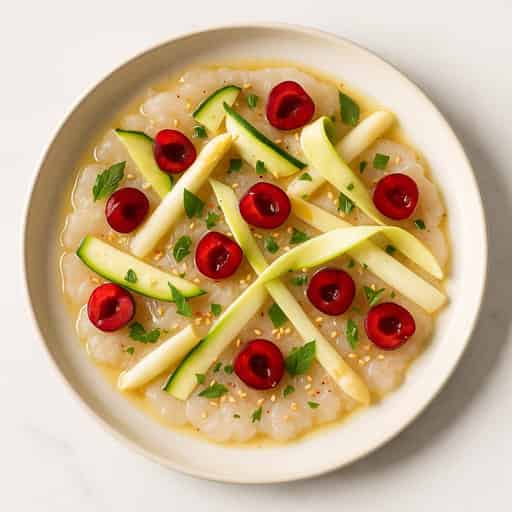
Thinly sliced dorade, also called sea bream, dressed with orange, lemon, mint, ginger, and soy for a bright raw fish starter served with fresh vegetables.
Prep time
25 min
Cook time
Total time
25 min
Servings
4
Recipe Snapshot
DifficultyMedium
MealLunch / Dinner
Chef's Tips
Use fish labelled sushi-grade or sashimi-grade, or fish that has been handled and frozen according to local raw-fish guidance.
Keep the fish refrigerated until the moment you slice and dress it; citrus does not make raw fish safe.
Do not rinse the fillets. Pat them dry with kitchen paper so the flavour stays clean and the slices hold together.
Chill the plates and slice the fish very thinly for the best carpaccio texture.
Assemble just before serving because the citrus will gradually firm and cure the surface of the fish.
Tools Used
We use affiliate links, which may earn us a small commission at no extra cost to you.
Ingredients
Ingredients
Servings
4 servings1×
Scale
Ingredient amounts update instantly.
Citrus Vinaigrette
Fish And Garnishes
Instructions
Make the Vinaigrette
- 1
Whisk the ginger, chilli, orange juice, lemon juice, raspberry vinegar, soy sauce, and grapeseed oil in a bowl. Taste and set aside while you prepare the fish and vegetables.
Prepare the Fish
- 1
Keep the fish cold. Remove any remaining pin bones, pat the fillets dry, and slice them as thinly as possible with a sharp knife. Do not rinse the fish.
- 2
Peel the zucchini and asparagus into thin ribbons. Pit and halve the cherries, then slice the mint.
Assemble and Serve
- 1
Arrange the dorade slices across four chilled plates. Add the zucchini and asparagus ribbons, then spoon over the citrus vinaigrette.
- 2
Finish with the cherries, mint, sesame seeds, and a light pinch of sea salt. Serve immediately while the fish is cold and the vegetables are crisp.
Plan This Recipe
Save this recipe to one of your meal plans or browse your existing plans.
Learn More
Everything you want to know about this recipe.
Citrus-Marinated Dorade Carpaccio
Citrus-Marinated Dorade Carpaccio
Dorade, also known as sea bream, has firm, delicate flesh that works beautifully in a carpaccio-style starter. Here it is sliced thinly and dressed just before serving with orange, lemon, raspberry vinegar, soy, ginger, and mint. Cherries add a small sweet-tart contrast, while zucchini and asparagus ribbons keep the plate fresh and light.
What Makes The Marinade Work
What Makes The Marinade Work
The vinaigrette balances several strong elements rather than relying on citrus alone. Orange juice brings round sweetness, lemon adds brightness, soy contributes salty depth, and raspberry vinegar reinforces the fruit without making the fish taste sugary. Ginger and chilli give the dressing a gentle aromatic lift.
Use the dressing sparingly at first. The fish should still taste clean and delicate, not like it has been submerged in a heavy sauce.
Raw Fish Safety And Texture
Raw Fish Safety And Texture
Choose fish labelled for raw preparation and follow the handling advice supplied by your fishmonger. Keep it refrigerated and work with clean, cold equipment. Citrus is not a substitute for safe sourcing or freezing guidance.
Do not rinse the fillets. Patting them dry preserves their flavour and makes it easier to cut neat slices. Dress the carpaccio immediately before serving; the acid will gradually firm the surface, so this is not a dish to assemble hours in advance.
Easy Substitutions
Easy Substitutions
Sea bass is the closest mild substitute for dorade. For a richer result, use a suitable tuna or salmon fillet, adjusting the slicing and seasoning to match the fish. Raspberry vinegar can be replaced with cherry vinegar or a mild white-wine vinegar.
If white asparagus is unavailable, use extra zucchini, shaved fennel, or very thinly sliced cucumber. Keep the vegetables crisp and delicate so they support rather than overwhelm the fish.
Serving And Storage
Serving And Storage
Serve this as a starter or light lunch on chilled plates, with toasted bread if you want something more substantial. It is best eaten immediately after dressing and should not be stored as assembled leftovers. Keep any undressed fish and vinaigrette refrigerated separately and follow the fish supplier's use-by guidance.
Nutrition Facts
Nutrition Facts
Serving Size: 1 plate
Calories 22011%
% Reference Intake*
Total Fat 10g14%
Saturated Fat 2g10%
Trans Fat 0g
Cholesterol 55mg
Sodium 560mg
Total Carbohydrates 8g3%
Dietary Fiber 2g
Sugars 5g6%
Protein 26g52%
* Reference intakes are based on an average adult's 8,400 kJ / 2,000 kcal diet. Your needs may be higher or lower.
FAQs
Is dorade the same as sea bream?
Dorade is commonly used for gilthead sea bream and related sea bream sold for cooking. Sea bass can be used as a similar substitute if dorade is unavailable.
Can I use ordinary fresh fish for this carpaccio?
Use fish specifically sold for raw preparation, or fish handled and frozen according to local food-safety guidance. Citrus juice changes the texture but does not make raw fish safe.
Can I marinate the fish overnight?
No. Dress the fish shortly before serving. Prolonged contact with citrus firms and whitens the surface and can make the delicate slices mushy.
Community Reviews
See how other home cooks made this recipe, then share your own experience.
—
0 ratings
5
0%
4
0%
3
0%
2
0%
1
0%
How would you rate this recipe?
Share your experience and help others.
Marcus
· 7 Sept 2026I followed the advice not to rinse the fillets and the texture was much better. The mint was subtle but really helped the citrus come through.
Nina
· 9 Apr 2026The vegetable ribbons made the plate feel substantial without taking attention away from the fish. Chilling the plates was a nice touch.
Theo
· 14 Aug 2025I used sea bream and raspberry vinegar, and the cherries were a lovely sweet contrast. I would definitely make the dressing ahead.
Amira
· 22 Jan 2025The orange and lemon made the fish taste bright without covering its delicate flavour. Slicing it very cold was the key.
Create Your Own Recipe
Add your personal creations and build your own recipe collection.