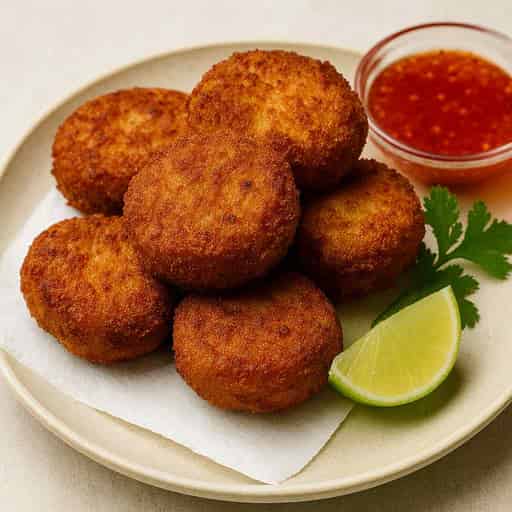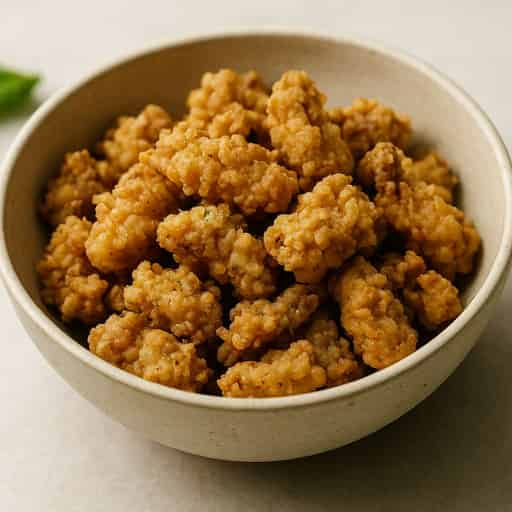
Baby squid in a light flour coating, fried until golden and served with spicy vinegar and optional garlic mayo.
Prep time
20 min
Cook time
15 min
Total time
35 min
Servings
8
Chef's Tips
Pat the squid very dry before marinating so the coating clings evenly.
Cake flour gives a lighter crust, but plain flour plus cornstarch also works.
Fry in small batches and avoid stirring right away so the crust can set.
Drain on a wire rack instead of paper towels to preserve crispness.
Tools Used
We use affiliate links, which may earn us a small commission at no extra cost to you.
Ingredients
Ingredients
Servings
8 servings1×
Scale
Ingredient amounts update instantly.
Squid
Spicy Vinegar Dip
Quick Garlic Mayo
Instructions
Prep the Squid
- 1
Rinse the squid, remove any remaining innards and pat it very dry.
- 2
Slice the bodies into 1 to 1.5 cm rings and leave the heads whole.
Marinate and Dredge
- 1
Beat the eggs with the calamansi juice, salt and pepper.
- 2
Toss the squid in the egg mixture for 5 minutes.
- 3
Lift the squid out, let the excess drip off and dredge well in cake flour.
Fry
- 1
Heat the oil to 180°C (355°F) in a deep pot.
- 2
Fry the squid in small batches for 2–3 minutes until light golden and crisp.
- 3
Drain on a wire rack and season lightly with salt and pepper.
Make the Dips
- 1
Stir together the vinegar, chillies, onion, garlic, salt and pepper.
- 2
Mix the mayonnaise, garlic, lemon juice and black pepper if using the mayo dip.
Plan This Recipe
Save this recipe to one of your meal plans or browse your existing plans.
Learn More
Everything you want to know about this recipe.
This style of squid depends more on technique than on a heavy batter. A quick egg marinade gives the flour something to cling to, and the short fry time keeps the coating crisp before the seafood has a chance to toughen.
Cake flour produces a lighter shell than bread flour or a dense all-purpose coating, but heat control matters just as much. If the oil drops too low, the squid absorbs oil and the coating softens before it sets.
Spicy vinegar is the sharper, more traditional pairing because it cuts the richness of the fry. Garlic mayo is useful if you want a second, creamier dip, but it works best as an optional extra rather than the main accompaniment.
Serve this as a starter or shared snack with cucumber, tomato salad or grilled vegetables if you want more balance around the fried element.
It also helps to fry in small batches so the oil temperature stays steady. When too much squid goes in at once, the coating steams before it has time to crisp and the whole batch loses some of its lightness.
For serving, lemon wedges or calamansi are useful even if you already have the vinegar dip on the table. The extra acidity gives the squid a fresher finish and keeps the last few pieces from tasting too heavy.
If you need to prep ahead, clean and cut the squid earlier but wait to dredge and fry until just before serving. That timing makes the biggest difference to the final crust and helps the coating stay delicate instead of compact.
Nutrition Facts
Nutrition Facts
Serving Size: 1 portion (about 250 g cooked with dips)
Calories 38019%
% Reference Intake*
Total Fat 15g21%
Saturated Fat 2g10%
Trans Fat 0g
Cholesterol 240mg
Sodium 520mg
Total Carbohydrates 31g12%
Dietary Fiber 2g
Sugars 3g3%
Protein 35g70%
* Reference intakes are based on an average adult's 8,400 kJ / 2,000 kcal diet. Your needs may be higher or lower.
FAQs
Why use cake flour instead of all-purpose flour?
Cake flour gives a lighter, more delicate crust because it is lower in protein and higher in starch.
How do I keep squid tender instead of rubbery?
Fry it hot and fast. Once squid is overcooked it tightens quickly and becomes chewy.
Community Reviews
See how other home cooks made this recipe, then share your own experience.
4.7
3 ratings
5
67%
4
33%
3
0%
2
0%
1
0%
How would you rate this recipe?
Share your experience and help others.
Anne
· 11 Nov 2025Light, crunchy, and not oily. I used lemon instead of calamansi—still great!
Marco
· 11 Nov 2025Spicy suka dip was perfect. Added one extra red chilli for kick—winner with beer.
Liza
· 11 Nov 2025Super crisp! Cake flour made a big difference—didn’t go soggy on the rack.
Create Your Own Recipe
Add your personal creations and build your own recipe collection.