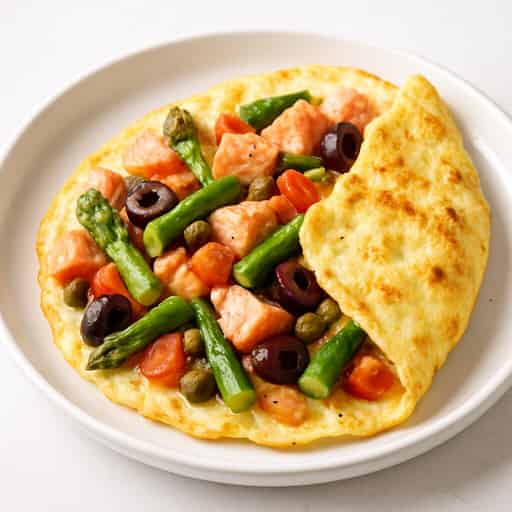
A salmon and asparagus omelet with tomato, olives, and capers for a savory high-protein breakfast or quick light lunch.
Prep time
10 min
Cook time
10 min
Total time
20 min
Servings
1
Chef's Tips
Make sure not to overcook the eggs to maintain a soft texture.
Cook the filling briefly before adding the eggs so the vegetables stay tender and the salmon does not dry out.
Tools Used
We use affiliate links, which may earn us a small commission at no extra cost to you.
Ingredients
Ingredients
Servings
1 serving1×
Scale
Ingredient amounts update instantly.
Filling
Eggs
Instructions
Cook the Filling
- 1
Add the olive oil to a medium nonstick skillet over medium heat.
- 2
Cook the onion and asparagus for 2 to 3 minutes until the onion softens.
- 3
Add the salmon and cook for 2 minutes, turning once or twice.
- 4
Stir in the garlic, olives, capers, and tomato, then cook for 1 minute.
- 5
Season the filling lightly with salt and black pepper.
Finish the Omelet
- 1
Pour in the beaten egg and egg whites, tilting the pan so the eggs spread evenly.
- 2
Cook gently for 1 to 2 minutes, lifting the edges with a spatula as they set.
- 3
Fold the omelet in half when the top is mostly set but still soft.
- 4
Cook for 30 seconds more, then slide onto a plate and serve immediately.
Plan This Recipe
Save this recipe to one of your meal plans or browse your existing plans.
Learn More
Everything you want to know about this recipe.
Salmon and Asparagus Omelet
Salmon and Asparagus Omelet
This salmon and asparagus omelet is the kind of breakfast that eats more like a proper savory meal than a quick egg dish. The filling is substantial enough to carry lunch, but it still cooks in about 20 minutes and only needs one skillet.
Salmon brings richness, asparagus keeps the texture fresh, and the olives, capers, and tomato give the omelet a briny, Mediterranean edge. Using one whole egg plus extra whites keeps the texture light while still giving the finished omelet enough body to hold the filling.
Flavor Profile
Flavor Profile
The flavor here is savory first, then bright and slightly salty from the olives and capers. Tomato softens into the filling and adds moisture, while the asparagus keeps some snap so the omelet does not feel overly soft all the way through.
Ingredient Highlights
Ingredient Highlights
salmon filletgives the omelet enough richness and protein to turn it into a full meal rather than a side breakfast.asparagus spearskeep the filling green and fresh, and they cook quickly enough for a fast skillet breakfast.Kalamata olivesandcapersadd salt and acidity in small amounts, which means you do not need much extra seasoning.egg whiteskeep the omelet larger and lighter without needing more whole eggs.
How It Comes Together
How It Comes Together
The filling goes into the pan first so the onion can soften, the asparagus can lose its raw edge, and the salmon can just start to cook before the eggs go in. That order matters because it prevents the omelet from overcooking while you wait for the vegetables and fish to catch up.
Once the eggs are added, the omelet needs a gentler hand. Let the bottom set, lift the edges slightly with a spatula, and fold while the center is still a little soft. The residual heat finishes everything without making the salmon or the eggs dry.
Chef's Tips
Chef's Tips
- Cut thicker asparagus spears smaller so they soften in the same time as the onion.
- Keep the heat at medium rather than high once the eggs go in, or the bottom will brown before the center sets.
- If the pan feels crowded, fold the omelet instead of trying to flip it.
Easy Swaps
Easy Swaps
- Smoked salmon can work here, but add it at the end and reduce the olives or capers slightly so the filling does not become too salty.
- Spinach, peas, or mushrooms can replace the asparagus when you need an easier vegetable swap.
- Feta can be added for a richer version, though the omelet is balanced without cheese.
Low-Cholesterol Notes
Low-Cholesterol Notes
Using one whole egg plus extra whites keeps the omelet more cholesterol-aware than a version built from several whole eggs alone. Salmon still brings some fat, but it is the kind of richness that makes the meal satisfying without needing butter or cheese.
Make-Ahead & Meal Prep
Make-Ahead & Meal Prep
This omelet is best cooked and eaten right away, but the filling can be prepped ahead. Dice the onion and tomato, trim the asparagus, and portion the salmon in advance so the morning cooking goes quickly. Leftover cooked filling also works well tucked into scrambled eggs the next day.
Serving & Goal Fit
Serving & Goal Fit
One omelet is one serving. For a fuller breakfast, serve it with fruit or a small side of toast. On training days, add one piece of fruit or a small potato side if you want more carbohydrate. On rest days, the omelet works well on its own with salad leaves or extra vegetables.
If you want to change the protein, cooked shrimp or firm tofu are the easiest swaps. For vegetables, spinach, mushrooms, courgette, peas, or green beans all fit the same savory breakfast profile.
Nutrition Facts
Nutrition Facts
Serving Size: 1 omelet
Calories 42521%
% Reference Intake*
Total Fat 21g30%
Saturated Fat 4g20%
Trans Fat 0g
Cholesterol 285mg
Sodium 540mg
Total Carbohydrates 11g4%
Dietary Fiber 3g
Sugars 4g4%
Protein 44g88%
* Reference intakes are based on an average adult's 8,400 kJ / 2,000 kcal diet. Your needs may be higher or lower.
FAQs
Can I use cooked salmon instead of raw salmon?
Yes. Add cooked salmon near the end of the filling step so it warms through without overcooking.
Do I have to use egg whites as well as whole eggs?
No. You can use only whole eggs if you prefer, though the extra whites make the omelet larger and slightly lighter in texture.
What can I serve with this omelet?
A simple green salad, roasted tomatoes, or crusty bread all work well, depending on whether you want a lighter breakfast or a more complete meal.
Community Reviews
See how other home cooks made this recipe, then share your own experience.
4.8
5 ratings
5
80%
4
20%
3
0%
2
0%
1
0%
How would you rate this recipe?
Share your experience and help others.
Ben
· 12 Jul 2026This worked well with leftover cooked salmon too. I added it right at the end of the filling step so it did not dry out.
Olivia
· 19 Jun 2026I liked the balance here a lot. The tomato kept it from feeling too rich and the asparagus still had a little bite.
Jade
· 29 May 2026I added a little dill at the end and would do that again. Nice option for a light lunch too.
Marcus
· 18 Jan 2026Good way to use a small salmon fillet. I kept the eggs slightly soft and the texture was much better.
Claire
· 7 Sept 2025I made this for brunch and liked the salty bite from the capers and olives. It felt substantial without needing toast.
Create Your Own Recipe
Add your personal creations and build your own recipe collection.