05 September 2026
Mediterranean Roast Chicken Legs with Yogurt, Lemon and Oregano
RecipeShare Test Kitchen
5.0(4 ratings)
Mediterranean roast chicken legs with Greek yogurt, lemon, oregano, and garlic, baked over potatoes, red onion, and peppers for an easy one-pan dinner with golden skin and juicy meat.
Prep time
20 min
Cook time
55 min
Total time
1 hr 15 min
Servings
6
Recipe Snapshot
CuisineMediterranean
Chef's Tips
Use thick full-fat Greek yogurt for the driest, best-browning marinade.
The longer marinade helps the yogurt season the chicken more evenly.
Scrape off most of the excess marinade before roasting so the yogurt does not slide into the tray and create too much liquid.
Pre-roast the vegetables first so they lose surface moisture before the chicken goes on.
Spread the vegetables in one layer so they roast instead of steaming.
Roast the chicken skin-side up without turning unless one area is coloring too fast.
Tools Used
Large Mixing Bowl(opens in a new tab)TongsKnife(opens in a new tab)Chopping Board(opens in a new tab)Oven
We use affiliate links, which may earn us a small commission at no extra cost to you.
Ingredients
Ingredients
Servings
6 servings1×
Scale
Ingredient amounts update instantly.
Yogurt Lemon Oregano Marinade And Chicken
Vegetables For The Tray
To Finish
Instructions
Marinate the Chicken
- 1
In a large bowl, whisk together the Greek yogurt, extra virgin olive oil, lemon zest, lemon juice, garlic, oregano, paprika, cumin, salt, black pepper, and chili flakes if using.
- 2
Add the chicken drumsticks and coat them thoroughly in the marinade.
- 3
Cover and refrigerate for at least 2 hours or overnight.
Prepare the Tray
- 1
Preheat the oven to 200°C fan (220°C conventional).
- 2
Toss the baby potatoes, red onion, and red pepper with the olive oil, salt, and black pepper in a large roasting tray.
- 3
Spread the vegetables into an even layer.
- 4
Roast the vegetables for 20 minutes to give them a head start.
- 5
Lift the chicken from the bowl and scrape off most of the excess marinade, leaving only a light coating on the surface.
- 6
Arrange the chicken skin-side up over the hot vegetables with space between the pieces.
Roast and Finish
- 1
Roast for 35 to 45 minutes more until the chicken is nearly done.
- 2
Cook until the chicken reaches 75°C in the thickest part and the skin is golden at the edges.
- 3
Broil for 3 to 5 minutes at the end if you want extra color.
- 4
Rest for 5 minutes, then finish with parsley and lemon wedges if using.
Plan This Recipe
Save this recipe to one of your meal plans or browse your existing plans.
Learn More
Everything you want to know about this recipe.
Mediterranean Roast Chicken Legs with Yogurt, Lemon and Oregano
Mediterranean Roast Chicken Legs with Yogurt, Lemon and Oregano
This Mediterranean roast chicken legs recipe is built for the kind of dinner that needs to be straightforward but still feel generous. The marinade uses Greek yogurt, lemon, garlic, oregano, paprika, and cumin, so the chicken roasts with plenty of flavor while staying juicy underneath the skin. Everything cooks on one tray with potatoes, red onion, and peppers, which makes it practical for family meals and easy weekend prep alike.
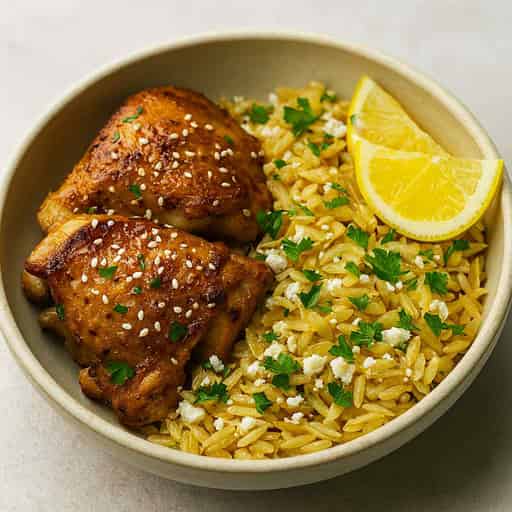
The page intent here is different from a Greek chicken rice bowl or a lighter salad-style recipe. This is a full roast-pan dinner centered on bone-in chicken legs, where the vegetables sit underneath and absorb the drippings as they cook. If you want a Mediterranean chicken recipe that feels hearty and complete without becoming complicated, this is the stronger fit.
Flavor Profile
Flavor Profile
The overall flavor is bright, savory, and gently smoky. Lemon keeps the dish fresh, oregano gives it a familiar Mediterranean backbone, and paprika plus cumin add warmth without pushing it into a heavily spiced profile. Garlic rounds everything out and gives the marinade depth.
Because the marinade is yogurt-based rather than oil-only, you need to control how much of it goes into the oven. Too much loose marinade plus raw vegetables can create steam and stop the chicken from browning properly. Keeping only a light coating on the chicken gives you the same flavor without flooding the tray.
Ingredient Highlights
Ingredient Highlights
Chicken drumsticks are a good match here because they stay moist and cook reliably on a tray with vegetables. A mix of drumsticks and thighs also works well if that is what you have.
Greek yogurt is doing two jobs. It carries the seasoning and helps the surface of the chicken roast into a more flavorful coating. It also softens the effect of the lemon so the finished dish tastes balanced rather than sharp.
Use a thick full-fat Greek yogurt if possible. It clings better, separates less in the oven, and gives more reliable browning. Fat-free yogurt can work, but it usually contains more water and is more likely to run off into the tray.
Baby potatoes, red onion, and red pepper are enough to turn this into a full meal. They roast well at the same temperature and bring sweetness and texture without needing a second side dish.
How It Comes Together
How It Comes Together
The workflow is simple: mix the marinade, coat the chicken, and let it sit while the flavor gets into the meat. When you are ready to cook, roast the vegetables first so they start drying and coloring, then place the chicken on top with only a light coating of marinade still attached.
That order matters. The vegetables stay exposed to the oven long enough to lose some water before the chicken goes on, which keeps the tray from turning soupy. The chicken should roast skin-side up without turning unless needed. A short broil at the end gives extra color if the skin still needs help.
Chef's Tips
Chef's Tips
Do not put the chicken into the tray dripping with marinade. Lift each piece out and scrape off the loose excess with your hands or the edge of the bowl, then leave only a thin coating on the surface. That gives you better browning and stops the yogurt from separating into liquid underneath.
Try to keep the vegetables in one layer with a little space between them. If they are piled too tightly, they will steam instead of roast. If your tray is small, use two trays rather than crowding everything together.
Do not turn the chicken unless one side is staying pale because of an uneven oven. Turning the pieces too early can disturb the coating and drop more liquid into the tray.
If fat-free yogurt is all you have, still marinate the chicken, but be more aggressive about scraping the excess off before roasting. You can also shorten the marinade slightly and let the chicken sit on a rack over a tray for 10 minutes before it goes into the oven so extra coating drips away first.
If your chicken pieces are especially large, start checking the internal temperature near the 50-minute mark. The safest target is 75°C in the thickest part near the bone.
Easy Swaps
Easy Swaps
Use all thighs if you prefer richer meat, or all drumsticks if you want a more economical tray. Yellow onion can replace red onion, and courgette can be added during the second half of cooking if you want more vegetables.
If you want a sharper finish, serve the tray with extra lemon wedges. If you want a cooler contrast, a spoonful of plain yogurt or tzatziki on the side works well without changing the core recipe.
Low-Cholesterol Notes
Low-Cholesterol Notes
This recipe is more cholesterol-aware than a butter-heavy roast because the marinade relies on yogurt, olive oil, and aromatics rather than cream or extra fat. If you want to lighten it further, use more drumsticks than thighs and serve it with a larger share of vegetables per plate.
Make-Ahead and Meal Prep
Make-Ahead and Meal Prep
The chicken can be marinated the night before, which is the easiest way to make this recipe feel low-effort on the day you cook it. Leftovers keep well in the fridge for up to 3 days and reheat best in the oven or air fryer so the skin does not soften too much.
For meal prep, store the chicken and vegetables together and add a fresh side salad when serving. That gives you a more balanced plate without needing extra cooking later.
Serving and Goal Fit
Serving and Goal Fit
This works best as a balanced main meal. One serving of chicken plus the roasted vegetables already gives you a good protein base and a practical carbohydrate portion from the potatoes. If you need a bigger meal, add salad or flatbread instead of increasing the oil in the tray.
Nutrition Facts
Nutrition Facts
Serving Size: 1 portion
Calories 51526%
% Reference Intake*
Total Fat 28g40%
Saturated Fat 6g30%
Trans Fat 0g
Cholesterol 165mg
Sodium 690mg
Total Carbohydrates 23g9%
Dietary Fiber 3g
Sugars 4g4%
Protein 38g76%
* Reference intakes are based on an average adult's 8,400 kJ / 2,000 kcal diet. Your needs may be higher or lower.
FAQs
Can I use only chicken thighs?
Yes. Bone-in thighs work well here and usually need a similar roasting time. Check doneness with a thermometer rather than relying only on time.
Why use yogurt in the marinade?
Yogurt helps the seasoning cling to the chicken and gently tenderizes the surface, which keeps the meat juicy while encouraging good browning.
What should I serve with this?
The tray already includes chicken and vegetables, so a green salad, warm flatbread, or a spoon of tzatziki is enough on the side.
Community Reviews
See how other home cooks made this recipe, then share your own experience.
5.0
4 ratings
5
100%
4
0%
3
0%
2
0%
1
0%
How would you rate this recipe?
Share your experience and help others.
Mira
· 7 Aug 2026I made it with thick full-fat Greek yogurt and the coating stayed put much better than with low-fat yogurt.
Elise
· 7 Aug 2026Pre-roasting the vegetables first made a big difference. The chicken browned better and the tray stayed much less watery.
Tom
· 7 Aug 2026I used a mix of thighs and drumsticks and it worked well. The potatoes underneath picked up all the good juices from the pan.
Nadia
· 7 Aug 2026This is exactly the kind of tray bake I like. The yogurt kept the chicken juicy and the lemon came through without making it sour.
Create Your Own Recipe
Add your personal creations and build your own recipe collection.