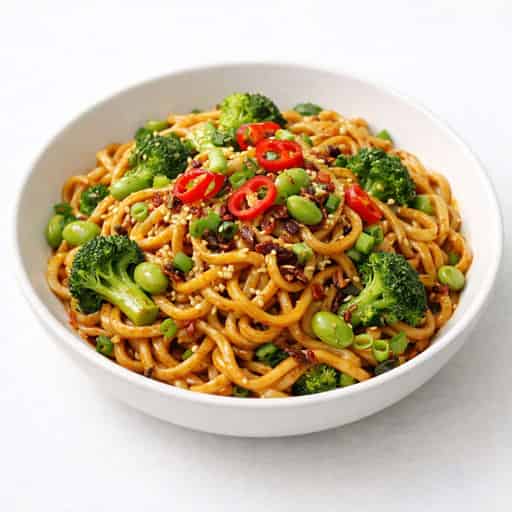
Thai green curry noodle soup with tender dumplings, udon, coconut broth, and herbs. A fragrant, comforting bowl ready in 30 minutes.
Prep time
10 min
Cook time
20 min
Total time
30 min
Servings
2
Recipe Snapshot
DifficultyEasy
MealLunch / Dinner
CuisineThai
Chef's Tips
Start with 2 tablespoons of green curry paste, then add more once the broth has simmered.
Use dumplings that cook from frozen; check the packet and extend the simmering time if needed.
Keep leftover noodles separate from the broth so they do not become overly soft.
Tools Used
We use affiliate links, which may earn us a small commission at no extra cost to you.
Ingredients
Ingredients
Servings
2 servings1×
Scale
Ingredient amounts update instantly.
Green Curry Broth
Dumplings And Noodles
Toppings
Instructions
Build the Broth
- 1
Heat a large saucepan over medium heat. Add the green curry paste, garlic, and ginger, then cook for 30 seconds, stirring, until fragrant.
- 2
Pour in the coconut milk and chicken stock. Add the lemongrass, makrut lime leaves, fish sauce, lime juice, and optional sugar. Bring to a gentle simmer, then cook uncovered for 10 minutes.
- 3
Taste the broth. Add more curry paste for heat, fish sauce for salt, or lime juice for brightness. Remove the lemongrass and lime leaves before serving.
Cook Dumplings and Noodles
- 1
Return the broth to a gentle bubble. Add the frozen dumplings and cook according to the packet directions, usually 4 to 5 minutes, until hot through and floating.
- 2
Add the fresh udon and cook for 2 to 3 minutes, using a ladle or tongs to gently separate the noodles. Do not boil hard once the noodles are in the pan.
Serve
- 1
Divide the udon, dumplings, and broth between two bowls. Top with the soft-boiled eggs, bean sprouts, coriander, sesame seeds, and chilli oil if using. Serve immediately.
Plan This Recipe
Save this recipe to one of your meal plans or browse your existing plans.
Learn More
Everything you want to know about this recipe.
Thai Green Curry Noodle Soup with Dumplings
Thai Green Curry Noodle Soup with Dumplings
This Thai green curry noodle soup is a fast, generous bowl of coconut broth, chewy udon, and tender dumplings. Green curry paste, lemongrass, lime, and fish sauce give the broth its familiar Thai balance of heat, fragrance, salt, and brightness, while a soft-boiled egg and herbs make it satisfying enough for lunch or dinner.
Why this dumpling noodle soup works
Why this dumpling noodle soup works
Blooming the curry paste with garlic and ginger before adding liquid gives the broth a deeper flavour than simply stirring everything together. Full-fat coconut milk rounds out the heat, while stock keeps the result brothy rather than heavy. Cooking the dumplings directly in the broth makes this a genuine one-pot meal and adds a little savoury richness at the same time.
Fresh udon is ideal here because it needs only a few minutes to loosen. Add it after the dumplings are hot so it stays springy instead of soaking up all the broth.
Ingredient notes and easy swaps
Ingredient notes and easy swaps
Use any good-quality green curry paste you enjoy; its heat level and saltiness can vary considerably by brand. Start with the smaller amount, taste after the broth simmers, and add more if you want a more assertive green curry flavour. Makrut lime leaves are optional, but a strip of lime zest can stand in for some of their citrus aroma when they are unavailable.
Frozen chicken, pork, prawn, or vegetable dumplings all work. Choose a variety that can be cooked from frozen, and use its packet timing as the final guide. For a vegetarian bowl, use vegetable stock and dumplings, then choose a green curry paste without shrimp paste and season with a vegetarian fish-sauce alternative to taste.
How to keep the noodles and dumplings tender
How to keep the noodles and dumplings tender
Keep the broth at a gentle bubble rather than a rolling boil after the dumplings go in. A hard boil can split delicate wrappers, while a quieter simmer cooks them evenly. Once the udon is added, separate it gently and serve as soon as it is warmed through. It will continue to soften in the hot broth.
If you are preparing bowls for different heat preferences, keep the base broth moderate and offer extra curry paste or chilli oil at the table. The egg yolk, bean sprouts, and coriander are especially useful here: they cool the palate and give the rich broth fresh contrast.
Serving, storing, and reheating
Serving, storing, and reheating
Serve the soup straight away with the eggs, coriander, bean sprouts, and sesame scattered on top. A crisp cucumber salad or a small plate of steamed greens makes a welcome side if you are feeding more people.
For leftovers, transfer the noodles and dumplings to a separate container from the broth within two hours. Refrigerate for up to 2 days. Reheat the broth gently until steaming, then add the noodles and dumplings only long enough to heat through; add a splash of stock or water if the udon has absorbed liquid. The finished soup is best not frozen because cooked udon and dumpling wrappers lose their texture.
Nutrition Facts
Nutrition Facts
Serving Size: 1 bowl
Calories 73537%
% Reference Intake*
Total Fat 39g56%
Saturated Fat 25g125%
Trans Fat 0g
Cholesterol 185mg
Sodium 1960mg
Total Carbohydrates 69g27%
Dietary Fiber 5g
Sugars 12g13%
Protein 27g54%
* Reference intakes are based on an average adult's 8,400 kJ / 2,000 kcal diet. Your needs may be higher or lower.
FAQs
Is green curry paste spicy?
It varies by brand, so start with 2 tablespoons and add more after the broth simmers. Coconut milk softens the heat, but it will not remove it.
Can I use dried noodles instead of fresh udon?
Yes. Cook dried wheat noodles separately until just tender, then add them to the bowls rather than simmering them in the broth.
Can I make this soup with vegetable dumplings?
Yes. Use vegetable dumplings and vegetable stock, then check that your curry paste does not contain shrimp paste or fish sauce if you need a vegetarian version.
Community Reviews
See how other home cooks made this recipe, then share your own experience.
5.0
4 ratings
5
100%
4
0%
3
0%
2
0%
1
0%
How would you rate this recipe?
Share your experience and help others.
Parvaty S.
· 29 Aug 2026Tried it today and it was amazing.
Freya U.
· 28 Apr 2026Udon in the soup was a game changer. So easy.
Itsjasrina K.
· 5 Dec 2025We make this weekly now. Great flavour and the dumplings make it feel like a proper meal.
Mina P.
· Invalid DateI used vegetable dumplings and added the extra lime at the table. The broth was fragrant, creamy, and not too heavy.
Create Your Own Recipe
Add your personal creations and build your own recipe collection.