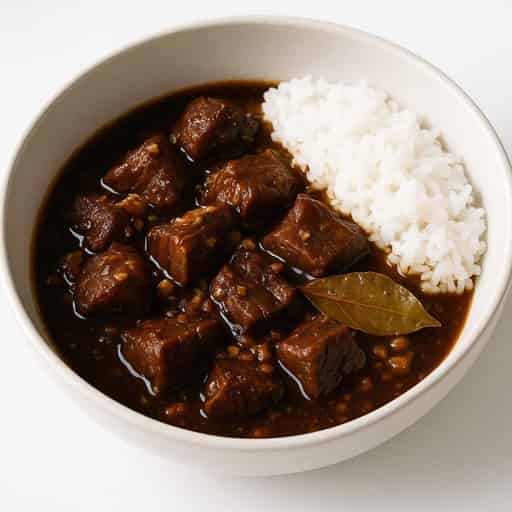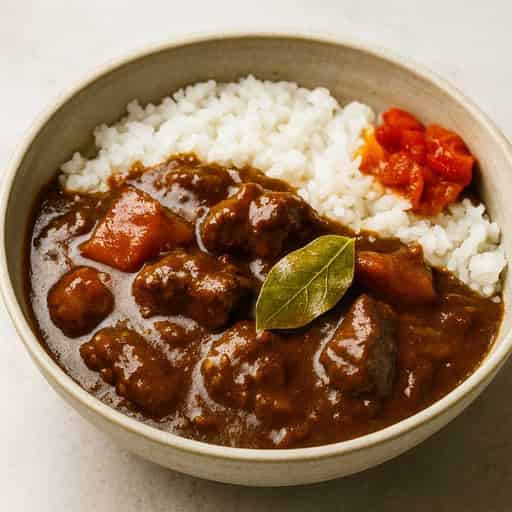
A rich Japanese beef curry rice made from scratch with tender chuck, sweet onions, apple, carrots, potatoes, and a mellow homemade curry roux.
Prep time
30 min
Cook time
2 hr
Total time
2 hr 30 min
Servings
6
Time Plan
45 min active · 2 hr 30 min total
- Simmer the beef1 hr 15 min
Recipe Snapshot
DifficultyMedium
MealDinner
Meal PrepExcellent
Freezer FriendlyYes
Family FriendlyYes
CuisineJapanese
Chef's Tips
Brown the beef in batches so it develops colour instead of releasing water and steaming.
Keep the roux at a gentle sizzle and stir constantly; flour that is cooked but not scorched gives the curry its smooth, rounded body.
Add the potatoes only after the beef has begun to tenderise so they keep their shape in the finished curry.
Tools Used
We use affiliate links, which may earn us a small commission at no extra cost to you.
Ingredients
Ingredients
Servings
6 servings1×
Scale
Ingredient amounts update instantly.
Japanese Rice
Beef Curry Base
Homemade Curry Roux
Curry Seasoning
Vegetables And To Serve
Instructions
Cook the Rice
- 1
Rinse the rice until the water runs mostly clear.
- 2
Cook according to the packet or your usual rice-cooker method, then keep covered and warm while the curry finishes.
Brown the Beef and Build the Base
- 1
Heat the oil in a large Dutch oven over medium-high heat. Season the beef lightly with salt and pepper, then brown it in batches on two or three sides. Transfer the browned beef to a plate.
- 2
Reduce the heat to medium. Add the onions with a pinch of salt and cook for 15 to 20 minutes, stirring often, until soft and deep golden.
- 3
Stir in the garlic, ginger, grated apple, and tomato paste. Cook for 1 minute, scraping up any browned bits from the base of the pot.
Make the Curry Roux and Simmer
- 1
Reduce the heat to low. Add the butter; once melted, stir in the flour and cook for 2 minutes. Stir in the curry powder for 30 seconds, until fragrant but not darkened.
- 2
Pour in the wine and scrape the pot clean. Gradually stir in the beef stock, then add the chuno sauce, soy sauce, ketchup, honey, bay leaf, and optional coffee.
- 3
Return the beef and any resting juices to the pot. Bring to a gentle simmer, cover partly, and cook on low for 75 minutes, stirring every 20 minutes so the roux does not catch.
Add the Vegetables and Serve
- 1
Add the carrots and potatoes. Simmer uncovered for 25 to 30 minutes, stirring occasionally, until the beef is fork-tender, the vegetables are cooked through, and the sauce coats a spoon.
- 2
Remove the bay leaf, then taste and adjust with salt and black pepper. If the curry is thicker than you like, loosen it with a little hot water or stock.
- 3
Spoon the curry over warm rice and serve fukujinzuke alongside, if using.
Plan This Recipe
Save this recipe to one of your meal plans or browse your existing plans.
Learn More
Everything you want to know about this recipe.
Japanese Beef Curry Rice From Scratch
Japanese Beef Curry Rice From Scratch
Japanese curry rice, or kare raisu, is a thick, mild curry served over short- grain rice. It sits closer to a glossy beef stew than to a coconut curry: the sauce is built from onions, stock, a flour-and-butter roux, and Japanese curry powder, with vegetables cooked until tender.
This version uses beef chuck for a proper slow simmer. Sweet onions and grated apple round out the spice, while chuno sauce, soy sauce, and a small amount of ketchup provide the familiar savoury-sweet backbone. It is intentionally a weekend or make-ahead curry, rather than a faster chicken curry bowl.
Why This Curry Works
Why This Curry Works
Browning first builds depth. Searing the beef in batches leaves flavourful browned bits in the pot. The onions, aromatics, and tomato paste lift those bits into the sauce rather than leaving them behind.
The roux thickens without curry cubes. Cooking butter and flour briefly removes the raw flour taste. Curry powder blooms in that fat, then stock is added gradually for a smooth sauce that clings to rice instead of tasting thin or chalky.
Vegetables go in late. Chuck needs time to soften, but potatoes do not. Adding carrots and potatoes after the beef has simmered keeps the vegetables substantial and prevents them from dissolving into the curry.
Common Problems
Common Problems
The beef is still chewy. Chuck needs a gentle simmer, not a hard boil. Keep the lid partly on and continue cooking until a fork enters easily; a tough cut will not become tender on a strict clock.
The sauce is too thick. Roux-based curry thickens as it cools. Stir in hot water or stock a splash at a time until it is loose enough to spoon over rice.
The sauce tastes flat. Give the onions enough time to become deeply golden, then taste only after the beef and vegetables have simmered. A small pinch of salt or a little extra chuno sauce is usually more useful than adding more curry powder.
Make Ahead and Serving
Make Ahead and Serving
This curry is well suited to cooking a day ahead: cool it promptly, refrigerate without rice, and reheat gently with a splash of stock. Make fresh rice when serving and add fukujinzuke for a crisp, tangy contrast to the mellow sauce.
For a faster Japanese-style curry dinner, try our Japanese-Style Curry Chicken Rice Bowls. For a meat-free version built around vegetables and a homemade roux, see Japanese Vegetable Curry.
Nutrition Facts
Nutrition Facts
Serving Size: 1 portion curry with rice
Calories 78039%
% Reference Intake*
Total Fat 29g41%
Saturated Fat 12g60%
Trans Fat 0g
Cholesterol 115mg
Sodium 820mg
Total Carbohydrates 92g35%
Dietary Fiber 7g
Sugars 13g14%
Protein 39g78%
* Reference intakes are based on an average adult's 8,400 kJ / 2,000 kcal diet. Your needs may be higher or lower.
FAQs
Is Japanese curry rice spicy?
Usually not. It is thick, mellow, and gently spiced rather than hot. Use a mild curry powder, then add chilli at the table only if wanted.
Can I use curry cubes instead of the homemade roux?
Yes. Omit the butter, flour, and curry powder. Add a standard packet of Japanese curry cubes after the beef has simmered, then stir until fully dissolved before adding the vegetables.
What can I use instead of red wine?
Use 120 ml extra beef stock plus 1 teaspoon balsamic vinegar. The small amount of acidity gives a similar rounded finish without alcohol.
Can I make beef curry ahead?
Yes. Refrigerate the curry, without the rice or pickles, for up to three days. Reheat gently with a splash of stock or water; the flavour often improves overnight.
Can I freeze Japanese beef curry?
Yes. Freeze cooled curry in portions for up to three months. For the best potato texture, freeze before adding the potatoes or accept that they may soften slightly after thawing.
Community Reviews
See how other home cooks made this recipe, then share your own experience.
4.8
8 ratings
5
75%
4
25%
3
0%
2
0%
1
0%
How would you rate this recipe?
Share your experience and help others.
Keiko S.
· 19 Aug 2026A satisfying slow-cooked curry for a weekend. Fukujinzuke on the side gave it the contrast it needed.
Ben C.
· 28 Jun 2026Made it a day ahead for friends and it was even better after reheating. The homemade roux gave it a great texture.
Eleanor V.
· 16 Apr 2026The onions and apple made the sauce taste rounded without being overly sweet. The potatoes stayed intact too.
TwilightPrincess727
· 6 Oct 2025Made this last night 👌🏻 — definitely one of the best curry rice recipes I've tried!
Andrew Oransky
· 5 Oct 2025We usually use curry cubes, but this from-scratch version was amazing. Worth the effort!
Damn sho
· 4 Oct 2025I’m Japanese and bro you nailed it 🤩 Perfect balance of sweetness and spice!
Marco Marchionda
· 3 Oct 2025Cleaned that plate 🤝 Looks so good — comforting and rich flavor!
Bilal Hoda
· 2 Oct 2025Skipped the wine and subbed with extra stock — still turned out incredible.
Create Your Own Recipe
Add your personal creations and build your own recipe collection.