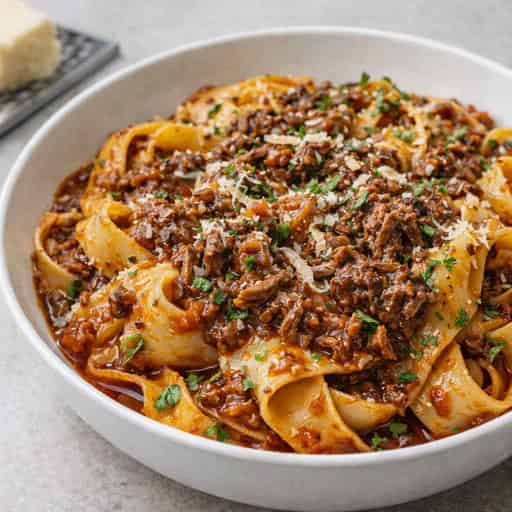
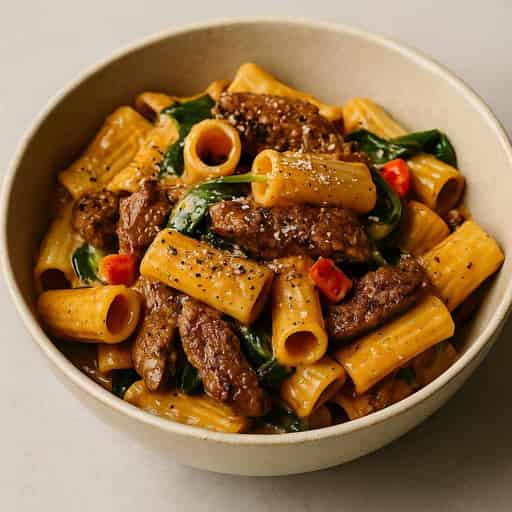
Restaurant-style ragu with beef shin, chuck, pork belly, pancetta, milk, and red wine for a rich, glossy sauce built through layered chef-style technique.
Prep time
40 min
Cook time
5 hr
Total time
5 hr 40 min
Servings
8
Chef's Tips
Keep the soffritto pale and sweet rather than browned. That softer base gives the finished ragu more balance.
Brown the beef in stages if your pot is crowded so the meat caramelises instead of steaming.
Add the first milk portion before the wine so it can coat the meat and soften the sharper edges of the browning.
Stir in the gastrique gradually at the end. You want lift and balance, not an obviously sweet finish.
Tools Used
Wooden SpoonLadleSmall Saucepan
We use affiliate links, which may earn us a small commission at no extra cost to you.
Ingredients
Ingredients
Servings
8 servings1×
Scale
Ingredient amounts update instantly.
Soffritto Base
Meat And Tomato Base
Slow-Cook Braising Base
Finish And Balance
Instructions
Soffritto Base
- 1
Set a large heavy pot over low heat, add the olive oil and pancetta, and render gently until the fat melts and the pancetta softens.
- 2
Add the onion, carrot, celery, and a pinch of salt. Cook gently for 20 to 25 minutes until soft, pale, and sweet with little to no colour.
- 3
Stir in the garlic for the final 1 to 2 minutes, then lift the soffritto out of the pot and set aside.
Meat and Tomato Base
- 1
Raise the heat to medium-high, add the neutral oil, then add the beef mince and break it up well.
- 2
Cook until the moisture evaporates, then keep browning until the meat is deeply caramelised and the base of the pot develops a rich fond.
- 3
Add the diced pork belly and warm it through gently for a few minutes without pushing for hard colour.
- 4
Stir in the tomato puree and cook until it darkens and smells sweeter.
- 5
Lower the heat, add the first milk portion, and let it absorb fully into the meat.
- 6
Pour in the red wine, scrape the pot clean, and reduce by about half.
Slow-Cook Braising Base
- 1
Return the soffritto to the pot, then add the passata, stock, parmesan rind, bay leaves, nutmeg, and a light seasoning of salt.
- 2
Bring just to a simmer, cover, and transfer to a 120C oven.
- 3
Cook for about 4 1/2 hours, stirring occasionally, until the sauce is rich, cohesive, and glossy.
Finish and Balance
- 1
While the ragu cooks, combine the balsamic vinegar and sugar in a small saucepan, bring to a boil, and reduce briefly until lightly thickened.
- 2
Remove the ragu from the oven, discard the parmesan rind and bay leaves, and stir in a splash of milk.
- 3
Swirl in the cold butter, then add the gastrique a little at a time until the richness tastes balanced and the sauce brightens slightly.
- 4
Taste and adjust the final seasoning before serving.
Plan This Recipe
Save this recipe to one of your meal plans or browse your existing plans.
Learn More
Everything you want to know about this recipe.
Restaurant-Style Beef and Pork Ragu
Restaurant-Style Beef and Pork Ragu
This ragu is built more like a chef-driven sauce than a quick family meat ragu. It uses the classic idea of soffritto, wine, tomato, and long cooking, but the flavour is pushed deeper through careful sequencing, controlled reduction, and a richer blend of beef, pork belly, pancetta, milk, and stock.
It is not positioned as an “authentic” one-region Italian ragu. The point here is technique: how to build a sauce that tastes glossy, savoury, and complete without letting tomato or heaviness dominate the final pot.
Why This Recipe Works
Why This Recipe Works
The base stays pale rather than dark. That matters because softened onion, carrot, and celery bring sweetness and depth without adding bitterness too early.
The real backbone comes from browning the beef properly before anything wet goes back in. That long caramelisation creates the savoury depth that separates a restaurant-style ragu from a simpler meat sauce.
Milk added before the wine softens the sharper roasted notes and helps bind the meat and fat into a rounder sauce. The final touch of butter and balsamic gastrique gives the ragu a cleaner finish and a more polished balance.
How This Differs From Our Other Ragu Pages
How This Differs From Our Other Ragu Pages
This page should sit separately from beef-short-rib-ragu.mdx, which is a braised short-rib pasta sauce built around shredded meat and a more classic red wine braise.
This new page targets a different search intent:
restaurant style raguchef style ragubeef and pork ragubest ragu recipehow to make ragu
The distinction is also structural: minced beef, pork belly, pancetta, milk in two stages, parmesan rind, and a final gastrique make this a technique-led meat sauce rather than another braised beef ragu page.
Ingredients Overview
Ingredients Overview
Using both shin and chuck in the beef mince gives you better flavour than a single generic mince blend, while pork belly adds collagen and body without needing cream.
Pancetta starts the sauce with rendered fat and a cured savoury note. Passata and tomato puree are used in moderation so the meat still leads. Parmesan rind, milk, and a little nutmeg round the sauce out instead of making it simply taste tomato rich.
How to Make It
How to Make It
Start by rendering the pancetta slowly and sweating the soffritto until it is soft and sweet. Remove it before browning the meat so the vegetables do not overcook while the beef builds colour.
Once the beef is properly caramelised, add the pork belly, cook the tomato puree until darker and sweeter, then add milk before the wine. After that, the soffritto, passata, stock, parmesan rind, and bay can go back in for the long oven cook.
At the end, do not skip the final balancing step. A little extra milk, cold butter, and a carefully judged amount of gastrique are what push the sauce from deeply rich into something that still tastes lifted and restaurant-finished.
Tips, Variations, and Storage
Tips, Variations, and Storage
This ragu is ideal for making ahead. It usually tastes even better the next day once the fat, stock, tomato, and meat have had time to settle together.
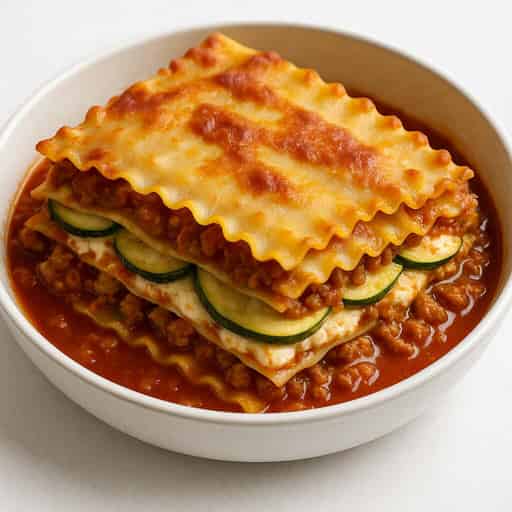
Serve it with pappardelle, tagliatelle, rigatoni, polenta, or use it as a lasagna filling. If you want a slightly lighter finish, spoon off excess fat after chilling and reheat gently with a small splash of stock.
It keeps well in the fridge for up to 4 days and freezes well in portions for future pasta nights.
Serving & Goal Fit
Serving & Goal Fit
One serving is about 1 ladle of ragu. For a balanced plate, pair it with about 90 g dry pasta or a moderate serving of polenta, plus a side of vegetables.
On training days, add +50 g cooked pasta or a piece of bread if you want more carbohydrate around the meal. On rest days, keep the pasta portion slightly smaller and add a larger vegetable side instead.
Good vegetable pairings include spinach, green beans, courgette, mushrooms, roasted peppers, or a bitter salad to cut through the richness.
Nutrition Facts
Nutrition Facts
Serving Size: 1 portion ragu
Calories 49225%
% Reference Intake*
Total Fat 33g47%
Saturated Fat 13g65%
Trans Fat 0g
Cholesterol 122mg
Sodium 520mg
Total Carbohydrates 12g5%
Dietary Fiber 2g
Sugars 8g9%
Protein 33g66%
* Reference intakes are based on an average adult's 8,400 kJ / 2,000 kcal diet. Your needs may be higher or lower.
FAQs
What makes this different from a standard ragu?
This version builds flavour in distinct stages: pale soffritto, deep meat browning, milk before wine, slow oven cooking, and a final glossing step with butter and gastrique.
Can I make this ragu ahead of time?
Yes. It is excellent made a day ahead because the flavour settles and rounds out overnight. Reheat gently and loosen with a little stock or milk if needed.
What pasta works best with this sauce?
Wide shapes like pappardelle, tagliatelle, or rigatoni hold this ragu well, but it also works in lasagna or spooned over soft polenta.
Community Reviews
See how other home cooks made this recipe, then share your own experience.
5.0
3 ratings
5
100%
4
0%
3
0%
2
0%
1
0%
How would you rate this recipe?
Share your experience and help others.
Ben
· 30 Jul 2026I served this with pappardelle and a little extra parmesan. It had that restaurant-style finish without tasting too tomato heavy.
Clare
· 30 Jul 2026Browning the beef properly took longer than I expected, but it changed the whole depth of the sauce. Worth the extra time.
Luca
· 30 Jul 2026The milk and final balsamic balance made this feel more polished than the usual all-day meat sauce. Rich, but not muddy.
Create Your Own Recipe
Add your personal creations and build your own recipe collection.