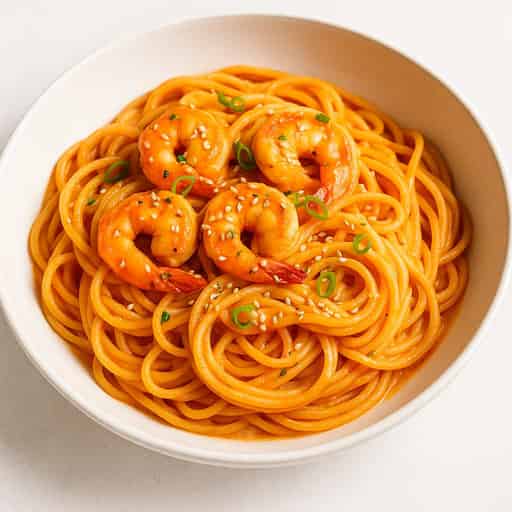
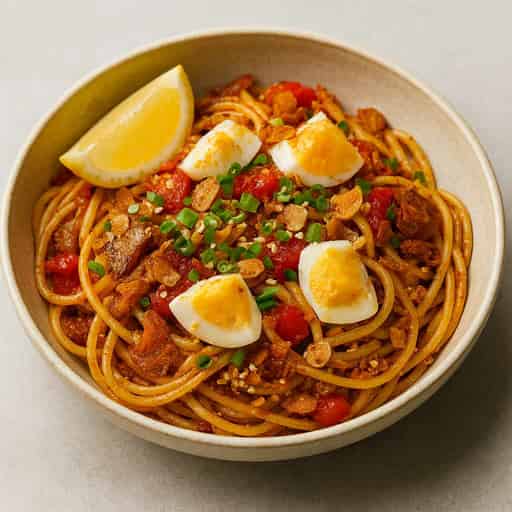
Make Filipino pancit palabok with rice noodles, a savoury annatto shrimp sauce, pork, and classic egg, chicharon, and calamansi toppings.
Prep time
30 min
Cook time
40 min
Total time
1 hr 10 min
Servings
6
Time Plan
55 min active · 1 hr 10 min total
- Prepare the toppings15 min
Recipe Snapshot
DifficultyMedium
MealLunch / Dinner
CuisineFilipino
Chef's Tips
Bloom the annatto in warm oil over low heat; high heat can make the colour and flavour taste harsh.
Add the slurry gradually and stop when the sauce coats a spoon, as it will thicken further while standing.
Keep the sauce, noodles, and crisp toppings separate until serving for the best texture.
Tools Used
We use affiliate links, which may earn us a small commission at no extra cost to you.
Ingredients
Ingredients
Servings
6 servings1×
Scale
Ingredient amounts update instantly.
Palabok Sauce
Rice Noodles
Toppings And Finish
Instructions
Palabok Sauce
- 1
Warm the oil in a large sauté pan over low heat. Stir in the annatto powder for 30 seconds until the oil turns bright orange, then add the garlic and onion. Cook for 3 to 4 minutes until softened and fragrant.
- 2
Add the ground pork and cook, breaking it up, until no pink remains. Pour in the stock and fish sauce, then add the tinapa flakes if using. Simmer for 8 to 10 minutes so the pork and smoky fish flavour the broth.
- 3
Whisk the cornstarch and cold water until completely smooth. Stir it into the simmering sauce a little at a time, then cook for 2 to 3 minutes until the sauce is glossy and thick enough to coat a spoon. Season with sugar and pepper; add more fish sauce only after tasting.
Rice Noodles
- 1
Soak or cook the rice noodles according to the packet directions until tender but still springy. Drain very well, then toss with a few spoonfuls of sauce so the strands do not clump while you finish the platter.
Toppings and Finish
- 1
Arrange the noodles on a warm serving platter and spoon over enough sauce to coat them generously. Reserve a little extra sauce for the table.
- 2
Scatter the shrimp, egg, chicharon, toasted garlic, and spring onions across the top. Serve straight away with calamansi halves for squeezing over each portion.
Plan This Recipe
Save this recipe to one of your meal plans or browse your existing plans.
Learn More
Everything you want to know about this recipe.
Filipino Pancit Palabok Noodles
Filipino Pancit Palabok Noodles
Pancit palabok is a Filipino noodle dish built around contrast: tender rice noodles, a savoury orange annatto sauce, and a generous layer of shrimp, egg, chicharon, toasted garlic, and calamansi. The sauce is what makes the dish unmistakable. It should be rich enough to cling to the noodles, but still loose enough to settle between the strands rather than turning into a paste.
This version is the broader, classic pork-and-shrimp style for a family meal or sharing platter. It keeps the ingredient list approachable by using ready-made stock, while annatto, fish sauce, optional tinapa, and the toppings give it the depth readers expect. For a more seafood-led variation with a stronger shrimp-and-tinapa focus, see the separate shrimp-and-tinapa palabok recipe.
Build a Sauce That Coats the Noodles
Build a Sauce That Coats the Noodles
Start the annatto gently. The powder needs only a short bloom in warm oil to release its orange colour; if it gets too hot, it can taste harsh. Garlic and onion follow, then ground pork. Browning the pork first creates a fuller base for the stock and means the sauce carries flavour rather than relying only on salt.
Cornstarch is what gives palabok sauce its familiar sheen. Always mix it with cold water before it reaches the pan, then add it gradually to a simmering sauce. Stop when it coats a spoon: the sauce will tighten a little as it cools, and it needs to stay spoonable enough to spread through the noodles.
Tinapa is optional here because it is not equally easy to find everywhere, but a small amount adds the smokiness that many people associate with special-occasion palabok. If you cannot find it, use a good shrimp, fish, or chicken stock and finish each plate with extra calamansi instead of trying to replace it with an unrelated smoked ingredient.
Cook and Assemble the Noodles
Cook and Assemble the Noodles
Rice noodles are easiest to manage when the sauce and toppings are ready first. Follow the packet method because fine bihon and thicker palabok noodles can need different soaking times. Drain them thoroughly, then toss them with a few spoonfuls of sauce. This keeps the noodles separated without soaking them before they reach the table.
Spread the noodles on a warm platter, pour over the remaining sauce, and add the toppings just before serving. The egg makes the dish more substantial, chicharon provides crunch, and toasted garlic gives every forkful a fragrant savoury note. Calamansi is not just garnish: its tartness cuts through the sauce and brings the seafood and pork flavours into focus. Lime is the closest practical substitute.
Make-Ahead and Storage
Make-Ahead and Storage
The sauce and toppings can be prepared up to one day ahead. Cool the sauce promptly, refrigerate it in a covered container, and reheat it gently with a splash of stock or water if it has thickened too much. Keep the cooked noodles separate whenever possible. They are best freshly cooked, but can be refreshed quickly in hot water, drained, and sauced at serving time.
Assembled leftovers will soften as the noodles absorb the sauce, so they are better reheated as a single quick lunch than held for a party. Store them chilled and use within two days. Reheat only until hot, then add fresh calamansi and a little extra toasted garlic or chicharon to restore contrast.
Common Palabok Problems
Common Palabok Problems
If the sauce is pasty, whisk in hot stock a tablespoon at a time until it loosens. If it tastes flat, add calamansi first, then taste before reaching for more fish sauce. If the noodles clump, they were likely drained and left too long without sauce; toss them immediately with a little warm sauce next time.
Serving Guidance
Serving Guidance
One-sixth of the platter is a satisfying main-course serving, with shrimp, pork, egg, and noodles in the same bowl. It is naturally a richer, higher-sodium celebration dish, so a crisp cucumber salad, steamed greens, or fresh fruit makes a useful side rather than adding more fried toppings. The nutrition is an estimate and varies with the stock, chicharon, and amount of sauce served.
Nutrition Facts
Nutrition Facts
Serving Size: 1 plated portion
Calories 53527%
% Reference Intake*
Total Fat 20g29%
Saturated Fat 6g30%
Trans Fat 0g
Cholesterol 165mg
Sodium 1250mg
Total Carbohydrates 60g23%
Dietary Fiber 2g
Sugars 4g4%
Protein 31g62%
* Reference intakes are based on an average adult's 8,400 kJ / 2,000 kcal diet. Your needs may be higher or lower.
FAQs
What noodles are best for pancit palabok?
Thin rice noodles, often sold as bihon or palabok noodles, are the usual choice. Cook only until tender and drain well so they can absorb the sauce without becoming soft.
What is the difference between palabok and pancit Malabon?
Palabok generally uses finer rice noodles and a smoother, lighter annatto sauce. Pancit Malabon is usually more seafood-forward, uses thicker noodles, and has a heavier sauce and topping mix.
Can I make palabok ahead?
Yes. Make the sauce and prepare the toppings up to one day ahead, then refrigerate them separately. Reheat the sauce gently and cook or refresh the noodles shortly before serving.
How can I make this pork-free?
Omit the ground pork and chicharon, use mushroom crisps or extra toasted garlic for crunch, and use a seafood or vegetable stock that fits your preferred diet.
Community Reviews
See how other home cooks made this recipe, then share your own experience.
4.6
7 ratings
5
57%
4
43%
3
0%
2
0%
1
0%
How would you rate this recipe?
Share your experience and help others.
Paolo C.
· 22 Sept 2026Keeping the sauce separate until lunch made a big difference—the noodles stayed springy and the toppings stayed crisp.
Sophia R.
· 7 Aug 2025The flavors were so comforting. I used lime instead of calamansi and it still worked perfectly.
Daniel P.
· 6 May 2025I served this at a birthday party and it was the first dish to run out. Next time I’ll double the recipe.
Ana V.
· 5 Jun 2024I tried the vegetarian version with mushroom chips and it turned out amazing.
Jerome T.
· 4 Apr 2024Super helpful for potluck parties! Quick to prepare once the stock is ready.
Liza M.
· 3 Dec 2023This brought back memories of home. I added extra tinapa flakes for a smokier flavor.
Kevin L.
· 2 Aug 2023Really appreciated the tip about using chicken stock. Worked well for my allergy and still tasted authentic.
Maria D.
· 1 May 2023I made this for a weekend family gathering and everyone loved it. The sauce was spot on.
Browse this topic
Create Your Own Recipe
Add your personal creations and build your own recipe collection.