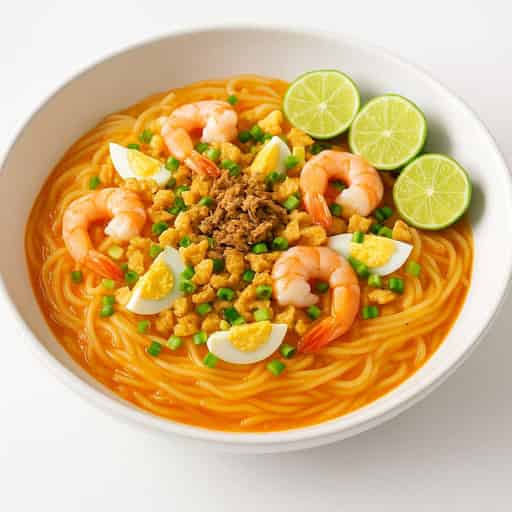
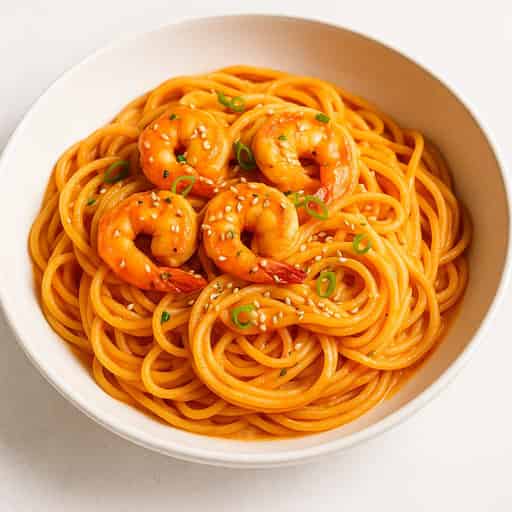
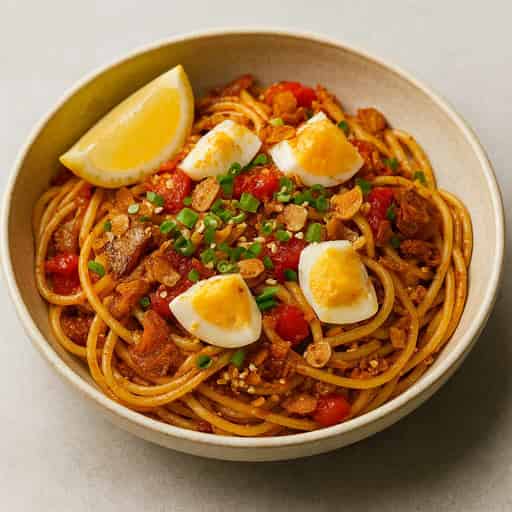
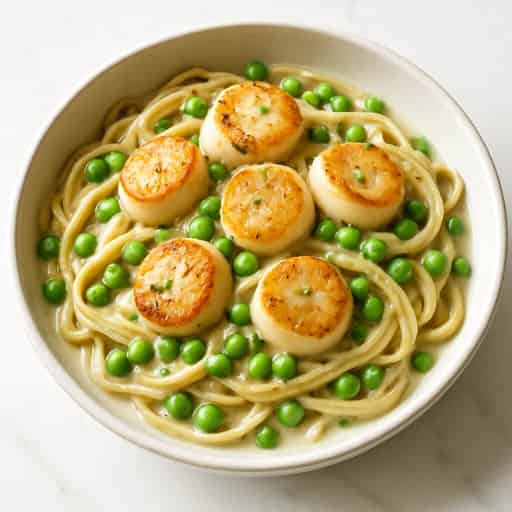
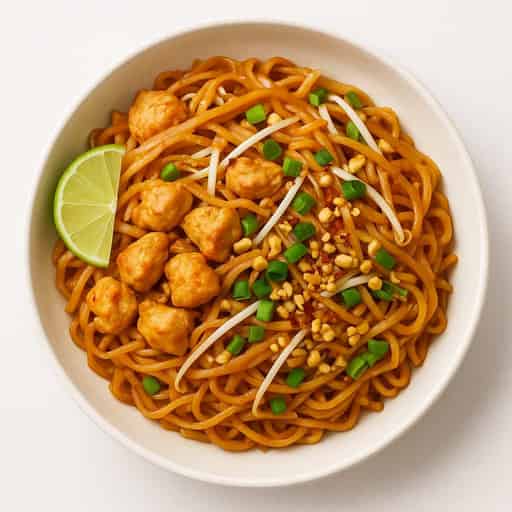
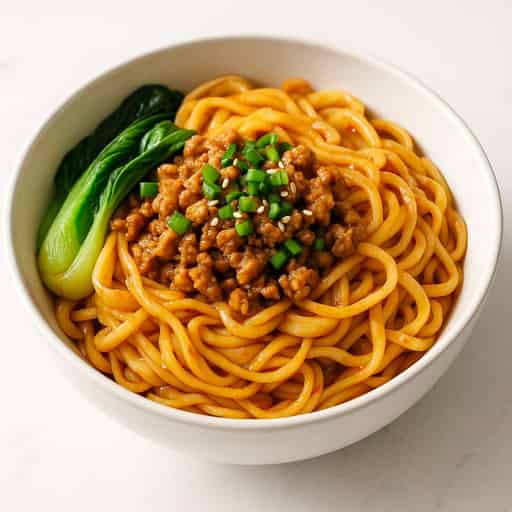
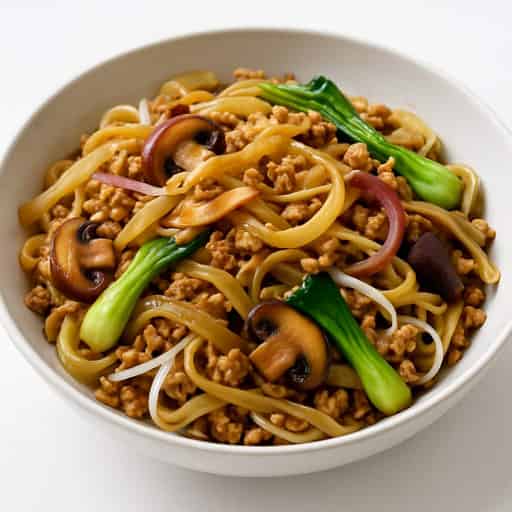
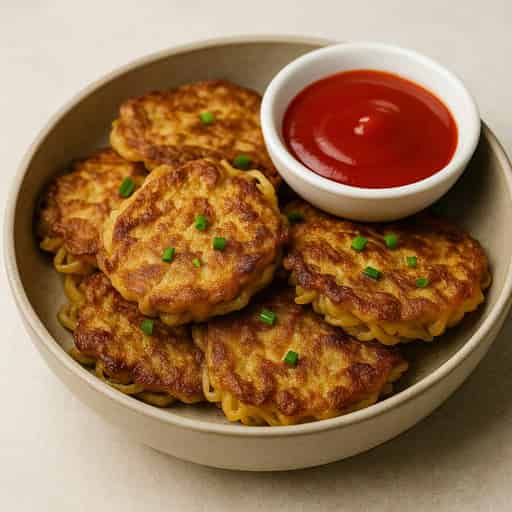
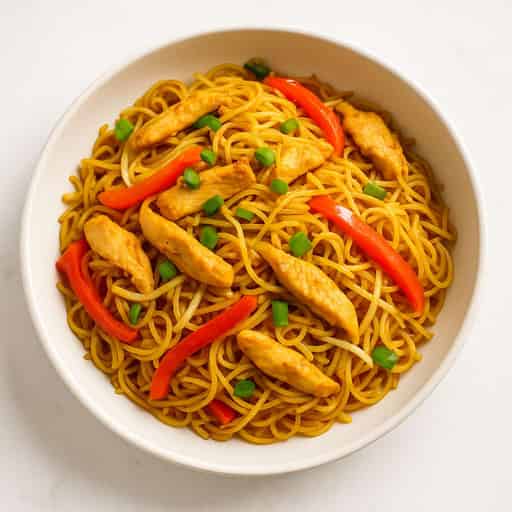
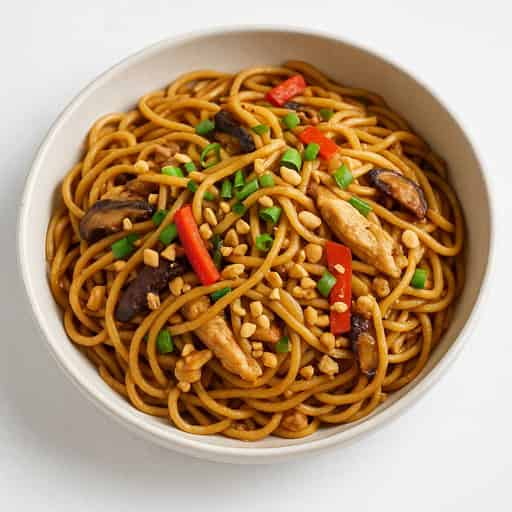
Filipino pancit palabok with shrimp stock, annatto sauce, and smoky tinapa, finished with eggs, chicharon, garlic, and spring onions. A more topping-rich palabok variation built for shrimp and smoked fish flavour.
Prep time
20 min
Cook time
25 min
Total time
45 min
Servings
6
Chef's Tips
For vibrant colour, bloom annatto (atsuete) in warm oil before adding liquids.
Keep the sauce thick enough to cling—start with half the slurry and add more as needed.
Don’t overcook the shrimp; remove as soon as they turn opaque and pink.
Swap pork chicharon with mushroom chicharon or toasted garlic for pork-free.
Tools Used
We use affiliate links, which may earn us a small commission at no extra cost to you.
Ingredients
Ingredients
Servings
6 servings1×
Scale
Ingredient amounts update instantly.
Noodles
Annatto Oil And Stock
Aromatics & Tinapa
Slurry & Seasoning
Toppings
Instructions
Make Annatto Oil and Stock
- 1
Warm oil over low heat; stir in annatto powder until the oil turns bright orange. Set aside.
- 2
Sauté shrimp shells in a dry pan, add half the achuete oil, then pour in stock and water; season with patis and simmer 5 minutes. Strain.
Build the Sauce
- 1
In a casserole, sauté garlic and onion in the remaining achuete oil until fragrant.
- 2
Add tinapa flakes; cook 1 minute.
- 3
Whisk cornstarch, flour, and water into a smooth slurry. Pour strained stock into the casserole and bring to a simmer.
- 4
Whisk in the slurry gradually until the sauce is thick enough to coat a spoon.
- 5
Season with chicken powder, sugar, and pepper. Adjust patis to taste.
Cook Noodles
- 1
Soak or parboil noodles per pack directions, then drain well.
- 2
Toss noodles with a ladle of sauce so they won’t stick.
Finish & Serve
- 1
Arrange noodles on a platter. Pour more palabok sauce over the top.
- 2
Add eggs, shrimp, chicharon, toasted garlic, and spring onions.
- 3
Drizzle calamansi juice just before serving.
Plan This Recipe
Save this recipe to one of your meal plans or browse your existing plans.
Learn More
Everything you want to know about this recipe.
Pancit Palabok with Shrimp and Tinapa
Pancit Palabok with Shrimp and Tinapa
This pancit palabok keeps the familiar structure of a Filipino palabok recipe but pushes the seafood depth a little further with shrimp stock and tinapa flakes in the sauce. The annatto gives the sauce its classic colour, while the toppings keep each plate textured with shrimp, egg, chicharon, spring onions, and toasted garlic.
Because there is already a broader palabok recipe page in the site, this
version works best as the more specific shrimp-and-tinapa variation. That makes
the page easier to rank for the long-tail search intent without fighting the
generic palabok page for the same query.
Why This Recipe Works
Why This Recipe Works
Shrimp stock gives the sauce its base flavour, but the tinapa is what makes the profile taste deeper and smokier. That combination helps the palabok sauce feel more layered than recipes that rely only on bouillon and annatto.
The sauce is also thickened gradually so it clings to the noodles rather than pooling underneath them. That is important for palabok because the noodles need to hold the topping-rich sauce without turning gluey.
Ingredient Notes
Ingredient Notes
Bihon or sotanghon can both work here, depending on the texture you want. Bihon keeps the dish closer to the standard pancit palabok feel, while sotanghon gives it a slightly lighter bite.
Tinapa flakes add the smoky edge, while fish sauce sharpens the savoury note of the sauce. Calamansi matters at the end because a little acidity helps cut through the richer stock, chicharon, and egg toppings.
How to Make It
How to Make It
Start by making the annatto oil and the quick shrimp stock so the sauce has its colour and seafood base ready first. After that, build the sauce with garlic, onion, tinapa, and the strained stock, then thicken it gradually with the slurry until it coats a spoon.
Cook the noodles separately, drain them well, and toss them with a little sauce right away so they do not stick together. From there, assemble the platter with more sauce on top and finish with shrimp, egg, chicharon, toasted garlic, and spring onions.
Tips, Storage, and Variations
Tips, Storage, and Variations
If you are making this ahead, keep the noodles, sauce, and toppings separate until serving. That gives you a better chance of reheating the sauce without over-softening the noodles.
For a quicker version, use bottled stock and let the fish sauce and tinapa do more of the flavour work. If you need a pork-free topping, skip the chicharon and use extra toasted garlic or a crisp mushroom topping instead.
Serving & Goal Fit
Serving & Goal Fit
One serving is one sixth of the recipe. For a training day, add a piece of fruit on the side or keep the noodle portion generous, since palabok is already the main carbohydrate source here.
For a rest day, keep the same portion and go a little lighter on the chicharon if you want to trim the richness. Shrimp is the main protein here, but tofu or extra egg can help if you want to stretch the dish for a mixed table, and spinach, green beans, or tenderstem broccoli can work as side vegetables rather than additions to the palabok itself.
- 25g white sugar
- 1g freshly ground black pepper
Toppings
- 3 hard-boiled eggs, sliced
- 250g boiled shrimp, peeled
- 60g chicharon crumbs
- 2 tbsp toasted garlic
- 30g spring onions, chopped
- 30ml calamansi juice (or lemon as substitute)
🍳 Instructions
🍳 Instructions
1. Make Achuete Oil & Stock
- Warm oil over low heat, stir in annatto powder until oil turns bright orange. Set aside.
- In a dry pan, sauté shrimp shells. Add half of the achuete oil, then pour in stock and water. Season with patis and simmer 5 minutes. Strain and reserve the stock.
2. Build the Sauce
- In a casserole, sauté garlic and onion in the remaining achuete oil until fragrant.
- Add tinapa flakes and cook for 1 minute.
- Whisk together cornstarch, flour, and water to make a smooth slurry.
- Pour in the strained stock and bring to a simmer.
- Slowly whisk in the slurry until thickened.
- Add chicken powder, sugar, and black pepper. Taste and adjust seasoning with more patis if needed.
3. Cook Noodles
- Soak or parboil the noodles based on package instructions.
- Drain well and toss with a little sauce to prevent sticking.
4. Finish & Serve
- Arrange noodles on a large platter. Pour palabok sauce generously over the top.
- Garnish with sliced eggs, shrimp, chicharon, toasted garlic, and spring onions.
- Drizzle with calamansi juice just before serving.
💡 Tips & Tricks
💡 Tips & Tricks
- Bloom annatto in warm oil to extract its colour fully.
- Use only half the slurry first—thicken gradually.
- Don’t overcook the shrimp—pull them as soon as they turn pink.
- Mushroom chicharon or toasted garlic make great pork-free alternatives.
❓ FAQ
❓ FAQ
Can I use spaghetti instead of rice noodles?
Yes! Just cook it al dente and toss with a little oil before adding sauce to keep the strands bouncy.
No time for homemade stock?
Use bottled stock or bouillon. Just boost the flavour with extra patis and tinapa.
Pork-free alternative to chicharon?
Use mushroom chicharon or extra toasted garlic for that same crunchy topping.
🔥 Nutrition (per serving)
🔥 Nutrition (per serving)
485 kcal · 25g protein · 15g fat · 65g carbs
Sodium: 1380mg · Sugar: 6g · Fiber: 2g
Nutrition Facts
Nutrition Facts
Serving Size: 1 plated portion (about 330g)
Calories 48524%
% Reference Intake*
Total Fat 15g21%
Saturated Fat 3g15%
Trans Fat 0g
Cholesterol 145mg
Sodium 1380mg
Total Carbohydrates 65g25%
Dietary Fiber 2g
Sugars 6g7%
Protein 25g50%
* Reference intakes are based on an average adult's 8,400 kJ / 2,000 kcal diet. Your needs may be higher or lower.
FAQs
Can I use spaghetti instead of rice noodles?
Yes—cook spaghetti al dente, drain well, and toss with a little oil before saucing so it stays bouncy.
No time for homemade stock?
Use good-quality bottled stock or broth cubes; keep patis and tinapa to layer back seafood depth.
Pork-free alternative to chicharon?
Use mushroom chicharon or double the toasted garlic for crunch.
Community Reviews
See how other home cooks made this recipe, then share your own experience.
4.6
5 ratings
5
60%
4
40%
3
0%
2
0%
1
0%
How would you rate this recipe?
Share your experience and help others.
Mae
· 21 Jun 2026Good make-ahead noodles for a family lunch. I prepped the toppings first and reheated the sauce gently before assembling.
Paolo
· 8 Mar 2026I kept the shrimp stock and tinapa together and that gave the sauce much more depth than the usual quick palabok shortcut.
Rhea
· 12 Nov 2025Used spaghetti in a pinch and it still slapped. Great for potlucks!
Anton
· 12 Nov 2025Swapped chicharon with crispy mushrooms—solid hack. Added extra calamansi for brightness.
Mariel
· 12 Nov 2025Sauce consistency was perfect—really clung to the bihon. Tinapa made it legit!
Create Your Own Recipe
Add your personal creations and build your own recipe collection.