18 September 2026
Make-Ahead Holiday Brisket with Red Wine and Apricots
RecipeShare Test Kitchen
4.8(8 ratings)
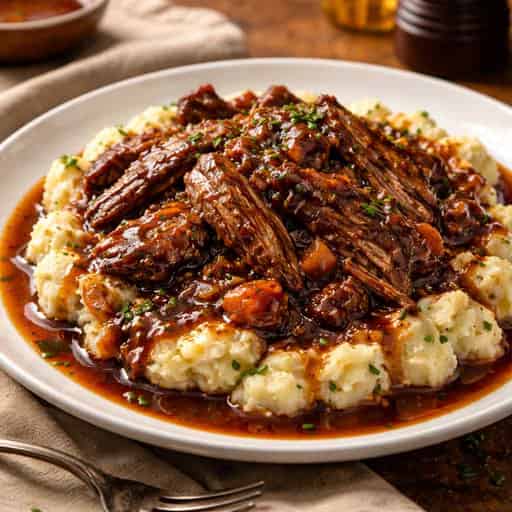
This make-ahead holiday brisket braises slowly with red wine, apricot preserves, prunes, and root vegetables. Chill, slice, and reheat it in its rich jus for tender, stress-free serving.
Prep time
25 min
Cook time
4 hr
Total time
4 hr 25 min
Servings
8
Recipe Snapshot
DifficultyMedium
MealDinner
Meal PrepExcellent
Freezer FriendlyYes
Family FriendlyYes
Chef's Tips
Brisket is ready when a fork twists easily in the thickest part. Time is a guide; continue braising if the meat still feels tight.
For the neatest slices, cool the brisket in its jus, chill overnight, then slice it cold against the grain before reheating.
Keep the vegetables in large pieces and arrange them around, not on top of, the brisket so they braise rather than disintegrate.
Use unsalted or low-salt stock if possible. The sauce concentrates during the final reheat.
Tools Used
We use affiliate links, which may earn us a small commission at no extra cost to you.
Ingredients
Ingredients
Servings
8 servings1×
Scale
Ingredient amounts update instantly.
Brisket And Seasoning
Vegetables And Aromatics
Braising Liquid
To Finish
Instructions
Season and Assemble
- 1
Heat the oven to 160C conventional / 140C fan (320F). Pat the brisket dry. Rub it all over with the oil, salt, pepper, paprika, garlic powder, onion powder, allspice, Dijon, and apricot preserves.
- 2
Set the brisket in a Dutch oven or lidded roasting pan. Arrange the potatoes, sweet potatoes, shallots, carrots, celeriac, and garlic around it in an even layer.
Braise Until Tender
- 1
Pour the wine and stock around the brisket, then add the prunes and herb bundle. Cover tightly and braise for 3 1/2 to 4 hours, turning the brisket once halfway through if practical.
- 2
The brisket is ready when a fork turns easily in the thickest part. If it is still firm, cover and continue cooking in 20-minute intervals.
Rest, Slice, and Finish
- 1
Transfer the brisket to a board and rest for 15 minutes. Slice thinly against the grain, then return the slices to the braising liquid.
- 2
Uncover and return the pot to the oven for 20 to 30 minutes, until the sauce is glossy and the slices are hot. Scatter with parsley and pomegranate seeds, if using.
Make Ahead Option
- 1
For the best make-ahead texture, cool the brisket in its liquid, cover, and refrigerate overnight. Slice cold, return the slices to the jus, cover, and reheat at 160C conventional / 140C fan until piping hot.
Plan This Recipe
Save this recipe to one of your meal plans or browse your existing plans.
Learn More
Everything you want to know about this recipe.
Make-Ahead Holiday Brisket with Red Wine and Apricots
Make-Ahead Holiday Brisket with Red Wine and Apricots
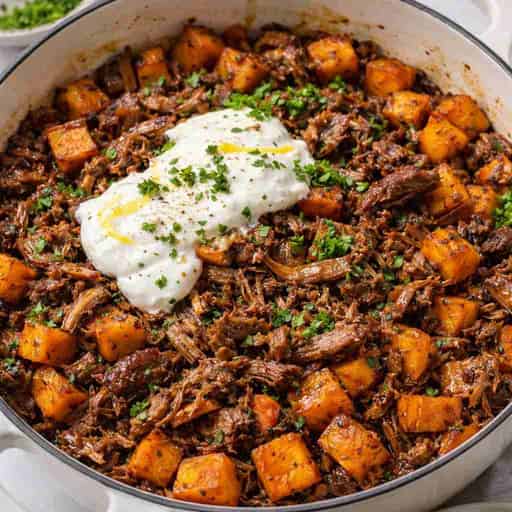
This holiday brisket is designed for the part of hosting that matters most: getting a tender, generous main on the table without last-minute carving stress. The brisket braises slowly in red wine and stock with apricot preserves, prunes, aromatics, and root vegetables. It is even better when cooked a day ahead, chilled in its jus, sliced cold, and reheated gently.
The flavour is savory first, with a restrained fruit sweetness that rounds out the wine and beef. It works beautifully for Rosh Hashanah, but it is equally at home at a winter gathering or any relaxed holiday dinner.
Why This Brisket Works
Brisket needs moist, gentle heat long enough for its connective tissue to melt. The covered braise keeps the cooking environment humid while the stock and wine become a sauce. Do not judge doneness by time alone: when the meat is ready, a fork should turn with little resistance in the thickest section.
Apricot preserves and prunes bring fruit, body, and a subtle caramel note to the braising liquid. They balance the wine without making the sauce sweet. Keeping the vegetables in large pieces lets them absorb the jus while still holding their shape on the serving platter.
Flat or Point Brisket?
Use a brisket flat, also called first cut, when you want tidy, even slices. It is leaner and benefits most from being reheated in plenty of sauce. The point is fattier and more forgiving, with rich flavour, but it is more likely to shred. Either cut works if it is cooked until fork-tender and sliced across the grain.
The Make-Ahead Method
Cooking brisket a day ahead is a technique, not merely a convenience. Once the meat is chilled, it firms enough to slice thinly without tearing. The flavour also settles into the meat while it rests in the braising liquid.
Cool the pot promptly, refrigerate the brisket in its jus overnight, then lift off any firm fat from the surface if desired. Slice the cold brisket against the grain, return it to the sauce, and reheat covered until hot. Uncover only at the end if the sauce needs reducing.
Serving and Leftovers
Serve the brisket with its root vegetables and plenty of jus. A crisp, acidic salad or a sharp pickle is useful alongside the rich sauce. For a fuller holiday spread, add a sauce such as Cranberry-Orange Sauce and a simple green vegetable.
Store leftovers covered in sauce for up to 4 days. Freeze cooled portions with enough jus to cover the meat; the sauce protects the slices as they reheat. Thaw overnight in the refrigerator and warm gently, covered, until piping hot.
Nutrition Facts
Nutrition Facts
Serving Size: 1/8 recipe, with vegetables and braising jus
Calories 60030%
% Reference Intake*
Total Fat 27g39%
Saturated Fat 9g45%
Trans Fat 0g
Cholesterol 110mg
Sodium 650mg
Total Carbohydrates 52g20%
Dietary Fiber 7g
Sugars 15g17%
Protein 40g80%
* Reference intakes are based on an average adult's 8,400 kJ / 2,000 kcal diet. Your needs may be higher or lower.
FAQs
Do I need to sear the brisket first?
No. The seasoned brisket develops depth during the long covered braise and final uncovered reduction. You can sear it first for extra browned flavour, but allow extra time and use the same pot.
What cut of brisket is best for slicing?
The flat, sometimes called first cut, slices neatly and is the best choice for this presentation. The point is fattier and more likely to shred.
Can I make this brisket without wine?
Yes. Replace the wine with more stock and add 1 to 2 tablespoons balsamic vinegar or pomegranate molasses for acidity and depth.
How long does leftover brisket keep?
Refrigerate sliced brisket covered in its jus for up to 4 days. Freeze it in the cooled sauce for up to 3 months, then thaw overnight before reheating gently.
Community Reviews
See how other home cooks made this recipe, then share your own experience.
4.8
8 ratings
5
75%
4
25%
3
0%
2
0%
1
0%
How would you rate this recipe?
Share your experience and help others.
Miriam F.
· 21 Aug 2026I used low-salt stock and the final sauce was well balanced. The apricot and prunes added gentle sweetness without making it taste like dessert.
Jonah S.
· 3 Apr 2026The fork-tender cue was more useful than following the clock. Mine needed another 20 minutes and came out exactly right.
Claire M.
· 11 Jan 2026Chilling it overnight made slicing so much easier. I reheated the slices in the sauce for a family lunch and they were exceptionally tender.
Sara G.
· 14 Oct 2025Veg stayed perfect in big chunks and the roasted garlic over slices—wow.
Avi
· 14 Oct 2025Point cut shredded a bit but was insanely juicy. Next time I’ll use flat for slices.
Maya
· 14 Oct 2025Skipped wine and used pomegranate molasses—still rich and balanced.
Daniel K.
· 14 Oct 2025I seared first for extra crust; came out restaurant-level. Keeper.
Leah R.
· 14 Oct 2025Made it for Erev Rosh Hashanah—so tender and the prunes were a great touch!
Create Your Own Recipe
Add your personal creations and build your own recipe collection.