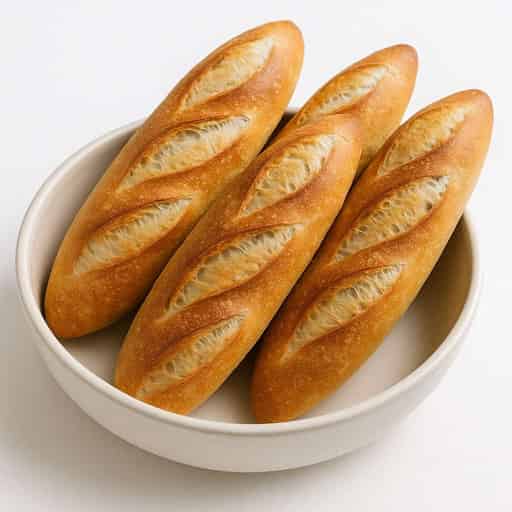
A traditional French baguette made with slow fermentation for a crisp crust, airy crumb, and developed wheat flavor. Makes 8 slim loaves.
Prep time
30 min
Cook time
12 min
Total time
30 hr
Servings
8
Chef's Tips
Use a baking stone or steel for superior oven spring.
Steam the oven in the first 5 minutes for a shinier crust.
Allow the baked baguettes to cool fully to set the crumb.
Tools Used
We use affiliate links, which may earn us a small commission at no extra cost to you.
Ingredients
Ingredients
Servings
8 servings1×
Scale
Ingredient amounts update instantly.
Dough
Instructions
Kneading
- 1
Mix flour and water in a stand mixer with a dough hook for 3 minutes on low.
- 2
Cover with plastic wrap touching the surface and rest for 2 hours at room temperature.
- 3
Add salt and yeast separately and knead 4 minutes on low.
- 4
Add liquid starter and the extra water, then knead 8 minutes more.
- 5
Cover again with plastic wrap.
Proofing
- 1
Refrigerate the dough overnight at 3°C (40°F).
Shaping
- 1
Divide dough into eight 160 g pieces.
- 2
Shape each into a baguette.
- 3
Let rise for 45–60 minutes at room temperature.
Baking
- 1
Preheat oven to 250–260°C (480–500°F).
- 2
Bake for 10–12 minutes until golden with a crisp crust.
Plan This Recipe
Save this recipe to one of your meal plans or browse your existing plans.
Learn More
Everything you want to know about this recipe.
Classic French Baguettes
Classic French Baguettes
This slow-fermented dough creates a baguette with a crisp crust and a tender, airy crumb. With flour, water, salt, yeast, and a touch of liquid starter, the dough develops steady flavor without complicated handling.
The recipe is built for home bakers who want a practical long-fermentation baguette with clear kneading, chilling, shaping, and baking cues.
Why This Baguette Recipe Works
Why This Baguette Recipe Works
Slow-fermentation is the secret. Resting the dough for nearly 24 hours allows the yeast to work gradually, unlocking complex aromas and a subtle natural sweetness. Paired with proper kneading and shaping, the result is a baguette that’s light, crisp, and beautifully rustic.
The inclusion of a liquid starter brings even more depth—giving the baguettes that classic French character without needing complicated techniques.
What Makes These Baguettes Classic?
What Makes These Baguettes Classic?
- Minimal ingredients: Flour, salt, yeast, water—true to French tradition.
- Long rest: A cold ferment enhances the crumb and keeps the crust crisp.
- High heat bake: Essential for a crisp, well-set crust.
- Liquid starter: A subtle boost of tang and aroma.
Serve warm with salted butter, pair with cheeses, or slice for sandwiches—these baguettes are endlessly versatile.
Texture & Flavor Profile
Texture & Flavor Profile
- Crust: Thin, crackly, golden.
- Crumb: Open, airy, tender.
- Flavor: Mildly nutty with gentle fermentation notes.
- Aroma: Deeply wheaty, slightly sweet, naturally fragrant.
It is a flexible bread for everyday meals, sandwiches, and cheese boards.
Step-By-Step Overview
Step-By-Step Overview
Kneading
Proper development begins with an initial autolyse—a simple mix of flour and water that rests for two hours, improving gluten strength naturally. After that, the dough is kneaded with salt, yeast, and the liquid starter until smooth and elastic.
Proofing
A long overnight rest at 3°C (40°F) lets the dough mature slowly, improving texture and flavor. This cold fermentation is what gives bakery baguettes their magic.
Shaping
Dividing the dough into eight small loaves makes them practical for home ovens. Classic shaping creates surface tension that encourages oven spring.
Baking
A very hot oven (250-260°C) combined with steam produces a crackling crust. Eleven minutes is usually enough to bake them until golden.
Serving Ideas
Serving Ideas
- Warm with salted European butter
- Toasted slices for bruschetta
- Sandwiches with cured meats
- Paired with soups and stews
- Simple breakfast with jam and café au lait
Freshly baked baguettes work well with simple meals.
Tips for a Crisp Finish
Tips for a Crisp Finish
- Use a baking stone or steel for maximum heat retention.
- Steam the oven early to boost crust shine.
- Let the baguettes cool fully so the crumb sets properly.
A Bread Worth Practicing
A Bread Worth Practicing
Making French baguettes at home takes technique, patience, and simple ingredients. Whether you're baking for family, guests, or your own weekly routine, this recipe gives you repeatable steps and clear texture targets.
Let the loaves cool before slicing so the crumb finishes setting.
Nutrition Facts
Nutrition Facts
Serving Size: 1 baguette
Calories 1809%
% Reference Intake*
Total Fat 0.8g1%
Saturated Fat 0.1g1%
Trans Fat 0g
Cholesterol 0mg
Sodium 290mg
Total Carbohydrates 37g14%
Dietary Fiber 1.5g
Sugars 0.5g1%
Protein 6g12%
* Reference intakes are based on an average adult's 8,400 kJ / 2,000 kcal diet. Your needs may be higher or lower.
Community Reviews
See how other home cooks made this recipe, then share your own experience.
4.7
3 ratings
5
67%
4
33%
3
0%
2
0%
1
0%
How would you rate this recipe?
Share your experience and help others.
Lucia
· 1 May 2025Loved how simple the steps were—my first proper baguettes!
Marc
· 18 Apr 2025Great structure and aroma. I added a touch more hydration and it was perfect.
Sophie
· 2 Apr 2025Turned out beautifully crisp! The long fermentation really makes a difference.
Create Your Own Recipe
Add your personal creations and build your own recipe collection.