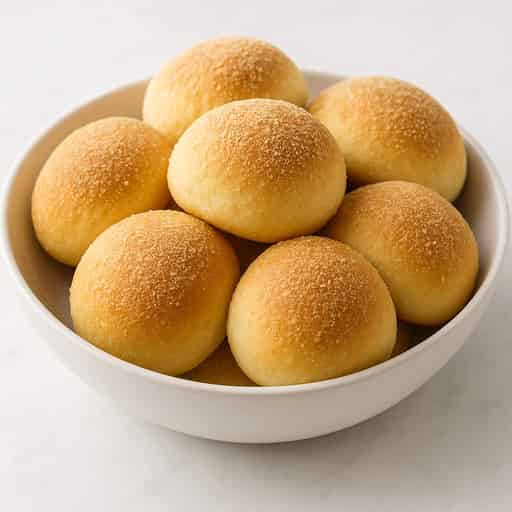
Make soft Filipino pandesal with a tender crumb and classic fine breadcrumb coating. Includes practical kneading, proofing, shaping, baking, and storage guidance.
Prep time
35 min
Cook time
20 min
Total time
3 hr 25 min
Servings
20
Time Plan
45 min active · 3 hr 25 min total
- First proof1 hr 30 min
- Final proof1 hr
Recipe Snapshot
DifficultyMedium
MealBreakfast / Snack
Meal PrepExcellent
Freezer FriendlyYes
Family FriendlyYes
CuisineFilipino
Chef's Tips
Weigh the flour and portions for more consistent rolls.
Do not keep adding flour to remove a little tackiness; kneading develops the dough.
Instant yeast is mixed directly into the dry ingredients and does not need blooming.
Let the dough rise by volume and texture rather than relying only on the clock.
Fine dry breadcrumbs give Pandesal its characteristic coating.
Cool completely before storing so condensation does not soften the crust.
Tools Used
Kitchen Scale(opens in a new tab)Mixing Bowl(opens in a new tab)Dough ScraperBaking Tray(opens in a new tab)Parchment Paper(opens in a new tab)Oven
We use affiliate links, which may earn us a small commission at no extra cost to you.
Ingredients
Ingredients
Servings
20 servings1×
Scale
Ingredient amounts update instantly.
Dough
Breadcrumb Coating
Instructions
Mix and Knead the Dough
- 1
Combine the bread flour, sugar, instant yeast, and salt in a large mixing bowl. Instant yeast can be added directly without blooming.
- 2
Add the water, milk, whole egg, and egg yolk. Mix until a shaggy dough forms, then knead until the dough begins to look smooth.
- 3
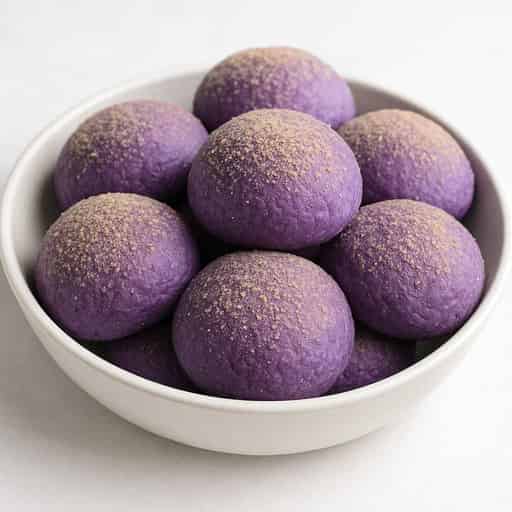
Add the softened butter in small pieces, kneading after each addition. Continue kneading by hand for about 12-15 minutes, or with a dough hook until the dough is smooth, elastic, and only slightly tacky. Mix in the optional ube essence with the liquids if using.
- 4
The dough should stretch thin enough for light to pass through before tearing, although it does not need to form a perfectly transparent windowpane. If it feels tacky, keep kneading before adding flour.
First Proof
- 1
Shape the dough into a ball and place it in a lightly greased bowl. Cover and leave at room temperature for about 60-90 minutes, until visibly puffy and close to doubled. A cool kitchen may take longer.
Shape and Coat
- 1
Deflate the dough gently and divide it into 20 equal pieces of about 54 g each. Shape each piece into a smooth ball by drawing the surface tight underneath.
- 2
Roll each dough ball in the fine dry breadcrumbs, pressing lightly so the coating adheres. The breadcrumbs are part of the classic Pandesal finish, not just a decoration.
Final Proof
- 1
Arrange the coated rolls on a parchment-lined baking tray, leaving room for expansion. Cover loosely and proof for about 45-75 minutes, until substantially puffed and light. A gentle indentation should spring back slowly rather than immediately disappearing.
Bake
- 1
Preheat the oven to 180°C conventional (350°F), or 160°C fan.
- 2
Bake for 15-20 minutes, until the rolls are lightly golden, feel set, and reach about 93-96°C in the centre if checked with a thermometer. Do not wait for deep browning, which can dry the crumb.
- 3
Cool on the tray for a few minutes, then transfer to a rack. Cool completely before storing.
Plan This Recipe
Save this recipe to one of your meal plans or browse your existing plans.
Learn More
Everything you want to know about this recipe.
What Is Pandesal?
What Is Pandesal?
Pandesal, also written pan de sal, is the classic Filipino bread roll. It has a soft, lightly enriched crumb and a fine breadcrumb coating, and is commonly served for breakfast or merienda with coffee, butter, cheese, eggs, or a savoury filling. Although pan de sal literally means "salt bread" in Spanish, modern Filipino pandesal is usually mildly sweet rather than distinctly salty.
This RecipeShare version is adapted from Chef RV Manabat's Pandesal demonstration, with the original source retained above. The page focuses on the classic plain roll; ube essence is listed only as an optional flavour variation.
How the Dough Should Feel
How the Dough Should Feel
This is a soft enriched dough, so it may feel slightly tacky while you knead. That is different from being loose or pourable. Butter and the egg make the dough supple, while bread flour provides enough gluten strength for the rolls to hold their shape.
Knead until the surface becomes smoother and the dough stretches without tearing immediately. A partial windowpane is a useful check: you should be able to pull a small piece thin enough for light to show through before it breaks. If the dough is tacky but elastic, resist adding flour. Continued kneading, a short rest, or lightly oiled hands is usually more helpful than repeatedly dusting in flour.
Proofing and Shaping Cues
Proofing and Shaping Cues
The first proof is ready when the dough is visibly puffy and close to doubled, not simply when a fixed number of minutes has passed. Yeast works more slowly in a cool room. If the dough looks extremely inflated and fragile or collapses when moved, it may have gone too far.
The recipe yields 20 rolls of approximately 54 g dough each. Shape each portion into a smooth, tight ball before coating it in fine dry breadcrumbs. Fine crumbs cling more evenly and give a more familiar Pandesal texture than coarse crumbs. The final proof is complete when the rolls look light and aerated; a gentle finger indentation should return slowly.
Troubleshooting
Troubleshooting
Why did my Pandesal stay dense?
The most likely causes are inactive yeast, insufficient kneading, a short first proof, or too much flour. Check that the yeast is within date, keep the liquids below about 30°C, and judge the dough by its volume and elasticity rather than adding flour until it feels dry.
Why did the dough not rise?
Give it more time if the kitchen is cool. If there is still no visible activity, the yeast may be inactive or the liquid may have been too hot. Salt should be mixed through the flour rather than placed directly against a concentrated yeast patch.
Why is my Pandesal dry?
Excess flour and overbaking are the usual causes. Pandesal should be lightly golden and set, not deeply browned. Measure the flour by weight where possible, and store the cooled rolls airtight rather than uncovered.
Why is my dough too sticky?
Slight tackiness is expected. Knead for longer, rest the dough briefly, or lightly oil your hands and work surface. Add flour only if the dough remains unmanageably wet after gluten development.
Storage and Reheating
Storage and Reheating
Cool the rolls completely before storing them airtight at room temperature for up to 3 days. Refrigeration can make bread stale faster, so use it only when necessary. For longer storage, freeze the cooled rolls in an airtight bag or container and thaw at room temperature.
Warm a roll briefly in the microwave for softness, or reheat it in a low oven or air fryer when you want to refresh the crumb and coating. Avoid overheating, which can make the bread rubbery or dry.
Where This Recipe Fits
Where This Recipe Fits
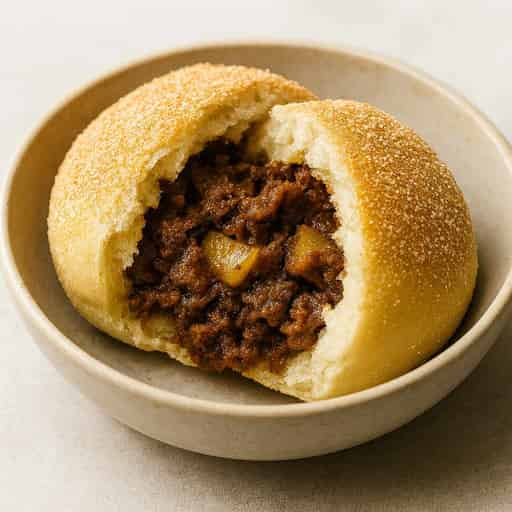
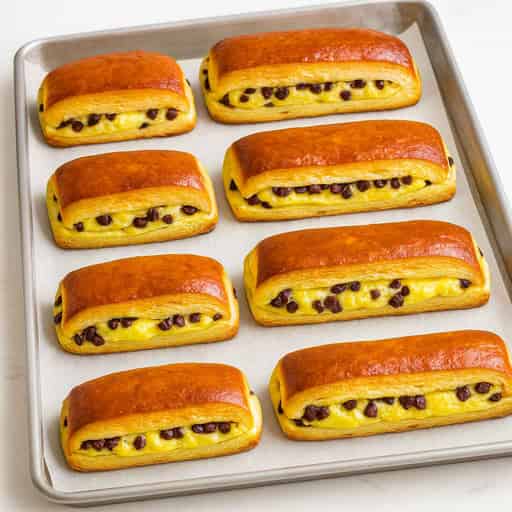
This is the plain, breadcrumb-coated Pandesal dough to use as a starting point. For a savoury stuffed version, try Corned Beef Pandesal. For a sweeter Filipino bread with a buttery breadcrumb filling, see Soft and Buttery Filipino Spanish Bread. For a richer, celebratory bread with a topping, compare it with Special Ensaymada.
For more Filipino bakery staples, browse the Filipino Bakery Classics collection.
Nutrition Facts
Nutrition Facts
Serving Size: 1 roll
Calories 1859%
% Reference Intake*
Total Fat 4g6%
Saturated Fat 2g10%
Trans Fat 0g
Cholesterol 19mg
Sodium 180mg
Total Carbohydrates 32g12%
Dietary Fiber 1g
Sugars 5g6%
Protein 5g10%
* Reference intakes are based on an average adult's 8,400 kJ / 2,000 kcal diet. Your needs may be higher or lower.
Community Reviews
See how other home cooks made this recipe, then share your own experience.
4.8
11 ratings
5
82%
4
18%
3
0%
2
0%
1
0%
How would you rate this recipe?
Share your experience and help others.
Isabel R.
· 22 Jul 2026The proofing cues were more useful than a fixed timer because my kitchen was cool. The rolls rose well and froze successfully after baking.
Marco L.
· 7 Feb 2026Weighed the portions at about 54 grams and they baked very evenly. The fine breadcrumbs gave them the familiar pandesal texture.
Nina C.
· 18 Oct 2025The dough was tacky at first, but I followed the kneading guidance instead of adding lots of flour. The finished rolls stayed soft the next day.
David Kim
· 10 Jul 2025Tried with whole wheat flour, and it worked surprisingly well. A bit denser but still tasty!
Sofia L.
· 5 May 2025I loved how light and fluffy these turned out. I froze a batch and they reheated perfectly.
Anthony R.
· 1 Apr 2025Baked these for my parents and they said it tasted exactly like what they grew up with in Manila. Such a win!
Grace M.
· 17 Dec 2024Delicious and nostalgic! Just like the pandesal from my childhood in the Philippines.
Carlo Dela Cruz
· 15 Sept 2024This was my first time making pandesal and it turned out perfectly. Thanks for the clear instructions!
Leah R.
· 14 Feb 2024So easy to follow, even for a beginner like me. I added ube essence and the color and flavor were amazing!
James P.
· 12 Dec 2023I made these for a Filipino breakfast potluck at work, and they were a hit! Will definitely bake again.
Maria Santos
· 10 Aug 2023I tried this recipe with my kids and we loved it! The rolls came out so soft and fluffy. Thank you for the helpful tips!
Browse this topic
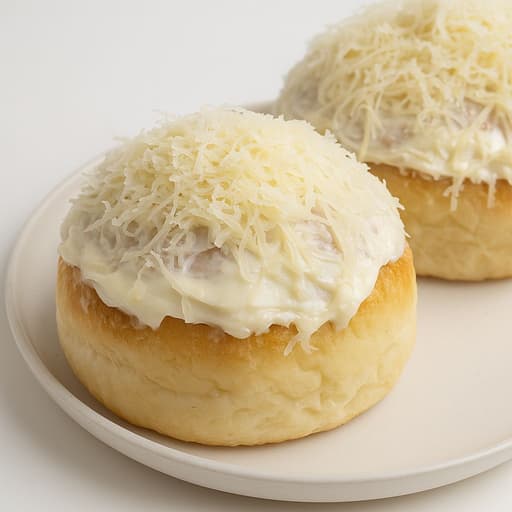
Filipino Bakery Classics
Filipino bakery classics including pandesal, Spanish bread, ensaymada, yema cake, and crinkles for breakfast, merienda, and gifting.
7 recipes • Updated 09/08/2026
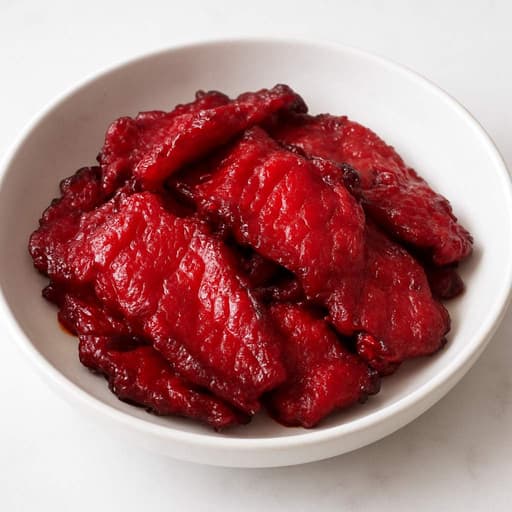
Filipino Breakfast Recipes
Filipino breakfast recipes with pork tapa, tapang Taal, tocino, longganisa, pandesal, and garlic rice, plus practical weekday prep ideas.
8 recipes • Updated 08/08/2026
Create Your Own Recipe
Add your personal creations and build your own recipe collection.