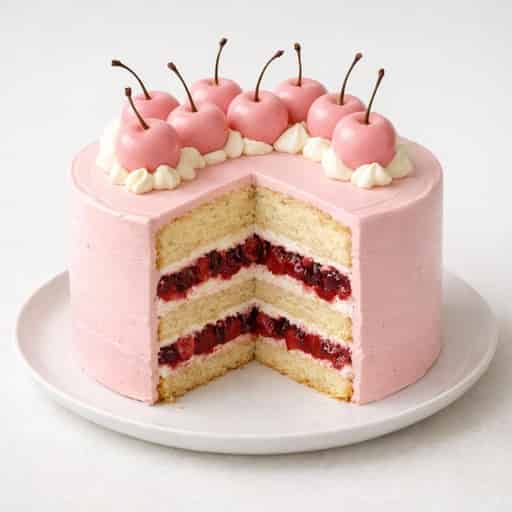
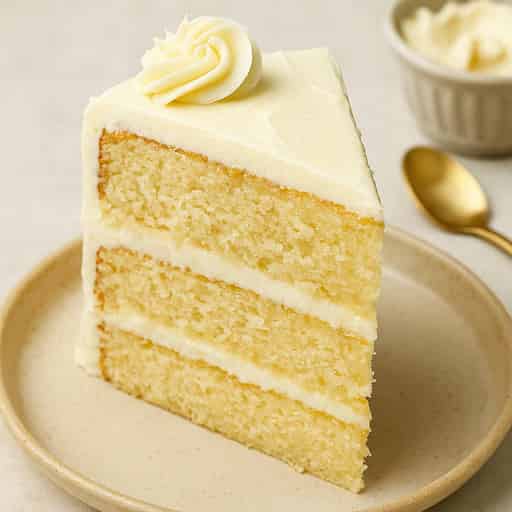
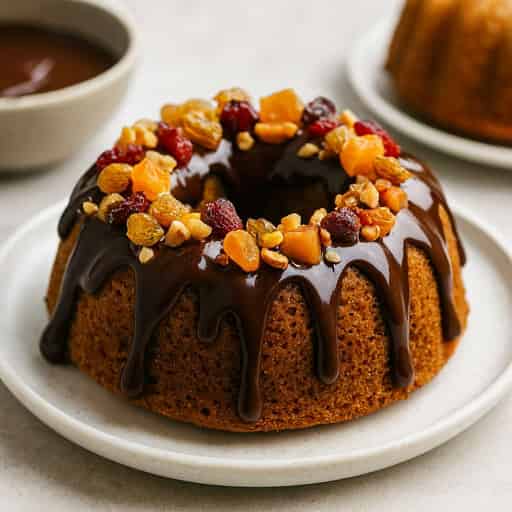
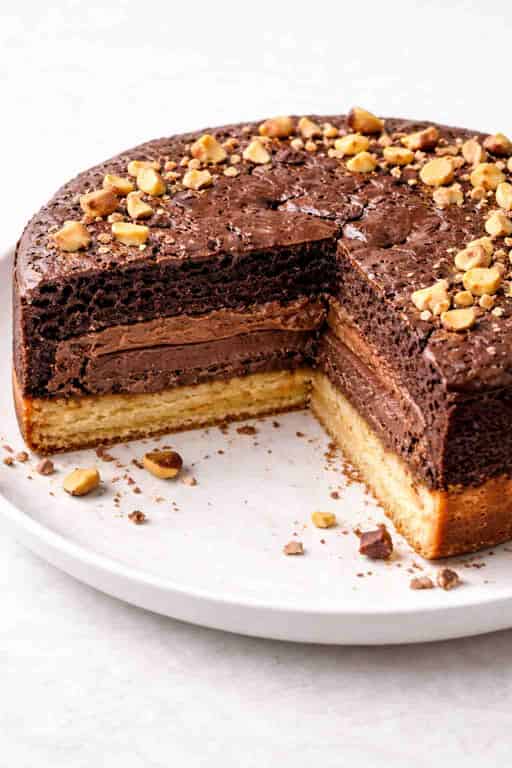
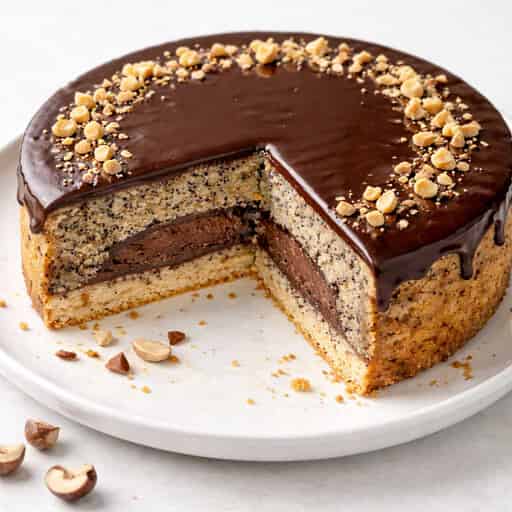
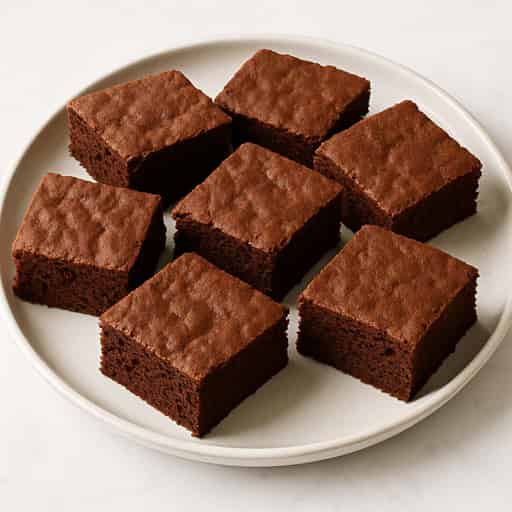
A very moist cocoa-based chocolate cake topped with soft, glossy caramel icing made with evaporated milk, egg yolks, and cornstarch.
Prep time
30 min
Cook time
50 min
Total time
1 hr 20 min
Servings
14
Recipe Snapshot
DifficultyMedium
MealDessert
Meal PrepExcellent
Family FriendlyYes
Chef's Tips
Strain the batter if you want an especially smooth crumb.
Do not overbake; the centre should be set but still moist when tested.
Cook the icing until it coats a spatula, then pour it warm over the cooled cake.
Tools Used
Mixing Bowl(opens in a new tab)Whisk(opens in a new tab)Sieve(opens in a new tab)OvenSaucepan(opens in a new tab)Wire Rack(opens in a new tab)
We use affiliate links, which may earn us a small commission at no extra cost to you.
Ingredients
Ingredients
Servings
14 servings1×
Scale
Ingredient amounts update instantly.
Chocolate Cake Batter
Caramel Icing
Instructions
Make the Cake
- 1
Heat the oven to 160C (325F).
- 2
Whisk together the flour, cocoa powder, baking powder, baking soda, salt, and brown sugar. Strain the mixture if you want a finer crumb.
- 3
Add the eggs, oil, vinegar, and water and whisk just until the batter is smooth. Do not overmix.
- 4
Pour into prepared pans. Because this is a large-batch formula and the source does not specify verified pan dimensions, use pans of similar depth rather than one standard cake tin.
- 5
Bake until the centre is set, the surface springs back lightly, and a skewer comes out with a few moist crumbs rather than wet batter.
Make the Caramel Icing
- 1
Whisk together the evaporated milk, cornstarch, brown sugar, and egg yolks in a saucepan.
- 2
Cook over medium-low heat, stirring constantly and scraping the corners, until thick enough to coat a spatula. Do not leave it unattended or allow it to scorch.
- 3
Remove from the heat and stir in the butter until glossy and fully emulsified. If the icing is lumpy, pass it through a fine sieve while warm.
Finish
- 1
Cool the cakes completely, then pour the warm icing over the top. Warm icing spreads; hot icing can run too thin.
- 2
Let the icing settle before slicing or chilling.
Plan This Recipe
Save this recipe to one of your meal plans or browse your existing plans.
Learn More
Everything you want to know about this recipe.
Moist Chocolate Cake with Soft Caramel Icing
Moist Chocolate Cake with Soft Caramel Icing
This is a large-batch cocoa cake with a soft, glossy cooked icing. The cake is moist rather than fluffy because it uses oil, brown sugar, plenty of liquid, and a small amount of vinegar. The vinegar reacts with the baking soda to support leavening and tenderness; it does not make the cake taste sour.
The icing is closer to a soft custard or natilla-style topping than a firm buttercream or fudge frosting. Evaporated milk, egg yolks, and cornstarch give it body, while butter makes it smooth and glossy. Pour it warm over a completely cooled cake so it spreads without melting into the crumb.
Getting the Icing Right
Getting the Icing Right
Stir constantly as the milk mixture heats, especially around the base and sides of the saucepan. The icing is ready when it coats a spatula and a dragged line briefly remains visible. If it is poured while very hot, it can look runny; if it is cooked too aggressively, the yolks can scramble or the bottom can scorch.
If the icing becomes lumpy, pass it through a fine sieve while warm. If it looks oily, whisk in the butter more thoroughly off the heat. If it thickens before you can spread it, warm it gently with a splash of evaporated milk rather than boiling it again.
Batch Size and Doneness
Batch Size and Doneness
The quantities make substantially more batter than a typical single 8-inch cake. The original source does not give a verified pan size, so divide it between prepared pans or tins of similar depth and avoid filling any pan more than about two-thirds full. Baking time will depend on the pan depth. Look for a lightly springy centre and moist crumbs on a skewer, not a completely dry test.
Make-Ahead and Storage
Make-Ahead and Storage
Cool the iced cake, cover it, and refrigerate because the topping contains milk and egg yolks. It is best served chilled or after a short rest at room temperature. For the best icing texture, bake the cake ahead and add the icing on the day of serving. Freeze the cake layers without icing if you need to store them longer; thaw them covered before finishing.
For related Filipino-inspired desserts, see Yema Cake and Chocolate Crinkles.
The source reference is Chef RV Manabat's version, adapted and edited for RecipeShare. RecipeShare is not affiliated with or endorsed by Chef RV Manabat.
Nutrition Facts
Nutrition Facts
Serving Size: 1 slice
Calories 42021%
% Reference Intake*
Total Fat 18g26%
Saturated Fat 7g35%
Trans Fat 0g
Cholesterol 90mg
Sodium 240mg
Total Carbohydrates 60g23%
Dietary Fiber 3g
Sugars 38g42%
Protein 6g12%
* Reference intakes are based on an average adult's 8,400 kJ / 2,000 kcal diet. Your needs may be higher or lower.
FAQs
Can I make the cake ahead?
Yes. Bake the cake first, then add the icing later or chill the finished cake for serving the next day.
Can I use a different pan?
Yes. The source does not give a verified pan size, so choose pans with a similar batter depth and begin checking earlier if the layers are shallow.
Why add vinegar to the batter?
It helps keep the crumb tender and moist, especially after chilling.
Why is my caramel icing runny?
It may not have cooked long enough to thicken, or it was poured on while very hot. Return it to low heat and stir until it coats a spatula, then cool it briefly before pouring.
Community Reviews
See how other home cooks made this recipe, then share your own experience.
4.7
3 ratings
5
67%
4
33%
3
0%
2
0%
1
0%
How would you rate this recipe?
Share your experience and help others.
Priya S.
· 4 Sept 2026I divided the batter between two pans instead of using one deep tin, and the moist-crumb doneness cue worked well.
Daniel R.
· 4 Apr 2026The spatula test made the icing easy to judge. Mine poured smoothly once it had cooled for a few minutes.
Elena M.
· 4 Jan 2026The cake stayed genuinely moist after chilling, and the soft caramel icing was much lighter than a buttercream frosting.
Create Your Own Recipe
Add your personal creations and build your own recipe collection.