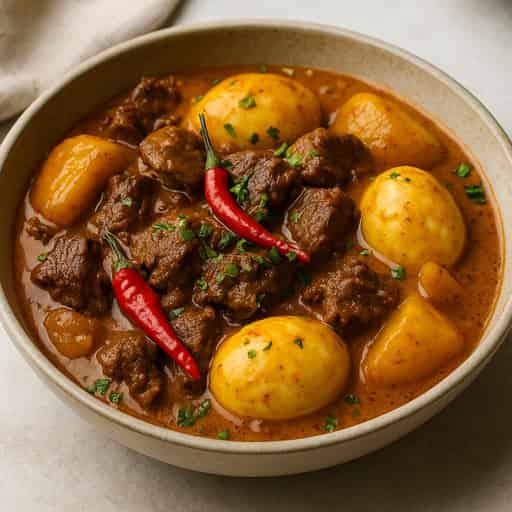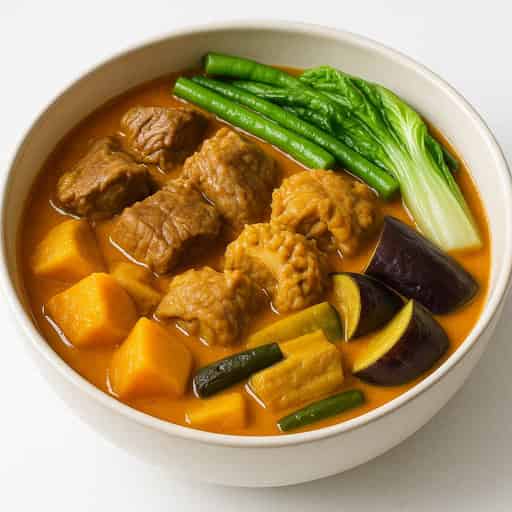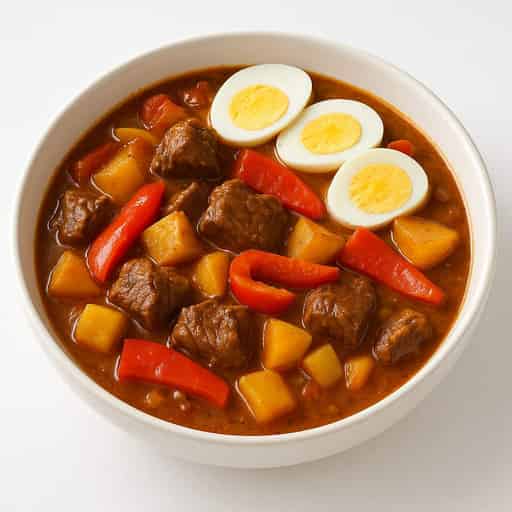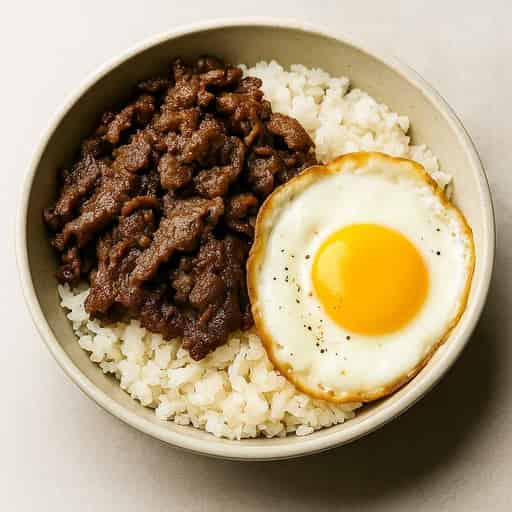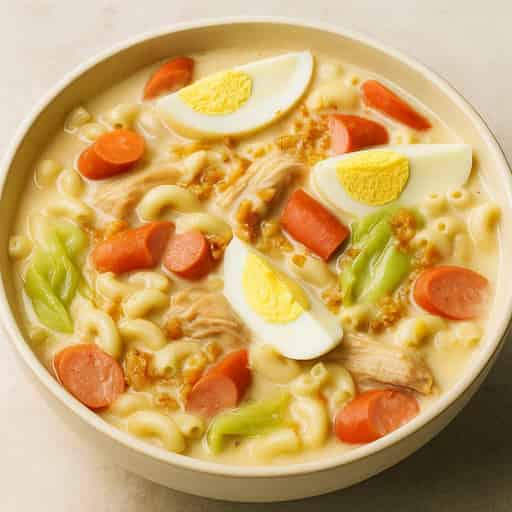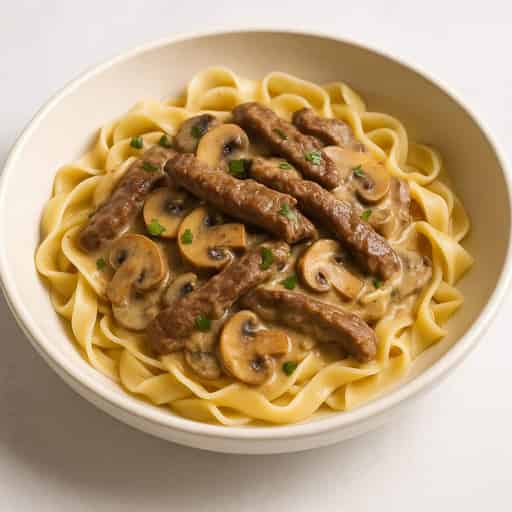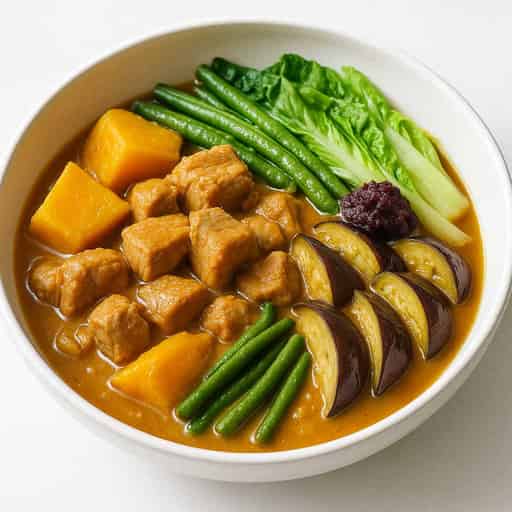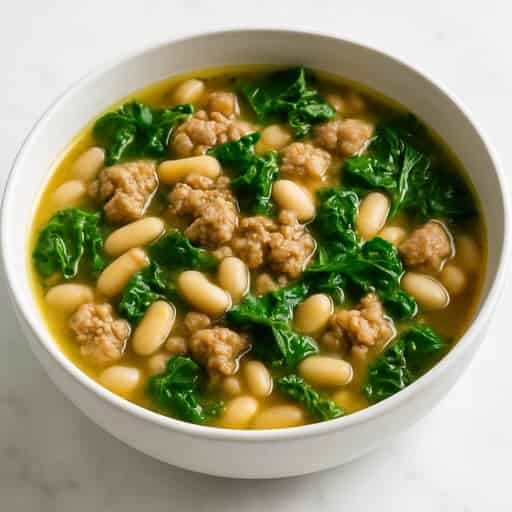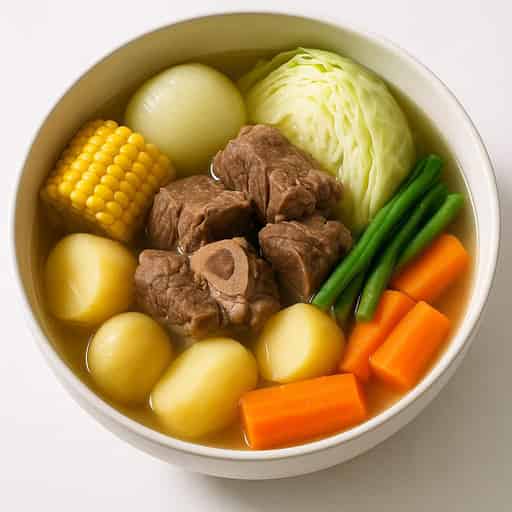
Filipino beef nilaga with tender beef, corn, potatoes, cabbage, and a clear savoury broth. This classic boiled beef soup is a comforting Filipino dinner recipe with simple ingredients and a clean, home-style flavour.
Prep time
15 min
Cook time
2 hr
Total time
2 hr 15 min
Servings
6
Chef's Tips
Skim the broth well in the early stage if you want a cleaner, clearer soup.
Add the vegetables in stages so the cabbage stays tender and the potatoes do not fall apart.
Fish sauce gives the most classic finish, but you can adjust with salt if needed.
Tools Used
We use affiliate links, which may earn us a small commission at no extra cost to you.
Ingredients
Ingredients
Servings
6 servings1×
Scale
Ingredient amounts update instantly.
Beef And Broth
Vegetables
Optional Additions And Garnish
Instructions
Simmer the Beef
- 1
Put the beef in a large pot with the water and bring to a boil.
- 2
Skim off the foam and impurities from the surface.
- 3
Add the onion, black peppercorns, fish sauce, and the garlic and bay leaf if using.
- 4
Lower the heat and simmer gently for 1 1/2 to 2 hours until the beef is tender.
Add the Vegetables
- 1
Add the corn and potatoes and simmer for 10 to 15 minutes.
- 2
Add the carrots and green beans and cook for another 5 to 7 minutes.
- 3
Add the cabbage and simmer just until wilted and tender.
Finish and Serve
- 1
Taste the broth and adjust with more fish sauce or salt if needed.
- 2
Serve hot with rice and garnish with spring onions or fried garlic if you like.
Plan This Recipe
Save this recipe to one of your meal plans or browse your existing plans.
Learn More
Everything you want to know about this recipe.
Filipino Beef Nilaga
Filipino Beef Nilaga
Filipino beef nilaga is one of the clearest examples of how simple ingredients can become deeply comforting with time and patience. Tender beef, sweet corn, potatoes, cabbage, and peppery broth come together in a soup that feels plain in the best possible way: clean, warming, and made for rice on the side.
If you are searching for a beef nilaga recipe that stays close to the home-style Filipino version, this one keeps the structure straightforward. The broth is clear rather than thick, the vegetables are added in stages, and the seasoning stays focused on beef, pepper, onion, and fish sauce.
Why This Recipe Works
Why This Recipe Works
Nilaga does not rely on a long spice list or a heavily browned base. Its flavour comes from beef slowly simmered in water with onion, peppercorns, and simple seasoning until the broth tastes savoury and rounded. Corn adds sweetness, while potatoes and cabbage make the soup feel filling enough to serve as a main meal.
The timing of the vegetables is important. If everything goes in at once, the cabbage overcooks and the potatoes can start to break down into the broth. Staging the vegetables keeps the soup clearer and the textures more distinct.
Ingredient Notes
Ingredient Notes
Beef shank gives a richer broth because of its connective tissue, while brisket gives a softer, meatier texture. Either works well for nilaga. Fish sauce is the most classic seasoning for the broth, but it should support the soup rather than dominate it.
Corn is one of the defining ingredients because it sweetens the broth naturally. Cabbage gives the soup its gentle finish, and green beans add a fresher bite than using only root vegetables.
How to Make Beef Nilaga
How to Make Beef Nilaga
Start by simmering the beef in water and skimming the broth well at the beginning. Once the foam is cleared, add the onion, peppercorns, and seasoning and let the pot cook gently until the beef is tender.
After that, add the vegetables in stages according to how long they need. Corn and potatoes go in first, then carrots and green beans, then cabbage last. That sequence keeps the final bowl balanced instead of mushy.
How to Keep the Broth Clear
How to Keep the Broth Clear
The clearest broth comes from not rushing the early stage. Bring the beef up to a boil, skim carefully, and then let the pot settle into a gentle simmer instead of a hard rolling boil.
If the broth reduces too much during the long simmer, top it up with a little hot water rather than cold water so the cooking stays steady.
Serving Ideas
Serving Ideas
Serve nilaga hot with steamed rice, which is how many Filipino households turn the soup into a full meal. A small dish of fish sauce on the side can be useful if different people want to adjust the seasoning at the table.
You can also serve it with patis and calamansi on the side if you like a sharper finish. For a fuller spread, pair it with a simple fried fish or omelette.
Easy Variations
Easy Variations
Some home versions include saba bananas, pechay, or extra cabbage depending on what is available. You can also use more brisket for a meatier bowl or more shank for a richer broth.
If you want a slightly deeper broth, you can brown the beef first, but many classic versions keep the soup lighter and clearer by skipping that step.
Common Mistakes to Avoid
Common Mistakes to Avoid
One common mistake is boiling the soup too hard for the entire cooking time, which can make the broth cloudy and the beef a little tougher. Another is adding the cabbage too early, which leaves it limp and overcooked.
It is also easy to under-season nilaga because the broth looks light. Taste at the end and adjust with fish sauce or salt so the soup feels complete.
Storage and Reheating
Storage and Reheating
Nilaga keeps well in the fridge for up to 3 days, and the broth often tastes even better the next day. Reheat it gently on the stove until fully hot.
If you know you are cooking ahead, you can slightly undercook the vegetables so they stay in better shape after reheating.
Frequently Asked Questions
Frequently Asked Questions
What cut of beef is best for nilaga?
Beef shank and brisket are both good choices. Shank gives a richer broth, while brisket gives softer slices of meat.
Is nilaga the same as bulalo?
They are related, but bulalo is more specifically associated with beef shank and bone marrow, while nilaga is a broader boiled soup style.
What do you serve with beef nilaga?
Steamed rice is the usual pairing, along with fish sauce or calamansi on the side if you want extra seasoning at the table.
Nutrition Facts
Nutrition Facts
Serving Size: 1 bowl
Calories 40020%
% Reference Intake*
Total Fat 23g33%
Saturated Fat 8g40%
Trans Fat 0g
Cholesterol 95mg
Sodium 760mg
Total Carbohydrates 22g8%
Dietary Fiber 4g
Sugars 6g7%
Protein 29g58%
* Reference intakes are based on an average adult's 8,400 kJ / 2,000 kcal diet. Your needs may be higher or lower.
Community Reviews
See how other home cooks made this recipe, then share your own experience.
4.8
5 ratings
5
80%
4
20%
3
0%
2
0%
1
0%
How would you rate this recipe?
Share your experience and help others.
Nina
· 14 Aug 2026First time making nilaga and it came out exactly how I hoped. The staged vegetable cooking helped a lot.
Marco
· 5 Mar 2026Proper Filipino comfort food. I let it simmer slowly all afternoon and the beef turned beautifully tender.
Analyn
· 10 Nov 2025I used brisket and added saba bananas on the side. The timing for the vegetables worked really well.
Kenji
· 2 Aug 2025I skipped searing and still got a lovely light broth. Great rainy-day soup.
Lara
· 18 Jun 2025This reminded me so much of the nilaga I grew up with. The broth tasted clean and comforting.
Create Your Own Recipe
Add your personal creations and build your own recipe collection.