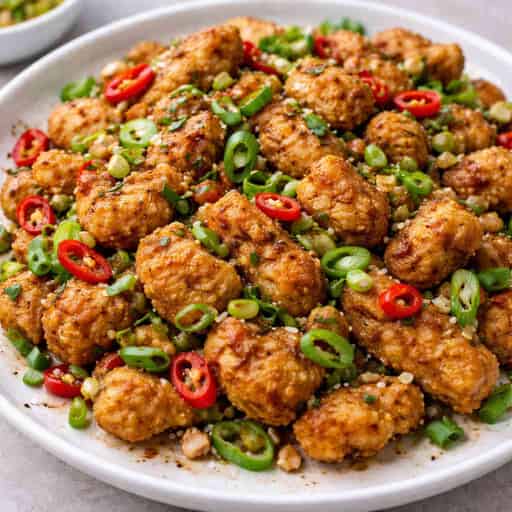
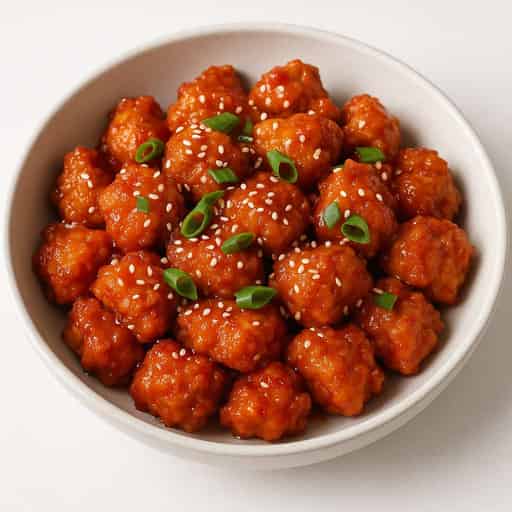
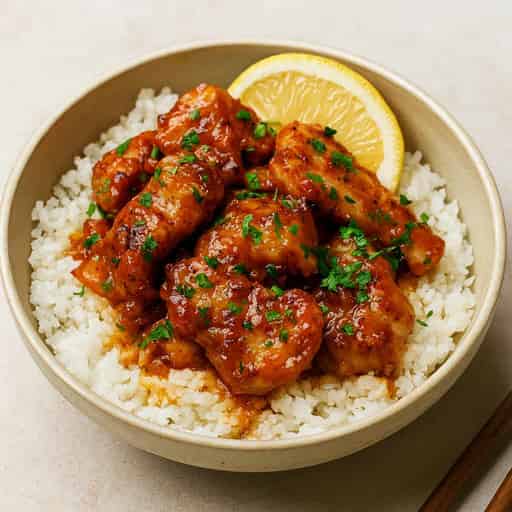
Taiwanese popcorn chicken with a craggy sweet-potato-starch crust, five-spice seasoning, and crisp fried basil. Double-fried chicken bites for a Taiwanese street-food-style snack or rice dinner.
Prep time
20 min
Cook time
15 min
Total time
35 min
Servings
3
Recipe Snapshot
DifficultyMedium
MealSnack / Dinner
Family FriendlyYes
CuisineTaiwanese
Chef's Tips
Dry the basil very thoroughly before frying. Water on the leaves will cause the hot oil to sputter and prevent them from turning crisp.
Use coarse sweet potato starch if you can find it. Its uneven granules form the rugged, crisp coating associated with Taiwanese popcorn chicken.
Fry in small batches and let the oil recover between them. Overcrowding drops the temperature and makes the starch coating greasy rather than crisp.
Tools Used
We use affiliate links, which may earn us a small commission at no extra cost to you.
Ingredients
Ingredients
Servings
3 servings1×
Scale
Ingredient amounts update instantly.
Chicken Marinade
Coat And Fry
Five-Spice Seasoning
Instructions
Marinate the Chicken
- 1
Combine the chicken with soy sauce, Shaoxing wine, ginger, garlic, sugar, MSG if using, white pepper, and five-spice powder. Mix well, cover, and refrigerate for 30 minutes.
- 2
Add the plain flour, cornflour, and egg white to the marinated chicken. Mix until every piece has a thin sticky coating; this helps the sweet potato starch cling without forming a heavy batter.
Fry the Basil and Coat the Chicken
- 1
Pour enough oil into a deep saucepan or wok to come 5 cm up the sides, without filling the vessel more than halfway. Heat to 170C.
- 2
Fry the thoroughly dry basil for 10 to 15 seconds, until crisp but still green. Lift it out with a slotted spoon and drain on a wire rack or paper.
- 3
Spread the sweet potato starch in a shallow bowl. Coat the chicken pieces in batches, pressing the starch on lightly, then shake away only loose excess. The coating should look craggy rather than smooth.
Double Fry and Season
- 1
Fry the chicken in small batches at 170C for 3 to 4 minutes, turning as needed, until pale golden and cooked through. The centre of the largest piece should reach 74C. Drain and let the oil return to temperature.
- 2
Raise the oil to 190C. Fry the chicken again in batches for 60 to 90 seconds, until deep golden and crisp, then drain briefly.
- 3
Mix the five-spice powder, chilli powder, white pepper, salt, and MSG if using. Toss the hot chicken with the seasoning and fried basil, then serve immediately.
Plan This Recipe
Save this recipe to one of your meal plans or browse your existing plans.
Learn More
Everything you want to know about this recipe.
Taiwanese Popcorn Chicken with Crisp Fried Basil
Taiwanese Popcorn Chicken with Crisp Fried Basil
Taiwanese popcorn chicken is made for contrast: juicy chicken thigh beneath a rough, crisp starch coating, fragrant five-spice seasoning, and brittle fried basil leaves. This home version keeps those defining elements while giving you clear oil temperatures and batch sizes for a safer, more reliable fry.
The method starts with a short savoury marinade, followed by a light flour and egg-white coating. Sweet potato starch then clings in uneven flakes, which is what makes the outside look craggy instead of like a smooth breaded nugget.
The Double-Fry Method
The Double-Fry Method
The first fry at 170C cooks the chicken through and sets the coating. Let the oil recover between batches, then use the short 190C second fry to dry and crisp the surface. The chicken should already be cooked before the second fry, so the final high-heat stage stays brief and does not dry out the thighs.
Fry the basil first, only after it is completely dry. It needs seconds, not minutes. Lift it out as soon as it crisps so it keeps its colour and does not become bitter in the oil.
Seasoning and Serving
Seasoning and Serving
The finishing powder is deliberately modest because the chicken is already seasoned with soy sauce. Toss it while hot so the spices adhere, then serve straight away with steamed rice, a cucumber salad, or a cold drink. For a different crispy chicken profile, try Chinese salt and pepper chicken.
Storage and Reheating
Storage and Reheating
This chicken is at its best straight after frying. Refrigerate leftovers for up to 2 days, then reheat in a 200C oven or air fryer for 5 to 7 minutes. The basil will soften in storage, so treat it as a fresh finish rather than something to make ahead.
Nutrition Facts
Nutrition Facts
Serving Size: 1 serving (about 150 g fried chicken)
Calories 44022%
% Reference Intake*
Total Fat 25g36%
Saturated Fat 6g30%
Trans Fat 0g
Cholesterol 110mg
Sodium 620mg
Total Carbohydrates 29g11%
Dietary Fiber 1g
Sugars 2g2%
Protein 28g56%
* Reference intakes are based on an average adult's 8,400 kJ / 2,000 kcal diet. Your needs may be higher or lower.
FAQs
What makes Taiwanese popcorn chicken crispy?
Coarse sweet potato starch gives the chicken a rugged coating, while the second short fry drives off surface moisture and crisps it. Keep the oil hot and fry in small batches so the temperature does not fall too far.
Can I use tapioca starch instead of sweet potato starch?
Yes. Tapioca starch gives a crisp, slightly chewier coating. Sweet potato starch is preferred when available because its coarser texture produces a more craggy crust.
Can I air fry Taiwanese popcorn chicken?
Not with the same result. The wet, starch-coated chicken is designed for deep-frying; an air fryer will not create the characteristic rugged crust. For an air-fryer chicken recipe, choose one developed specifically for it.
How do I reheat popcorn chicken?
Reheat in a 200C oven or air fryer for 5 to 7 minutes, until hot and crisp. Do not microwave it if you want to preserve the coating's crunch.
Community Reviews
See how other home cooks made this recipe, then share your own experience.
4.8
9 ratings
5
78%
4
22%
3
0%
2
0%
1
0%
How would you rate this recipe?
Share your experience and help others.
famngkitchen
· 24 Aug 2026Omg need this right now.
Daniel W.
· 19 Aug 2026The adjusted seasoning was balanced and not too salty. We had it with rice and cucumber salad for dinner.
noneofyabidness
· 24 Jul 2026Man, I wanna go to Taipei again after watching this.
Rachel P.
· 29 Jun 2026I used dry sherry and tapioca starch because that was what I had. Still really crisp, with a great five-spice aroma.
Mae
· 24 Apr 2026Try dipping it in a mix of kewpie mayo + soy + curry powder. So good!
Aaron T.
· 11 Apr 2026Frying in small batches made a huge difference. My second fry was quick, crisp, and the chicken stayed juicy inside.
Ian Fujimoto
· 23 Feb 2026Would love to see a few different versions of this - looks amazing!
Mia L.
· 22 Feb 2026The sweet potato starch gave the chicken a rough, crunchy coating rather than a thick batter. The basil was worth the extra frying step.
tiff
· 23 Nov 2025That basil drop was so satisfying!
Create Your Own Recipe
Add your personal creations and build your own recipe collection.