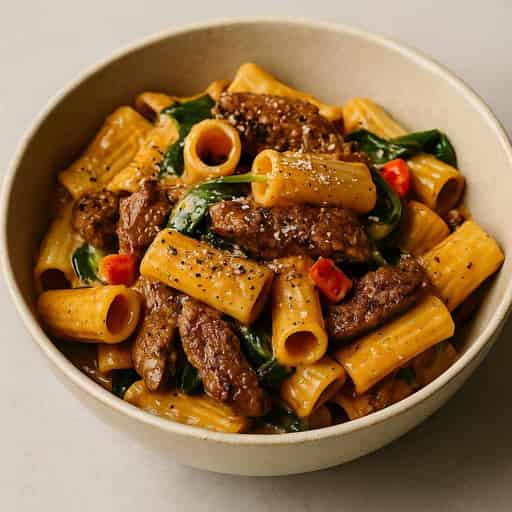
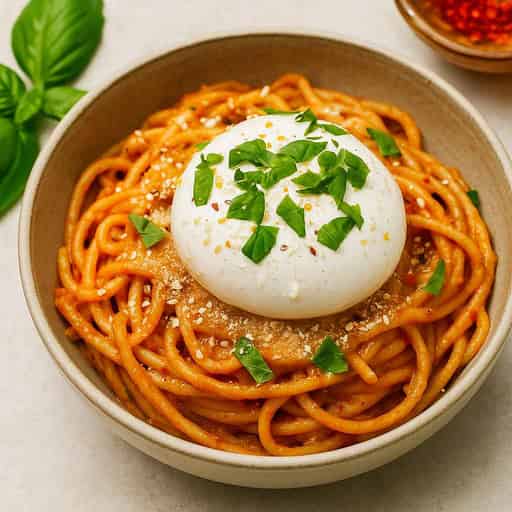
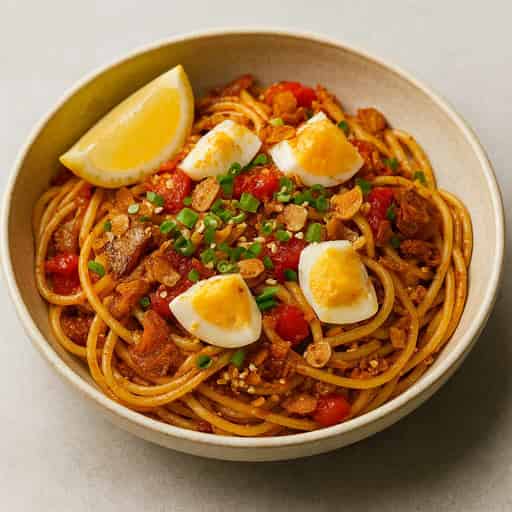
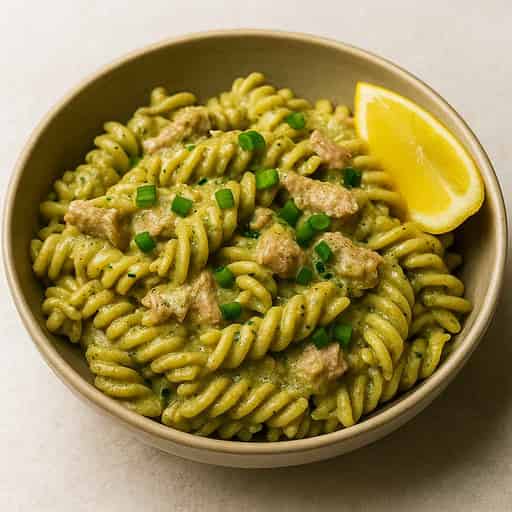
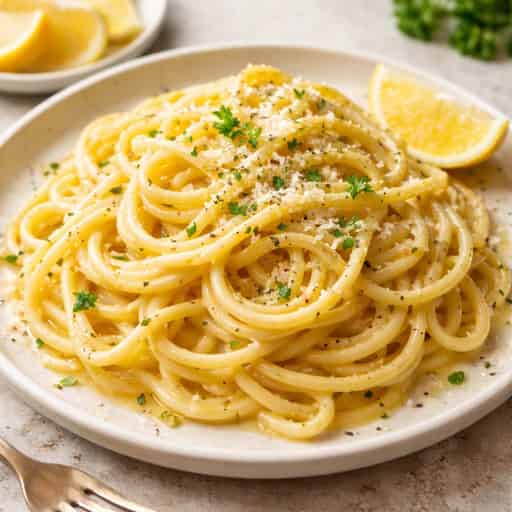
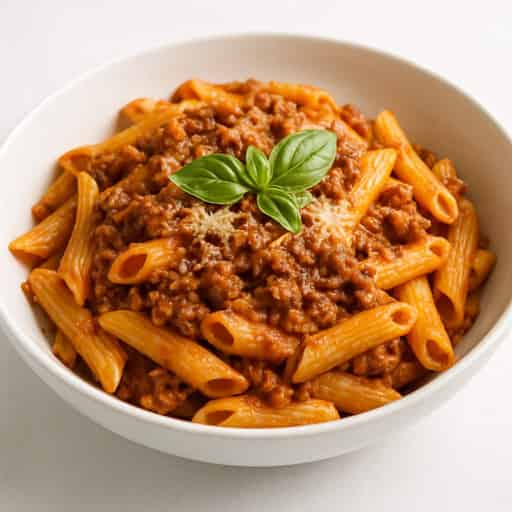
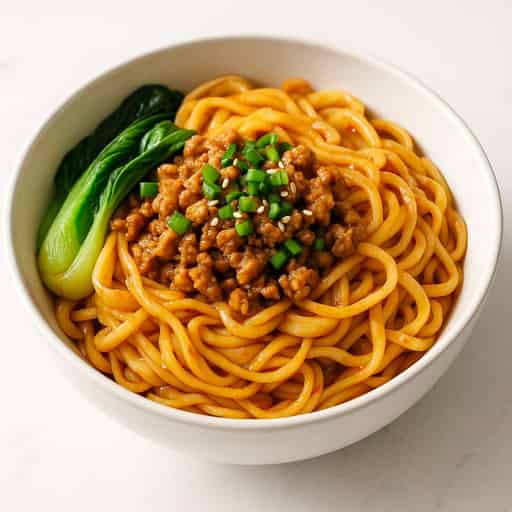
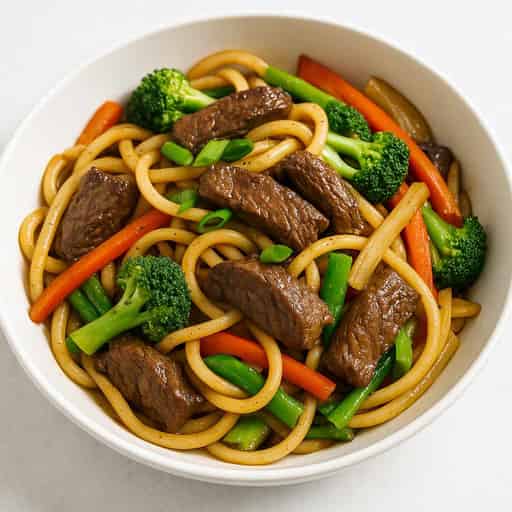
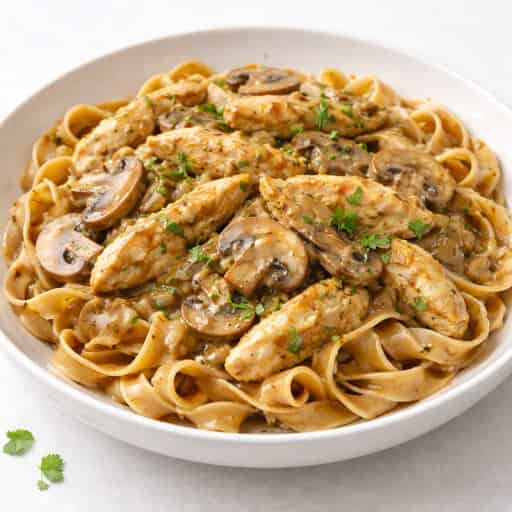
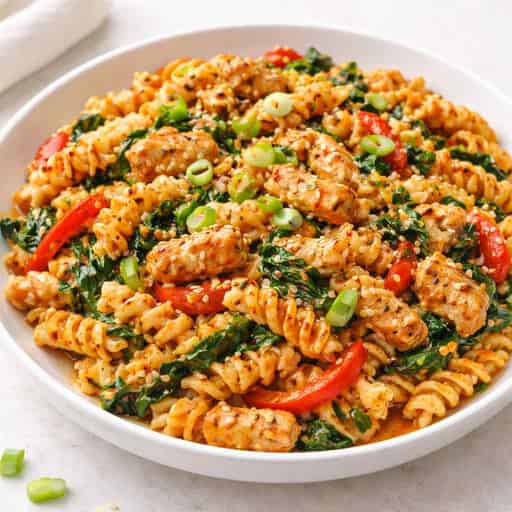
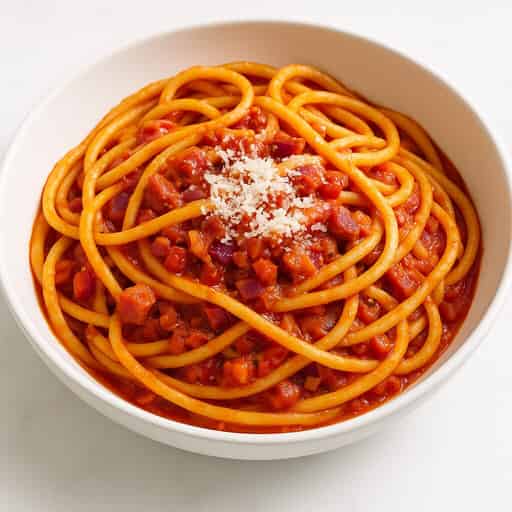
Filipino longganisa pasta alla Positanese with tomatoes, calamansi, and glossy pasta-water sauce. A no-cream sausage pasta inspired by Amalfi flavors.
Prep time
12 min
Cook time
25 min
Total time
37 min
Servings
4
Chef's Tips
Start the longganisa in a cold pan so the fat renders before the meat browns.
Keep enough rendered fat in the pan to coat the tomatoes and help emulsify the sauce.
Add pasta water gradually and toss until the sauce looks glossy rather than oily.
Taste before adding salt because longganisa is already seasoned.
Tools Used
Large Pot(opens in a new tab)Large Skillet(opens in a new tab)Wooden SpoonTongsChef's Knife(opens in a new tab)Cutting Board
We use affiliate links, which may earn us a small commission at no extra cost to you.
Ingredients
Ingredients
Servings
4 servings1×
Scale
Ingredient amounts update instantly.
Pasta
Longganisa Tomato Sauce
Finish
Instructions
Cook the Pasta
- 1
Bring a large pot of water to a boil and salt it until lightly seasoned.
- 2
Cook pasta until just al dente.
- 3
Reserve at least 480 ml pasta water, then drain without rinsing.
Cook the Longganisa and Tomatoes
- 1
Place the longganisa meat in a cold large skillet over medium heat.
- 2
Break it apart with a wooden spoon and cook for 8 to 10 minutes, until the fat renders and the edges are browned and lightly crisp.
- 3
Spoon out excess oil if needed, leaving enough fat to coat the pan.
- 4
If using mushrooms, add them now and cook until their moisture evaporates.
- 5
Add garlic and cook for 30 seconds until fragrant.
- 6
Add tomatoes and black pepper, then cook for 8 to 12 minutes until the tomatoes soften, release juice, and turn jammy.
- 7
Lightly crush some tomatoes with the spoon while keeping some texture.
- 8
If using spinach, fold it in and cook just until wilted.
Emulsify and Finish
- 1
Add drained pasta directly to the skillet.
- 2
Add a splash of pasta water and toss vigorously over medium heat until the sauce starts to cling.
- 3
Continue adding pasta water a little at a time until the sauce is glossy, silky, and lightly saucy.
- 4
If the pasta looks oily, add more pasta water and keep tossing.
- 5
If it looks too loose, cook for 1 to 2 minutes more.
- 6
Turn off the heat.
- 7
Add calamansi zest, calamansi juice, basil or parsley, and more black pepper.
- 8
Taste before adding salt, then serve with chili flakes and a light olive oil drizzle if using.
Plan This Recipe
Save this recipe to one of your meal plans or browse your existing plans.
Learn More
Everything you want to know about this recipe.
Filipino Longganisa Pasta alla Positanese
Filipino Longganisa Pasta alla Positanese
Filipino longganisa pasta alla Positanese takes the sausage-and-tomato idea of southern Italian pasta and gives it a Manila-friendly finish with Ilocos longganisa and calamansi. It skips cream and cheese, relying instead on rendered sausage fat, softened tomatoes, and starchy pasta water for a glossy sauce.
The result is rich but not heavy. Sweet-savory longganisa gives the sauce depth, while calamansi cuts through the fat in the same way lemon often brightens coastal Italian pasta.
Why This No-Cream Pasta Works
Why This No-Cream Pasta Works
The sauce gets its body from three things: rendered pork fat, tomato pectin, and starch from pasta water. When the pasta is tossed vigorously with the tomato-longganisa base, those elements come together into a silky coating.
Starting the longganisa in a cold pan matters. It gives the fat time to render before the meat browns, so the sausage becomes caramelized without needing extra oil.
Ingredients Overview
Ingredients Overview
Short pasta shapes such as orecchiette, rigatoni, and fusilli work especially well because they catch small bits of longganisa and tomato. Spaghetti or linguine also work if you prefer a smoother twirl.
Ilocos longganisa brings garlic, sweetness, and pork richness. Tomatoes make the sauce jammy, calamansi adds brightness, and basil or parsley keeps the final bowl fresh. Mushrooms and spinach are optional, but they help stretch the dish into a more vegetable-forward main.
How to Make Longganisa Pasta alla Positanese
How to Make Longganisa Pasta alla Positanese
Boil the pasta until just al dente and save more pasta water than you think you need. Cook the longganisa slowly until browned, then use the rendered fat to carry the garlic and tomatoes.
Once the tomatoes have softened into a concentrated sauce, add the pasta and toss with splashes of pasta water. The finished sauce should look glossy and clingy, not greasy or watery. Calamansi zest and juice go in after the heat is turned off so the flavor stays bright.
Tips, Variations, and Storage
Tips, Variations, and Storage
If the sauce looks oily, it usually needs more pasta water and more tossing. If it looks soupy, keep cooking for another minute or two until the starch tightens the sauce.
For deeper flavor, add one anchovy with the garlic and let it melt into the fat. For crunch, finish with toasted breadcrumbs. Chili flakes are useful if your longganisa is on the sweeter side.
This pasta is best eaten fresh. To reheat, add a splash of water and warm gently in a pan until the sauce loosens. Avoid long, high-power microwaving because the sauce can split.
Serving & Goal Fit
Serving & Goal Fit
One serving is one bowl, about one quarter of the recipe. Because longganisa is rich and seasoned, this works best with a moderate pasta portion and plenty of tomatoes, spinach, mushrooms, or another vegetable on the side.
On a training day, add one piece of fruit or serve with a little extra pasta if you need more carbohydrate. On a rest day, reduce the pasta portion slightly and add more broccoli, green beans, spinach, peas, mushrooms, onions, courgette, tenderstem broccoli, or frozen mixed veg.
For a higher-protein version, add grilled chicken, shrimp, tofu, or tempeh alongside the longganisa rather than simply increasing the sausage. That keeps the flavor intact while making the meal more balanced.
Nutrition Facts
Nutrition Facts
Serving Size: 1 bowl
Calories 58529%
% Reference Intake*
Total Fat 27g39%
Saturated Fat 9g45%
Trans Fat 0g
Cholesterol 55mg
Sodium 780mg
Total Carbohydrates 62g24%
Dietary Fiber 5g
Sugars 8g9%
Protein 22g44%
* Reference intakes are based on an average adult's 8,400 kJ / 2,000 kcal diet. Your needs may be higher or lower.
Community Reviews
See how other home cooks made this recipe, then share your own experience.
5.0
2 ratings
5
100%
4
0%
3
0%
2
0%
1
0%
How would you rate this recipe?
Share your experience and help others.
Paolo R.
· 25 May 2026I added mushrooms and spinach and the sauce still stayed glossy. Great Filipino pasta idea.
Mika S.
· 25 May 2026The calamansi made the longganisa taste brighter without needing cheese. Really good with rigatoni.
Create Your Own Recipe
Add your personal creations and build your own recipe collection.