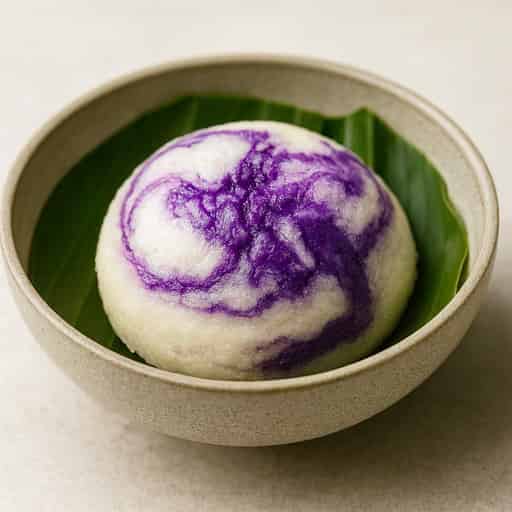
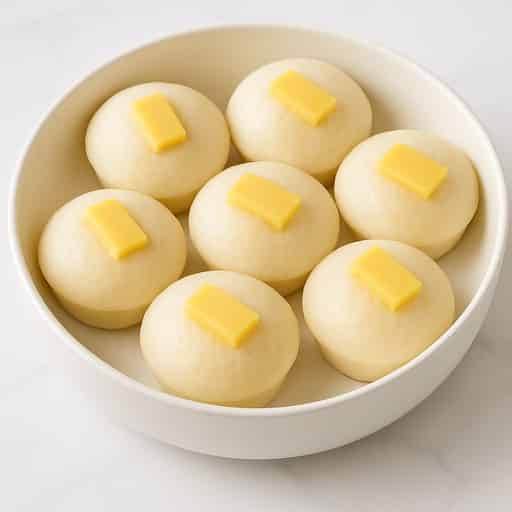
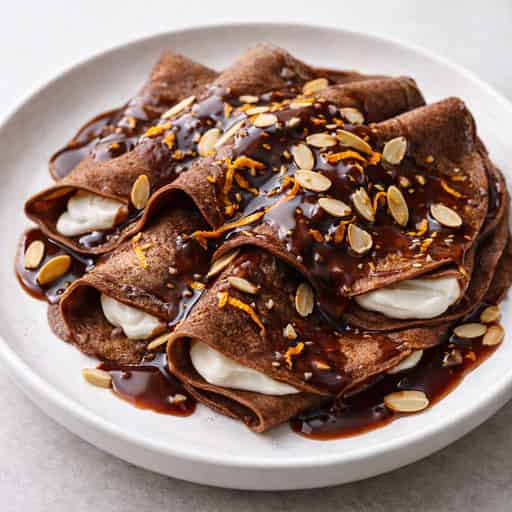
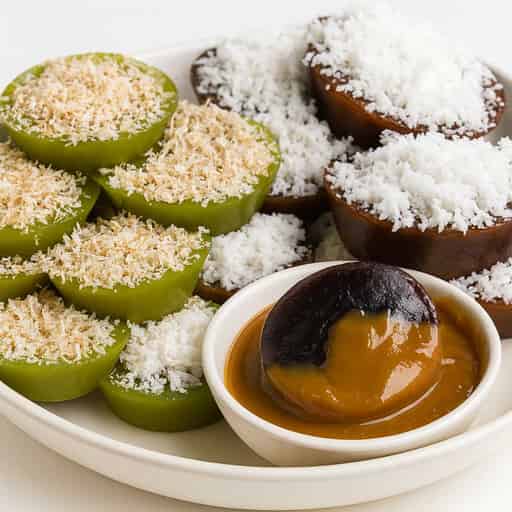
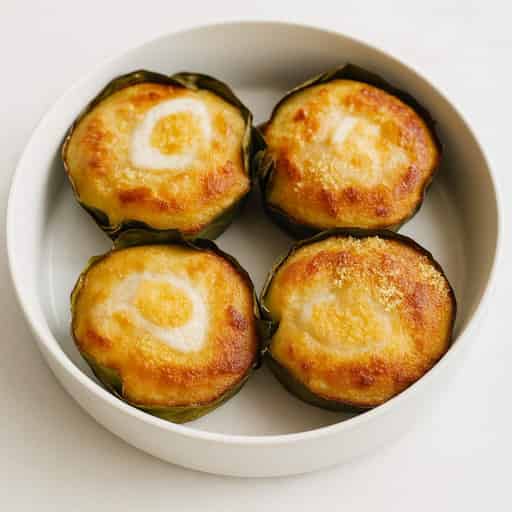
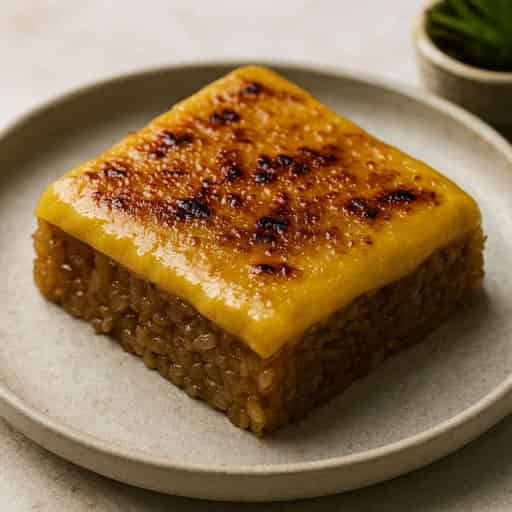
A sticky rice cake cooked in coconut milk, wrapped in banana leaves and served plain or with sweet toppings.
Prep time
30 min
Cook time
1 hr
Total time
1 hr 30 min
Servings
12
Chef's Tips
Cook the rice gently so the coconut base does not scorch.
Soften banana leaves before wrapping to prevent tearing.
A snug arrangement helps the wrapped suman hold its shape while steaming.
Tools Used
We use affiliate links, which may earn us a small commission at no extra cost to you.
Ingredients
Ingredients
Servings
12 servings1×
Scale
Ingredient amounts update instantly.
Suman Base
Coconut Yema Sauce
Toasted Coconut Topping
Instructions
Cook the Rice
- 1
Simmer the glutinous rice with water, coconut milk and salt until partially cooked.
- 2
Fold in the sugar once the grains are mostly tender.
Wrap and Steam
- 1
Portion the rice into banana leaves or parchment and wrap into tight logs.
- 2
Steam until fully cooked and sticky.
Optional Toppings
- 1
Cook the condensed milk and coconut milk together for the sauce.
- 2
Toast the coconut and sugar together for the topping.
Serve
- 1
Unwrap and serve warm or at room temperature, plain or with the toppings.
Plan This Recipe
Save this recipe to one of your meal plans or browse your existing plans.
Learn More
Everything you want to know about this recipe.
Suman is more about texture and aroma than complexity. Coconut milk gives the rice its softness and fragrance, while the wrapping keeps the portions neat and slightly perfumed if banana leaves are used.
It can be served plain, but the optional sauces and toppings let you shift it toward breakfast, merienda or dessert. Smaller portions usually work best, especially when served with a richer topping.
What Makes Suman Feel Properly Soft
What Makes Suman Feel Properly Soft
The rice should be cooked gently enough that it turns sticky without breaking down into a paste. Coconut milk adds richness, but it also means the mixture can catch on the bottom of the pan if the heat is too high. Slow cooking and steady stirring help the grains absorb flavor while still holding together once they are wrapped and steamed.
Wrapping matters too. Banana leaves give the logs a more traditional aroma, but the main job is keeping the rice compact so it steams evenly. If the packets are too loose, the rice can spread and feel uneven; if they are packed neatly, the finished suman slices more cleanly and holds its shape better.
Serving And Make-Ahead Notes
Serving And Make-Ahead Notes
Suman is flexible enough to serve in different ways depending on the rest of the meal. It can sit beside coffee in the morning, work as a mid-afternoon snack, or be plated as dessert with extra sauce and coconut topping. Keeping the base only lightly sweet makes that easier, especially if some people want it plain.
It also stores well, which is one reason it is practical for bigger batches. Cool the wrapped pieces fully before chilling, then reheat by steaming so the rice softens again instead of drying out. If you are freezing some for later, wrap them tightly so the leaves or parchment do not pick up excess moisture.
Nutrition Facts
Nutrition Facts
Serving Size: 1 suman with sauce and budbud (about 120 g)
Calories 45023%
% Reference Intake*
Total Fat 20g29%
Saturated Fat 16g80%
Trans Fat 0g
Cholesterol 10mg
Sodium 80mg
Total Carbohydrates 65g25%
Dietary Fiber 3g
Sugars 28g31%
Protein 6g12%
* Reference intakes are based on an average adult's 8,400 kJ / 2,000 kcal diet. Your needs may be higher or lower.
FAQs
Can I freeze suman sa gata?
Yes. Cool it fully, wrap well and steam again to reheat.
What can I use instead of banana leaves?
Parchment works, though it will not add the same aroma.
Community Reviews
See how other home cooks made this recipe, then share your own experience.
4.7
3 ratings
5
67%
4
33%
3
0%
2
0%
1
0%
How would you rate this recipe?
Share your experience and help others.
Ana
· 15 Nov 2025Nagustuhan ng mga kids yung coconut yema sauce, pero ako mas bet ko yung budbud para hindi sobrang tamis.
Mark
· 15 Nov 2025First time kong gumawa ng suman sa UK and this method worked perfectly kahit frozen banana leaves lang ang gamit ko.
Katrina
· 15 Nov 2025Ginawa ko kagabi tapos nilagay ko sa freezer—ang dali i-reheat sa umaga. Sakto lang ang tamis, lalo na kung plain lang ang gusto mo.
Create Your Own Recipe
Add your personal creations and build your own recipe collection.