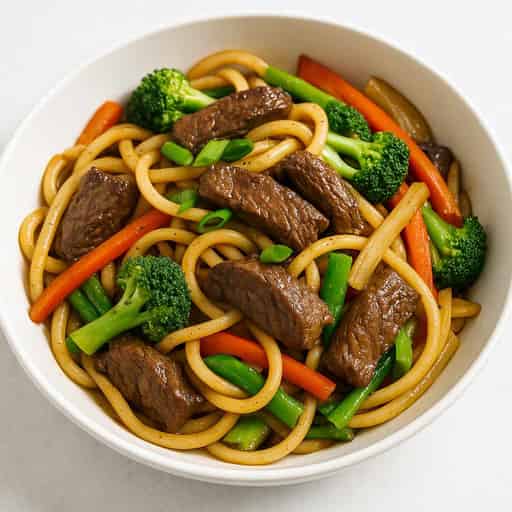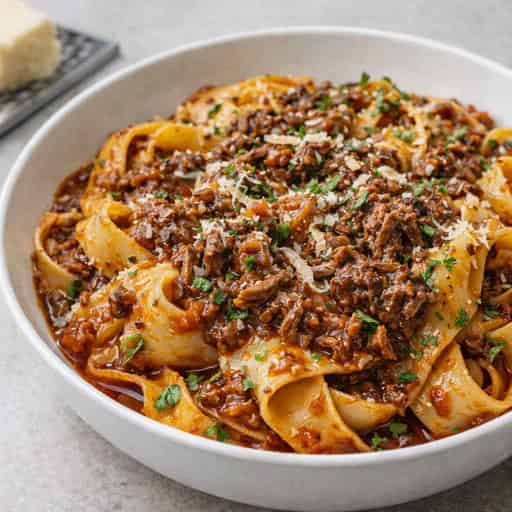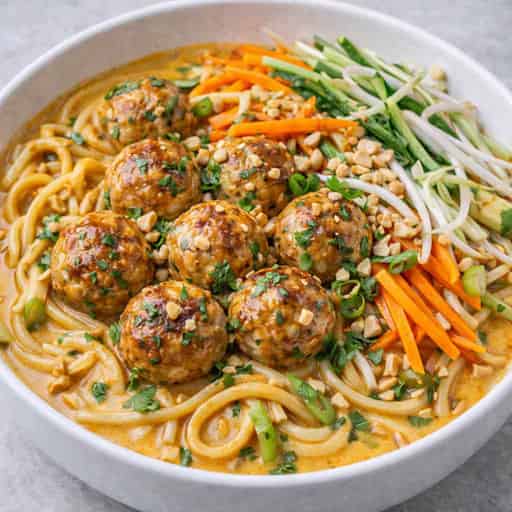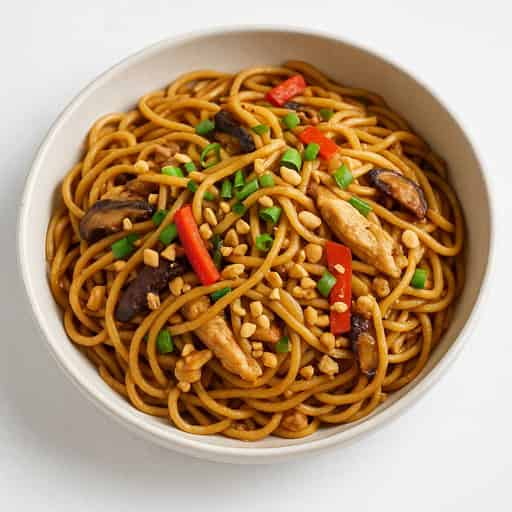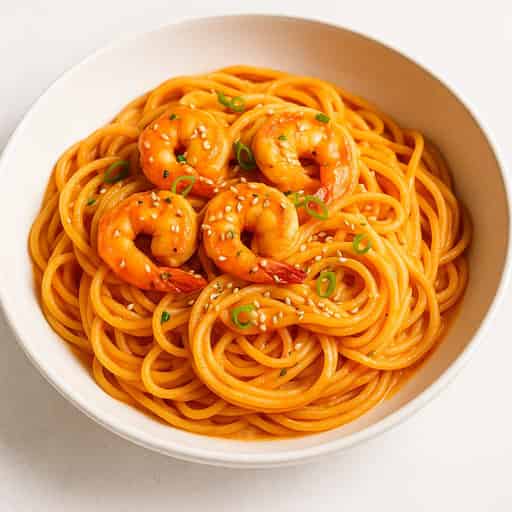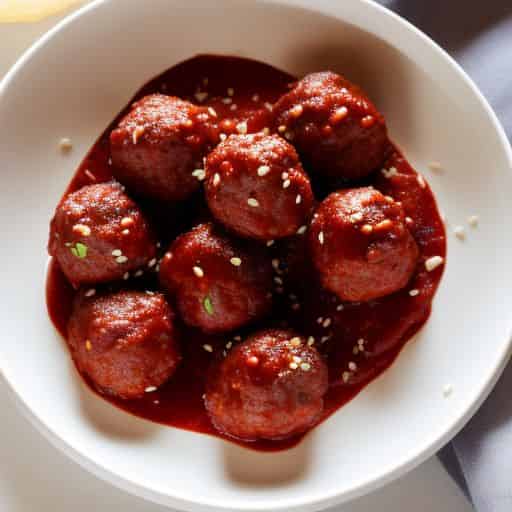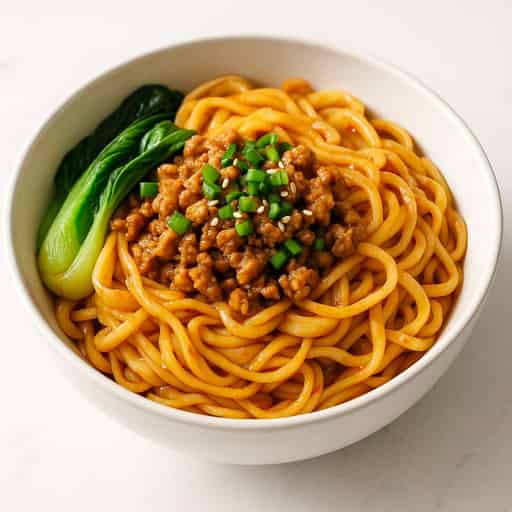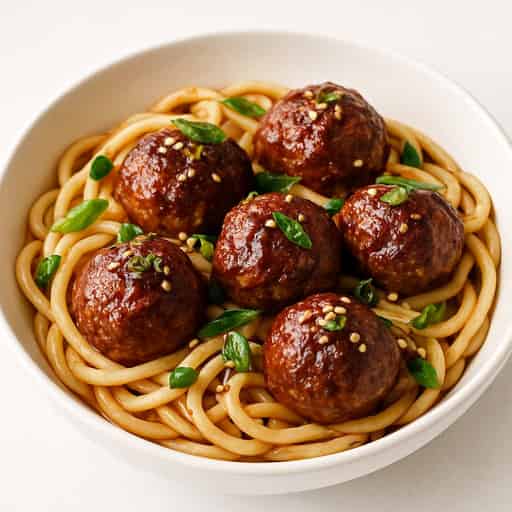
Juicy Korean-style beef meatballs sweetened with pear, tossed in a spicy gochujang sauce, and served over udon or noodles for a quick weeknight dinner.
Prep time
20 min
Cook time
20 min
Total time
40 min
Servings
4
Tools Used
Baking Sheet(opens in a new tab)Food Processor Or Blender(opens in a new tab)Large Mixing Bowl(opens in a new tab)Saucepan(opens in a new tab)
We use affiliate links, which may earn us a small commission at no extra cost to you.
Ingredients
Ingredients
Servings
4 servings1×
Scale
Ingredient amounts update instantly.
Meatballs
Noodles & Sauce
Instructions
Prepare Meatballs
- 1
Preheat oven to 180°C (350°F). Line a rimmed baking sheet with foil.
- 2
Blend honey, black pepper, sesame oil, vinegar, pear, onion, ginger, soy sauce, and half of the garlic in a food processor.
- 3
Mix ground beef with blended sauce, egg, and breadcrumbs in a large bowl.
- 4
Form 1½-inch balls and place on the prepared sheet.
- 5
Bake for 20–30 minutes until fully cooked.
Prepare Noodles and Sauce
- 1
Boil a pot of water and cook noodles (5 mins for udon, 8 mins for linguine).
- 2
Reserve ⅔ cup of pasta water, then drain noodles.
- 3
Transfer cooked meatballs to a bowl; add pan juices to a sauté pan.
- 4
Cook remaining garlic in the pan until fragrant.
- 5
Whisk in gochujang and pasta water; simmer until slightly thickened.
- 6
Reduce heat, toss noodles in the sauce, add meatballs, and mix gently.
- 7
Serve in bowls topped with green onions and sesame seeds.
Plan This Recipe
Save this recipe to one of your meal plans or browse your existing plans.
Learn More
Everything you want to know about this recipe.
Ingredients
Ingredients
Meatballs
- 1 pound (450g) ground beef, preferably short rib and chuck
- 1½ tablespoons honey
- 1 teaspoon ground black pepper
- 1 tablespoon Asian sesame oil
- 1 tablespoon rice vinegar
- 0.33 cup (80g) chopped peeled Bosc or Asian pear
- ¼ cup (60g) chopped onion
- ½ tablespoon grated ginger
- 3 tablespoons soy sauce
- 2 cloves garlic, minced
- 1 large egg, beaten
- bunch of green onions, chopped for garnish
- sesame seeds for garnish
Noodles
- 6 ounces (170g) udon noodles or linguine
Sauce
- 2 tablespoons gochujang, or ketchup seasoned with 1 teaspoon hot sauce
- 3 scallions, trimmed and slant-cut
Preparation
Preparation
Preparing Meatballs.
- Preheat your oven to 350F or 180C.
- Line a rimmed baking sheet with aluminum foil.
- In a food processor or blender, combine honey, black pepper, sesame oil, vinegar, pear, onion, ginger, soy sauce, and half of the minced garlic.
- In a large mixing bowl, combine the ground beef with the blended sauce. Mix until combined, then mix in the egg and bread crumbs.
- Form 1½-inch balls and arrange them on a baking sheet lined with aluminum foil with some space in between.
- Bake for 20-30 minutes or until cooked through.
Cooking Noodles
- While the meatballs are baking, bring a large pot of water to a boil.
- Add the noodles and cook for 5 minutes if using udon or around 8 minutes for linguine.
- Reserve ⅔ cup (160ml) of the pasta water, then drain the noodles.
Making Sauce
- Once the meatballs are done, transfer them to a bowl and scrape the pan juices into a sauté pan.
- Heat the pan on medium, add the remaining garlic and cook briefly until it starts to color.
- Whisk in gochujang, then pasta water.
- Simmer about 3 minutes, until sauce reduces and starts to thicken.
- Reduce heat to low, add noodles and toss in sauce.
- Add meatballs and mix gently.
- Transfer to a warm serving dish or individual bowls, scatter with chopped green onions and sesame seeds and serve.
Ingredient Substitutes
Ingredient Substitutes
If you can't find certain ingredients, don't worry! There are some substitutes you can use:
- Bosc or Asian pear: You can replace it with an equal amount of ripe, sweet apple.
- Gochujang: If unavailable, mix 2 tablespoons of ketchup with 1 teaspoon hot sauce, like sriracha.
Nutrition Information
Nutrition Information
Here's the nutrition information per serving, considering the ingredients provided:
- Calories: 580 kcal
- Protein: 32g
- Fat: 24g
- Carbohydrates: 61g
- Fiber: 4g
- Sugar: 14g
Final Thoughts
Final Thoughts
Korean Meatballs and Noodles is a delicious and satisfying dish that brings the best of Korean flavors to your table. It's easy to make and perfect for a weeknight dinner or when you want to impress your friends and family. The combination of savory meatballs, chewy noodles, and a slightly spicy sauce creates a taste sensation that will leave everyone craving more.
Don't forget that you can experiment with this recipe by trying different types of ground meat or even adding some veggies to the mix. Have fun and enjoy your Korean Meatballs and Noodles!
FAQs
FAQs
Can I use ground pork or chicken instead of beef for the meatballs?
Yes, you can substitute ground pork or chicken for the beef in this recipe. Just make sure to adjust the cooking time as needed, as the different meats may cook at different rates.
Can I make this dish vegetarian?
You can replace the ground beef with a plant-based ground meat substitute, such as Beyond Meat or Lightlife, to make a vegetarian version of this dish.
Can I prepare the meatballs in advance?
Yes, you can prepare the meatballs ahead of time. Form the meatballs, then store them in an airtight container in the refrigerator for up to 24 hours before cooking.
Can I freeze the cooked meatballs?
Yes, the cooked meatballs can be frozen for up to 3 months in an airtight container. When you're ready to use them, let them thaw in the refrigerator and then reheat in the oven or on the stovetop.
Is this dish spicy?
The spiciness of this dish depends on the gochujang or hot sauce used. If you prefer a milder dish, use less gochujang or hot sauce, or choose a milder variety. On the other hand, if you enjoy spicier dishes, feel free to add more gochujang or hot sauce to taste.
Making It Healthier
Making It Healthier
If you're looking for ways to make this delicious Korean Meatballs and Noodles dish even healthier, consider the following tips:
Whole Grain Noodles
Instead of using regular udon noodles or linguine, opt for whole grain noodles. Whole grains are packed with fiber, vitamins, and minerals that can help improve digestion, maintain a healthy weight, and reduce the risk of chronic diseases.
Add Vegetables
Boost the nutritional value of this dish by incorporating more vegetables. Consider adding thinly sliced bell peppers, carrots, spinach, or broccoli to the sauce or even mixing them into the meatballs. Not only will this add more vitamins and minerals to your meal, but it will also make the dish more colorful and visually appealing.
Use Lean Ground Meat
Choose lean ground beef, such as 90% lean or higher, to reduce the fat content of the meatballs. Alternatively, you could also use lean ground turkey or chicken, as mentioned in the FAQs.
Serving Suggestions
Serving Suggestions
Korean Meatballs and Noodles can be served as a main course or as part of a larger meal. Here are some serving suggestions to make your meal even more enjoyable:
- Pair the dish with a simple green salad or a cucumber salad with a light sesame dressing.
- Serve alongside steamed or stir-fried vegetables for a balanced meal.
- For a more authentic Korean dining experience, serve with a variety of banchan (Korean side dishes), such as kimchi, pickled radish, or seasoned bean sprouts.
- Offer a selection of dipping sauces, like soy sauce mixed with a little rice vinegar and sesame oil, to add even more flavor to the dish.
Storing Leftovers
Storing Leftovers
If you have leftovers, store the meatballs and noodles separately in airtight containers in the refrigerator. The meatballs will keep for 3 to 4 days, while the noodles should be consumed within 2 days. To reheat, gently warm the meatballs and noodles separately in the microwave or on the stovetop, and then combine them before serving.
Nutrition Facts
Nutrition Facts
Serving Size: 1 bowl
Calories 58029%
% Reference Intake*
Total Fat 24g34%
Saturated Fat 10g50%
Trans Fat 0g
Cholesterol 90mg
Sodium 820mg
Total Carbohydrates 61g23%
Dietary Fiber 4g
Sugars 14g16%
Protein 32g64%
* Reference intakes are based on an average adult's 8,400 kJ / 2,000 kcal diet. Your needs may be higher or lower.
FAQs
Can I substitute the pear in the meatballs?
Yes, you can use apple, grated zucchini, or even a splash of apple juice. Pear adds natural sweetness and tenderness but isn’t essential.
What noodles work best for this recipe?
Udon noodles are traditional, but linguine, soba, or rice noodles all work well with the gochujang sauce.
Can I make the meatballs ahead of time?
Absolutely! Bake them a day ahead, refrigerate, and reheat in the sauce before serving. They also freeze well for up to 2 months.
Is this recipe kid-friendly?
If your kids are sensitive to spice, reduce the gochujang and replace part of it with ketchup for a milder flavor.
Community Reviews
See how other home cooks made this recipe, then share your own experience.
4.6
7 ratings
5
57%
4
43%
3
0%
2
0%
1
0%
How would you rate this recipe?
Share your experience and help others.
Laura P.
· 7 Jun 2025The pear marinade gave the meatballs such a unique flavor. Loved it with soba instead of udon.
Tom H.
· 2 May 2025I made this for a dinner party and everyone raved about the sauce. Definitely making again!
Rachel C.
· 14 Sept 2024A keeper! Balanced flavor and perfect for meal prep. The oven method made cleanup easy too.
Marcus T.
· 13 Jul 2024Delicious meatballs! But next time I’ll double the sauce—it’s that good.
Jenny M.
· 11 Mar 2024Easy to follow and super flavorful! I didn’t have Bosc pear so I used apple—still great.
David K.
· 10 Dec 2023This turned out amazing with udon. I swapped the beef for ground turkey and it still worked really well!
Amanda L.
· 8 Sept 2023Loved the sweet and savory combo from the pear and gochujang! My kids even asked for seconds, which is rare with anything spicy.
Create Your Own Recipe
Add your personal creations and build your own recipe collection.