29 September 2026
Filipino Champorado (Chocolate Rice Porridge)
RecipeShare Test Kitchen
4.8(5 ratings)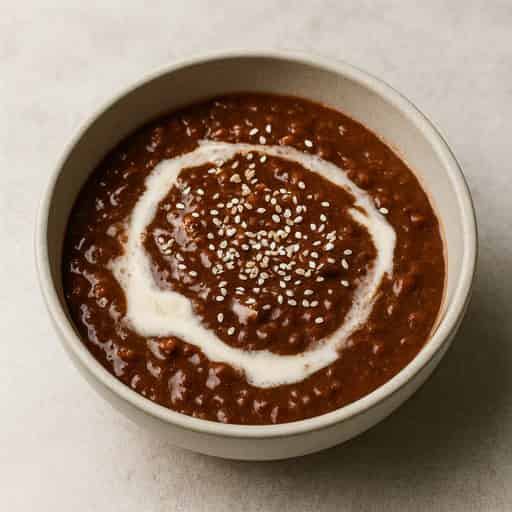
Make Filipino champorado, a thick chocolate rice porridge with malagkit, tablea or cocoa powder, and milk for serving. Includes consistency, rice, and reheating guidance.
Prep time
5 min
Cook time
25 min
Total time
30 min
Servings
4
Recipe Snapshot
DifficultyEasy
MealBreakfast / Snack
Meal PrepExcellent
Family FriendlyYes
CuisineFilipino
Chef's Tips
Keep the champorado looser than you want to eat it: sticky rice continues to absorb liquid as it cools.
Use either cocoa powder or tablea, not both. Sweetened tablea needs less added sugar than unsweetened tablea.
Scrape the base and corners of the pan often once the porridge starts to thicken, especially after the chocolate goes in.
Tools Used
We use affiliate links, which may earn us a small commission at no extra cost to you.
Ingredients
Ingredients
Servings
4 servings1×
Scale
Ingredient amounts update instantly.
Cook The Rice
Add Chocolate And Sweetness
Serve
Instructions
Cook the Rice
- 1
Rinse the malagkit briefly once or twice to remove dust, then drain. Do not rinse until the water is completely clear; some surface starch helps the porridge thicken.
- 2
Put the rice, water, and salt in a heavy-bottomed saucepan. Bring to a boil over medium heat, then reduce to a gentle simmer. Cook for about 10 to 12 minutes, stirring every few minutes and scraping the base and corners of the pan.
Add Chocolate and Sweetness
- 1
Ladle about 120 ml (1/2 cup) of hot cooking liquid into a heatproof bowl. Whisk in the cocoa until smooth. If using tablea, break it up and stir it into the hot liquid until mostly melted. Use one cacao option, not both.
- 2
Stir the chocolate mixture and sugar into the rice. Simmer for another 10 to 15 minutes, stirring more often as it thickens, until the grains are tender with no hard centre and the porridge is glossy and spoon-coating.
- 3
The champorado should still look a little looser than your ideal bowl consistency while hot. If it thickens before the rice is tender, stir in hot water a splash at a time and continue simmering. If it is loose after the rice is tender, simmer gently for a few more minutes rather than adding cornstarch.
Serve the Champorado
- 1
Taste and adjust the sweetness while the champorado is hot. Unsweetened tablea varies in bitterness; sweetened tablea and condensed milk both require less added sugar.
- 2
Ladle into bowls and drizzle with evaporated milk. Fresh milk gives a lighter finish; use condensed milk sparingly because it adds substantial sweetness. Serve optional tuyo alongside for its salty contrast.
Plan This Recipe
Save this recipe to one of your meal plans or browse your existing plans.
Learn More
Everything you want to know about this recipe.
Filipino Champorado
Filipino Champorado
Champorado is a Filipino chocolate rice porridge made with malagkit (glutinous or sticky rice), cacao, and sugar. It is usually served warm with milk poured over the bowl. This recipe keeps the classic sticky, spoon-coating texture and gives a practical choice between Filipino tablea and unsweetened cocoa powder.
It is a breakfast or merienda dish, rather than a chocolate rice pudding in the Western dessert sense. If you see champurrado in Mexican cooking, that is a different dish: a chocolate masa drink, not a rice porridge.
What Rice to Use for Champorado
What Rice to Use for Champorado
Choose malagkit, also sold as glutinous or sticky rice. Its high starch content gives champorado its characteristic chew and creamy body. The word glutinous refers to texture, not gluten; rice itself is naturally gluten-free.
The recipe uses 200 g rice to 960 ml water, a 1:4.8 rice-to-water ratio. That initially looks loose, but it needs to: the rice absorbs liquid while cooking and the porridge thickens again as it cools. Rinse only briefly. A long, clear-water rinse removes more surface starch than this porridge needs.
Short-grain rice is the best non-traditional fallback, but expect a less sticky result. Do not use long-grain rice if you want the usual champorado texture.
Tablea vs Cocoa Powder
Tablea vs Cocoa Powder
Tablea (or tableya) are Filipino cacao tablets or discs made from ground roasted cacao. Commercial tablea differs: some products are unsweetened while others include sugar, so check the packet before adding the full amount of sugar. Break it up and melt it in a little hot cooking liquid before stirring it into the pot.
Unsweetened cocoa powder is a useful alternative when tablea is unavailable. Whisk it with hot liquid first to make a smooth slurry; adding dry cocoa to a thickening pot can leave stubborn lumps. Natural and Dutch-process cocoa both work here because there is no leavening reaction involved. Dutch-process cocoa is darker and rounder; natural cocoa is often a little fruitier and sharper.
Use one cacao option, not both. The 30 g cocoa and 100 g tablea measures are not interchangeable by weight: tablea includes cocoa butter, while cocoa powder is more concentrated in dry cocoa solids. If you prefer a stronger cocoa version, increase it only modestly and taste with a little extra sugar or hot water; more cocoa can also make the porridge more bitter and thicker.
How to Judge the Consistency
How to Judge the Consistency
Simmer gently after the first boil and stir often enough to scrape the bottom and corners of the pan. The rice is ready when the grains are tender through the centre and the porridge looks glossy and coats a spoon. It should look slightly looser than the bowl you want to eat. A perfect-looking thick pot will become much firmer as it cools.
If the rice is still hard but the pot is becoming dry, add hot water a splash at a time and keep simmering. If the rice is tender but the champorado is too loose, continue cooking gently for a few minutes. The rice starch should do the thickening; cornstarch is not needed.
Serving Champorado with Milk and Tuyo
Serving Champorado with Milk and Tuyo
Evaporated milk is commonly drizzled over warm champorado for a mellow, creamy finish. Fresh milk is lighter. Condensed milk can be used, but it is sweetened, so use a small drizzle and reduce the sugar in the pot if that is your plan.
Champorado is also often served with tuyo, Filipino salted dried fish. The salty, savoury fish is a contrast to the sweet chocolate porridge, not a requirement. Serve it on the side so everyone can decide how to eat it.
For another Filipino rice sweet, try sticky biko with latik and coconut jam. For a savoury breakfast alongside a warm bowl, soft Filipino pandesal is a useful make-ahead option.
Champorado Troubleshooting
Champorado Troubleshooting
Too thick: Warm it gently with hot water or milk, stirring in small splashes until it is creamy again. Cold leftovers almost always need extra liquid.
Too thin: First make sure the rice is tender. Then simmer uncovered for a few more minutes, stirring frequently. It will continue to thicken off the heat.
Rice is hard: The mixture needs more hot liquid and time, not higher heat. Add a splash of hot water, simmer gently, and check again after a few minutes.
Bitter or too sweet: Cacao products vary. Unsweetened tablea may need the full sugar amount, while sweetened tablea or condensed milk calls for less. Adjust a spoonful at a time while the pot is hot.
Cocoa is lumpy: Whisk it into hot liquid before it reaches the pot. A small whisk works better than trying to break up dry cocoa after it has hit the rice.
The bottom is scorching: Lower the heat and scrape the bottom regularly. If the base has caught badly, transfer the unburnt top portion to a clean pan without scraping up the scorched layer.
Storage and Reheating
Storage and Reheating
Cool leftovers promptly, cover, and refrigerate for up to 3 days. Reheat on low heat with a splash of water or milk, stirring until loose and hot throughout. For a microwave, use a bowl with room for bubbling, heat in short intervals, and stir between each one. The nutrition estimate uses the cocoa-powder version and 60 ml evaporated milk per bowl; it excludes optional tuyo, and tablea or condensed milk will change the result.
Nutrition Facts
Nutrition Facts
Serving Size: 1 bowl (about 320 g porridge plus 60 ml evaporated milk)
Calories 38019%
% Reference Intake*
Total Fat 6g9%
Saturated Fat 4g20%
Trans Fat 0g
Cholesterol 18mg
Sodium 115mg
Total Carbohydrates 76g29%
Dietary Fiber 3g
Sugars 32g36%
Protein 9g18%
* Reference intakes are based on an average adult's 8,400 kJ / 2,000 kcal diet. Your needs may be higher or lower.
FAQs
What is champorado?
Champorado is Filipino chocolate rice porridge, usually made with malagkit (glutinous or sticky rice), cacao, sugar, and milk served over the finished bowl. It is different from Mexican champurrado, which is a chocolate masa drink rather than a rice porridge.
Does glutinous rice contain gluten?
No. Glutinous describes the rice's sticky texture, not wheat gluten. Rice is naturally gluten-free, although packaged ingredients should always be checked if avoiding gluten is medically necessary.
Can I use regular rice instead of malagkit?
Glutinous rice gives the classic chewy, creamy texture. Short-grain rice is the most workable substitute, but it will be less sticky and may need a little longer to soften. Long-grain rice stays comparatively separate, so it is not a like-for-like swap.
Can I use cocoa powder instead of tablea?
Yes, this recipe supports 30 g unsweetened cocoa powder or 100 g unsweetened tablea. They are not a 1:1 substitution: tablea contains cocoa butter as well as cocoa solids. Bloom cocoa into hot liquid first; check whether tablea is sweetened before adding the full sugar amount.
Why is my champorado too thick or too thin?
It thickens substantially as it cools. For a thick batch, reheat gently with hot water or milk added a splash at a time. For a thin batch with tender rice, simmer a few more minutes while stirring; do not use cornstarch as the default fix.
Can I make champorado ahead of time?
Yes. Cool it promptly, refrigerate in an airtight container for up to 3 days, and reheat gently with a little water or milk to restore its creamy texture. It is best not frozen because cooked sticky rice can become grainy after thawing.
Community Reviews
See how other home cooks made this recipe, then share your own experience.
4.8
5 ratings
5
80%
4
20%
3
0%
2
0%
1
0%
How would you rate this recipe?
Share your experience and help others.
Ramon
· 22 Aug 2026I used unsweetened tablea and started with the lower sugar amount, then adjusted after tasting. The hot-liquid step melted it smoothly.
Bea
· 18 Apr 2026The note to leave it looser in the pan made a real difference. Mine was creamy after cooling instead of setting too thick.
Liza
· 13 Sept 2025Perfect rainy-day breakfast. I added a little condensed milk for extra sweetness!
Carlo
· 13 Sept 2025Used cocoa powder since I didn’t have tablea—still turned out delicious and comforting.
Maria
· 13 Sept 2025Brings back childhood memories! I love mine with evaporated milk and tuyo on the side.
Create Your Own Recipe
Add your personal creations and build your own recipe collection.