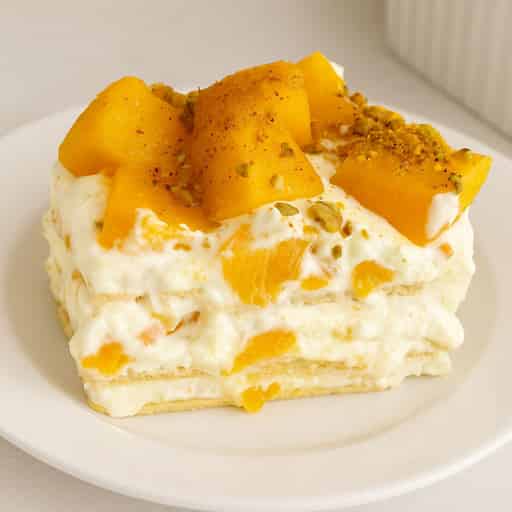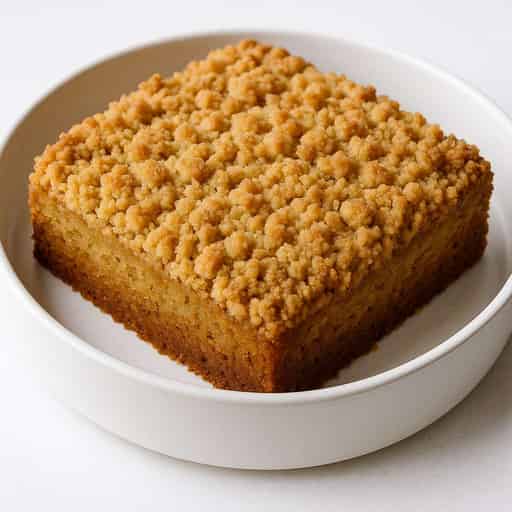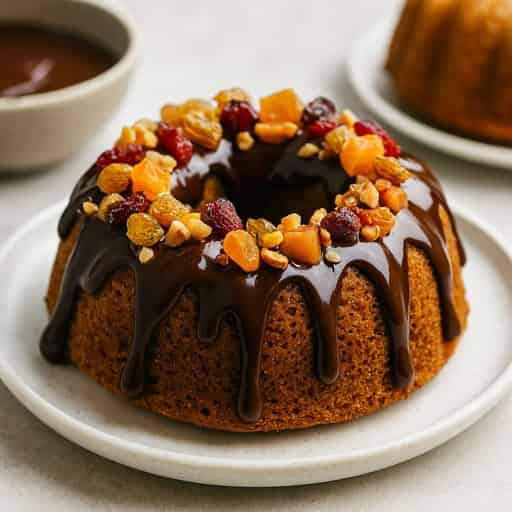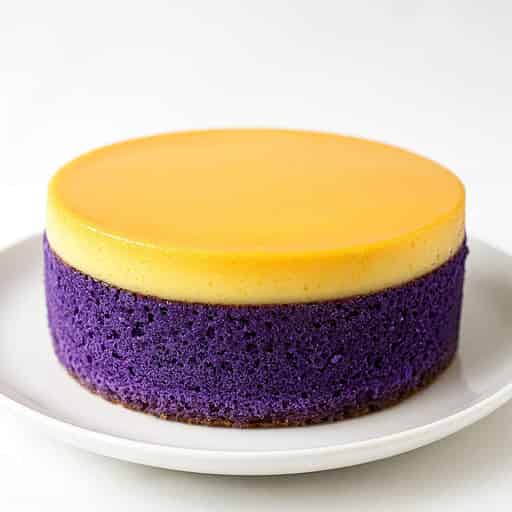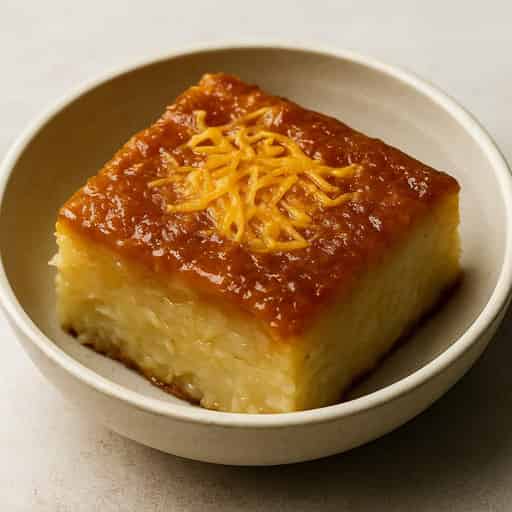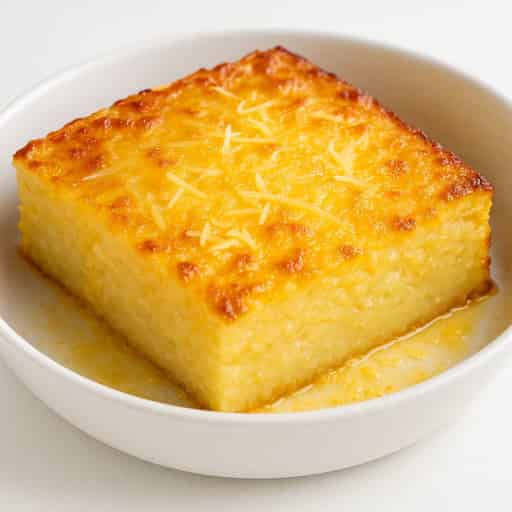
Make creamy Filipino cassava cake with grated cassava, coconut milk, condensed milk, and a golden cheese topping. A soft, sliceable baked kakanin for merienda.
Prep time
15 min
Cook time
55 min
Total time
1 hr 40 min
Servings
16
Time Plan
25 min active · 1 hr 40 min total
- Cool before slicing30 min
Recipe Snapshot
DifficultyEasy
MealDessert / Snack
Meal PrepExcellent
Freezer FriendlyYes
Family FriendlyYes
CuisineFilipino
Chef's Tips
Use full-fat canned coconut milk, shaken before measuring, for the most consistent texture.
Do not overbake the base before adding the topping; it should be mostly set but still soft in the centre.
For clean portions, chill the cooled cake completely and wipe the knife between cuts.
Tools Used
We use affiliate links, which may earn us a small commission at no extra cost to you.
Ingredients
Ingredients
Servings
16 servings1×
Scale
Ingredient amounts update instantly.
Main Ingredients
Topping
Instructions
Make the Cassava Base
- 1
Heat the oven to 165°C fan / 185°C conventional. Lightly grease a 23 x 33 cm (9 x 13-inch) baking pan.
- 2
In a large mixing bowl, combine the grated cassava, coconut milk, coconut water, condensed milk, eggs, grated cheese, and melted butter.
- 3
Mix just until even. The batter should be thick but pourable; with frozen cassava, drain only liquid that has visibly separated rather than squeezing the cassava dry.
- 4
Pour into the prepared pan and smooth the surface.
- 5
Cover loosely with foil and bake for 40 to 45 minutes, or until mostly set.
Add the Cheese Topping
- 1
While the cake bakes, combine the topping ingredients in a saucepan over medium heat.
- 2
Cook just until the butter and cheese melt and the topping is smooth.
- 3
Once the cassava base feels mostly firm, remove the foil and spread the topping evenly.
- 4
Bake uncovered for 8 to 12 minutes, until the top is set, then grill for 1 to 2 minutes only if needed for light colour. Cool for at least 30 minutes before slicing.
Plan This Recipe
Save this recipe to one of your meal plans or browse your existing plans.
Learn More
Everything you want to know about this recipe.
Filipino cassava cake is a baked kakanin made with grated cassava, coconut milk, and sweetened condensed milk. It is not a sponge cake: the texture should be soft and lightly custardy in the middle, firm enough at the edges to slice, and finished with a sweet-salty cheese topping. Serve it warm for a tender scoopable square, or chilled for the cleanest merienda portions.
This is the classic, smooth cassava-cake style rather than a buko cassava cake. The batter is deliberately moist, the base is baked under foil until it is mostly set, and the cheese topping is added only for the final bake. That keeps the two layers distinct and prevents the surface from becoming dry before the centre has cooked through.
Why This Cassava Cake Works
Why This Cassava Cake Works
Grated cassava supplies the structure, but coconut milk, condensed milk, eggs, and butter keep it supple as it bakes. Frozen grated cassava is reliable and convenient; after thawing, drain only liquid that has visibly separated. Squeezing the cassava dry removes the moisture needed for the characteristic tender centre.
The covered first bake gives the thick base time to set gently. At that point, it should look firm around the edges and still yield softly in the middle, not look dry or fully browned. The warm cheese topping then finishes the surface without sinking into loose batter.
Ingredients That Matter
Ingredients That Matter
Use full-fat canned coconut milk, shaken before measuring, for the most even texture. Sweetened condensed milk provides both sweetness and body, so reducing it substantially changes the set of the cake. A mild cheddar or quick-melting processed cheese gives the familiar salty contrast; use one you enjoy eating on its own rather than a very sharp mature cheese.
Fresh grated cassava works well if it is peeled and grated finely. For frozen cassava, thaw it in the refrigerator, stir it well, and drain only the puddle of separated liquid. Do not substitute cassava flour or tapioca starch: neither has the moisture and fibre structure of grated cassava.
How to Tell When It Is Done
How to Tell When It Is Done
After the first bake, the base should no longer ripple when the pan is gently shaken, although the centre will still be soft. Once topped and returned to the oven, the surface should look set and lightly glossy. A brief grill finish is only for colour; watch continuously, as condensed milk can brown quickly.
Cooling is part of the recipe, not an optional wait. Rest the cake for at least 30 minutes before cutting, then chill it completely if you want compact squares that hold their shape. It will feel firmer cold and soften again after a few minutes at room temperature.
Serving, Storage and Variations
Serving, Storage and Variations
Cassava cake is a natural merienda or dessert for sharing, especially alongside coffee or tea. For a more substantial spread, serve smaller squares with fresh fruit. Refrigerate covered leftovers for up to 3 days. Freeze individual slices for up to 2 months, then thaw overnight in the refrigerator and warm gently if you prefer a softer centre.
For a genuinely different cassava cake, try Young Coconut Cassava Cake. Young coconut gives that version a chewy, buko-forward texture rather than simply a different label.
Common Problems
Common Problems
Why is my cassava cake watery or loose?
It likely needed more time in the first bake, or the frozen cassava carried a large amount of separated water into the batter. Bake until the edges are set and the centre only yields softly, then cool fully before judging the final set.
Why is the centre dry instead of creamy?
Overbaking is usually the cause. Remove the foil only once the base is mostly set, and use the topping bake to finish it. The cake also firms considerably as it cools, so do not wait for a dry-looking centre in the oven.
Why did the topping sink into the base?
The base was still too fluid. Return it to the oven under foil until it has a soft but stable surface, then spread the warm topping gently rather than pouring it from height.
Nutrition Facts
Nutrition Facts
Serving Size: 1 square (about 105 g)
Calories 28014%
% Reference Intake*
Total Fat 15g21%
Saturated Fat 10g50%
Trans Fat 0g
Cholesterol 45mg
Sodium 150mg
Total Carbohydrates 33g13%
Dietary Fiber 1g
Sugars 18g20%
Protein 6g12%
* Reference intakes are based on an average adult's 8,400 kJ / 2,000 kcal diet. Your needs may be higher or lower.
FAQs
Can I use frozen grated cassava instead of fresh?
Yes. Thaw it fully, then drain only liquid that has visibly separated. Squeezing the cassava dry can make this creamy-style cake less tender.
How do I know when the cassava cake is fully baked?
The base should be set around the edges and only softly yielding in the centre before the topping goes on. After the final bake, cool it before slicing; cassava cake firms as it cools.
Can I make this cassava cake ahead of time?
Absolutely. Bake the cake a day before, store it in the fridge, and simply reheat slices in the oven before serving.
What other toppings can I try aside from cheese?
You can add macapuno strips, grated coconut, or even a layer of custard for extra flavor and texture.
How should I store leftover cassava cake?
Keep leftovers in an airtight container in the fridge for up to 3 days. For longer storage, freeze slices and reheat before serving.
Community Reviews
See how other home cooks made this recipe, then share your own experience.
4.8
5 ratings
5
80%
4
20%
3
0%
2
0%
1
0%
How would you rate this recipe?
Share your experience and help others.
Inez G.
· 8 Sept 2026Clear instructions and a very good cassava-to-topping balance. I will make it again for merienda.
Paolo M.
· 22 Jul 2026Made this the day before a family lunch. It sliced more cleanly from the fridge, then softened nicely after a few minutes at room temperature.
Celine R.
· 9 Jun 2026The cheese topping was sweet and salty without being heavy. I kept the grill finish brief and it browned nicely.
Daniel P.
· 27 Apr 2026The 9 x 13-inch pan made the thickness much easier to judge. I chilled it before cutting and the squares held together really well.
Mariel S.
· 18 Mar 2026I used thawed frozen cassava and only drained the liquid sitting in the bowl. The centre stayed creamy instead of turning dry.
Browse this topic
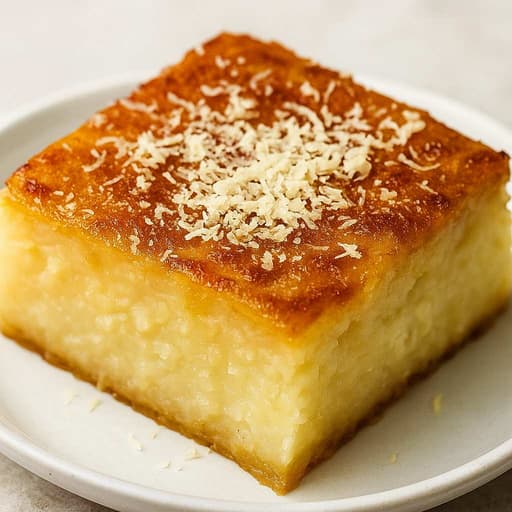
Filipino Home Bakes for Merienda & Celebrations
Filipino home-baking recipes for merienda and celebrations, including cassava cake, mamon, polvoron, brazo de Mercedes, pianono, and more.
8 recipes • Updated 09/08/2026
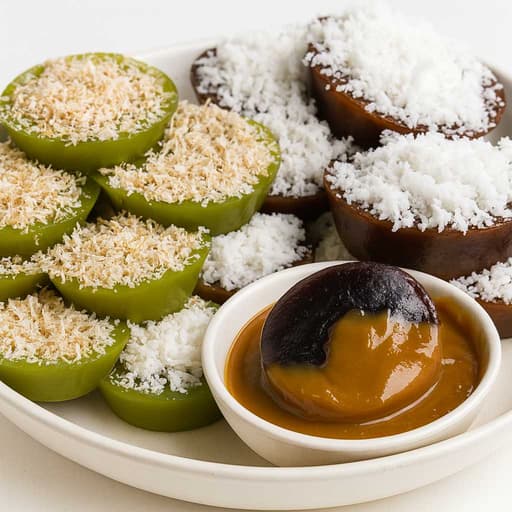
Kakanin Recipes: Filipino Rice Cakes & Sticky Sweets
This topic gathers Filipino rice cakes and sticky sweets such as bibingka, kutsinta, sapin-sapin, and cassava cake for merienda tables, holidays, and everyday dessert spreads.
5 recipes • Updated 24/09/2025
Cassava Cake: Filipino Cassava Cake and Young Coconut Variations
Explore Filipino cassava cake, from a creamy classic with a cheese topping to a distinct young coconut (buko) variation, with practical baking and storage guidance.
2 recipes • Updated 20/05/2026
Create Your Own Recipe
Add your personal creations and build your own recipe collection.