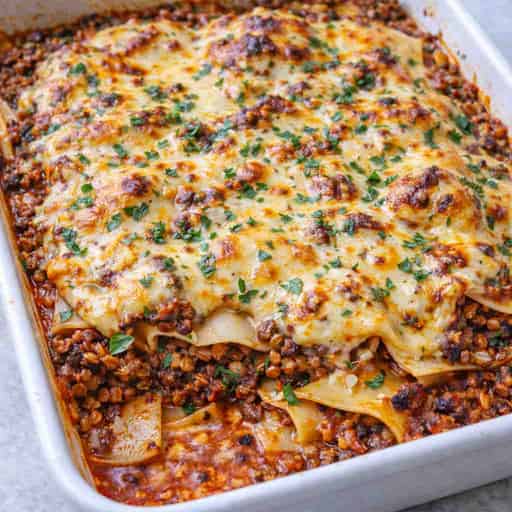
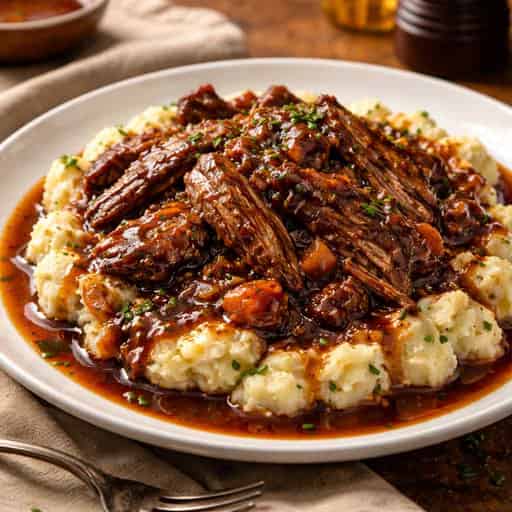
A simpler Greek-inspired lamb moussaka with roasted aubergine, rich tomato sauce, warm spices, and a golden Parmesan breadcrumb topping instead of béchamel.
Prep time
35 min
Cook time
1 hr 15 min
Total time
1 hr 50 min
Servings
6
Recipe Snapshot
DifficultyMedium
MealDinner / Lunch
Meal PrepExcellent
Freezer FriendlyYes
Family FriendlyYes
CuisineGreek
Chef's Tips
Roast the aubergine in a single layer so it browns instead of steaming.
Reduce the lamb sauce until thick before assembling; a wet sauce makes the layers slide.
Rest the baked moussaka for at least 20 minutes so it cuts cleanly.
Tools Used
We use affiliate links, which may earn us a small commission at no extra cost to you.
Ingredients
Ingredients
Servings
6 servings1×
Scale
Ingredient amounts update instantly.
Roasted Aubergine
Lamb Tomato Sauce
Parmesan Breadcrumb Topping
To Finish
Instructions
Roast the Aubergine
- 1
Heat the oven to 220°C fan (240°C conventional). Line two baking trays with parchment paper.
- 2
Arrange the aubergine slices in a single layer. Brush both sides with the 45 ml olive oil and season with the salt.
- 3
Roast for 20 to 25 minutes, turning halfway, until tender and browned at the edges. Set aside and reduce the oven to 190°C fan (210°C conventional).
Cook the Lamb Sauce
- 1
Heat the 15 ml olive oil in a large frying pan over medium heat. Add the onion and cook for 6 to 8 minutes until soft and lightly golden.
- 2
Add the garlic and cook for 1 minute. Add the lamb, increase the heat to medium-high, and cook for 8 to 10 minutes, breaking it up, until browned and no longer watery.
- 3
Stir in the tomato purée, cinnamon, cumin, oregano, salt, and pepper. Cook for 2 minutes until the tomato purée darkens slightly.
- 4
Add the chopped tomatoes and stock. Bring to a simmer, then cook uncovered for 25 to 30 minutes, stirring occasionally, until thick enough that a spoon leaves a clear track across the pan.
Assemble the Moussaka
- 1
Lightly oil a 2-litre baking dish. Cover the base with one-third of the roasted aubergine, followed by half of the lamb sauce.
- 2
Repeat with another third of the aubergine and the remaining lamb sauce. Finish with the remaining aubergine slices.
- 3
Mix the Parmesan, breadcrumbs, and 15 ml olive oil. Scatter evenly over the top.
Bake and Rest
- 1
Bake at 190°C fan (210°C conventional) for 25 to 30 minutes, until bubbling at the edges and golden on top.
- 2
Rest for at least 20 minutes before slicing. Finish with parsley and serve with Greek yogurt, if using.
Plan This Recipe
Save this recipe to one of your meal plans or browse your existing plans.
Learn More
Everything you want to know about this recipe.
Easy Lamb Moussaka Without Béchamel
Easy Lamb Moussaka Without Béchamel
This easy lamb moussaka keeps the best parts of a Greek-inspired layered bake: tender roasted aubergine, a deeply seasoned tomato and lamb sauce, and a golden cheesy topping. It skips the separate béchamel stage, making it more practical for a weeknight or a make-ahead weekend dinner.
The page is intentionally distinct from a classic béchamel-topped moussaka. Roasting the aubergine instead of frying it also gives the finished dish a cleaner texture and avoids a heavy layer of absorbed oil.
Why Roast the Aubergine?
Why Roast the Aubergine?
Aubergine can absorb a surprising amount of oil when fried. Roasting the slices with a measured amount of olive oil softens them while concentrating their flavour and browning the edges. Use two trays if necessary; crowded slices release steam and become soft without developing colour.
Do not skip the turning step. The second side needs direct heat so the slices are flexible enough to layer but not watery.
Building a Thick Lamb Sauce
Building a Thick Lamb Sauce
Brown the lamb before adding the tomatoes. This drives off excess moisture and creates savoury browned flavour. Tomato purée is cooked briefly with the spices before the chopped tomatoes and stock go in, which removes its raw taste and gives the sauce more depth.
The sauce is ready when it is thick enough for a spoon to leave a track across the pan. If it still looks loose, keep simmering uncovered for a few minutes. This is the main protection against a watery bake.
Layering and Topping
Layering and Topping
Divide the aubergine into three portions so every serving gets vegetables through the middle and at the top. The Parmesan breadcrumb mixture forms a light crust rather than a thick cheese blanket. Add it evenly and drizzle with the measured olive oil so it browns without dry patches.
Rest the moussaka before cutting. The lamb sauce will continue to set as it cools, and the layers will be easier to serve neatly after 20 minutes.
Make-Ahead, Freezing, and Reheating
Make-Ahead, Freezing, and Reheating
Assemble the dish up to 24 hours ahead and keep it covered in the refrigerator. Let the chilled dish sit at room temperature while the oven heats, then add a few extra minutes to the bake if needed.
Cooked leftovers keep for up to three days in the refrigerator. Reheat portions covered at 180°C until piping hot, then uncover for the final few minutes to re-crisp the topping. Freeze cooled portions in airtight containers for up to two months and thaw overnight in the refrigerator before reheating.
Serving Ideas
Serving Ideas
Serve with Greek yogurt, chopped parsley, and a sharp lemon-dressed salad. A simple cucumber and tomato salad also works well because its freshness balances the rich lamb sauce. Warm flatbread is useful for catching any remaining sauce, but the moussaka is substantial enough to serve on its own.
Common Problems
Common Problems
- Watery layers: The lamb sauce needed more reduction, or the aubergine trays were overcrowded.
- Oily aubergine: Too much oil was used or the slices were fried rather than roasted. Brush them lightly and measure the oil.
- Crumbly slices: The dish was cut immediately after baking. Rest it for at least 20 minutes.
- Pale topping: Bake uncovered and use the measured oil in the breadcrumb mixture to help it brown.
Frequently Asked Questions
Frequently Asked Questions
Is this the same as béchamel moussaka?
No. This easier version uses a Parmesan breadcrumb topping instead of béchamel. The flavour profile is still recognisably Greek-inspired, but the method has one fewer cooked component and a lighter finish.
Can I use beef instead of lamb?
Yes. Use the same quantity of lean-to-medium beef mince. It will taste less distinctly lamb-like, but the tomato, cinnamon, and aubergine combination still works well.
Can I prepare it in advance?
Yes. Assemble it up to one day ahead, or bake it and refrigerate portions for up to three days. Allow the dish to rest after baking so the layers set before serving.
Nutrition Facts
Nutrition Facts
Serving Size: 1 portion
Calories 52026%
% Reference Intake*
Total Fat 31g44%
Saturated Fat 11g55%
Trans Fat 0g
Cholesterol 95mg
Sodium 760mg
Total Carbohydrates 28g11%
Dietary Fiber 9g
Sugars 13g14%
Protein 36g72%
* Reference intakes are based on an average adult's 8,400 kJ / 2,000 kcal diet. Your needs may be higher or lower.
FAQs
Is this traditional Greek moussaka?
This is a simpler Greek-inspired version. It uses the familiar lamb, aubergine, tomato, and warm-spice combination but replaces the classic béchamel layer with a Parmesan breadcrumb topping. Our separate layered Greek moussaka includes a silky béchamel when that is the style you want.
How do I stop moussaka from becoming watery?
Roast the aubergine until tender and browned, and reduce the lamb sauce uncovered until it is thick before layering. Resting the finished bake is also important because the juices settle as it cools.
Can I make this moussaka ahead?
Yes. Assemble and refrigerate it for up to 24 hours before baking, or bake it, cool it, and refrigerate portions for up to three days. Reheat covered until hot, then uncover briefly to refresh the topping.
Community Reviews
See how other home cooks made this recipe, then share your own experience.
5.0
3 ratings
5
100%
4
0%
3
0%
2
0%
1
0%
How would you rate this recipe?
Share your experience and help others.
Noor
· 17 Aug 2026I made it ahead, chilled it, and reheated portions the next day. The aubergine stayed tender and the topping crisped again nicely.
Daniel
· 16 Jun 2025The reduced sauce and resting time were useful tips. The slices held together instead of sliding across the plate.
Sofia
· 16 Jun 2025Roasting the aubergine made this much less oily than versions I have made before, and the lamb sauce had plenty of flavour.
Create Your Own Recipe
Add your personal creations and build your own recipe collection.