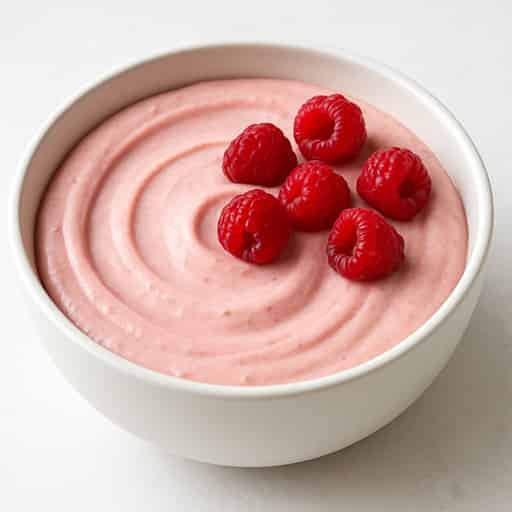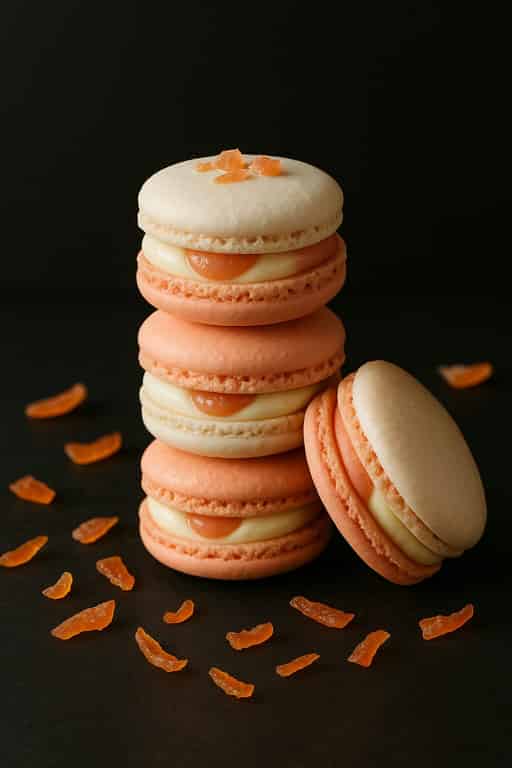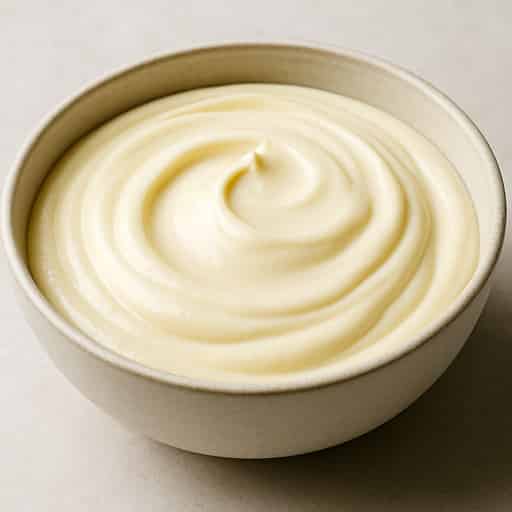
Make smooth white chocolate namelaka with milk, cream, gelatin, and a stable chocolate emulsion. Includes overnight chilling and troubleshooting guidance.
Prep time
15 min
Cook time
10 min
Total time
8 hr 25 min
Servings
6
Time Plan
25 min active · 8 hr 25 min total
- Mature the namelaka in the refrigerator8 hr
Recipe Snapshot
DifficultyMedium
MealDessert
Meal PrepExcellent
Chef's Tips
Weigh the powdered gelatin and water in grams. At 3 g, small measuring errors noticeably affect the final set.
Use real white chocolate that lists cocoa butter. Different white chocolates set differently, so avoid replacing it with compound coating or untested chips.
Keep the immersion blender head below the surface and blend in a tall jug to make a smooth emulsion without filling the namelaka with bubbles.
Tools Used
Small BowlSaucepan(opens in a new tab)Heatproof Measuring Jug(opens in a new tab)Immersion Blender(opens in a new tab)Silicone Spatula(opens in a new tab)
We use affiliate links, which may earn us a small commission at no extra cost to you.
Ingredients
Ingredients
Servings
6 servings1×
Scale
Ingredient amounts update instantly.
Gelatin Bloom
White Chocolate Emulsion
Cold Cream Finish
Instructions
Bloom the Gelatin
- 1
Sprinkle the powdered gelatin evenly over the cold water in a small bowl. Leave it for 5 to 10 minutes, until it has absorbed the water and looks fully hydrated. Do not add dry gelatin directly to the hot milk.
Make the White Chocolate Emulsion
- 1
Put the chopped white chocolate in a tall heatproof measuring jug. Melt it gently in short microwave bursts, stirring between each, until smooth and just melted. Do not overheat it.
- 2
Heat the milk and glucose syrup in a small saucepan until steaming and just beginning to simmer. Remove from the heat, add the bloomed gelatin, and stir until it has dissolved completely.
- 3
Pour the warm milk mixture over the melted chocolate in three additions. After each addition, stir from the centre outward until the mixture looks smooth, glossy, and elastic before adding the next.
- 4
Blend with an immersion blender for 30 seconds with the head submerged. Keep it at a slight angle in the tall jug and do not lift it through the surface, which would introduce air bubbles.
Add the Cold Cream and Mature
- 1
Add the cold cream and blend again just until completely homogeneous and glossy. The namelaka will be fluid at this point; do not whip the cream or expect the mixture to be ready for piping yet.
- 2
Transfer to an airtight container and press cling film directly onto the surface. Refrigerate for at least 8 hours, ideally overnight, until it is softly set, spoonable, and pipeable. The yield is about 588 g.
Use the Chilled Namelaka
- 1
Use the chilled namelaka directly for the smoothest texture. If it has become firmer than you need for piping, let it stand at cool room temperature for 5 to 10 minutes, then stir gently with a spatula.
Plan This Recipe
Save this recipe to one of your meal plans or browse your existing plans.
Learn More
Everything you want to know about this recipe.
White Chocolate Namelaka
White Chocolate Namelaka
White chocolate namelaka is an ultra-smooth chocolate cream made by emulsifying white chocolate with warm milk, gelatin, and cold cream, then chilling it until softly set. It is a pastry component rather than a mousse or frosting: initially fluid, then spoonable and pipeable after a full refrigerator rest.
The name is associated with an exceptionally creamy texture. This recipe keeps that texture as its priority, using white chocolate for cocoa butter and sweetness, a small amount of gelatin for a soft set, and cold cream to complete the emulsion.
What Makes Namelaka Different?
What Makes Namelaka Different?
Namelaka is not simply white chocolate ganache. Ganache is generally a chocolate-and-cream emulsion, while this namelaka also uses milk, gelatin, and an extended maturation period. The result is softer and more supple than a firm ganache, but still holds more neatly than a loose sauce.
It is also different from mousse, which gets much of its structure from incorporated air such as whipped cream, meringue, or eggs. Namelaka is set primarily by its chocolate emulsion and gelatin, so use this recipe unwhipped. Unlike pastry cream, it contains neither egg yolks nor starch and is not cooked until thick.
The Key to a Smooth White Chocolate Emulsion
The Key to a Smooth White Chocolate Emulsion
The tested formulation is 170 g white chocolate, 130 g whole milk, 260 g cold cream, 10 g glucose syrup, and 3 g powdered gelatin bloomed in 15 g water. That puts the gelatin at about 0.5% of the finished 588 g mixture: enough for a softly set cream, not a firm jelly.
Use real white chocolate that contains cocoa butter. White chocolate has no cocoa solids and its cocoa butter, sugar, and milk-solids balance differs from dark or milk chocolate, so their namelaka ratios are not interchangeable. There is no single required cocoa-butter percentage here because commercial white chocolates vary; follow the weights and assess the set only after the full chill.
Add the warm milk in stages and stir until each addition becomes glossy before adding the next. This establishes the emulsion rather than leaving an oily or grainy mixture. An immersion blender finishes it, but keep the blade submerged in a tall jug so it homogenises the cream without adding bubbles.
Why It Needs an Overnight Chill
Why It Needs an Overnight Chill
The namelaka should look fluid immediately after blending. During refrigeration, the gelatin sets and the cocoa butter and dairy fat firm into the intended softly set texture. Eight hours is the minimum; overnight is more reliable, especially if you plan to pipe it.
Cover the surface directly and refrigerate rather than leaving it at room temperature. Chilled namelaka is suitable for filling a baked tart shell, piping into choux, or using in a small chilled cake layer. It is not a direct buttercream replacement and should not sit unrefrigerated for an extended display.
White Chocolate Namelaka Troubleshooting
White Chocolate Namelaka Troubleshooting
It is still runny after chilling
First confirm that it has chilled for the full 8 hours; warm namelaka is supposed to be liquid. If it is still loose after overnight chilling, check that the full 3 g gelatin was weighed and fully dissolved, the white chocolate contained cocoa butter, and the liquid quantities were not increased. Do not add extra gelatin to an already made batch without retesting the formula.
It is too firm to pipe
Too much gelatin, a high-cocoa-butter chocolate, or a very cold refrigerator can make the set firmer. Let the bowl stand for 5 to 10 minutes at cool room temperature, then stir gently. Do not heat it aggressively, which can damage the set and make it uneven.
It looks split or oily
A split emulsion looks oily at the edges or separated rather than uniformly glossy. This usually comes from overheated chocolate, adding the liquid too quickly, or incomplete mixing. While the mixture is still warm, use the immersion blender with the head submerged to try to bring it back together; do not add random extra liquid.
It is grainy or full of bubbles
Graininess usually points to overheated or incompletely melted white chocolate, not the same issue as trapped air. Melt the chocolate gently and emulsify each addition before the next. Bubbles come from lifting the immersion blender through the surface; blend at a slight angle and allow the finished mixture to stand briefly before covering.
Practical Uses
Practical Uses
Use this white chocolate namelaka in a crisp tart shell, inside choux, or as a chilled insert or filling for modest cake layers. Pair it with tart fruit, coffee, citrus, or lightly salted elements to balance its sweetness. For a different chocolate profile, use the separately formulated chocolate namelaka; for a nut-led version, use pistachio namelaka cream. Do not simply add fruit purée, alcohol, or citrus juice to this base, as each changes the water balance or acidity.
Storage
Storage
Make the namelaka one day ahead when possible. Keep it covered airtight in the refrigerator and use within 3 days for the cleanest texture. Freezing has not been tested for this formulation, so it is not recommended as a make-ahead method. For an application in a tart, the sweet dough tart shell guide covers how to keep the pastry crisp before filling.
Nutrition Facts
Nutrition Facts
Serving Size: 1/6 recipe, about 98 g
Calories 32016%
% Reference Intake*
Total Fat 25g36%
Saturated Fat 15g75%
Trans Fat 0g
Cholesterol 60mg
Sodium 40mg
Total Carbohydrates 22g8%
Dietary Fiber 0g
Sugars 21g23%
Protein 4g8%
* Reference intakes are based on an average adult's 8,400 kJ / 2,000 kcal diet. Your needs may be higher or lower.
FAQs
Can I use white chocolate chips?
Use the tested form first: real white chocolate that lists cocoa butter. Some baking chips contain stabilisers or different fat profiles, so they may melt and set differently in this formulation.
Can I whip this white chocolate namelaka?
This formulation is designed to be used unwhipped. Whipping changes its texture and stability, so use it chilled and smooth rather than treating it as whipped ganache or buttercream.
Can I make namelaka without gelatin?
Not with this tested formula. Agar, pectin, and starch create different textures and cannot be substituted one-for-one for gelatin here.
Can I use it as a cake filling?
It works best in chilled, low layers or as a piped filling inside a dam. It is not a room-temperature-stable frosting and is not designed to support tall, heavy cake layers by itself.
Community Reviews
See how other home cooks made this recipe, then share your own experience.
5.0
4 ratings
5
100%
4
0%
3
0%
2
0%
1
0%
How would you rate this recipe?
Share your experience and help others.
Samira P.
· 14 Jul 2026The three additions and overnight chill gave me a smooth cream that piped cleanly into my tart the next day.
Claire
· 13 Sept 2025So smooth and rich! Tastes amazing with raspberry coulis.
Marco
· 12 Sept 2025Made it for an entremet filling. Sets beautifully overnight.
LilaBakes
· 10 Sept 2025Tried this for a fruit tart—so creamy and not too sweet. Perfect balance!
Create Your Own Recipe
Add your personal creations and build your own recipe collection.