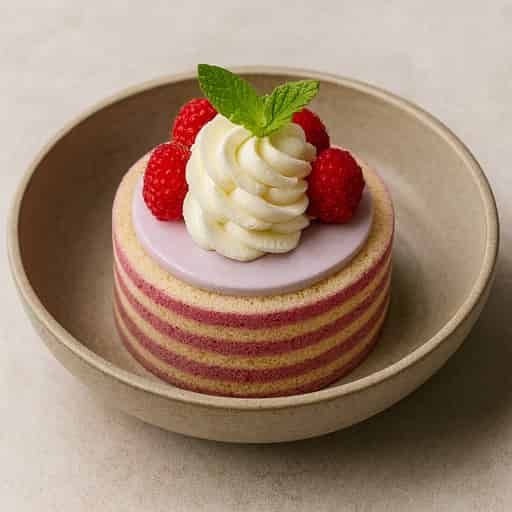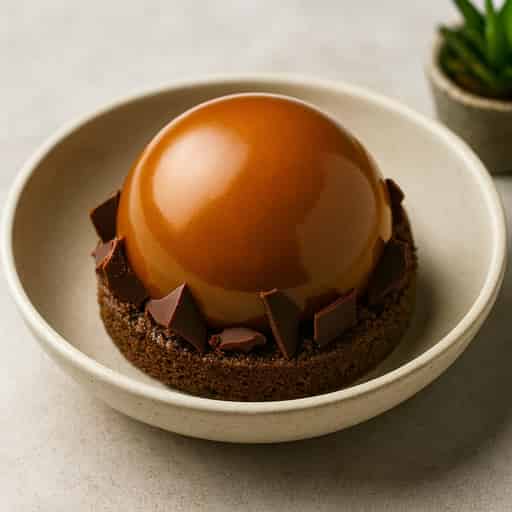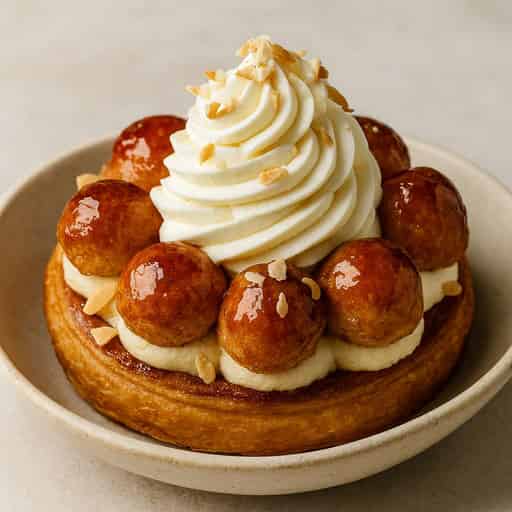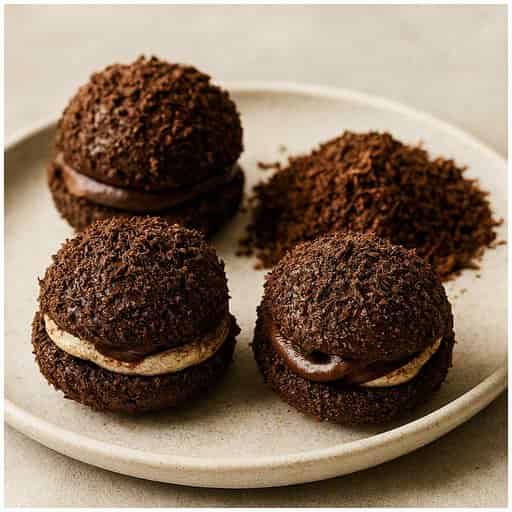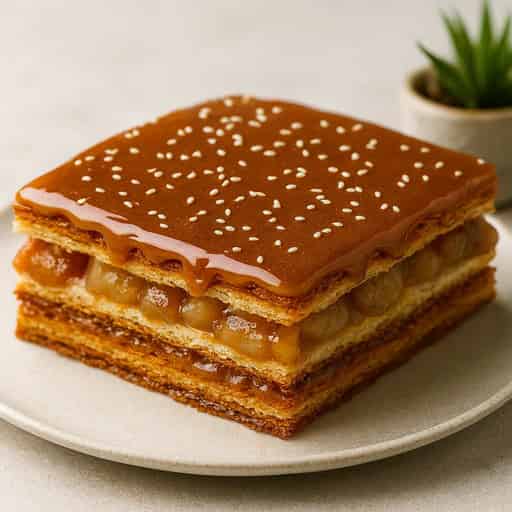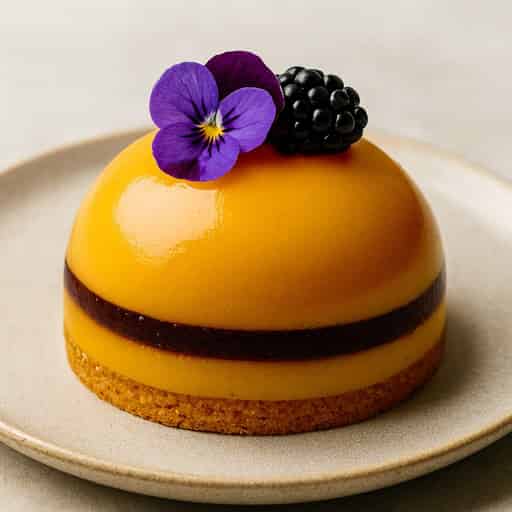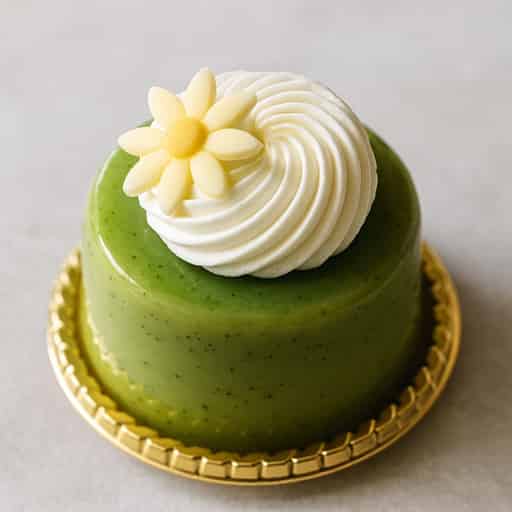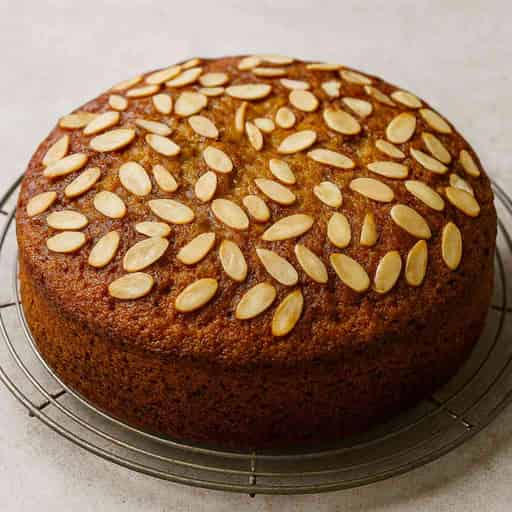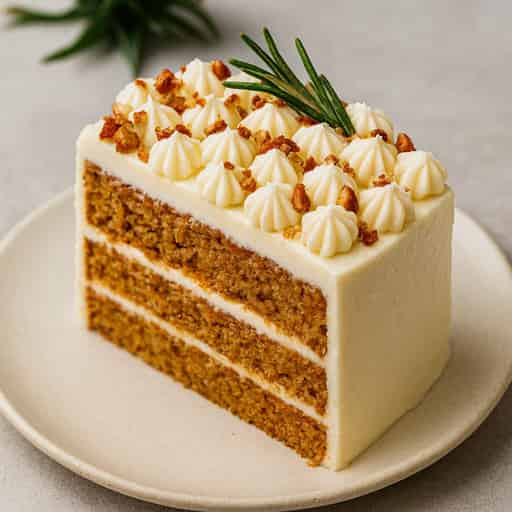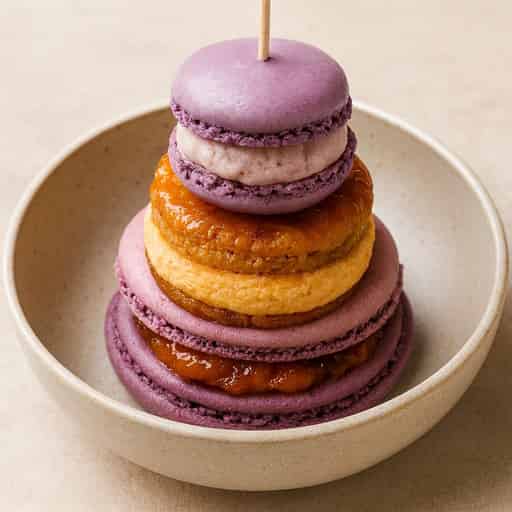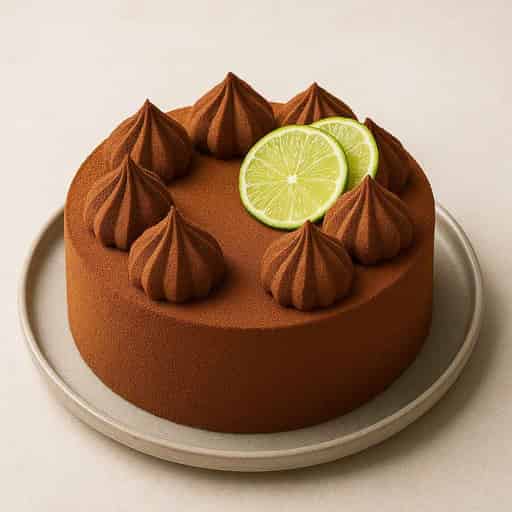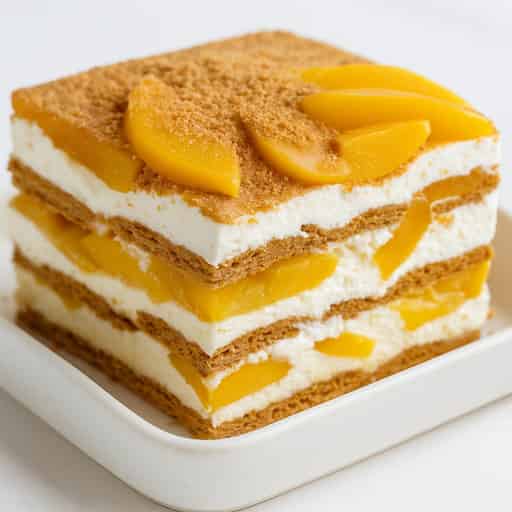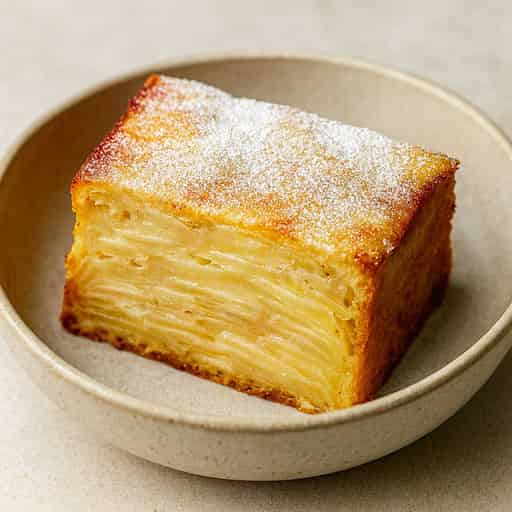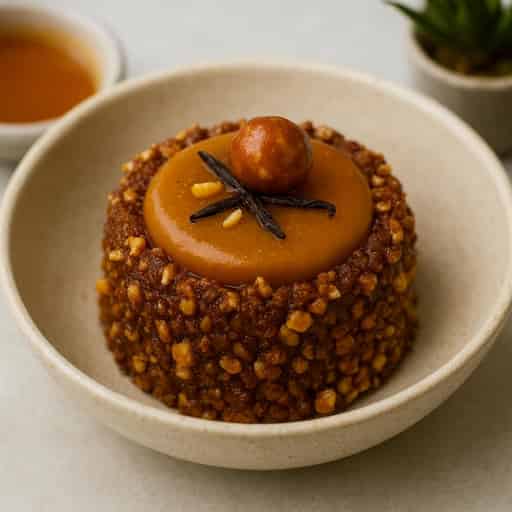
Hazelnut pound cake with candied orange, citrus syrup, and a soft vanilla caramel center, finished with praline crunch. A detailed baking project with nutty crumb, bright citrus, and a rich caramel finish.
Prep time
4 hr
Cook time
45 min
Total time
6 hr 45 min
Servings
9
Chef's Tips
Toast the hazelnut meal for a deeper nutty flavor.
If you don’t have silicone inserts, press a cutter into the warm cake to create the caramel well.
Brush the sides with apricot jam before coating with praline for a glossy finish.
Tools Used
We use affiliate links, which may earn us a small commission at no extra cost to you.
Ingredients
Ingredients
Servings
9 servings1×
Scale
Ingredient amounts update instantly.
Hazelnut Pound Cake
Citrus Syrup
Soft Vanilla Caramel
Praline Coating
Instructions
Hazelnut Pound Cake
- 1
Toast the hazelnut meal and cool.
- 2
Dust candied orange in cornflour.
- 3
Combine hazelnut meal, almond meal, and remaining cornflour.
- 4
Whisk brown sugar, eggs, and yolks until thick.
- 5
Make a soft meringue from egg whites, sugar, and salt.
- 6
Fold meringue into egg mix, then fold in dry ingredients and melted butter.
- 7
Stir in zests and candied orange.
- 8
Fill rings or moulds and bake at 155°C (300°F) for 30–35 minutes.
Citrus Syrup
- 1
Boil water and sugar, then add lemon juice and Grand Marnier.
- 2
Brush warm cakes with syrup immediately after baking.
Soft Vanilla Caramel
- 1
Warm cream, butter, and invert sugar.
- 2
Caramelize sugar and glucose with vanilla.
- 3
Deglaze with cream, cook to 115°C (239°F), and pour into cake wells.
Praline Coating
- 1
Heat hazelnuts at 80°C (175°F).
- 2
Cook sugar and water to 118°C (244°F), add nuts, stir until caramelized.
- 3
Add cocoa butter, cool, and chop.
Assembly
- 1
Brush cakes with apricot jam and coat with chopped praline.
- 2
Top with caramelized hazelnut for garnish.
Plan This Recipe
Save this recipe to one of your meal plans or browse your existing plans.
Learn More
Everything you want to know about this recipe.
Hazelnut Pound Cake with Caramel and Orange
Hazelnut Pound Cake with Caramel and Orange
This hazelnut pound cake is a detailed baking project built around contrast. The cake itself is nutty and dense in a good way, the citrus syrup keeps it from tasting heavy, and the soft caramel center adds a richer texture that breaks up the crumb. The praline coating finishes the cakes with crunch instead of making them feel uniformly soft.
It reads like a special-occasion dessert rather than an everyday loaf cake. The method has several components, but each one has a clear job, so the recipe is easier to approach when you think of it as a series of small pastry steps.
Why This Recipe Works
Why This Recipe Works
Hazelnut meal and almond meal give the cakes more depth than a standard butter pound cake, while the candied orange and citrus zest stop the flavor from leaning too flat or overly sweet.
The syrup matters because it keeps the cakes moist after baking and helps carry the orange liqueur flavor through the crumb. The caramel center then adds a second texture that makes the finished cakes feel more layered and polished.
Ingredient Notes
Ingredient Notes
Toast the hazelnut meal before mixing if you want a stronger roasted flavor in the finished cake. Candied orange adds both sweetness and chew, so it is worth dusting it in cornstarch as written to help distribute it more evenly through the batter.
The praline coating is not just decorative. It gives the outside of the cakes a firmer bite that contrasts with the syrup-soaked crumb and soft caramel center. If you are planning the bake across more than one session, this is one of the best components to make ahead.
How to Make It
How to Make It
Start with the cake batter and bake the cakes first so they can be soaked while still warm. Once they are out of the oven, brush them with the citrus syrup so the flavor absorbs properly rather than sitting only on the surface.
Make the caramel separately and pour it into the prepared cake wells while it is still fluid enough to settle cleanly. Finish by making the praline, chopping it once cool, and coating the outside of the cakes after brushing them lightly with apricot jam.
Planning, Storage, and Serving
Planning, Storage, and Serving
This recipe is easier to manage when broken into stages. You can bake the cakes and make the syrup one day, then finish the caramel and praline closer to when you want to serve them.
Because the cakes are syrup-soaked and filled, they hold well for a short time, but the praline is best when it still has some crispness. Serve them slightly cool rather than fridge-cold so the caramel stays soft enough to cut cleanly.
Portion Guidance for Goals
Portion Guidance for Goals
One small cake is a reasonable dessert serving because the caramel, praline, and nut meal make this richer than an ordinary tea cake.
When to Eat
When to Eat
This is best saved for a dinner party, holiday table, or a baking project where the point is the finished dessert rather than speed.
Balance Tip
Balance Tip
If you are serving a full meal, keep the rest of dessert simple around it. The cake already brings citrus, caramel, and crunch, so it does not need much more than coffee or tea on the side.
Nutrition Facts
Nutrition Facts
Serving Size: 1 small cake
Calories 42021%
% Reference Intake*
Total Fat 26g37%
Saturated Fat 9g45%
Trans Fat 0g
Cholesterol 85mg
Sodium 120mg
Total Carbohydrates 40g15%
Dietary Fiber 2g
Sugars 30g33%
Protein 7g14%
* Reference intakes are based on an average adult's 8,400 kJ / 2,000 kcal diet. Your needs may be higher or lower.
Community Reviews
See how other home cooks made this recipe, then share your own experience.
4.6
5 ratings
5
60%
4
40%
3
0%
2
0%
1
0%
How would you rate this recipe?
Share your experience and help others.
Rowan
· 22 Jun 2026Definitely a project bake, but the caramel center and praline edge made it feel worth the effort for a dinner party dessert.
Elise
· 7 Feb 2026I spread the work over two days and that made the whole recipe much more manageable. The orange syrup helped keep the cakes tender.
Marie
· 20 Oct 2025Loved the hazelnut aroma and praline crunch. A showstopper dessert.
Liam
· 18 Oct 2025Takes time but looks professional—perfect for dinner parties!
Sophie
· 14 Oct 2025Absolutely divine! The caramel centre was silky and rich—worth every step.
Create Your Own Recipe
Add your personal creations and build your own recipe collection.