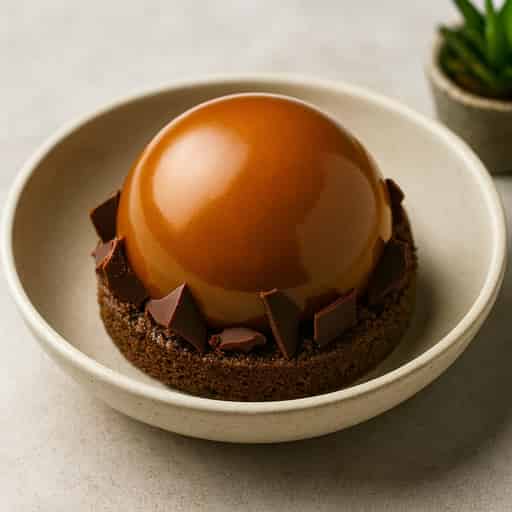
Smooth chocolate namelaka made with milk chocolate, cream, and gelatin for a stable yet light pastry cream ideal for cakes, tarts, and plated desserts.
Prep time
15 min
Cook time
10 min
Total time
25 min
Servings
6
Chef's Tips
Chill overnight for the cleanest texture and best piping consistency.
Blend with a stick blender to form a stable emulsion.
Whisk lightly before serving if you want a softer, more aerated finish.
Tools Used
We use affiliate links, which may earn us a small commission at no extra cost to you.
Ingredients
Ingredients
Servings
6 servings1×
Scale
Ingredient amounts update instantly.
Chocolate Namelaka
Instructions
Prepare the Base
- 1
Bloom the gelatin in water and set aside.
- 2
Heat milk and glucose over medium-low until just simmering.
Combine with Chocolate
- 1
Melt the chopped chocolate gently in a heatproof bowl.
- 2
Stir bloomed gelatin into the hot milk until fully dissolved.
- 3
Pour the hot liquid over the chocolate in three additions, mixing well each time.
- 4
Blend with a stick blender until smooth and glossy.
Finish and Chill
- 1
Add cold cream and blend again to fully emulsify.
- 2
Transfer to a shallow dish and cover with wrap touching the surface.
- 3
Refrigerate for at least 8 hours or overnight before using.
- 4
Use as is, or whisk lightly for a softer texture.
Plan This Recipe
Save this recipe to one of your meal plans or browse your existing plans.
Learn More
Everything you want to know about this recipe.
Flavor Profile
Flavor Profile
Chocolate namelaka sits between ganache and mousse in texture. It has the richness of chocolate cream but feels lighter on the palate because of the emulsion method and gelatin structure. The result is smooth, spoonable, and clean-tasting rather than heavy.
Milk chocolate gives gentle cocoa flavor and enough sweetness to stand on its own. If you serve it with fruit, tart berries or citrus segments help balance that sweetness.
Ingredient Highlights
Ingredient Highlights
Gelatin provides the structure that makes namelaka stable for piping and layering. The amount here is low, so the texture stays creamy rather than firm.
Glucose syrup supports a smoother mouthfeel and reduces graininess. It also helps the cream hold a uniform texture after chilling.
Cold cream is added at the end to cool the mixture and complete the emulsion. Blending thoroughly at this stage is key to a glossy, even finish.
How It Comes Together
How It Comes Together
The process is short but technique-driven. First, bloom gelatin fully so it dissolves cleanly without lumps. Next, heat milk and glucose only to a simmer; boiling aggressively can affect texture.
When combining with chocolate, add the hot liquid in stages. This gradual mixing builds a stable emulsion and prevents separation. A stick blender then smooths and tightens the structure.
Finally, add cold cream and blend again. Chill overnight so the network sets evenly. Once chilled, namelaka can be spooned, piped, or lightly whisked depending on how you plan to serve it.
Chef's Tips
Chef's Tips
Use a narrow container for blending to reduce air bubbles and keep the finish shiny. If you want a very clean plated presentation, strain the final mixture before chilling.
Avoid over-whisking after it sets. Excess agitation can loosen structure and reduce hold for piping.
For layered cakes, pipe a border ring first, then fill the center. This keeps fillings stable and helps the layers stay level.
Easy Swaps
Easy Swaps
If glucose syrup is unavailable, substitute light corn syrup or mild honey. Keep the quantity the same and taste before adding extra sweetness elsewhere.
You can shift flavor profile by using darker chocolate, but reduce gelatin slightly only after testing because darker chocolate naturally firms more when chilled.
Make-Ahead and Storage
Make-Ahead and Storage
Chocolate namelaka is ideal for advance prep. Make it one day ahead and keep covered with film touching the surface to prevent skin formation.
Use within 3 to 4 days refrigerated. If very firm after chilling, leave at cool room temperature for a short time, then whisk gently to restore spreadable texture.
Nutrition Facts
Nutrition Facts
Serving Size: About 100 g
Calories 30515%
% Reference Intake*
Total Fat 24g34%
Saturated Fat 14g70%
Trans Fat 0g
Cholesterol 55mg
Sodium 35mg
Total Carbohydrates 20g8%
Dietary Fiber 1g
Sugars 18g20%
Protein 4g8%
* Reference intakes are based on an average adult's 8,400 kJ / 2,000 kcal diet. Your needs may be higher or lower.
FAQs
What is chocolate namelaka best used for?
It works well as a cake filling, tart layer, plated dessert cream, or a spoonable component in dessert cups.
Can I make it without glucose syrup?
Yes. Honey or corn syrup can substitute, though glucose usually gives the smoothest texture and best stability.
How long does it keep in the refrigerator?
Stored in an airtight container, it keeps well for 3 to 4 days.
Community Reviews
See how other home cooks made this recipe, then share your own experience.
4.5
4 ratings
5
50%
4
50%
3
0%
2
0%
1
0%
How would you rate this recipe?
Share your experience and help others.
Citizen of the World
· 6 Sept 2025Great flavor and easy to portion for plated desserts.
Jam Stock
· 5 Sept 2025The texture came out very smooth and light.
J9 Sparx
· 3 Sept 2025It set well overnight and piped cleanly the next day.
Baz
· 1 Sept 2025How stable is this when used as a cake filling?
Browse this topic
Create Your Own Recipe
Add your personal creations and build your own recipe collection.