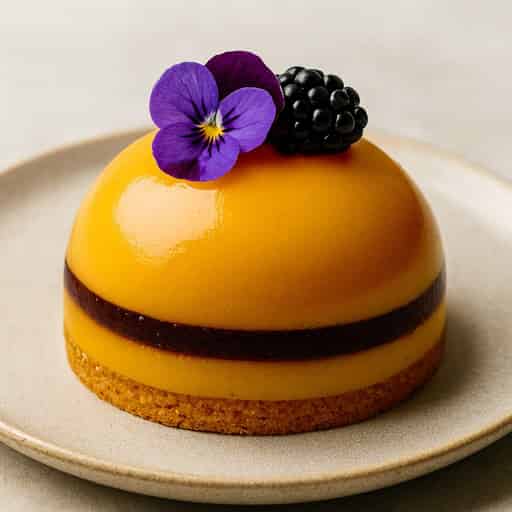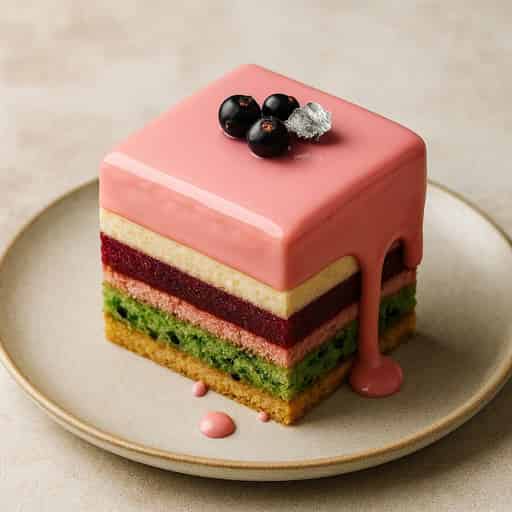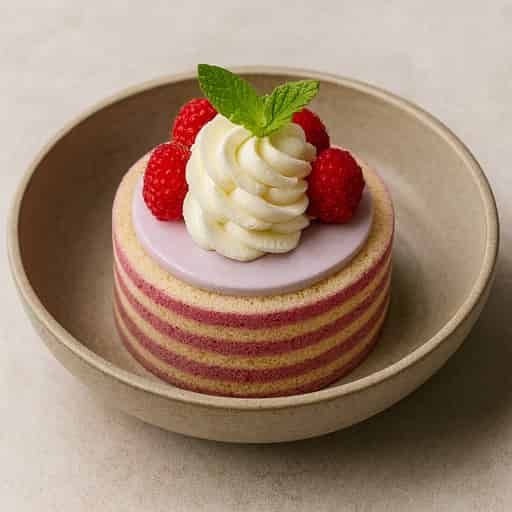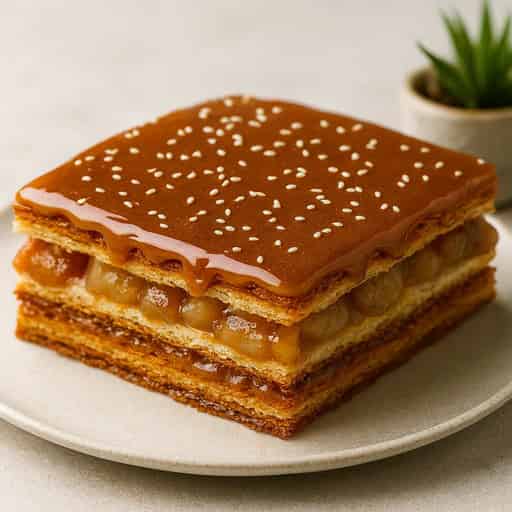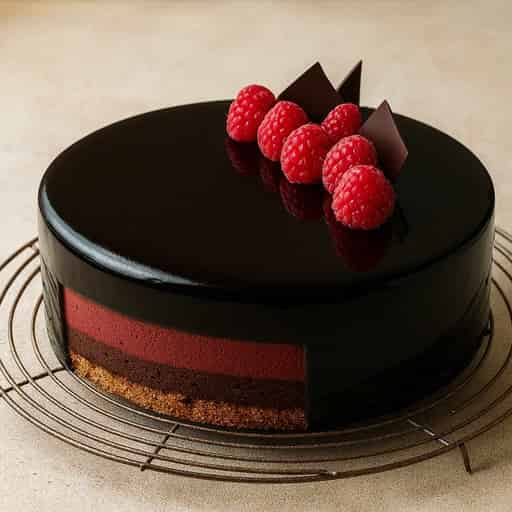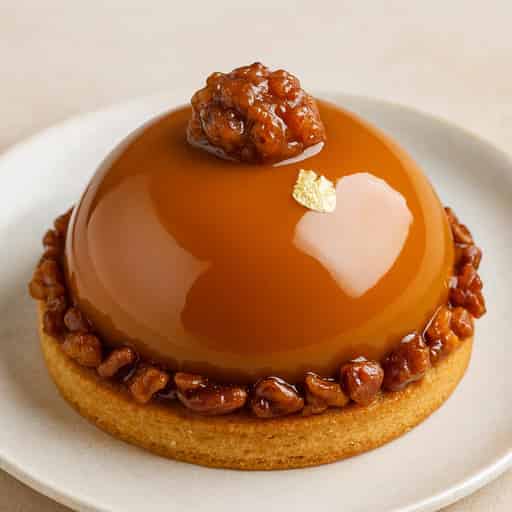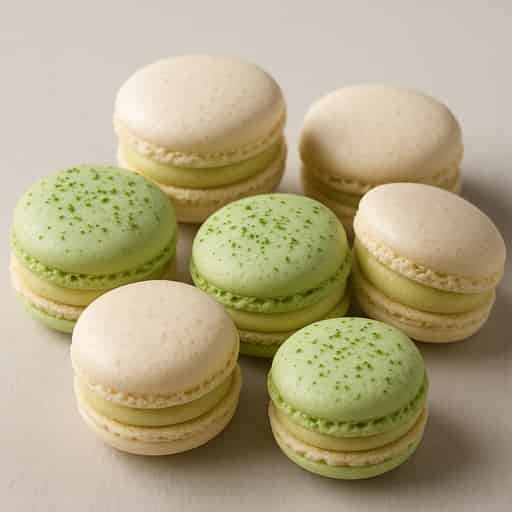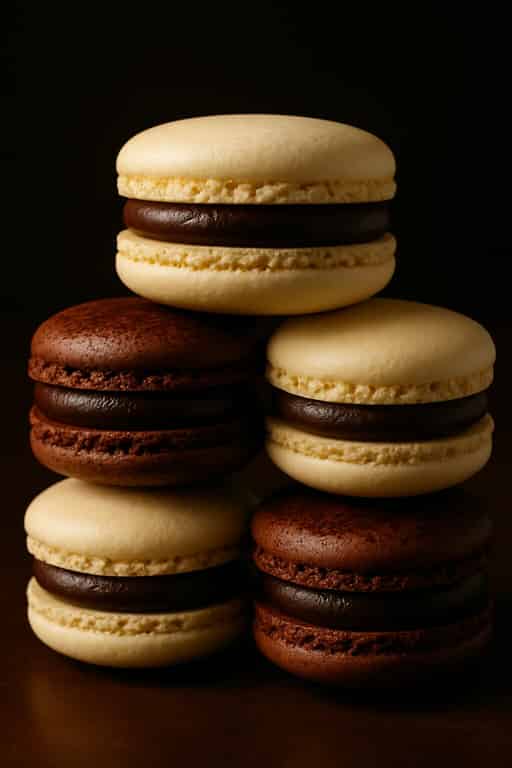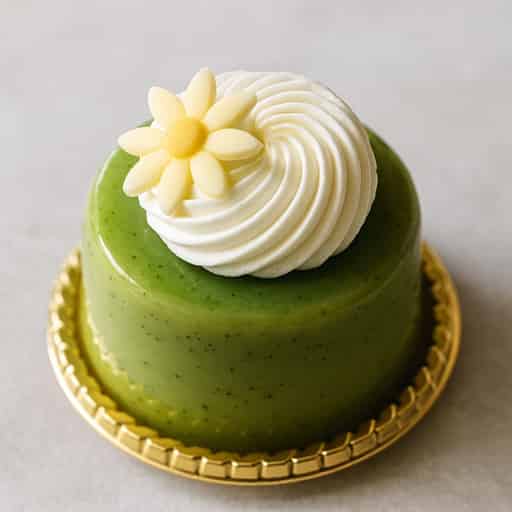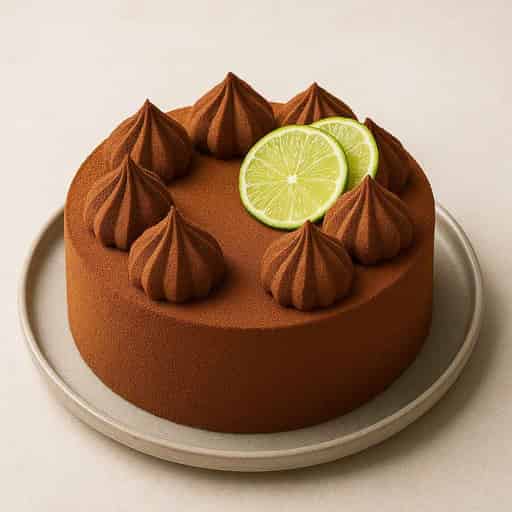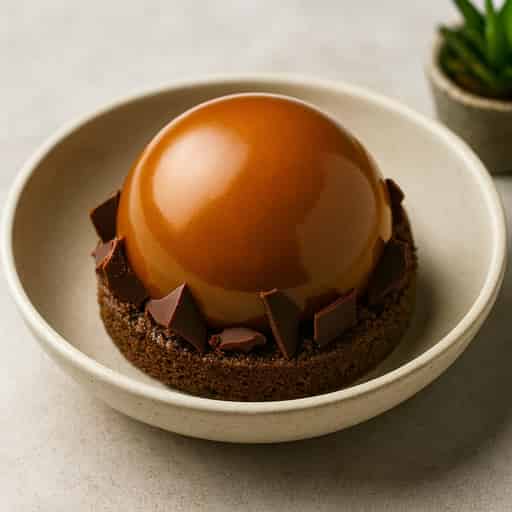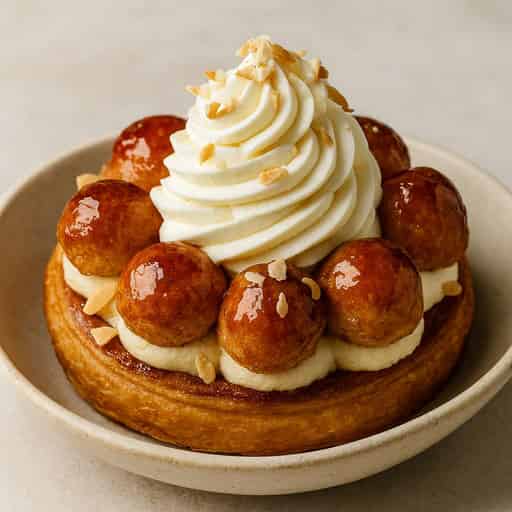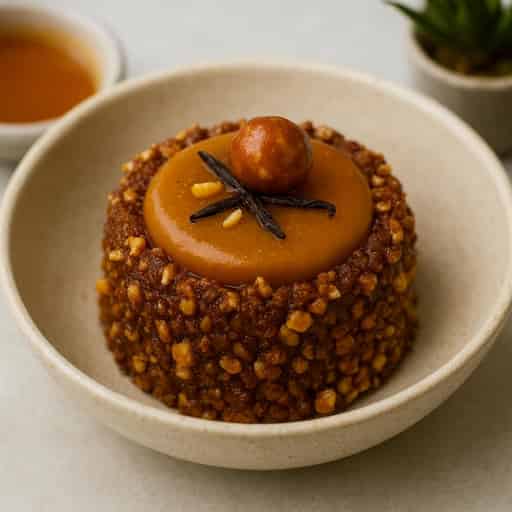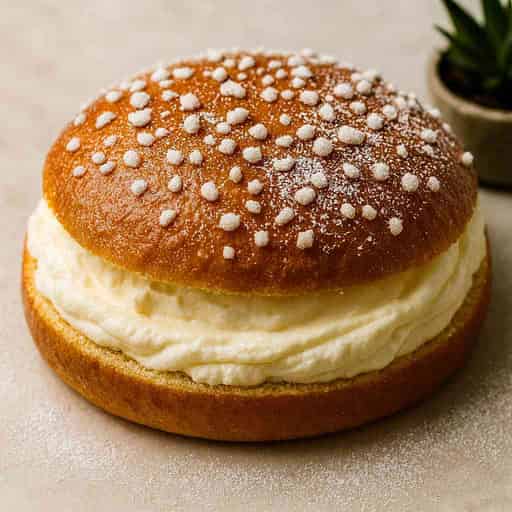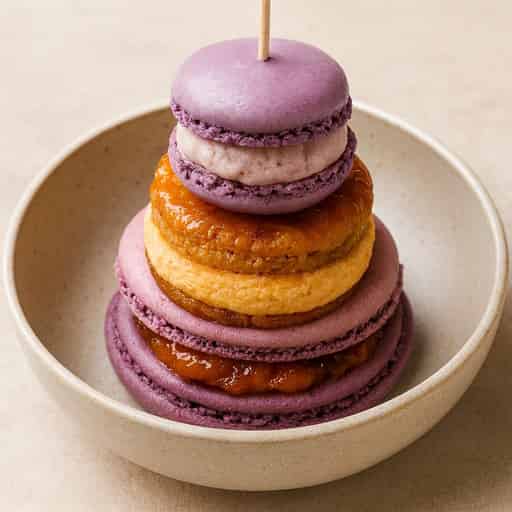
Advanced French-inspired dessert stacks with lavender macarons, apricot mousse, fruit compote, and a glazed choux pastry top.
Prep time
3 hr
Cook time
1 hr
Total time
4 hr
Servings
24
Recipe Snapshot
DifficultyAdvanced
MealDessert
Meal PrepExcellent
Chef's Tips
Age egg whites 24–48 hours in the fridge for more stable macaron shells; bring to room temperature before whipping.
Aim for syrup targets: 118°C for macaron Italian meringue and 124°C for the mousse meringue.
Dry macaron shells until they form a skin; adjust resting time to your kitchen humidity.
Freeze mousse inserts solid for neat assembly and clean cuts.
Bake choux fully until deeply golden to avoid collapse as they cool.
Tools Used
We use affiliate links, which may earn us a small commission at no extra cost to you.
Ingredients
Ingredients
Servings
24 servings1×
Scale
Ingredient amounts update instantly.
Macaron Shells (Base Meringue + Tpt)
Macaron Colour & Aroma
Apricot Mousse Inserts
Italian Meringue For Mousse
Apricot Compote Discs
Choux Pastry (Lavender Religieuse Top)
Lavender Pastry Cream (Filling For Choux)
Choux Icing
Assembly Components
Instructions
Macaron Shells
- 1
Boil water and sugar to 118°C. Meanwhile whip egg whites [1] with egg white powder to medium peaks; stream in syrup to make Italian meringue. Whisk down to ~42°C.
- 2
Mix egg whites [2] with combined icing sugar and almond meal to form a paste; fold in the meringue.
- 3
Divide batter (2/3 lavender, 1/3 apricot). Colour and flavour each accordingly.
- 4
Pipe 48 lavender shells at 6.2 cm and 48 apricot shells at 4 cm on lined trays. Rest until a skin forms.
- 5
Bake at 150°C: lavender 14–16 min; apricot 10–12 min. Cool on racks.
Italian Meringue for Mousse
- 1
Cook sugar and water to 124°C. Whip egg whites to soft peaks, stream in syrup, then whisk to stiff, glossy meringue. Set aside.
Apricot Mousse Inserts
- 1
Warm apricot purée with lemon juice; off heat, dissolve soaked gelatine and cool to lukewarm.
- 2
Fold in spirit (optional), then the Italian meringue and softly whipped cream.
- 3
Cast into enough 6 cm moulds to produce 24 discs; eight inserts sliced into three thin discs each will yield the stated 24 stacks. Freeze solid before unmoulding and slicing.
Apricot Compote Discs
- 1
Cook apricots, purée, honey, and vanilla until soft. Stir in sugar and gelatine to dissolve; add spirit.
- 2
Pour 1 cm layer into a tray; chill to set. Cut 24 discs (6 cm). Reserve trimmings for assembly.
Choux Pastry & Lavender Pastry Cream
- 1
For choux, bring milk, butter, salt, sugar to a boil. Stir in flour off heat; dry 1 min on heat. Beat in eggs gradually to pipeable consistency.
- 2
Pipe 24 rounds; bake at 170°C for 30–35 min until well coloured. Cool.
- 3
For pastry cream, scald milk with half the sugar. Whisk eggs, remaining sugar, and cornflour; temper and cook 3 min while whisking. Flavour to taste; cool, then fold in whipped cream.
Choux Icing
- 1
Warm fondant with glucose until fluid (do not exceed ~35–37°C). Flavour and tint lightly purple; glaze choux tops.
Assembly
- 1
Sandwich each lavender macaron with a layer of reserved apricot compote, a mousse disc, then another compote disc; cap with the second lavender shell.
- 2
Top each with a small apricot macaron filled with a 50:50 mix of almond paste and apricot jam.
- 3
Fill a glazed choux with lavender pastry cream and set on top. Secure the stack with a bamboo stick. Keep chilled; serve at cool room temperature.
Plan This Recipe
Save this recipe to one of your meal plans or browse your existing plans.
Learn More
Everything you want to know about this recipe.
Lavender-Apricot Religieuse Macaron Stacks
Lavender-Apricot Religieuse Macaron Stacks
These lavender-apricot stacks are a French-inspired plated pastry made from two sizes of macaron shell, apricot mousse, apricot compote, and a glazed choux top filled with lavender pastry cream. The name refers to the religieuse presentation: a smaller pastry is secured on top of a larger one. Here, the macaron-and-choux combination is a RecipeShare variation rather than a claim that this is the only traditional form of a religieuse.
The finished dessert moves from crisp-chewy macaron, to bright fruit, to soft mousse and cream. Lavender should stay subtle; too much aroma can make the dessert taste medicinal and will overpower the apricot.
How the Components Work Together
How the Components Work Together
The macaron shells provide the structure. Italian meringue gives the batter stability, while careful macaronage removes large air pockets without making the mixture runny. The larger lavender shells form the base, and smaller apricot shells cap the mousse-and-compote stack.
The apricot mousse is lightened with Italian meringue and softly whipped cream. Gelatine gives it enough strength to freeze, unmould, and slice into discs. The compote adds a denser fruit layer and a sharper contrast to the creamy mousse. Freezing the mousse inserts completely is essential; partially frozen inserts will deform during slicing and make the stack unstable.
The choux top needs to be baked deeply golden. A pale choux shell still contains too much moisture and can collapse as it cools or soften quickly once filled. The lavender pastry cream should be fully cooled before the whipped cream is folded in, otherwise the cream loses volume.
Best Order for a Manageable Bake
Best Order for a Manageable Bake
Make the mousse inserts and compote first because both need chilling or freezing time. The macaron shells can be baked and stored in an airtight container for a day, while the choux can be baked the day before and filled closer to serving. Prepare the pastry cream once the choux has cooled.
On assembly day, confirm the recipe yield before starting: eight frozen 6 cm mousse inserts sliced into three discs produce the stated 24 mousse discs. The 24 choux rounds and 24 small apricot macaron caps then complete the 24 stacks. Keep all components cold and work quickly so the mousse remains firm while the stacks are secured.
Troubleshooting
Troubleshooting
Why did the macaron shells crack?
The shells may not have rested long enough to form a skin, or the batter may have contained large air pockets. Rest until the surface feels dry to a light touch, tap the trays after piping, and avoid overmixing during macaronage.
Why did the choux collapse?
It may have been underbaked or opened too early. Bake until deeply golden and dry, then cool fully before filling. If the choux is still soft inside, return it to a lower oven for a few minutes to dry.
Why is the mousse too soft to slice?
The gelatine may not have dissolved fully, or the insert was not frozen solid. Keep the mousse cold while assembling and freeze it completely before cutting the discs. Do not add warm purée to the whipped cream.
Why is the lavender flavour too strong?
Use the aroma sparingly and taste the pastry cream before adding more. Apricot needs to remain identifiable, so a restrained floral note works better than a strong lavender flavour.
Make-Ahead and Serving
Make-Ahead and Serving
Freeze the mousse inserts and compote discs for up to two weeks in airtight containers. Store baked macaron shells and choux separately at room temperature for up to one day. Assemble on the day of serving so the shells retain some texture while the mousse remains neat.
Serve slightly chilled, when the mousse is set but the macaron shells are not rock-hard. Refrigerate finished stacks and use them the same day. The bamboo sticks are structural and should be removed before serving to young children.
For a simpler French pastry project, see Classic Choux Pastry Dough. For another stacked religieuse-style dessert, try Cocoa Nib Praline Éclair Religieuses.
Nutrition Facts
Nutrition Facts
Serving Size: 1 assembled stack
Calories 29014%
% Reference Intake*
Total Fat 12g17%
Saturated Fat 6g30%
Trans Fat 0g
Cholesterol 35mg
Sodium 90mg
Total Carbohydrates 40g15%
Dietary Fiber 2g
Sugars 32g36%
Protein 5g10%
* Reference intakes are based on an average adult's 8,400 kJ / 2,000 kcal diet. Your needs may be higher or lower.
FAQs
Can I substitute the lavender flavouring?
Yes. Almond or vanilla extract works well if guests are sensitive to lavender.
Do I have to use apricot spirit?
No—omit for an alcohol-free version. The mousse and compote remain flavourful.
How far ahead can I prepare these?
Freeze mousse and compote discs up to 2 weeks ahead; bake shells and choux 1 day ahead; assemble the same day for best texture.
Community Reviews
See how other home cooks made this recipe, then share your own experience.
4.8
4 ratings
5
75%
4
25%
3
0%
2
0%
1
0%
How would you rate this recipe?
Share your experience and help others.
Elise
· 20 Aug 2026Freezing the mousse inserts solid made assembly much easier. The lavender was best when kept subtle so the apricot could still come through.
Sophie
· 12 Oct 2025Made for a garden party—big hit. I added a touch of almond instead of lavender for a crowd-pleaser.
Marco
· 12 Oct 2025Resting the shells longer helped in my humid kitchen. Choux bake needs to be deep golden—don’t rush!
Amélie
· 12 Oct 2025The perfume of lavender with the bright apricot is stunning—delicate but not soapy. Held their shape beautifully.
Create Your Own Recipe
Add your personal creations and build your own recipe collection.