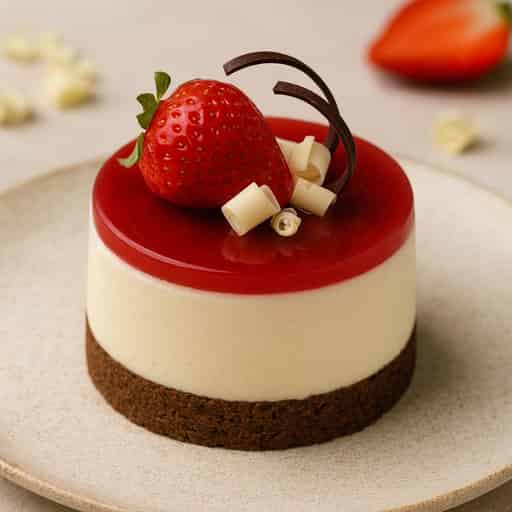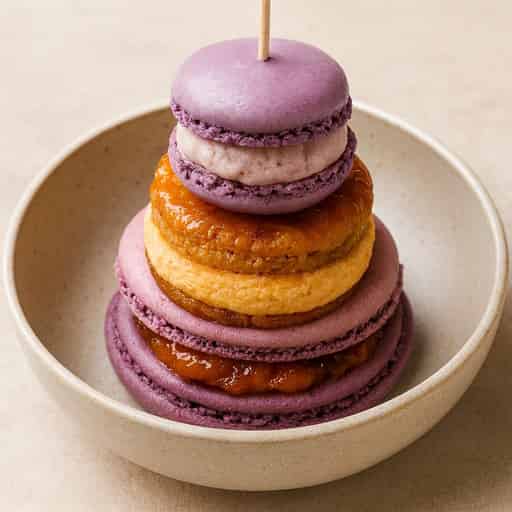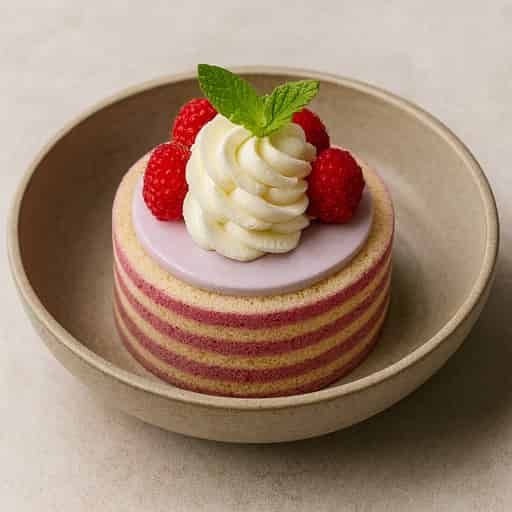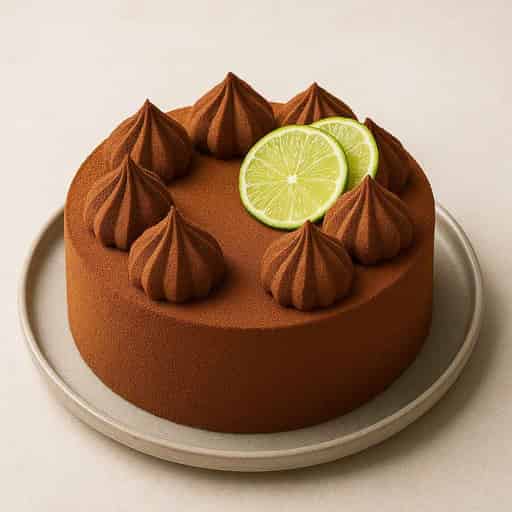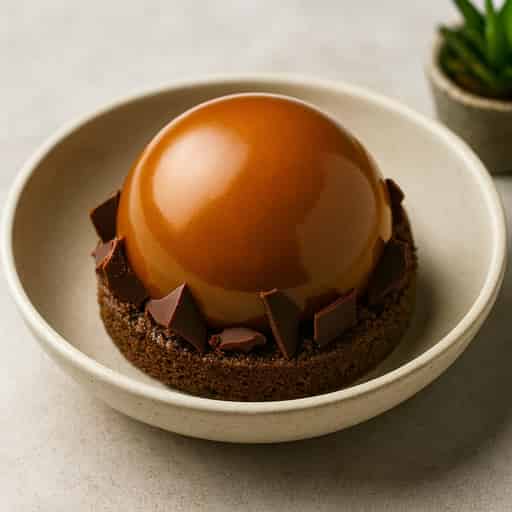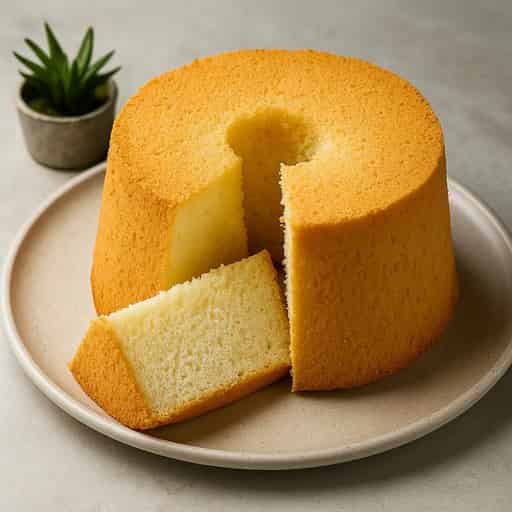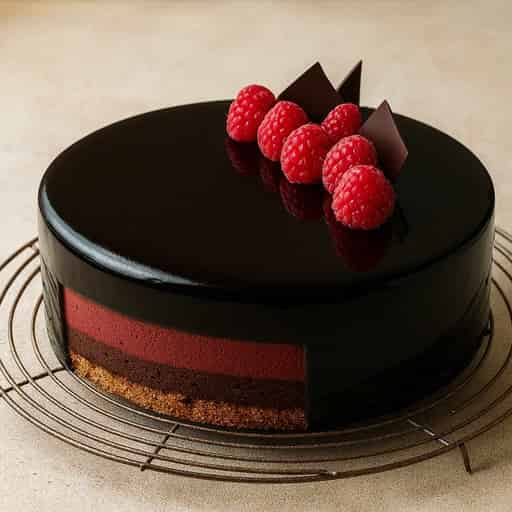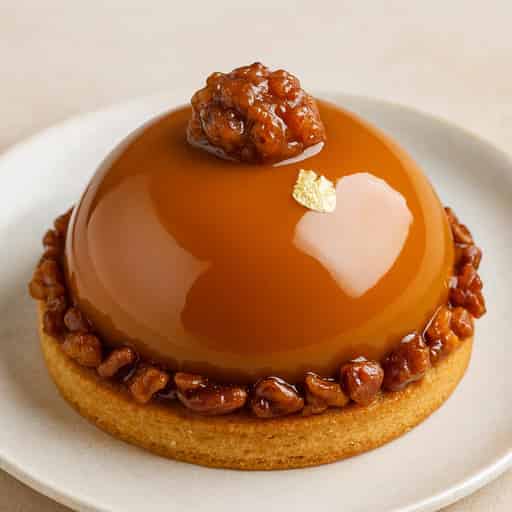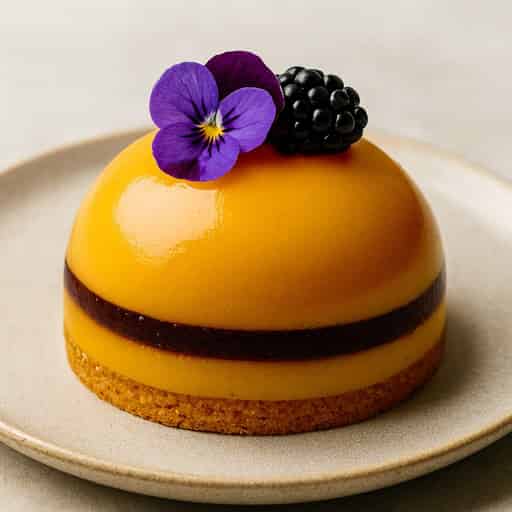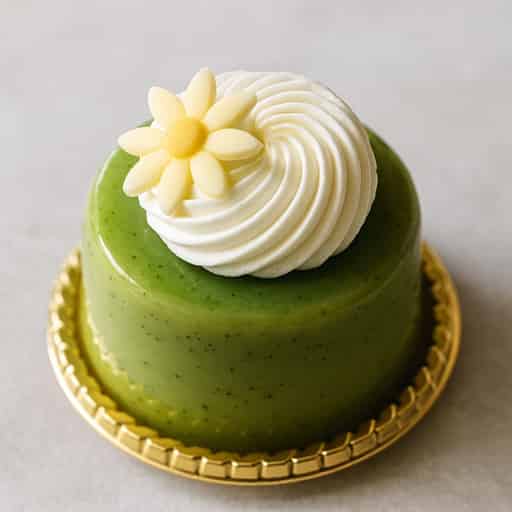
Silky matcha mousse domes on honeyed castella sponge, finished with a glossy white chocolate glaze. A make-ahead dessert for a special occasion.
Prep time
1 hr
Cook time
20 min
Total time
5 hr
Servings
6
Time Plan
1 hr 30 min active · 5 hr total
- Freeze the filled domes until solid2 hr
- Chill after glazing before serving30 min
Recipe Snapshot
DifficultyAdvanced
MealDessert
Freezer FriendlyYes
CuisineJapanese
Chef's Tips
Sift the matcha for both the sponge and mousse so it disperses without green flecks.
Freeze the filled domes solid before glazing; cold, dry surfaces are essential for an even coat.
Blend the glaze with the blade fully submerged, then strain it to remove bubbles.
Serve the domes cool, not frozen, so the mousse has time to soften and taste aromatic.
Tools Used
Digital ThermometerFine-mesh Sieve(opens in a new tab)Immersion Blender(opens in a new tab)Mixing Bowls(opens in a new tab)Saucepan(opens in a new tab)Wire Rack(opens in a new tab)
We use affiliate links, which may earn us a small commission at no extra cost to you.
Tin & Mould
6-cavity silicone half-sphere mould
Ingredients
Ingredients
Servings
6 servings1×
Scale
Ingredient amounts update instantly.
Matcha Castella Sponge
Approx. 270 gMatcha Mousse
Approx. 341 gMatcha White Chocolate Glaze
Approx. 431 gWhipped Cream Decoration
To Finish
Instructions
Bake the Matcha Castella
- 1
Heat the oven to 170°C conventional / 150°C fan. Line a 20 cm square baking tin with parchment, leaving an overhang for lifting out the sponge.
- 2
Whisk the eggs, sugar, and honey with an electric mixer for 5 to 7 minutes, until very pale, thick, and able to hold a ribbon on the surface.
- 3
Sift the flour and matcha together. Fold them into the egg foam in two additions, using a wide spatula and stopping as soon as no dry streaks remain.
- 4
Fold in the warm milk, spread the batter evenly in the tin, and tap the tin once on the counter. Bake for 18 to 22 minutes, until the centre springs back lightly and a skewer comes out clean.
- 5
Cool completely, then stamp out 6 rounds with a cutter that fits the base of the dome mould. Cover until needed.
Make the Matcha Custard Base
- 1
Bloom the gelatine in cold water. In a saucepan, whisk the yolks, sugar, and sifted matcha until smooth, then gradually whisk in the milk.
- 2
Cook over low to medium-low heat, stirring constantly with a spatula, until the custard reaches 82 to 84°C and lightly coats the spatula. Do not let it boil.
- 3
Remove from the heat, stir in the squeezed gelatine until dissolved, then pass the custard through a fine sieve. Leave it to cool until just lukewarm; it should not feel hot when touched on the outside of the bowl.
Fill and Freeze the Domes
- 1
Whip the cream to soft peaks. Fold one third into the lukewarm custard to loosen it, then fold in the remainder gently until no white streaks remain.
- 2
Spoon or pipe the mousse into 6 silicone half-sphere moulds, filling each about two thirds full. Press a castella round into each mould so it sits level with the base.
- 3
Freeze until completely solid, at least 2 hours or preferably overnight. The domes must be firm and dry to the touch before glazing.
Make the Matcha White Chocolate Glaze
- 1
Put the chopped white chocolate in a tall jug. Bloom the gelatine in cold water. Whisk the sifted matcha and cream into a smooth paste in a small bowl.
- 2
Bring the water, sugar, and glucose syrup to 103°C in a saucepan. Remove from the heat, stir in the condensed milk and squeezed gelatine, then pour the hot syrup over the white chocolate.
- 3
Rest for 1 minute, then blend with an immersion blender, keeping the blade fully submerged. Blend in the matcha cream, strain the glaze, and cool it to 32 to 35°C before using.
Glaze and Decorate
- 1
Unmould the frozen domes onto a wire rack set over a rimmed tray. Pour the glaze over each dome in one steady pass; do not go back over areas that have begun to set. Let the excess drip for 1 to 2 minutes.
- 2
Transfer the domes to serving plates. Whip the cream and sugar to medium peaks, then pipe or spoon on a small garnish. Dust lightly with matcha, if using.
- 3
Chill for 30 to 60 minutes before serving so the mousse can temper. Keep refrigerated and serve within 48 hours.
Plan This Recipe
Save this recipe to one of your meal plans or browse your existing plans.
Learn More
Everything you want to know about this recipe.
Matcha Mousse Domes with White Chocolate Glaze
Matcha Mousse Domes with White Chocolate Glaze
These matcha mousse domes are a special-occasion dessert with three distinct layers: a soft honeyed matcha castella base, an airy custard-set mousse, and a thin white chocolate glaze. The matcha is earthy and slightly bitter, while the sweet glaze rounds it out rather than hiding it.
They are not a traditional Japanese sweet or a classic French entremet. Think of them instead as a Japanese-style matcha dessert made with modern pastry technique. The mould and thermometer make the finish precise, but the work is easy to spread over two days: bake and fill the domes first, then glaze them just before serving.
Why This Recipe Works
Why This Recipe Works
The castella-style sponge is deliberately light. It supports the mousse without adding a heavy cake layer, and the honey gives the matcha a softer, warmer edge. Whipping the eggs to ribbon stage creates a fine, springy crumb; once the flour goes in, fold gently so the foam does not collapse.
The mousse begins as a yolk custard, which gives it more body than a simple whipped-cream mousse. Gelatine sets it firmly enough to unmould, while softly whipped cream keeps the final texture light. Let the custard become lukewarm before folding in the cream: hot custard melts the foam, while cold custard can start setting in streaks.
The glaze needs both temperature and a frozen surface. Boiling the syrup to 103°C gives it enough concentration to coat cleanly, and pouring at 32 to 35°C creates a thin, even sheen rather than a thick blanket.
Plan the Components
Plan the Components
For the calmest assembly, make the sponge, mousse, and filled domes the day before. Once solid, unglazed domes hold in the freezer for up to two weeks when protected from freezer odours. Make the glaze on the day you plan to serve them, or make it ahead and gently rewarm it to its pouring temperature.
Set up the rack, tray, serving plates, and decoration before taking the domes out of the freezer. A mirror glaze sets quickly, so this small amount of prep prevents the finish from becoming rushed.
Matcha and White Chocolate Notes
Matcha and White Chocolate Notes
Use fresh culinary or ceremonial matcha with a colour and aroma you like. The recipe does not need the most expensive tea, but stale matcha tastes flat or harsh after heating. Sifting it is more important than whisking it aggressively: it prevents little green specks in both the mousse and the glaze.
White chocolate makes the glaze fluid and glossy, and its milkiness cushions matcha's tannic edge. Choose real white chocolate with cocoa butter rather than a confectionery coating; it melts and emulsifies more reliably. For more matcha desserts, try the Japanese matcha tart or the fluffy matcha roll cake.
Common Glazing Problems
Common Glazing Problems
If the glaze slides straight off, the domes were not fully frozen or the glaze was too warm. Return the domes to the freezer until firm and let the glaze cool to the stated range. If it sets in ridges, it is usually too cool; warm it very gently, blend without incorporating air, and strain it again.
Tiny bubbles usually come from lifting the blender blade above the surface. Keep the blade submerged, then pass the glaze through a fine sieve. A few bubbles on top of the jug can be skimmed away before pouring.
Serving and Storage
Serving and Storage
One dome is a rich individual dessert. Let glazed domes rest in the refrigerator for at least 30 minutes, then serve them cool rather than straight from the freezer so the mousse is creamy and the matcha aroma is clear. A small cup of unsweetened green tea or genmaicha is a natural pairing.
The nutrition is an estimate per dome and will vary with the white chocolate and cream used. Keep finished domes refrigerated, covered once the glaze has set, and enjoy them within 48 hours for the cleanest texture and shine.
Source: Sunday Baking on TikTok
Nutrition Facts
Nutrition Facts
Serving Size: 1 dome (1/6 of recipe)
Calories 56528%
% Reference Intake*
Total Fat 29g41%
Saturated Fat 17g85%
Trans Fat 0g
Cholesterol 150mg
Sodium 95mg
Total Carbohydrates 68g26%
Dietary Fiber 1g
Sugars 59g66%
Protein 7g14%
* Reference intakes are based on an average adult's 8,400 kJ / 2,000 kcal diet. Your needs may be higher or lower.
FAQs
Why must the mousse domes be frozen before glazing?
A frozen dome gives the warm glaze a surface on which to set immediately. A chilled but soft mousse will dent under its own weight and the glaze can slide off in a thin, uneven layer.
What if my mirror glaze is too thick or too thin?
Check the temperature first. Above 35°C it tends to run too thin; below 32°C it may set in a thick coat or leave lines. Rewarm it gently or let it cool, then blend briefly and strain again.
Can I make these matcha mousse domes ahead?
Yes. Freeze the filled, unglazed domes for up to 2 weeks in an airtight container. Glaze them while frozen, then refrigerate for 30 to 60 minutes before serving. The finished glazed domes are best within 48 hours.
Why does my matcha mousse taste bitter?
Use a fresh culinary or ceremonial matcha that you enjoy drinking, sift it, and keep the custard below a simmer. Old matcha and overheated custard both make the tea flavour harsher.
Community Reviews
See how other home cooks made this recipe, then share your own experience.
4.8
6 ratings
5
83%
4
17%
3
0%
2
0%
1
0%
How would you rate this recipe?
Share your experience and help others.
Daniel P.
· 12 Sept 2026The thermometer guidance was exactly what I needed. Mine looked polished and the castella kept the dessert from feeling too rich.
Naomi S.
· 18 Apr 2026Freezing the filled mould overnight made glazing far less stressful. The matcha stayed clear and balanced against the white chocolate.
Mina K.
· 8 Oct 2025That glaze shine is unreal! Set beautifully at 33°C—thanks for the tip.
Sophie
· 7 Oct 2025Swapped corn syrup for glucose—worked a charm. Domes unmoulded cleanly.
Luca
· 6 Oct 2025Used pastry-grade matcha and the colour popped. Not too sweet—perfect.
Arjun
· 5 Oct 2025Castella base kept the mousse light. Next time I’ll add azuki for a twist.
Browse this topic

Create Your Own Recipe
Add your personal creations and build your own recipe collection.