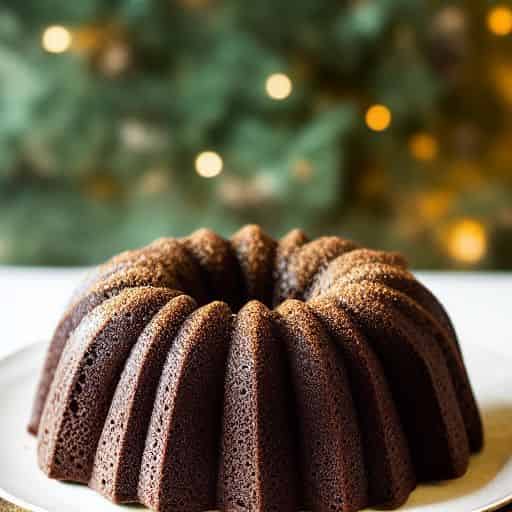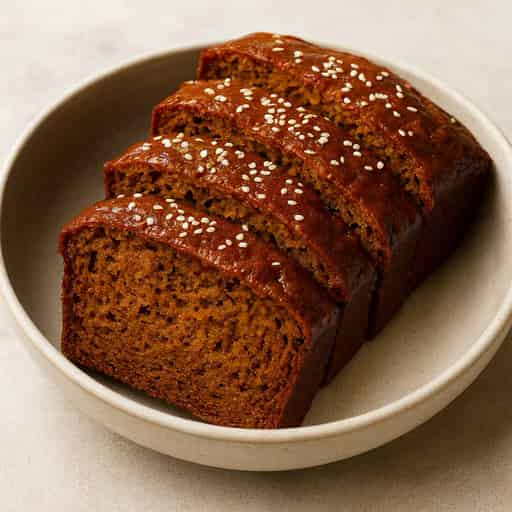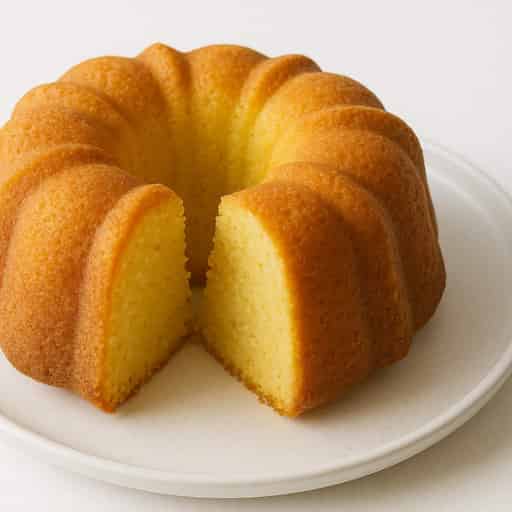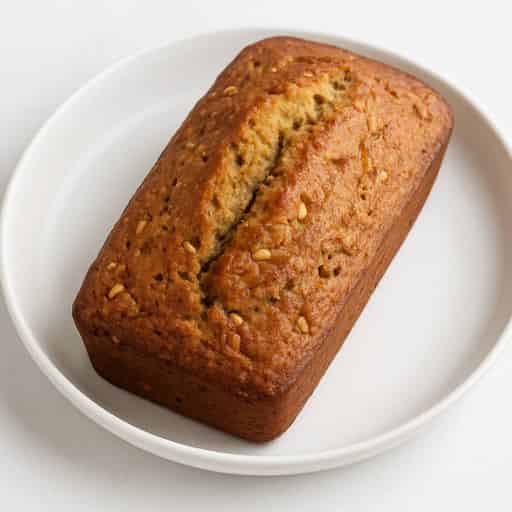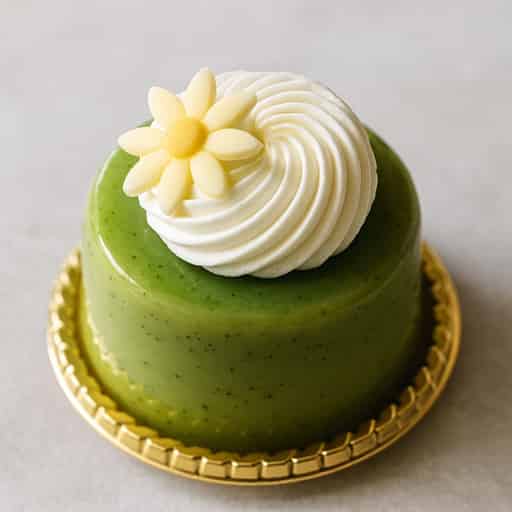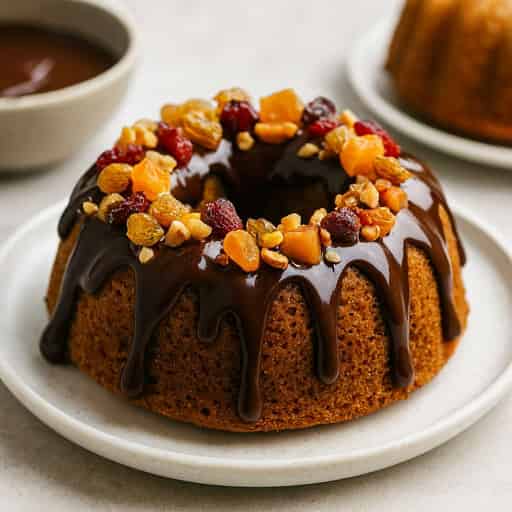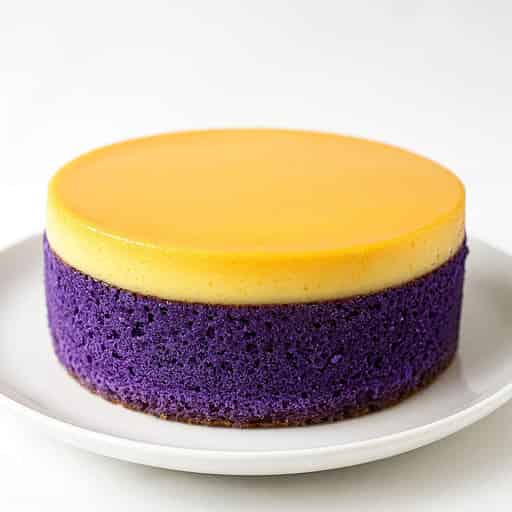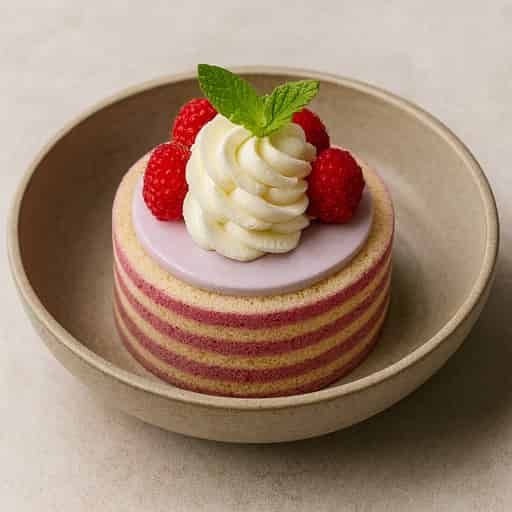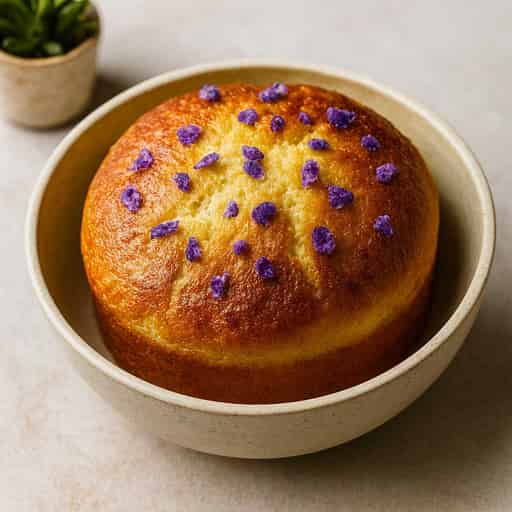
A tall, buttery sourdough country cake scented with violet, vanilla, and lemon, finished with white chocolate and candied violets.
Prep time
2 hr 15 min
Cook time
40 min
Total time
30 hr
Servings
22
Time Plan
2 hr 15 min active · 30 hr total
- Make and ferment the first dough15 hr
- Mix, shape, and proof the finished dough12 hr 30 min
- Bake and cool2 hr 30 min
Recipe Snapshot
DifficultyAdvanced
MealDessert / Breakfast
Freezer FriendlyYes
Family FriendlyYes
CuisineItalian
Chef's Tips
Use a strong bread flour that can support the butter- and yolk-rich dough.
Keep the long ferment around 23–24°C (73–75°F) for a clean, balanced flavour.
Add violet extract sparingly; it should read as floral, not soapy or perfumey.
Use only edible, food-grade candied violets for the finish.
Tools Used
Stand Mixer With Dough Hook(opens in a new tab)Instant-read Thermometer(opens in a new tab)Pastry Brush
We use affiliate links, which may earn us a small commission at no extra cost to you.
Tin & Mould
Two 18 cm round cake tins
18 cm diameter
Ingredients
Ingredients
Servings
22 servings1×
Scale
Ingredient amounts update instantly.
First Dough
Second Dough
Shape And Finish
Instructions
First Dough
- 1
Warm the 150 ml water and caster sugar just until the sugar dissolves. Let the syrup cool to lukewarm; it must not be hot enough to weaken the starter.
- 2
Put the starter, flour, egg yolks, and cooled syrup in the bowl of a stand mixer. Mix on low until no dry flour remains, then knead until the dough begins to look smooth and elastic.
- 3
Add the remaining water a little at a time. Work in the softened butter in small additions, then the vanilla seeds, lemon zest, and violet extract. Mix only until the dough is glossy, stretchy, and passes a thin windowpane test.
- 4
Cover and ferment at 23–24°C (73–75°F) for 14–15 hours, until roughly tripled in volume. The dough should smell lightly sweet and yeasty, not sharply sour.
Second Dough
- 1
Add the second quantity of flour to the fermented dough and mix until it is smooth again. Add the sugar, then the softened butter and egg yolks gradually, allowing each addition to disappear before adding more.
- 2
Mix in the salt, then fold in the white chocolate on the lowest speed. Cover and rest the dough for 30 minutes at room temperature.
Shape and Finish
- 1
Lightly flour the work surface and divide the dough between two greased 18 cm cake tins, about 1.25 kg in each. Round and settle the dough gently; avoid adding extra flour unless it is sticking badly.
- 2
Cover and proof at 23–24°C (73–75°F) for about 12 hours, until the dough is very puffy and close to the rim of each tin.
- 3
Heat the oven to 170°C (325°F). Brush the tops with melted butter, sprinkle lightly with sugar, and make a shallow fork prick in the centre of each cake. Bake for 35–40 minutes, until deep golden and the centre reaches 93–95°C (199–203°F).
- 4
Cool in the tins for 15 minutes, then turn out carefully. Brush with clarified butter while still warm and scatter over the candied violets. Cool fully before slicing for the neatest crumb.
Plan This Recipe
Save this recipe to one of your meal plans or browse your existing plans.
Learn More
Everything you want to know about this recipe.
Parma Violet Sourdough Country Cake
Parma Violet Sourdough Country Cake
This Parma violet country cake is a tall, sliceable celebration bake built on a rich sourdough dough. Vanilla and lemon keep the violet flavour light and clear, while white chocolate melts into the crumb and edible candied violets give the finished cakes a delicate floral finish.
The recipe makes two 18 cm cakes, enough for 22 modest slices. It is a project rather than a quick bake, but most of the time is gentle fermentation and proofing rather than active work.
Why the Long Fermentation Matters
Why the Long Fermentation Matters
This dough contains a high proportion of egg yolks and butter. Those ingredients make the cake tender, but they also slow gluten development and fermentation. A strong, recently refreshed starter and a steady 23–24°C (73–75°F) environment give the dough enough time to build structure without becoming overly sour.
Watch the dough rather than relying only on the clock. After the first rise, it should be close to tripled, airy, and stretchy. During the final proof, it should feel buoyant and approach the rims of the tins. If your kitchen is cooler, allow more time rather than trying to force the proof with high heat.
Keeping the Floral Flavour Balanced
Keeping the Floral Flavour Balanced
Violet extract is powerful, so the small amount in the recipe is intentional. The goal is a soft floral aroma that arrives after the vanilla and lemon, not a perfume-like taste. Use an edible, food-grade extract and candied violets; decorative flowers are not automatically safe to eat.
White chocolate is folded in only after the second dough is developed. Mixing it in too early can interfere with the dough's strength and leave the cakes dense rather than lofty.
Baking and Serving the Cakes
Baking and Serving the Cakes
The two tins hold roughly 1.25 kg of dough each. Bake until the centres reach 93–95°C (199–203°F); this is more reliable than a skewer alone in such a rich dough. Let the cakes cool fully before slicing so the crumb can set around the melted chocolate.
Serve thin slices with coffee or tea, or offer them as part of a dessert table. The cake is rich enough to stand on its own, so a simple fruit salad or lightly sweetened yoghurt is usually a better accompaniment than a heavy sauce.
Storage and Freezing
Storage and Freezing
Keep the cooled cake airtight at room temperature for up to two days. For longer storage, freeze individual slices in a tightly wrapped container for up to one month. Thaw at room temperature and warm gently if desired; adding the candied violets after warming keeps their colour at its best.
Portion Guidance for Goals
Portion Guidance for Goals
One slice is a satisfying dessert portion. Because this is a butter- and yolk-rich cake, serve it as the sweet part of a meal or share smaller slices for an afternoon gathering.
When to Eat
When to Eat
This cake works especially well for a weekend brunch, afternoon tea, or a celebration dessert after a lighter meal.
Balance Tip
Balance Tip
Pair a slice with unsweetened tea or coffee and fruit if you would like a fresher contrast. The cake has enough richness and sweetness on its own, so it does not need an additional sweet topping.
Nutrition Facts
Nutrition Facts
Serving Size: 1 slice (1/22 recipe)
Calories 46023%
% Reference Intake*
Total Fat 23g33%
Saturated Fat 14g70%
Trans Fat 0g
Cholesterol 145mg
Sodium 190mg
Total Carbohydrates 57g22%
Dietary Fiber 2g
Sugars 18g20%
Protein 8g16%
* Reference intakes are based on an average adult's 8,400 kJ / 2,000 kcal diet. Your needs may be higher or lower.
FAQs
Can I make this violet cake with commercial yeast?
Yes, but the flavour and fermentation timing will change. Use 7 g instant yeast in place of the starter, use a 2–3 hour first rise at warm room temperature, and judge the final proof by the dough's rise rather than the clock.
How do I keep the violet flavour from tasting too strong?
Use a food-grade extract and measure it exactly. The vanilla and lemon should support the floral note; if you can smell violet strongly from across the room before baking, the flavour will likely be overpowering.
Can I freeze Parma violet country cake?
Yes. Cool the cakes completely, wrap individual slices tightly, and freeze for up to one month. Thaw at room temperature, then warm briefly in a low oven if you would like a softer, just-baked texture.
Community Reviews
See how other home cooks made this recipe, then share your own experience.
4.8
4 ratings
5
75%
4
25%
3
0%
2
0%
1
0%
How would you rate this recipe?
Share your experience and help others.
Nadia C.
· 24 Aug 2026The temperature cue made the proof much easier to judge. I froze half in slices and it stayed wonderfully tender after thawing.
Sophie R.
· 12 Oct 2025Long proof is worth it! I added extra candied violets for crunch—beautiful for afternoon tea.
Marco D.
· 12 Oct 2025Used orange blossom water instead of violet and still lovely. Crumb is super soft and feathery.
Elena P.
· 12 Oct 2025Delicate violet aroma—not perfumey at all. Served warm with a quick zabaglione and it was perfect.
Create Your Own Recipe
Add your personal creations and build your own recipe collection.