26 August 2026
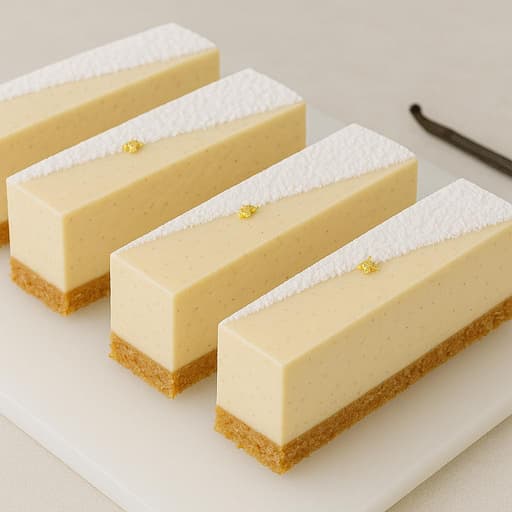
Vanilla Namelaka Cheesecake with Almond Biscuit Crust
RecipeShare Test Kitchen
4.7(3 ratings)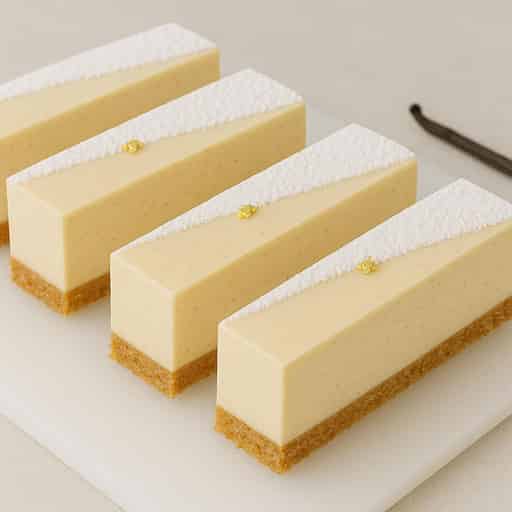
A three-layer vanilla namelaka cheesecake with a toasted almond biscuit crust, creamy baked cheesecake centre, and silky white chocolate topping.
Prep time
35 min
Cook time
1 hr
Total time
15 hr 35 min
Servings
10
Time Plan
35 min active · 15 hr 35 min total
- Chill the cheesecake layer overnight12 hr
- Set the namelaka layer2 hr
Recipe Snapshot
DifficultyMedium
MealDessert
Meal PrepExcellent
Family FriendlyYes
CuisineFrench
Chef's Tips
Use room temperature cream cheese for a smoother cheesecake batter.
Don’t overbake the cheesecake; it should still jiggle slightly in the center when removed.
For the namelaka, let the gelatin bloom fully before melting into the milk.
Chill each layer thoroughly before adding the next for neat, even layers.
Slice with a hot knife (dip in warm water, wipe dry) for clean cuts.
Tools Used
Mixing Bowls(opens in a new tab)Whisk(opens in a new tab)Saucepan(opens in a new tab)Hand Mixer(opens in a new tab)Spatula(opens in a new tab)OvenRefrigerator
We use affiliate links, which may earn us a small commission at no extra cost to you.
Ingredients
Ingredients
Servings
10 servings1×
Scale
Ingredient amounts update instantly.
Toasted Almond Biscuit Crust
Creamy Baked Cheesecake
Vanilla Bean Namelaka
Instructions
Crust
- 1
Preheat oven to 160°C (320°F).
- 2
Mix crushed biscuits, almonds, sugar, salt, and melted butter until evenly coated.
- 3
Press firmly into an 18 cm square mold, about 0.7–1 cm thick.
- 4
Bake for 8 minutes, then let cool.
Cheesecake Layer
- 1
Lower oven to 140°C (285°F).
- 2
Beat cream cheese and sugar until smooth.
- 3
Add eggs one at a time, then mix in sour cream, vanilla, lemon juice, and salt.
- 4
Pour over cooled crust and smooth the top.
- 5
Bake for 45–55 minutes until just set (center should still jiggle slightly).
- 6
Chill overnight in the fridge.
Namelaka Layer
- 1
Bloom gelatin in cold water.
- 2
Heat milk with scraped vanilla seeds/paste until warm.
- 3
Add gelatin to hot milk, stir to dissolve.
- 4
Pour hot mixture over chopped white chocolate, whisk until smooth.
- 5
Fold in cold heavy cream.
- 6
Pour over chilled cheesecake layer, smooth, and refrigerate 2–3 hours (or overnight) until set.
Assembly & Finish
- 1
Remove cheesecake from mold and cut into 8–10 bars.
- 2
Dust with powdered sugar and decorate with gold leaf if desired.
Plan This Recipe
Save this recipe to one of your meal plans or browse your existing plans.
Learn More
Everything you want to know about this recipe.
Vanilla Namelaka Cheesecake with Almond Biscuit Crust
Vanilla Namelaka Cheesecake with Almond Biscuit Crust
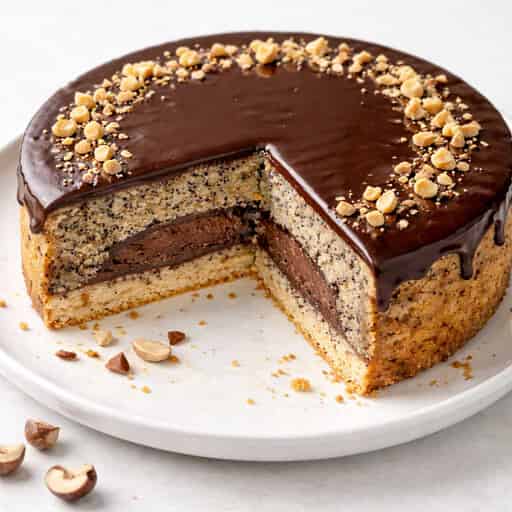
This layered vanilla cheesecake combines three contrasting textures: a crisp toasted almond biscuit crust, a softly baked sour-cream cheesecake, and a cool, silky vanilla namelaka topping. The result is a polished dessert that can be made at home as long as each layer is given enough time to cool and set.
The centre is baked, so this is not a no-bake cheesecake. The namelaka is the modern pastry element: a white chocolate cream emulsified with warm milk, stabilised with gelatin, and finished with cold cream for a smooth, spoonable texture.
Why This Recipe Works
Why This Recipe Works
The biscuit and almond crust gives the soft filling a little toasted flavour and crunch. Press it firmly into the mould so it forms a stable base, but avoid making it excessively thick, which can make the finished slices difficult to cut.
Room-temperature cream cheese blends more evenly with the sugar and eggs. Sour cream adds moisture and gentle acidity, balancing the sweetness of the white chocolate topping. Bake only until the edges are set and the centre still wobbles slightly; the cheesecake will finish setting during its overnight chill.
For the namelaka, the gelatin must dissolve fully in the warm milk before it is combined with the chocolate. Add the milk gradually while whisking so the mixture emulsifies instead of becoming greasy or lumpy. Cold cream is folded in afterward, then the topping is chilled until it is firm enough to spread.
Important Technique Notes
Important Technique Notes
Cool the crust before adding the cheesecake batter. A warm crust can soften the butter and make the layers separate. When mixing the batter, stop as soon as it is smooth; excessive beating incorporates air, which can cause cracks or a puffed centre.
Do not judge doneness by a completely firm centre. A gentle wobble in the middle is the useful cue. If the cheesecake is baked until rigid, it is more likely to be dry after chilling. Let it cool, then refrigerate overnight before adding or cutting the namelaka.
Serving and Storage
Serving and Storage
Chill the namelaka topping for at least 2–3 hours, but use an overnight chill when possible. For clean portions, release the cheesecake from the mould and cut it with a sharp knife warmed in hot water and wiped dry between slices.
Keep the finished cheesecake covered in the refrigerator for up to 3 days. It is best served cold but not heavily frozen, since freezing can change the smooth texture of the namelaka and make the biscuit crust less crisp.
Easy Variations
Easy Variations
- Replace the almond crust with digestive biscuits or graham crackers alone for a simpler base.
- Add finely grated lemon zest to the cheesecake batter for a brighter finish.
- Serve with a small spoonful of raspberry coulis or fresh berries to offset the white chocolate.
- Bake in a round 18 cm tin, adjusting the final portion shape rather than the ingredient quantities.
Nutrition Estimate
Nutrition Estimate
Each of the 10 portions contains approximately 410 calories, 30 g fat, 32 g carbohydrate, and 7 g protein. This is an estimate based on the listed cream cheese, butter, white chocolate, and cream; the final values vary by brand and portion size.
Nutrition Facts
Nutrition Facts
Serving Size: 1 slice (1/10 recipe)
Calories 41021%
% Reference Intake*
Total Fat 30g43%
Saturated Fat 16g80%
Trans Fat 0g
Cholesterol 90mg
Sodium 220mg
Total Carbohydrates 32g12%
Dietary Fiber 1g
Sugars 22g24%
Protein 7g14%
* Reference intakes are based on an average adult's 8,400 kJ / 2,000 kcal diet. Your needs may be higher or lower.
FAQs
What is namelaka?
Namelaka is a Japanese pastry term meaning ultra-creamy. It is a silky white chocolate cream made here with milk, gelatin, and cold cream.
Why is the cheesecake layer baked?
Baking gives the cream cheese layer enough structure to support the soft namelaka topping. It should still have a slight centre wobble when it leaves the oven because it firms as it chills.
How long does namelaka topping take to set?
It needs at least 2–3 hours in the refrigerator, although an overnight chill gives the neatest slices and most stable finish.
Can I use powdered gelatin instead of sheets?
Yes. Use the same weight, bloom it according to the packet instructions, and dissolve it fully in the warm milk before combining it with the chocolate.
Community Reviews
See how other home cooks made this recipe, then share your own experience.
4.7
3 ratings
5
67%
4
33%
3
0%
2
0%
1
0%
How would you rate this recipe?
Share your experience and help others.
Mia
· 16 Aug 2025A hot, dry knife gave clean slices, and the almond crust was a great contrast to the silky vanilla topping.
Kenji
· 16 Aug 2025I baked the cheesecake a little too long the first time. Watching for the gentle centre wobble made the next batch much creamier.
Sarah B.
· 16 Aug 2025The layers looked elegant and the namelaka was easier to make than I expected. The overnight chill made slicing straightforward.
Browse this topic
Create Your Own Recipe
Add your personal creations and build your own recipe collection.