20 February 2026
Fool-Proof Japanese Cheesecake (20 cm / 8-Inch)
RecipeShare Test Kitchen
4.7(3 ratings)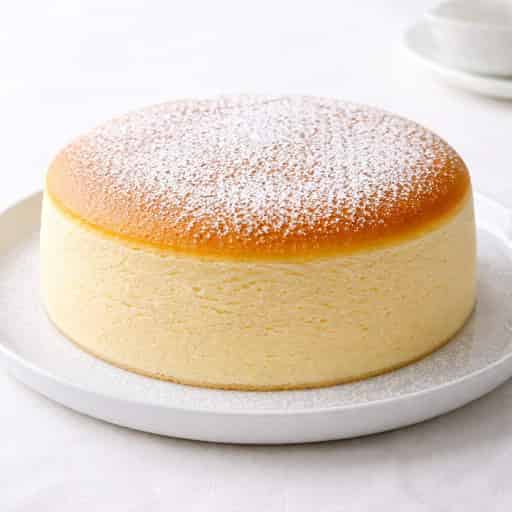
A reliable Japanese souffle cheesecake with staged baking, water bath, and slow cooling for less cracking, less shrinkage, and a creamy, stable crumb.
Prep time
30 min
Cook time
1 hr 20 min
Total time
1 hr 50 min
Servings
10
Chef's Tips
Whip meringue only to medium-soft peaks, not stiff peaks.
Keep water bath hot and deep enough to stabilize oven heat.
Cool gradually in stages to reduce collapse and wrinkles.
Chill fully before unmolding for clean sides.
Tools Used
8-inch Round Cake PanParchment Paper(opens in a new tab)Electric Mixer(opens in a new tab)Fine Sieve(opens in a new tab)
We use affiliate links, which may earn us a small commission at no extra cost to you.
Ingredients
Ingredients
Servings
10 servings1×
Scale
Ingredient amounts update instantly.
Cream Cheese Batter
Meringue
Optional Stability Upgrade
Instructions
Pan Prep
- 1
Line the base of an 8-inch pan with parchment.
- 2
Add a tall parchment collar that rises 2 to 3 cm above the rim.
- 3
Wrap the outside of the pan with 2 layers of heavy-duty foil.
- 4
Set the wrapped pan in a roasting tray.
Warm Cream Cheese Base
- 1
Preheat oven to 160 C (fan off if possible).
- 2
Over low heat, melt cream cheese, butter, and milk together until smooth. Do not let the mixture get steamy.
- 3
Remove from heat and whisk in salt, vanilla, and optional lemon juice.
- 4
Sift in cake flour and cornstarch, then whisk smooth.
- 5
Add yolks one at a time and whisk until glossy.
- 6
Strain through a fine sieve into a clean bowl.
Make the Meringue
- 1
Whip egg whites on medium speed until foamy.
- 2
Add cream of tartar.
- 3
Add sugar gradually in 3 to 4 additions.
- 4
Whip to medium-soft peaks: the tip should bend and droop when the whisk is lifted.
Fold and Fill
- 1
Whisk one-third of meringue into the yolk batter to loosen it.
- 2
Fold in remaining meringue in 2 additions using a cut-and-fold motion.
- 3
Stop once large white streaks disappear.
- 4
Pour batter into pan, tap gently 2 to 3 times, then run a skewer in a loose S.
Water Bath Bake
- 1
Place tray with filled pan in the oven.
- 2
Add hot water to reach halfway up the cake pan.
- 3
Bake at 160 C for 20 minutes.
- 4
Reduce to 140 C and bake 40 to 50 minutes more.
- 5
Turn oven off and leave cake inside 15 minutes with door closed.
- 6
Crack oven door open and rest 10 minutes.
- 7
Remove cake from water bath and cool on a rack.
Chill and Serve
- 1
Cool fully, then chill at least 4 hours (overnight is best).
- 2
Unmold while chilled for clean sides.
- 3
Dust with icing sugar if desired.
Plan This Recipe
Save this recipe to one of your meal plans or browse your existing plans.
Learn More
Everything you want to know about this recipe.
Fool-Proof Japanese Cheesecake
Fool-Proof Japanese Cheesecake
This version is designed for reliability, not just height. The method uses a warm smooth base, medium-soft meringue, deep hot water bath, and staged cooling. That combination is what helps reduce cracking, hard collapse, and wet bottom layers.
What "Done" Looks Like
What "Done" Looks Like
At the end of baking, the cake should be set around the edge, lightly golden on top, and jiggle like soft gelatin in the center. It should not slosh like liquid. A skewer can come out slightly moist, but not with raw batter.
Tin Size Adjustment (For 6, 7, and 9 Inch)
Tin Size Adjustment (For 6, 7, and 9 Inch)
Your site dropdown can scale the ingredients automatically, but pan size still changes baking behavior. Use these practical targets:
- 6-inch pan: use about 0.56x of the 8-inch ingredient quantities.
- 7-inch pan: use about 0.77x of the 8-inch ingredient quantities.
- 8-inch pan: base recipe (1.00x).
- 9-inch pan: use about 1.27x of the 8-inch ingredient quantities.
Because depth changes, monitor doneness by jiggle, not only by time:
- 6-inch: center sets faster; start checking 8 to 10 minutes earlier in the second phase.
- 7-inch: start checking 5 to 8 minutes earlier.
- 9-inch: may need 8 to 15 extra minutes in the 140 C phase, depending on pan height and oven behavior.
If using your dropdown for scaling, keep the same method sequence and water bath depth, then adjust only final bake duration based on visual doneness.
Common Pitfalls and Fixes
Common Pitfalls and Fixes
- Big top crack: Use medium-soft peaks, deep water bath, and tall parchment collar.
- Hard collapse after rising: Bake until set with jiggle, then follow oven-off and door-cracked cooling.
- Wet center after long bake: Keep the initial 160 C set phase and use hot water, not lukewarm.
- Eggy flavor: Keep lemon and vanilla in, avoid overbaking, and chill overnight.
Make-Ahead and Serving
Make-Ahead and Serving
This cheesecake is best baked the day before serving. Chill overnight so flavor and structure settle. Unmold while cold, then hold at cool room temperature for 15 to 20 minutes before slicing for the cleanest cut and best texture.
Nutrition Facts
Nutrition Facts
Serving Size: 1 slice (1/10 cake)
Calories 25513%
% Reference Intake*
Total Fat 16g23%
Saturated Fat 9g45%
Trans Fat 0g
Cholesterol 130mg
Sodium 145mg
Total Carbohydrates 20g8%
Dietary Fiber 0g
Sugars 14g16%
Protein 7g14%
* Reference intakes are based on an average adult's 8,400 kJ / 2,000 kcal diet. Your needs may be higher or lower.
FAQs
Why did my Japanese cheesecake crack?
Most cracks come from heat that is too high, shallow water bath, or stiff meringue. Keep medium-soft peaks and follow the staged 160 C to 140 C schedule.
Why does it collapse after rising?
Usually underbaking, overwhipped meringue, or cooling shock. Bake until set with a soft gelatin jiggle, then cool in the oven in two stages.
Why is there a dense wet layer at the bottom?
This can happen from deflated folding, unstable water bath, or water leakage into the pan. Loosen with one-third meringue first and wrap foil tightly.
Can I reduce sugar?
Yes. You can reduce meringue sugar from 120 g to 100 g for less sweetness. Going much lower can weaken foam stability.
Community Reviews
See how other home cooks made this recipe, then share your own experience.
4.7
3 ratings
5
67%
4
33%
3
0%
2
0%
1
0%
How would you rate this recipe?
Share your experience and help others.
Mae
· 20 Feb 2026Slight wrinkle on top but crumb was soft and even. Will reduce final bake by a few minutes next time.
Kevin
· 20 Feb 2026I used the optional cornstarch in the meringue sugar and the rise was very stable.
Nina
· 20 Feb 2026Finally got the jiggly texture without a cracked top. The staged cooling made a big difference.
Create Your Own Recipe
Add your personal creations and build your own recipe collection.