06 October 2025
Golden Poppy Seed Wreath Roll (Makovník/Beigli)
RecipeShare Test Kitchen
4.7(9 ratings)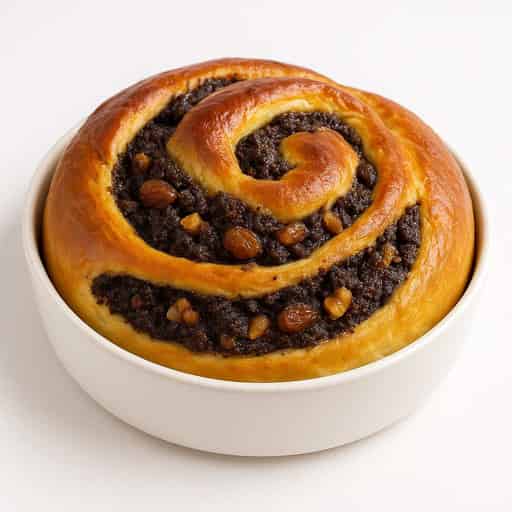
Buttery soft sweet bread swirled with fragrant poppy seed, raisin & walnut crunch—an Eastern European classic for holidays and Sunday tea.
Prep time
30 min
Cook time
35 min
Total time
1 hr 5 min
Servings
16
Tools Used
We use affiliate links, which may earn us a small commission at no extra cost to you.
Ingredients
Ingredients
Servings
16 servings1×
Scale
Ingredient amounts update instantly.
For The Dough
For The Filling
Instructions
Make the Dough
- 1
In a large bowl, combine the flour, sugar, salt, and yeast.
- 2
Add melted butter, warm milk, and beaten eggs. Mix until smooth.
- 3
Knead for about 10 minutes until the dough is elastic.
- 4
Place in a greased bowl, cover, and let rise until doubled, about 1 hour.
Prepare the Filling
- 1
In a saucepan, mix ground poppy seeds, sugar, honey, vanilla, raisins, walnuts, lemon zest, and milk.
- 2
Cook over medium heat, stirring constantly until thickened. Let cool.
Assemble and Bake
- 1
Preheat oven to 170°C (340°F).
- 2
Roll the dough into a rectangle about 1/4 inch thick.
- 3
Spread the cooled filling evenly, leaving a small border.
- 4
Roll tightly from the long edge and pinch the seam to seal.
- 5
Place seam-side down on a parchment-lined baking sheet.
- 6
Bake for 25 minutes or until golden brown.
- 7
Cool on a wire rack before slicing and serving.
Plan This Recipe
Save this recipe to one of your meal plans or browse your existing plans.
Learn More
Everything you want to know about this recipe.
A Taste of History: The Origins of European Poppy Seed Bread
A Taste of History: The Origins of European Poppy Seed Bread
The European Poppy Seed Bread, also known as Makowiec (Poland), Mákos Beigli (Hungary), Cozonac cu Mac (Romania) or Strudla (Czech Republic), is a pastry with deep historical roots in Eastern Europe. This sweet, nutty roll has long been a favorite treat during holidays and special occasions, particularly Christmas and Easter, when families come together to share in the delicious tradition.
The origins of this delectable bread can be traced back to medieval times when the cultivation of poppy seeds became popular in Europe. Poppy seeds, known for their culinary and medicinal properties, were a valuable commodity, and their use in various dishes grew rapidly. As a result, many Eastern European countries developed their own unique versions of poppy seed-filled pastries, giving rise to the diverse array of bread rolls we know and love today.
While the specific ingredients and preparation methods may vary between countries, the essence of the European Poppy Seed Bread Roll remains consistent – a soft, pillowy dough filled with a rich, flavorful poppy seed mixture, often combined with nuts, dried fruits, and a touch of honey or sugar. The roll is then baked to golden perfection, creating a delightful contrast between the tender dough and the crunchy filling.
In addition to the names mentioned above, this beloved pastry goes by several other names across Eastern Europe, including:
- Germknödel (Austria)
- Makový závin (Slovakia)
- Mákosguba (Hungary)
- Makovnjača (Croatia)
Despite the variations in names and preparation styles, the European Poppy Seed Bread Roll remains a cherished symbol of culinary heritage and family traditions throughout the region. Its delicious flavor and rich history continue to unite people across borders, transcending cultural differences and bringing joy to countless generations.
Enough history, let's get baking!
Scrumptious Ingredients
Scrumptious Ingredients
Citrusy Raisins and nuts
- 60 grams raisins
- 2 tablespoons orange juice
- 60 grams chopped walnuts
- 1 teaspoon lemon zest
For the dough
- 600 grams bread flour
- 100 grams granulated sugar
- 1/2 teaspoon salt
- 1.5 teaspoons dry yeast
- 120 grams unsalted butter, melted
- 300 grams milk, room temperature (max 30C or 90F)
- 2 large eggs, beaten
For the filling
- 200 grams ground poppy seeds
- 100 grams granulated sugar
- 1 tablespoon honey
- 1 teaspoon vanilla extract
- 250 grams milk
Prepare the Raisins and nuts
Prepare the Raisins and nuts
- Soak the raisins and nuts in the orange juice and orange zest overnight.
Top tip: substitute your favourite liquor for the orange juice to add more kick to these raisins!
Crafting the Perfect Dough
Crafting the Perfect Dough
- In a large bowl, combine the flour, sugar, salt, and active dry yeast.
- Add the melted butter, warm milk, and beaten egg to the dry ingredients. Mix until a smooth dough forms.
- Knead the dough for about 15-20 minutes, until it becomes elastic and smooth. If using a stand mixer, knead at medium-high speed for around 15 minutes or until the dough no longer sticks to the bottom of the bowl.
- Place the dough in a lightly floured bowl, put some dusting of flour on top of the dough, then cover with a damp cloth, and let it rise in a warm place for 1-2 hour or until doubled in size. Be careful not to over-proof.
Top tip: If you have a cold room, proof your bread in a turned-off oven by putting two bowls of boiling water at the bottom rack and then closing the oven door. The steam will also ensure the dough does not dry out.
Delectable Poppy Seed Filling
Delectable Poppy Seed Filling
- While the bread is proofing, make the citrusy poppy seed filling. In a saucepan, combine the ground poppy seeds, sugar, honey, vanilla extract, soaked raisins, chopped walnuts, lemon zest, and milk.
- Cook the mixture over medium heat, stirring constantly until thickened. Remove from heat and let it cool.
Top tip: Avoid burning the poppy seed mixture by continously mixing.
Rolling and Baking
Rolling and Baking
- Moderately flour a clean, flat surface where you have enough space to work with the dough.
- Once the dough has double in size, take it out of the bowl using a scraper and put it on the floured surface.
- Using your fingers, flatten the dough out to make a rectangle, around 1/4 inch thick. Be careful not to overly stretch the dough otherwise it will easily break.
- Spread the poppy seed, raising and walnut filling evenly over the dough, leaving a 1/2 inch border.
- Roll up the dough tightly, starting from the long edge, and seal the seam by pinching it together.
- Place the roll on a parchment-lined baking sheet and make a circular wreath shape, seam-side down. Pinch the ends together to make a continuous circular log.
- Dust lightly with some flour then let it rise for another hour or two, or until double in size. Do not leave for longer or else the dough will lose its shape.
Baking
Baking
- Preheat your oven to 340°F (170°C).
- Once the dough has doubled in size, brush with a beaten egg wash then bake for 25 minutes or until golden brown.
- Remove from the oven and let it cool on a wire rack before slicing and serving.
Top tip: Let the baked bread cool on top of a wire rack to prevent condensation. This will help prolong the shelf life of your bread!
Nutritional Information
Nutritional Information
Each serving (approximately 150 grams) contains:
- Calories: 450
- Fat: 20g
- Carbohydrates: 60g
- Protein: 10g
Perfect Pairings: What to Serve with Poppy Seed Bread Roll
Perfect Pairings: What to Serve with Poppy Seed Bread Roll
A European Poppy Seed Bread Roll pairs beautifully with a variety of dishes, both sweet and savory. Serve it alongside a steaming cup of tea or coffee for a cozy afternoon treat. For a more substantial meal, pair it with a fresh salad or a hearty bowl of soup.
Ingredient Substitutes
Ingredient Substitutes
-
If ground poppy seeds are not available, you can use chia seeds or ground flaxseeds as a substitute, although the flavor profile will be slightly different.
-
Instead of walnuts, you can use pecans, almonds, or hazelnuts for a different nutty twist in the filling.
-
Raisins can be replaced with dried cranberries or currants for a tangy, fruity flavor.
-
If you're out of honey, try using maple syrup or agave nectar as a sweet alternative.
Tips and Tricks for a Perfect Poppy Seed Bread Roll
Tips and Tricks for a Perfect Poppy Seed Bread Roll
- Ensure that the milk is warm but not hot when mixing with the yeast. Too hot, and it may kill the yeast; too cold, and the yeast won't activate.
- To grind your own poppy seeds, use a coffee grinder or a spice grinder for a fresh and aromatic filling.
- For a glossy finish, brush the top of the roll with an egg wash or melted butter before baking.
- To check if the roll is fully baked, tap the bottom – it should sound hollow.
Last Words: A Deliciously Rewarding Experience
Last Words: A Deliciously Rewarding Experience
Baking a European Poppy Seed Bread Roll from scratch may seem like a daunting task, but the end result is a scrumptious, aromatic treat that is well worth the effort. By following these steps and using the best combination of ingredients, you'll be able to create a delightful pastry that will transport you and your loved ones to the heart of Europe with every bite. Enjoy!
Frequently Asked Questions
Frequently Asked Questions
Can I freeze the European Poppy Seed Bread Roll for later?
Absolutely! Wrap the cooled roll tightly in plastic wrap and aluminum foil, then place it in a freezer-safe bag. It can be frozen for up to 3 months. Thaw in the refrigerator before reheating and serving.
Is it possible to make the dough in a bread machine?
Yes, you can use a bread machine to prepare the dough. Simply add the ingredients to the bread machine in the order recommended by the manufacturer and select the "dough" setting.
Can I use store-bought poppy seed filling instead of making my own?
While homemade filling is recommended for the best flavor, you can use store-bought poppy seed filling in a pinch. Just make sure to choose a high-quality filling for the best results.
Can I make this recipe vegan?
Yes! Replace the milk with a plant-based milk, like almond or soy milk. For the egg, use a flax egg (1 tablespoon ground flaxseed mixed with 3 tablespoons water) or a commercial egg replacement product.
What's the best way to store leftover European Poppy Seed Bread Roll?
Store any leftovers in an airtight container at room temperature for up to 3 days. For longer storage, consider freezing the roll as mentioned earlier.
Nutrition Facts
Nutrition Facts
Serving Size: 1 slice
Calories 45023%
% Reference Intake*
Total Fat 20g29%
Saturated Fat 8g40%
Trans Fat 0g
Cholesterol 60mg
Sodium 180mg
Total Carbohydrates 60g23%
Dietary Fiber 3g
Sugars 18g20%
Protein 10g20%
* Reference intakes are based on an average adult's 8,400 kJ / 2,000 kcal diet. Your needs may be higher or lower.
FAQs
Can I prepare the poppy seed filling in advance?
Yes—cook it, cool completely, then refrigerate in an airtight container for up to 3 days or freeze for 1 month. Spread while cold so the dough stays firm.
My roll cracked—what went wrong?
Over-proofing or rolling too tight can cause splitting. Leave a small border, don’t overfill, and proof the shaped roll just until puffy, not doubled.
Do I need to grind the poppy seeds?
For classic flavour and a creamy texture, yes. Use a poppy-seed grinder, spice grinder, or food processor and pulse until lightly ground.
How should I store leftovers?
Keep in an airtight container at room temperature for 2–3 days. For longer storage, slice and freeze; thaw at room temp and warm briefly in the oven.
Community Reviews
See how other home cooks made this recipe, then share your own experience.
4.7
9 ratings
5
67%
4
33%
3
0%
2
0%
1
0%
How would you rate this recipe?
Share your experience and help others.
Tomas H.
· 16 Jul 2025Mine cracked slightly but still tasted fantastic. Next time I’ll proof a bit less as suggested in the FAQs.
Elena V.
· 10 Mar 2025Great step-by-step. Grinding the poppy seeds made all the difference. I froze half the slices for later—still moist after reheating.
Martin K.
· 30 Jan 2025Used almond flakes instead of walnuts and added a splash of rum to the raisins—amazing aroma!
Petra S.
· 24 Nov 2024Turned this into a wreath and it looked stunning on our Christmas table. Not too sweet and the filling is perfectly balanced.
Ana D.
· 8 Jul 2024I used a mix of orange and lemon zest in the filling for a citrusy twist—highly recommend! This recipe is a keeper.
Emil R.
· 6 Apr 2024Really tasty, though I had to bake mine a bit longer to get a golden top. I’ll definitely make this again for the holidays!
Julia N.
· 4 Feb 2024Lovely recipe! I made it for Easter brunch and everyone asked for seconds. The dough was so soft and easy to work with.
Lukas M.
· 3 Nov 2023I didn’t have raisins so I used dried cranberries and it still worked great. The poppy seed filling is divine and not too sweet.
Katarina B.
· 1 Sept 2023This brings back memories of my grandmother's baking in Slovakia. I made it exactly as written, and it turned out beautifully—fluffy, sweet, and just the right amount of crunch from the walnuts. Thank you!
Create Your Own Recipe
Add your personal creations and build your own recipe collection.