15 November 2026
Marbled Ube Bibingka
RecipeShare Test Kitchen

Make soft marbled ube bibingka with purple yam swirls, coconut milk, rice flour, melted cheddar, and butter for a Filipino rice cake.
Prep time
25 min
Cook time
45 min
Total time
1 hr 25 min
Servings
16
Recipe Snapshot
DifficultyEasy
MealBreakfast / Snack / Dessert
Meal PrepExcellent
Freezer FriendlyYes
Family FriendlyYes
CuisineFilipino
Chef's Tips
Use regular rice flour, not glutinous or sweet rice flour, so the bibingka stays soft and sliceable rather than chewy or gummy.
Stir the full-fat coconut milk thoroughly before measuring so its cream and liquid are evenly combined.
Make only a few gentle swirls; overmixing turns the purple and coconut batters into one colour.
Tools Used
Large Mixing Bowl(opens in a new tab)Medium Mixing Bowl(opens in a new tab)Whisk(opens in a new tab)Rubber Spatula(opens in a new tab)Pastry BrushWire Rack(opens in a new tab)
We use affiliate links, which may earn us a small commission at no extra cost to you.
Tin & Mould
Two shallow 18 cm round cake tins
18 cm diameter
Ingredients
Ingredients
Servings
16 servings1×
Scale
Ingredient amounts update instantly.
Marbled Ube Bibingka Batter
Cheddar Butter Finish
Optional Banana Leaf Lining
Instructions
Marbled Ube Bibingka Batter
- 1
Heat the oven to 180C conventional or 160C fan. Grease two shallow 18 cm round cake tins. If using banana leaves, soften them briefly over gentle heat or with hot water until pliable, wipe dry, and use them to line the tins. Otherwise line with baking parchment.
- 2
Whisk the rice flour, all-purpose flour, baking powder, and salt in a medium bowl. In a large bowl, whisk the eggs and sugar for 1 to 2 minutes until slightly lighter, then whisk in the well-stirred coconut milk and cooled melted butter.
- 3
Add the dry mixture to the wet ingredients and whisk only until smooth. Do not beat for longer than necessary; the rice flour needs hydration, but excessive mixing can make the crumb heavy.
- 4
Divide the batter into two bowls: about 60 percent plain coconut batter and 40 percent for the ube batter. Stir the ube extract into the smaller portion until evenly purple, adjusting carefully for the concentration of your extract.
- 5
Divide the plain and ube batters between the prepared tins, alternating spoonfuls to make a loose patchwork. Draw a skewer through each tin in two or three gentle figure-eight motions, leaving clear purple and cream sections rather than blending the batters completely.
- 6
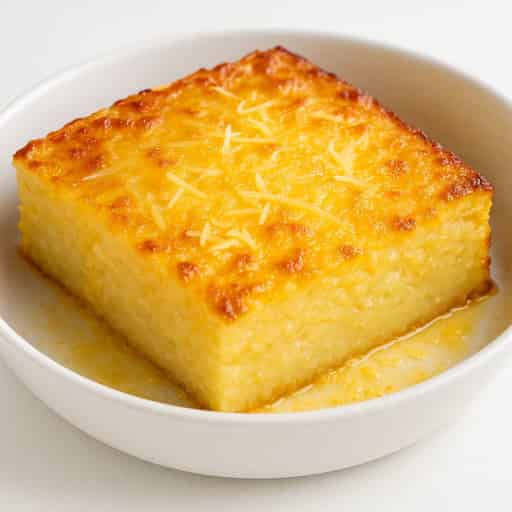
Bake for 28 to 32 minutes, then scatter the cheddar evenly over both bibingkas. Return to the oven for 10 to 15 minutes more, until the cheese has melted and the centres are set. A skewer should emerge without wet batter when tested away from a purple swirl.
Cheddar Butter Finish
- 1
Brush the warm bibingkas with melted salted butter and scatter over the optional toasted coconut. Cool in the tins for 15 minutes, then slice warm or at room temperature. Serve ube halaya alongside instead of adding it to the batter.
Optional Banana Leaf Lining
- 1
If the banana leaves do not fully cover the tins, overlap smaller pieces and use parchment beneath them for support. The leaves add a gentle aroma but parchment produces the same soft, marbled crumb.
Plan This Recipe
Save this recipe to one of your meal plans or browse your existing plans.
Learn More
Everything you want to know about this recipe.
Marbled Ube Bibingka
Marbled Ube Bibingka
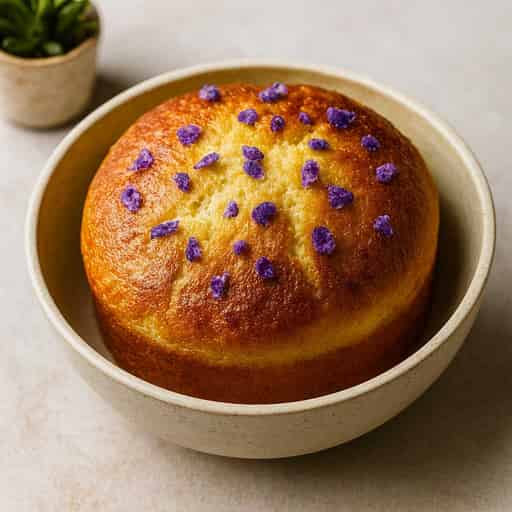
Marbled ube bibingka is a soft, slightly springy Filipino-style rice cake with a pale coconut batter and vivid purple ube swirls. It is baked in two shallow tins rather than over charcoal, making it approachable for a home oven while keeping the rice-flour character that makes bibingka different from an ordinary sponge cake.
The important contrast is both visual and flavourful. Coconut milk makes the base rich and tender, ube extract adds its distinctive sweet purple-yam aroma, and a final layer of melted cheddar and salted butter gives the familiar sweet-and-savoury finish. This version is intentionally softer and more cake-like than a dense traditional bibingka, but it should never be wet, gummy, or overly sweet.
Use Regular Rice Flour for the Right Texture
Use Regular Rice Flour for the Right Texture
Choose regular rice flour, not glutinous rice flour or sweet rice flour. Regular rice flour gives the finished bibingka a delicate rice-cake bite that still slices neatly once cool. Glutinous flour behaves very differently: it creates a chewy, sticky texture and would make this batter much denser than intended.
The small amount of all-purpose flour is equally purposeful. It adds enough structure to hold the two colours in distinct swirls and gives the crumb a softer, more cake-like quality. Whisk the dry ingredients together first, then mix them into the wet ingredients only until smooth. Beating for too long after the flour goes in makes the finished cake heavier.
Make Clear Ube Swirls
Make Clear Ube Swirls
Stir the full can of coconut milk before measuring; the rich cream can settle at the top of the can. Once the batter is smooth, divide it approximately 60:40, leaving the larger portion plain and flavouring the smaller portion with ube extract. Ube extract strengths differ substantially between brands, so begin at the lower end if yours is especially concentrated or brightly coloured.
Alternate spoonfuls of each batter in the tins, then run a skewer through only two or three figure-eight motions. The goal is defined purple and cream-coloured sections, not a fully purple batter. If you swirl too much, the colours blend together and the visual marble disappears.
Do not add ube halaya directly to the main batter. It is delicious as an accompaniment, but its extra moisture and sugar can create damp patches and make the marbling less reliable. Spoon it alongside each warm slice if you would like a more pronounced purple-yam flavour.
Banana Leaf and Cheddar Finish
Banana Leaf and Cheddar Finish
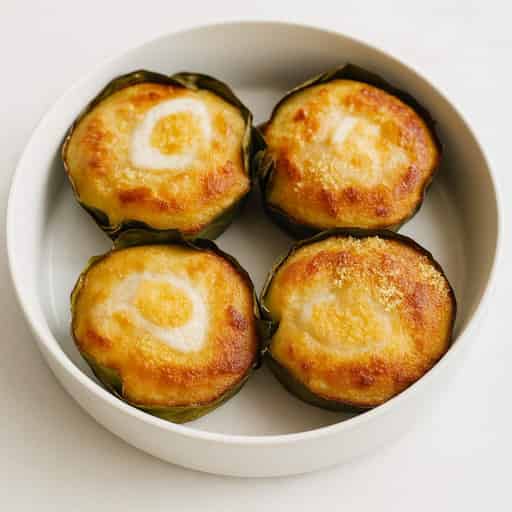
Banana leaves are optional but worthwhile when you can find them. Soften a leaf carefully over gentle heat or with hot water until pliable, then line the tins. It gives a light, characteristic aroma but does not change the basic baking method; parchment is a dependable alternative.
Add the cheddar toward the end of the bake rather than at the beginning. This lets it melt over a nearly set surface without browning too hard or sinking into the soft batter. Brushing the warm bibingka with salted butter after it leaves the oven keeps the top glossy and creates the classic contrast between buttery saltiness, mild cheese, coconut, and ube.
Storage and Reheating
Storage and Reheating
Bibingka is especially good while still slightly warm, but it also makes a practical make-ahead snack. Let it cool completely, then store it airtight at room temperature for one day or in the refrigerator for up to four days. Reheat slices gently in a low oven or for a short time in the microwave until warm; overheating can dry the rice-flour crumb.
For longer storage, wrap slices individually and freeze for up to two months. Defrost at room temperature, then reheat gently and brush with a little more melted butter if desired. Keep any ube halaya separate until serving.
Portion Guidance for Goals
Portion Guidance for Goals
One small slice is a sensible dessert or snack portion. Bibingka includes coconut milk, butter, cheddar, sugar, and rice flour, so it is best treated as a planned sweet bake rather than an everyday protein source. The nutrition is an estimate per slice and will vary with the cheese and coconut milk used.
When to Eat
When to Eat
Serve marbled ube bibingka warm for merienda, as part of a Filipino celebration spread, or after a savoury meal with tea or coffee. It is also a lovely sharing cake for breakfast because it can be sliced ahead and warmed briefly just before serving.
Balance Tip
Balance Tip
If you are serving bibingka as dessert, pair it with fresh fruit or unsweetened tea and keep earlier meals lighter in saturated fat where practical. The cheddar-and-butter finish is part of the recipe’s character, so a smaller slice is usually more satisfying than altering that contrast.
Nutrition Facts
Nutrition Facts
Serving Size: 1 of 16 slices
Calories 22011%
% Reference Intake*
Total Fat 10g14%
Saturated Fat 7g35%
Trans Fat 0g
Cholesterol 65mg
Sodium 170mg
Total Carbohydrates 29g11%
Dietary Fiber 1g
Sugars 12g13%
Protein 4g8%
* Reference intakes are based on an average adult's 8,400 kJ / 2,000 kcal diet. Your needs may be higher or lower.
FAQs
Can I use glutinous rice flour for ube bibingka?
No. This recipe is developed for regular rice flour, which gives a soft, lightly springy crumb. Glutinous or sweet rice flour absorbs liquid differently and can make the bibingka overly chewy or gummy.
Can I use ube halaya in the batter?
It is better served alongside this recipe. Ube halaya adds extra moisture and sugar, which can blur the marbling and make the centre harder to bake evenly.
Why is there all-purpose flour in bibingka?
A small amount of all-purpose flour gives the rice flour enough structure for a softer, more cake-like crumb. The bibingka still keeps its characteristic rice-flour texture.
How do I store and reheat bibingka?
Cool completely, then store airtight at room temperature for one day or refrigerate for up to four days. Reheat slices briefly in a low oven or microwave until warm. Freeze wrapped slices for up to two months and thaw before reheating.
Community Reviews
See how other home cooks made this recipe, then share your own experience.
—
0 ratings
5
0%
4
0%
3
0%
2
0%
1
0%
How would you rate this recipe?
Share your experience and help others.
Create Your Own Recipe
Add your personal creations and build your own recipe collection.