07 September 2026
Gooey Basque Cheesecake (Burnt Basque Style)
RecipeShare Test Kitchen

A small-batch gooey Basque cheesecake with a deeply caramelised top and a chilled, custardy centre. No crust or water bath required.
Prep time
30 min
Cook time
20 min
Total time
13 hr 50 min
Servings
8
Time Plan
30 min active · 13 hr 50 min total
- Cool in the pan1 hr
- Chill before slicing12 hr
Recipe Snapshot
DifficultyMedium
MealDessert
Freezer FriendlyYes
Family FriendlyYes
CuisineBasque
Chef's Tips
Bring the cream cheese and eggs to room temperature so the batter becomes smooth without overmixing.
Line the pan with crumpled parchment that rises above the rim; the cheesecake will puff as it bakes.
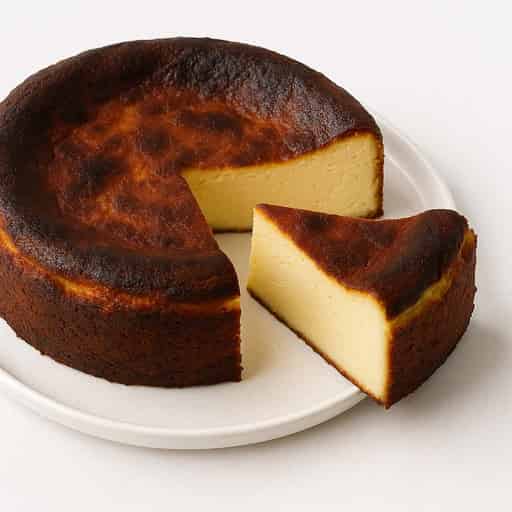
Bake until the edge is set and the centre still moves as one loose wobble.
Chill for at least 12 hours before slicing; the centre firms as it cools.
Use cornstarch for a slightly more delicate, custardy texture or cake flour for a little more structure.
Tools Used
Electric Mixer(opens in a new tab)Fine-mesh Sieve(opens in a new tab)Baking Tray(opens in a new tab)Parchment Paper(opens in a new tab)
We use affiliate links, which may earn us a small commission at no extra cost to you.
Ingredients
Ingredients
Servings
8 servings1×
Scale
Ingredient amounts update instantly.
Batter
Instructions
Prepare the Batter
- 1
Heat the oven to 220°C (428°F). Crumple two sheets of parchment paper, flatten them slightly, and use them to line a 15cm round cake pan, leaving the paper several centimetres above the rim.
- 2
Beat the cream cheese until smooth. Add the sugar and salt and mix just until combined.
- 3
Gradually mix in the beaten eggs, followed by the cream and vanilla if using. Stir the flour or cornstarch into the batter until no dry pockets remain.
- 4
Pass the batter through a fine-mesh sieve into the lined pan to remove lumps and large air bubbles.
Bake and Chill
- 1
Bake for 18–22 minutes, until the top is deeply caramelised, the edges are puffed and set, and the centre still has a loose wobble.
- 2
Cool in the pan at room temperature for 1 hour. The cheesecake will sink as it cools; this is normal.
- 3
Cover and refrigerate for at least 12 hours, preferably overnight, before peeling away the parchment and slicing.
Serve
- 1
Slice the cheesecake cold for the cleanest shape, or let it stand for 15–20 minutes for a softer, more gooey centre. Serve plain or with fresh berries and coffee.
Plan This Recipe
Save this recipe to one of your meal plans or browse your existing plans.
Learn More
Everything you want to know about this recipe.
Gooey Basque Cheesecake
Gooey Basque Cheesecake
This small-batch Basque cheesecake is designed for a soft, custardy centre rather than a firm cheesecake set. The high oven temperature quickly caramelises the top while the centre remains loose enough to finish setting during an overnight chill.
Unlike a conventional cheesecake, it needs no crust and no water bath. The crumpled parchment is deliberately rustic: it supports the tall batter and lets the edges develop the characteristic dark, uneven finish.
Why This Version Stays Gooey
Why This Version Stays Gooey
The modest amount of flour or cornstarch gives the cheesecake enough structure to slice without turning the centre cakey. Cream cheese and double cream provide the rich, silky texture, while straining the batter removes small lumps before the short bake.
Do not judge the texture while it is hot. The centre should look under-set when it leaves the oven, then become sliceable after at least 12 hours in the fridge.
Troubleshooting
Troubleshooting
The cheesecake is runny after chilling
It probably needed a little longer in the oven, or it was cut before the centre had fully chilled. Return the pan to the refrigerator and give it more time. For the next batch, add 2–3 minutes to the bake while keeping the centre wobbly.
The centre is firm instead of gooey
The cheesecake was likely baked too long or the batter was overmixed with extra air. Remove it as soon as the edge is set and the middle still moves as one piece. A longer bake creates a firmer, more conventional cheesecake texture.
The top is pale
Use a fully preheated oven and bake on the centre rack. The deep colour comes from high heat, so avoid opening the door during the first 15 minutes.
Serving And Storage
Serving And Storage
Serve it cold for the cleanest slices, or rest it at room temperature for 15–20 minutes when you want the middle to feel softer. Tart berries and unsweetened coffee balance the rich cream cheese and caramelised top.
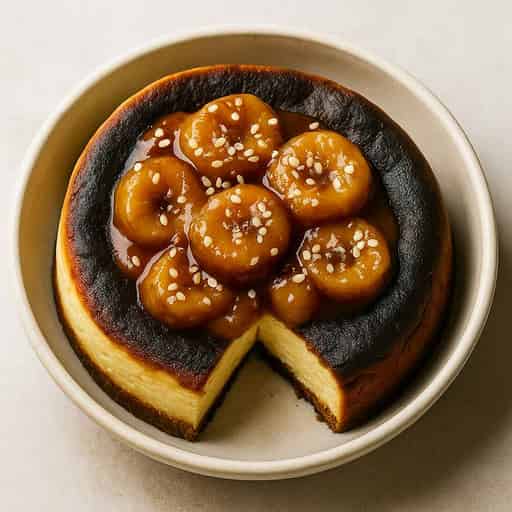
Keep it covered in the refrigerator for up to 4 days. For a broader classic Basque cheesecake with a larger yield and firmer slice, see Burnt Basque Cheesecake. For another flavour variation, try Caramelised Banana Burnt Basque Cheesecake.
Nutrition Facts
Nutrition Facts
Serving Size: 1/8 cheesecake (about 90 g)
Calories 28014%
% Reference Intake*
Total Fat 23g33%
Saturated Fat 13g65%
Trans Fat 0g
Cholesterol 110mg
Sodium 210mg
Total Carbohydrates 13g5%
Dietary Fiber 0g
Sugars 12g13%
Protein 5g10%
* Reference intakes are based on an average adult's 8,400 kJ / 2,000 kcal diet. Your needs may be higher or lower.
FAQs
Why is the centre still jiggly when the cheesecake comes out of the oven?
That is expected for a gooey Basque cheesecake. The edge should be set, while the centre moves as one loose wobble. It will continue to set during the long chill.
Can I use cornstarch instead of cake flour?
Yes. Use the same 10 g quantity. Cornstarch gives the centre a slightly softer, more custardy texture, while cake flour provides a little more structure.
Why did my cheesecake crack or sink?
A little sinking is normal. Cracking is more likely when the batter is overmixed or the cheesecake is baked until the centre is fully firm. Mix only until smooth and keep the centre slightly wobbly at the end.
How should I store gooey Basque cheesecake?
Refrigerate it covered for up to 4 days. You can freeze individual slices for up to 2 months; thaw them overnight in the refrigerator.
Community Reviews
See how other home cooks made this recipe, then share your own experience.
—
0 ratings
5
0%
4
0%
3
0%
2
0%
1
0%
How would you rate this recipe?
Share your experience and help others.
Luca
· 7 Sept 2026I followed the wobble cue instead of waiting for a firm centre, and the texture after chilling was exactly the creamy Basque style I wanted.
Hannah
· 7 Jun 2026The parchment lining looked messy before baking, but it made lifting the cheesecake out very easy and gave the edges a lovely shape.
Sofia
· 7 Mar 2026I made the batter with cake flour and found the texture slightly firmer, which worked well for clean slices at a dinner party.
Noah
· 7 Dec 2025The dark top looked dramatic but was not bitter. I served it with raspberries and liked the contrast with the rich centre.
Elise
· 7 Sept 2025Letting it sit out for 15 minutes before serving gave the centre that lovely gooey texture without making it difficult to slice.
Priya
· 7 Mar 2025The small tin gives it a lovely height. Mine needed a few extra minutes before the middle had the right wobble.
Daniel
· 11 Jul 2024I used cornstarch instead of flour and strained the batter as suggested. The texture was very smooth.
Mara
· 18 Feb 2024The overnight chill made a huge difference. The centre was soft and creamy but still easy to slice.
Browse this topic

Create Your Own Recipe
Add your personal creations and build your own recipe collection.