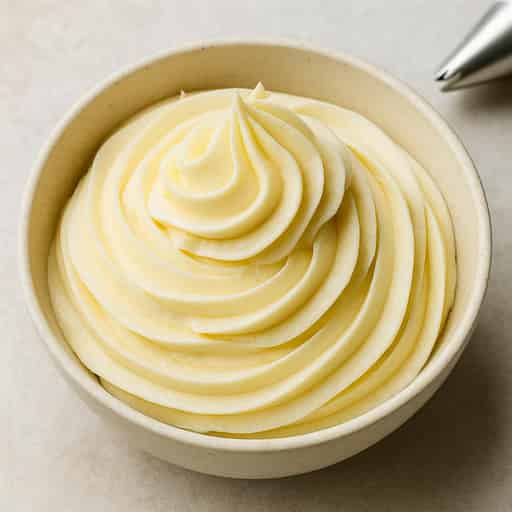
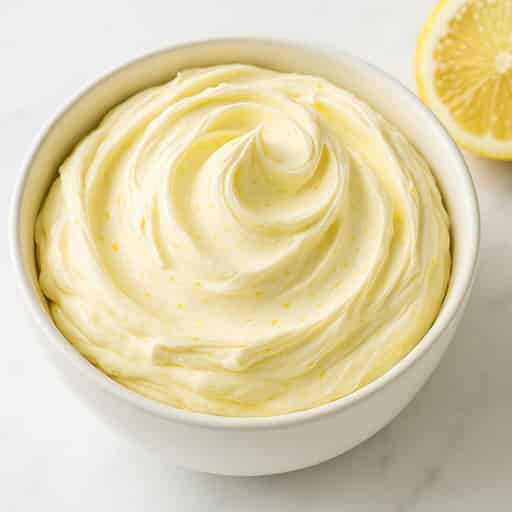
Chocolate buttercream frosting made with dark chocolate and plain buttercream for a smooth, pipeable finish. A practical frosting for cakes, cupcakes, and layered desserts when you want deeper chocolate flavor without making the texture dense.
Prep time
10 min
Cook time
5 min
Total time
15 min
Servings
12
Chef's Tips
Let the melted chocolate cool slightly before mixing so the buttercream does not split.
Whisk the base buttercream until smooth before adding the chocolate.
If the frosting firms up too much, leave it at room temperature briefly and re-whisk.
Tools Used
Mixing Bowl(opens in a new tab)Whisk(opens in a new tab)Heatproof Bowl(opens in a new tab)Saucepan(opens in a new tab)Spatula(opens in a new tab)
We use affiliate links, which may earn us a small commission at no extra cost to you.
Ingredients
Ingredients
Servings
12 servings1×
Scale
Ingredient amounts update instantly.
Chocolate Buttercream
Instructions
Melt the Chocolate
- 1
Melt the chopped dark chocolate in a heatproof bowl over barely simmering water until smooth.
- 2
Let it cool for a few minutes so it stays fluid but no longer feels hot.
Finish the Buttercream
- 1
Whisk the plain buttercream in a separate bowl until smooth and light.
- 2
Gradually whisk in the melted chocolate until the frosting is fully combined and silky.
- 3
Use immediately, or cover and chill until needed. If refrigerated, let it soften slightly and whisk again before spreading or piping.
Plan This Recipe
Save this recipe to one of your meal plans or browse your existing plans.
Learn More
Everything you want to know about this recipe.
Chocolate Buttercream Frosting
Chocolate Buttercream Frosting
Chocolate buttercream sounds simple, but the difference between a good batch and an average one usually comes down to temperature and proportion. This version is meant to deepen an existing plain buttercream with real chocolate instead of relying only on cocoa powder or extra sugar. The result is smoother, darker, and more balanced, with enough structure for spreading or piping.
It is especially useful when you want a frosting that tastes recognizably of chocolate without becoming overly heavy. Dark chocolate adds depth and a cleaner finish, while the base buttercream keeps the texture soft and workable.
Flavor Profile
Flavor Profile
This frosting tastes rich and clearly chocolate-forward, but not aggressively sweet. The dark chocolate gives it a more rounded finish than standard supermarket-style frosting, and the buttercream keeps the texture soft rather than fudgy.
Because the chocolate is folded into an already-made buttercream, the flavor lands somewhere between classic birthday-cake frosting and a more refined cake filling. It is full enough for chocolate cakes, but still balanced on vanilla or coffee cakes too.
Chef's Tips
Chef's Tips
- Let the chocolate cool slightly before mixing. If it is too hot, it can melt the butter and make the frosting greasy.
- Whisk the plain buttercream first so it is completely smooth. Lumps are much harder to fix once the chocolate goes in.
- If the finished frosting feels too firm, let it sit at room temperature for a short time and whisk again.
- If it feels too loose for piping, chill it briefly, then stir or whisk until it is spreadable again.
Ingredient Highlights
Ingredient Highlights
Dark chocolate brings the main flavor here, so quality matters more than in recipes where chocolate is diluted by cream or milk.
Plain buttercream acts as the base and determines most of the final texture. A smooth, well-made buttercream gives you a smoother chocolate frosting.
Using chopped chocolate rather than chips usually gives a cleaner melt and a more even finish.
How It Comes Together
How It Comes Together
First melt the chocolate gently until smooth. It should be fluid but not hot by the time it meets the buttercream. While it cools slightly, whisk the buttercream until light and even.
Then add the chocolate gradually, whisking until the frosting turns uniform in color and texture. Once fully combined, it is ready to spread, pipe, or chill for later use. If you refrigerate it, bring it back toward room temperature before using so it softens properly.
Easy Swaps
Easy Swaps
- Use semisweet chocolate instead of darker chocolate if you want a sweeter, softer flavor.
- Add a small pinch of fine salt if your base buttercream tastes flat.
- Stir in a little espresso powder if you want a subtle mocha effect.
Make-Ahead and Storage
Make-Ahead and Storage
This frosting is well-suited to advance prep. Store it covered in the fridge for several days, or freeze it in an airtight container for longer storage. The key after chilling is to let it soften slightly, then whisk it again so the texture turns smooth rather than stiff.
If you are frosting a cake ahead of time, it is easier to work with the buttercream once it is cool but still pliable. Very cold frosting will drag; overly warm frosting will smear.
Portion Guidance for Goals
Portion Guidance for Goals
Treat this as a finishing element, not a large dessert portion on its own. About 2 tablespoons, or roughly 35 g, is enough for one generous cupcake or a modest slice of layer cake.
If you are using it on a richer cake, a thinner layer is usually enough. The frosting has plenty of flavor, so you do not need a very deep coating for it to read as indulgent.
When to Eat
When to Eat
This kind of frosting makes the most sense as part of a planned dessert, such as birthday cake, cupcakes, or a weekend baking project. It also works well when you want a smaller, intentional sweet rather than grazing on multiple desserts.
Balance Tip
Balance Tip
If you are having a buttercream-topped dessert, keep the rest of the day a bit lighter on other high saturated-fat foods. Let the frosting be the indulgent piece rather than stacking it with several other rich extras.
FAQ
FAQ
Can I spread this on a sheet cake?
Yes. It spreads well when the texture is cool and smooth, especially on a cake
that has fully cooled.
Can I use it between cake layers?
Yes. It works well as both frosting and filling.
Why did my frosting look split?
The chocolate was likely too warm, or the buttercream temperature was off. Let
the mixture rest briefly, then whisk again once the temperatures even out.
Nutrition Facts
Nutrition Facts
Serving Size: 2 tablespoons (35 g)
Calories 1608%
% Reference Intake*
Total Fat 12g17%
Saturated Fat 7g35%
Trans Fat 0g
Cholesterol 35mg
Sodium 10mg
Total Carbohydrates 14g5%
Dietary Fiber 1g
Sugars 13g14%
Protein 1g2%
* Reference intakes are based on an average adult's 8,400 kJ / 2,000 kcal diet. Your needs may be higher or lower.
FAQs
Can I pipe this frosting?
Yes. It pipes well once the texture is cool, smooth, and not overly soft.
What kind of chocolate works best?
Dark chocolate around 60 to 70 percent cacao gives the best balance of flavor and texture.
How long does it keep?
It keeps in the fridge for several days. Let it soften slightly, then whisk again before using.
Community Reviews
See how other home cooks made this recipe, then share your own experience.
4.7
3 ratings
5
67%
4
33%
3
0%
2
0%
1
0%
How would you rate this recipe?
Share your experience and help others.
Mia K.
· 2 Aug 2025I used it on a birthday cake and liked that it looked polished without being overly sweet.
Daniel P.
· 9 Jul 2025Good chocolate depth without becoming too bitter. Worked well as a layer cake filling too.
Sarah B.
· 28 Jun 2025Turned out silky smooth and piped neatly onto cupcakes.
Create Your Own Recipe
Add your personal creations and build your own recipe collection.