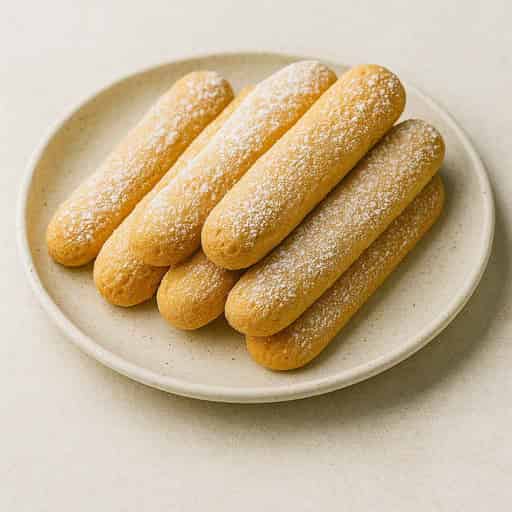
Make Joconde sponge, also called biscuit Joconde: a thin, flexible French almond sponge for Opera Cake, entremets, and layered desserts. Includes precise foam, tray, and baking guidance.
Prep time
25 min
Cook time
24 min
Total time
49 min
Servings
36
Recipe Snapshot
DifficultyMedium
MealDessert
Freezer FriendlyYes
CuisineFrench
Chef's Tips
Use fine almond flour or finely ground blanched almonds, not coarse almond meal.
Spread about 280 g batter per sheet promptly; it should sit about 3 to 4 mm thick in the 5 mm frame.
Bake only until lightly golden and springy. Thin Joconde dries and becomes brittle quickly if overbaked.
Tools Used
Stand Mixer With Whisk Attachment(opens in a new tab)Large Mixing Bowl(opens in a new tab)Fine Sieve(opens in a new tab)Offset Spatula(opens in a new tab)Baking Tray(opens in a new tab)Kitchen Scale(opens in a new tab)
We use affiliate links, which may earn us a small commission at no extra cost to you.
Tin & Mould
27 x 37 cm sponge frame
0.5 cm deep · 37 × 27 cm
Ingredients
Ingredients
Servings
36 servings1×
Scale
Ingredient amounts update instantly.
Almond And Egg Base
Meringue
Instructions
Prepare the Almond Egg Base
- 1
Heat the oven to 220C fan (240C conventional) and position a rack in the middle. Line a 27 x 37 cm, 5 mm-deep sponge frame set on a baking tray with baking paper. Prepare three sheets of paper and bake each sheet as soon as it is spread.
- 2
Sift the icing sugar and flour into the mixer bowl, then whisk in the almond flour. Add the whole eggs gradually while mixing on medium speed, then whisk for about 8 to 10 minutes until pale, increased in volume, and thick enough to fall in a ribbon that remains visible briefly on the surface.
Whip and Fold the Meringue
- 1
In a clean bowl, whisk the egg whites to soft peaks. Add the granulated sugar gradually, then whisk to glossy medium-stiff peaks: the tip should stand with a slight hook, not look dry or clumpy.
- 2
Fold one-third of the meringue into the almond base to lighten it, then fold in the rest in two additions. Cut through the centre, sweep around the base, and turn the bowl; stop once no white streaks remain. The finished batter should be light, aerated, and fluid enough to spread.
Spread and Bake the Sheets
- 1
Weigh about 280 g batter into the lined frame for each of three sheets. Spread it swiftly and evenly with an offset spatula to about 3 to 4 mm thick. Pop any obvious large surface bubbles with the tip of a skewer, but do not repeatedly work the batter.
- 2
Bake each sheet for 7 to 8 minutes, until the surface is pale gold, no longer wet, and springs back lightly when touched. Do not wait for a deep brown colour: the sponge should remain flexible, not dry or crisp.
Cool and Store the Joconde
- 1
Slide the baked sheet from the tray, cover it with a fresh sheet of baking paper, and invert. Peel the used paper back low and parallel to the sponge rather than pulling upward. Keep the sheet between paper while it cools to protect its moisture.
- 2
Stack cooled sheets between baking paper, wrap airtight, and use within 1 day or freeze flat for up to 1 month. Thaw while wrapped before trimming or assembling so condensation stays on the wrapper, not the sponge.
Plan This Recipe
Save this recipe to one of your meal plans or browse your existing plans.
Learn More
Everything you want to know about this recipe.
What Is Joconde Sponge?
What Is Joconde Sponge?
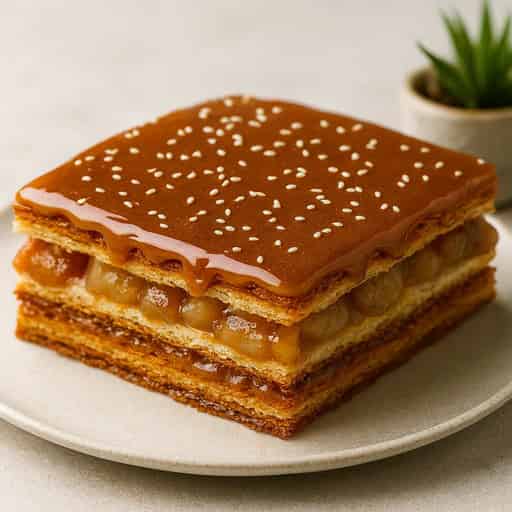
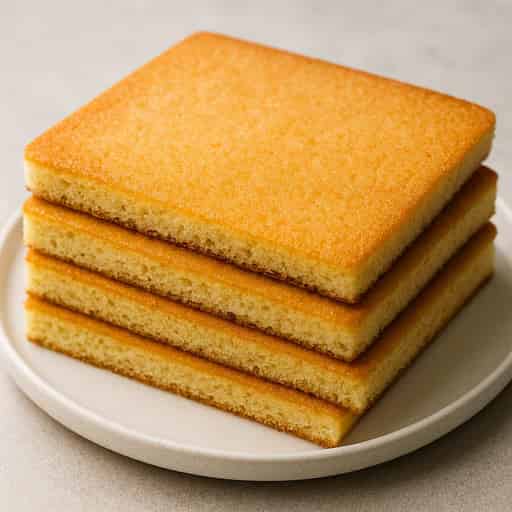
Joconde sponge, also called biscuit Joconde, is a thin French almond sponge made for pâtisserie assembly rather than for serving as a tall cake on its own. It is light enough for mousse and cream layers, yet flexible enough to trim precisely or use as a lining in an entremet. The three thin sheets in this recipe are particularly useful for Opera Cake-style layers.
French pastry uses biscuit to mean sponge. Joconde should be thin and relatively flat: a modest rise is normal, and a tender, flexible sheet is the goal.
Joconde, Genoise, and Joconde Imprime
Joconde, Genoise, and Joconde Imprime
Joconde differs from genoise in both ingredients and structure. This recipe uses almond flour, icing sugar, a whipped whole-egg base, and a separate meringue. Genoise usually depends on a whole-egg foam and is commonly baked as a taller sponge. Joconde is also different from an ordinary almond cake; it is designed as a thin component, not a standalone cake layer.
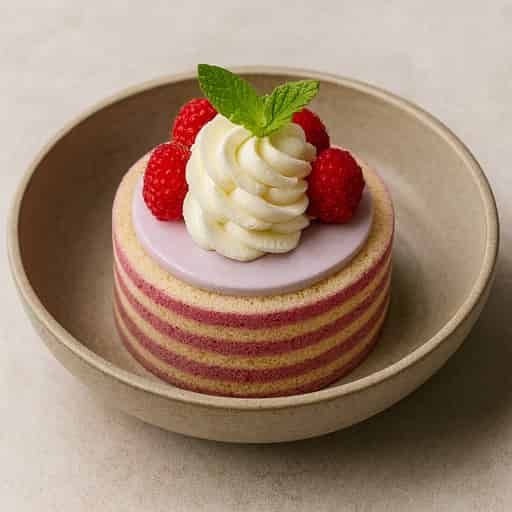
Joconde Imprime is not another name for plain Joconde. It uses a decorative pate a cigarette pattern beneath a thin Joconde layer, normally for lining moulds. This page intentionally covers the plain sponge. For a finished dessert that uses a striped Joconde treatment, see lavender raspberry mousse cake.
How to Keep Joconde Light and Flexible
How to Keep Joconde Light and Flexible
Use fine almond flour, sometimes labelled finely ground blanched almonds. Coarse almond meal makes a rougher sponge and is not a reliable substitute. Icing sugar (powdered or confectioners' sugar) is part of the almond-egg foam; it is not interchangeable with the small amount of granulated sugar that stabilises the meringue.
Whip the almond-egg base until it is pale and leaves a ribbon briefly visible on the surface. Whip the whites only to glossy medium-stiff peaks. Dry, overwhipped whites are harder to fold and can leave a grainy batter. Fold with a broad spatula, working deliberately but not endlessly, then spread and bake the batter immediately.
This particular in-house formulation is butter-free. Some classical Joconde formulas include melted butter, but it is not missing here: the almond flour and two egg foams provide the intended tenderness and flexibility. Do not add butter to this formula without retesting its thickness and bake.
Tray Size, Thickness, and Baking
Tray Size, Thickness, and Baking
The complete batter weighs about 845 g and makes three 27 x 37 cm sheets. Use about 280 g per lined sheet, spread to roughly 3 to 4 mm thick inside a 5 mm-deep frame. An offset spatula gives the most even layer; make a few decisive passes rather than continually smoothing the foam flat.
Bake each sheet at 220C fan / 240C conventional for 7 to 8 minutes on the middle rack. A baked sheet is pale gold, dry on the surface, and gently springy. Do not wait for deep browning. Overbaked Joconde becomes brittle; underbaked Joconde can stick, tear, or feel gummy.
As soon as the sheet is out of the oven, cover it with fresh baking paper, invert, and peel away the used paper back on itself. Keep it between paper while cooling so the thin sponge does not dry before assembly.
Using Joconde in Layered Desserts
Using Joconde in Layered Desserts
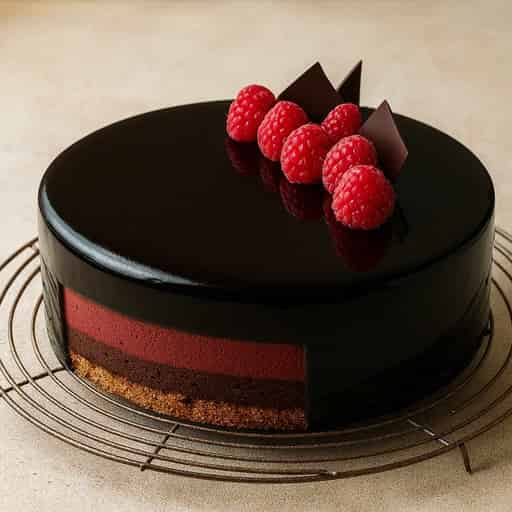
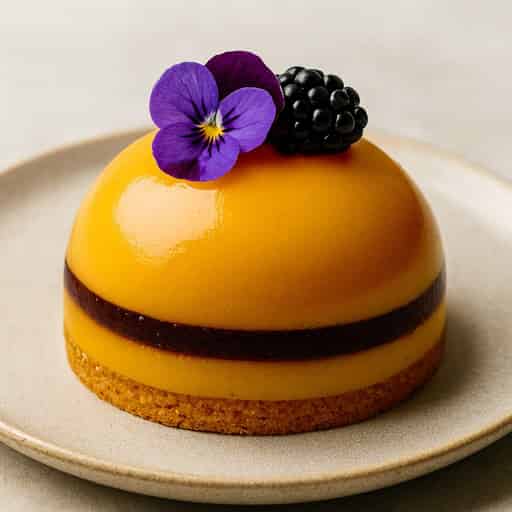
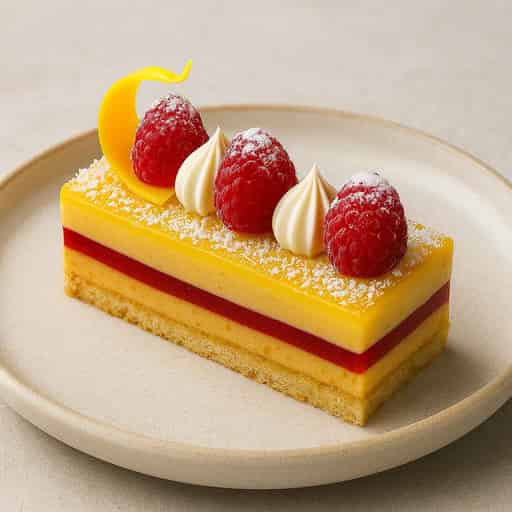
Joconde is the almond sponge associated with Opera Cake, where it is often brushed with coffee syrup during assembly. That syrup belongs to the finished dessert, not this base recipe. In entremets, use the sheet as a thin base or trim it to fit between mousse, cremeux, or ganache layers.
For a clean white-chocolate filling, white chocolate namelaka is a useful component. Keep assembled desserts focused on their own recipe: this page owns the generic Joconde technique rather than any one Opera Cake or entremet variation.
Joconde Troubleshooting
Joconde Troubleshooting
The sponge is thin but not dense: That is normal. Joconde is meant to be a thin pastry sheet, not a high-rising layer cake. It is dense only if it feels heavy, rubbery, or lacks small air bubbles throughout.
The batter lost volume: The almond-egg base or meringue was underwhipped, the whites were overwhipped and dry, the folding was too forceful, or the batter sat too long before baking. Work promptly after the final fold.
The sponge is dry or brittle: It was overbaked, spread too thinly, or left uncovered after baking. Use the specified frame, pull the sheet while pale gold, and cool it between paper.
The sheet tears or sticks: A gummy sheet needs a little more baking; a brittle sheet has baked too long. Use quality baking paper and peel it low and parallel after inversion.
The thickness is uneven: Weigh the batter per tray, use a level frame and tray, then spread from the centre outward with an offset spatula. Pop only obvious large bubbles rather than knocking the tray hard on the counter.
Storage and Freezing
Storage and Freezing
Once cool, keep Joconde sheets stacked between baking paper and wrapped airtight. Use within 1 day for the softest result, or freeze flat for up to 1 month. Thaw the sheets while still wrapped before trimming. This limits drying and keeps condensation away from the sponge surface.
Nutrition Facts
Nutrition Facts
Serving Size: 1 of 36 pieces (about 1/12 sheet)
Calories 704%
% Reference Intake*
Total Fat 3g4%
Saturated Fat 0.5g3%
Trans Fat 0g
Cholesterol 26mg
Sodium 10mg
Total Carbohydrates 8g3%
Dietary Fiber 1g
Sugars 6g7%
Protein 3g6%
* Reference intakes are based on an average adult's 8,400 kJ / 2,000 kcal diet. Your needs may be higher or lower.
FAQs
What is Joconde sponge?
Joconde, or biscuit Joconde, is a thin French almond sponge used as a pastry component for Opera Cake, entremets, and layered desserts. In French pastry, biscuit means a sponge rather than an American-style biscuit.
How is Joconde different from genoise?
Joconde uses almond flour and a separate meringue as well as a whipped whole-egg base, which gives it a tender, flexible structure. Genoise relies primarily on a whipped whole-egg foam and is usually baked as a taller sponge. Neither is simply an ordinary almond cake.
Is Joconde Imprime the same as Joconde sponge?
No. Joconde Imprime combines a decorative patterned paste with a thin layer of Joconde sponge, usually to line a mould. This is the plain Joconde sponge base; use it for layers or as the sponge part of a patterned preparation.
Why is my Joconde dry or brittle?
Thin sheets dry quickly if the tray is too large, the batter is spread too thinly, the oven runs hot, or the sponge is deeply browned. Bake only until pale gold and springy, then keep the sheet between paper as it cools.
Why does Joconde tear or stick to the paper?
Underbaked sponge can stick and tear, while overbaked sponge becomes brittle. Use good baking paper, wait until the surface is set and springy, then peel the paper back low and parallel rather than pulling upward.
Can I make Joconde ahead?
Yes. Stack fully cooled sheets between baking paper, wrap airtight, and keep them for 1 day or freeze flat for up to 1 month. Thaw while wrapped before trimming and assembling.
Community Reviews
See how other home cooks made this recipe, then share your own experience.
5.0
6 ratings
5
100%
4
0%
3
0%
2
0%
1
0%
How would you rate this recipe?
Share your experience and help others.
Daniel M.
· 18 Sept 2026The ribbon and meringue cues were more useful than timing alone. Mine baked pale, flexible, and trimmed neatly for a mousse cake.
Sophie R.
· 28 Aug 2026Weighing the batter per sheet made the thickness much easier to control. The layers stayed supple after cooling between paper.
Claire W.
· 21 Jul 2026Good basic Joconde recipe. I kept the baked sheets between parchment and they stayed soft enough to layer the next day.
Hannah P.
· 14 Feb 2026Spreading it evenly took a little practice, but the sponge stayed light and did not crack once baked.
Marco
· 9 Nov 2025I baked the sheets ahead and froze them flat. They thawed cleanly and were still easy to trim for an entremet.
Elise
· 16 Aug 2025Used this for opera cake and the layers stayed flexible without tearing. Much easier to work with than I expected.
Create Your Own Recipe
Add your personal creations and build your own recipe collection.