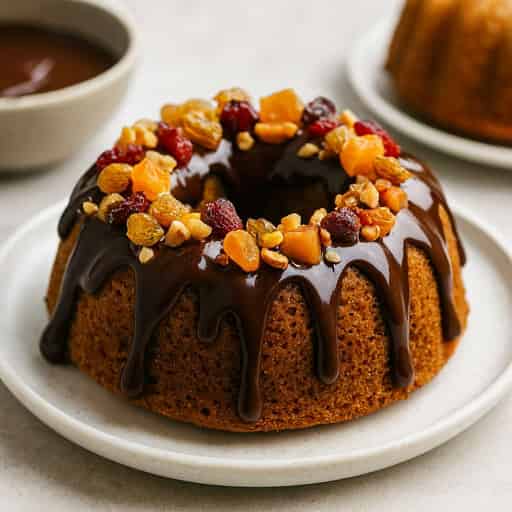
An airy orange chiffon cake with a dark chocolate marble swirl. Bake it in an ungreased tube pan for a tall, soft cake with a delicate crumb.
Prep time
20 min
Cook time
1 hr 10 min
Total time
2 hr 50 min
Servings
12
Recipe Snapshot
DifficultyMedium
MealDessert / Snack
Freezer FriendlyYes
Family FriendlyYes
Chef's Tips
Keep the tube pan completely clean and ungreased so the chiffon can climb its sides.
Use room-temperature eggs and dry, grease-free equipment for the most stable meringue.
Fold the meringue in three additions, stopping as soon as no white streaks remain.
Cool the cake upside down until completely cold before loosening it from the pan.
Tools Used
Mixing Bowls(opens in a new tab)Fine Sieve(opens in a new tab)Rubber Spatula(opens in a new tab)Wire Rack(opens in a new tab)
We use affiliate links, which may earn us a small commission at no extra cost to you.
Tin & Mould
25 to 26 cm tube or angel food pan
25 cm diameter
Ingredients
Ingredients
Servings
12 servings1×
Scale
Ingredient amounts update instantly.
Orange Yolk Batter
Meringue
Chocolate Marble
Instructions
Prepare the Pan
- 1
Heat the oven to 160C fan (180C conventional). Use a clean, ungreased 25 to 26 cm tube or angel food pan; the batter needs to grip the sides as it rises.
Make the Orange Batter
- 1
Whisk the egg yolks, oil, and orange juice until smooth.
- 2
Sift in the self-raising flour and whisk only until no dry pockets remain. Set the batter aside while you make the meringue.
Whip the Meringue
- 1
Beat the egg whites with the salt until foamy. Add the caster sugar gradually, then beat to glossy medium peaks. The tip should curl over softly rather than stand rigidly upright.
Fold and Marble
- 1
Fold one-third of the meringue into the orange batter to loosen it. Fold in the remaining meringue in two additions, using broad, gentle strokes until the batter is even.
- 2
Transfer about one-quarter of the batter to a separate bowl and fold in the cooled melted chocolate. Spoon the plain and chocolate batters alternately into the ungreased pan, then run a skewer through just three or four times.
- 3
Tap the pan once or twice on the counter to release large air bubbles without deflating the batter.
Bake and Cool
- 1
Bake for 65 to 75 minutes, until deeply risen, springy, and a skewer inserted in the centre comes out clean. Avoid opening the oven during the first 50 minutes.
- 2
Invert the pan immediately and cool the cake completely upside down, about 75 to 90 minutes. Run a thin knife around the outside and centre tube, then lift out and slice with a serrated knife.
Plan This Recipe
Save this recipe to one of your meal plans or browse your existing plans.
Learn More
Everything you want to know about this recipe.
Orange Chocolate Marble Chiffon Cake
Orange Chocolate Marble Chiffon Cake
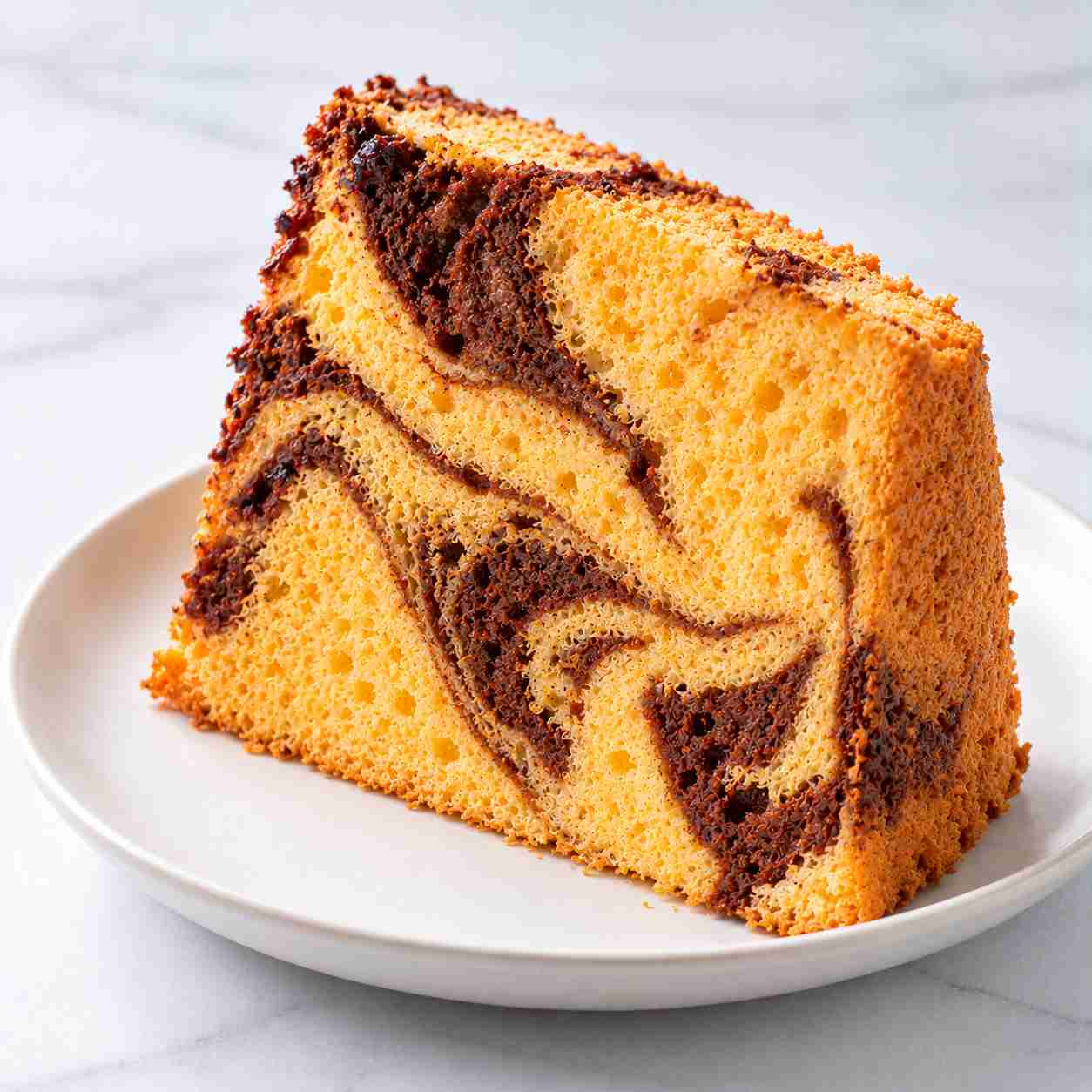
This orange chocolate marble chiffon cake is a tall, light cake built from a fluid orange yolk batter and a glossy egg-white meringue. The chocolate is folded into only part of the batter, giving each slice clear dark ribbons rather than turning the whole cake into a chocolate sponge.
It is quite different from a buttery marble loaf. Chiffon has no butter and gets its lift from whipped egg whites, so the crumb is softer, springier, and lighter on the palate. It is a good choice when you want a generous cake that feels elegant without frosting.
Why This Chiffon Cake Works
Why This Chiffon Cake Works
Orange juice gives the yolk batter flavour and moisture, while neutral oil keeps the crumb supple even after chilling. The meringue provides the structure: beat it to medium peaks so it has enough strength to hold the cake up but is still flexible enough to fold in without leaving dry clumps.
An ungreased tube pan is part of the recipe, not an omission. The batter grips the bare sides as it rises, then the inverted pan supports the cake while the crumb finishes setting. Melted dark chocolate makes a pronounced marble without adding cocoa powder, which can thicken and dry the chocolate portion.
Key Technique Notes
Key Technique Notes
Use two clean bowls when separating the eggs. Even a little yolk or oil in the whites can prevent them from gaining enough volume. Add the sugar gradually once the whites are foamy; this gives a smoother, more stable meringue than adding it all at once.
Fold the meringue in three additions. The first addition makes the orange batter light enough to accept the rest, while the next two preserve the air you worked into the whites. When marbling, stop after a few passes with the skewer. More swirling gives a muddy pattern and deflates the batter.
For another marble cake with a richer, buttery crumb, try this chocolate vanilla marble loaf. If you would like to practise the basic tube-pan method first, the foolproof chiffon cake is a useful simpler reference.
Common Problems
Common Problems
The cake sank after baking
The centre may not have baked through, the pan may have been greased, or the cake may have cooled upright. Bake until the centre springs back and the skewer is clean, then invert the pan immediately and leave it untouched until completely cold.
The texture is dense or rubbery
Over-mixing after the meringue is added is the most common reason. Use a broad spatula to cut down through the batter, sweep across the bottom, and fold over. Stop when you no longer see white streaks.
The chocolate sank or formed a heavy layer
Let the melted chocolate cool until barely warm before folding it into the reserved batter. Very hot chocolate thins and deflates that portion; cold, stiff chocolate will not distribute evenly.
Serving and Storage
Serving and Storage
Let the cake cool fully before slicing so the delicate crumb is not compressed. A plain dusting of icing sugar is enough, though lightly sweetened whipped cream and fresh orange segments make a simple dessert. For an afternoon snack, serve a small slice with coffee, black tea, or mint tea.
The cake keeps well in an airtight container for two days. Freeze individual slices in a snug layer of wrap and thaw them at room temperature; this is often the easiest way to keep the last few slices soft.
Nutrition Facts
Nutrition Facts
Serving Size: 1 slice (1/12 cake)
Calories 40520%
% Reference Intake*
Total Fat 24g34%
Saturated Fat 5g25%
Trans Fat 0g
Cholesterol 108mg
Sodium 180mg
Total Carbohydrates 42g16%
Dietary Fiber 1.5g
Sugars 20g22%
Protein 6.5g13%
* Reference intakes are based on an average adult's 8,400 kJ / 2,000 kcal diet. Your needs may be higher or lower.
FAQs
Why must the tube pan stay ungreased?
Chiffon batter needs a clean metal surface to climb while the egg-white foam expands. Grease makes the batter slip, reducing height and making a collapse more likely as the cake cools.
Can I use a Bundt pan?
A traditional aluminium tube or angel food pan is the reliable choice. Nonstick and decorative Bundt pans give the delicate cake less grip and make it harder to cool upside down, so expect a shorter cake if you use one.
Why did my chiffon cake turn out dense?
The usual causes are under-whipped whites, very stiff and dry whites, or folding too vigorously. Aim for glossy medium peaks and fold only until the batter is uniform.
How do I keep the marble pattern clear?
Keep the chocolate portion to about one-quarter of the batter and swirl only a few times. Too much stirring blends the batters into one colour rather than leaving distinct ribbons.
How should I store orange chocolate chiffon cake?
Keep the cooled cake airtight at room temperature for up to 2 days. For longer storage, wrap individual slices well and freeze for up to 2 months; thaw at room temperature before serving.
Community Reviews
See how other home cooks made this recipe, then share your own experience.
4.8
9 ratings
5
78%
4
22%
3
0%
2
0%
1
0%
How would you rate this recipe?
Share your experience and help others.
Priya
· 18 Sept 2026This is much lighter than a butter-based marble cake. The orange keeps the chocolate from feeling heavy.
Felix
· 19 Jul 2026The swirl stayed distinct and the cake did not collapse after cooling. I froze a few slices and they thawed beautifully.
Amira
· 12 Mar 2026The medium-peak description was the detail I needed. My previous chiffon cakes were dry because I was taking the whites too far.
CurlyBeauty
· 14 Oct 2025Love the airy texture. I dusted the cooled cake with icing sugar and it looked beautifully simple.
Marium
· 14 Oct 2025I used plain flour with baking powder before, but self-raising flour made this version much easier to follow.
Noa
· 14 Oct 2025Served with mint tea and everyone asked for seconds. The orange and chocolate are a lovely pairing.
AllThingsHappy
· 14 Oct 2025Not greasing the pan scared me, but it really helped the rise. The crumb was super fluffy.
Luxury_Bag_Connection
· 14 Oct 2025Added orange zest and a little vanilla paste. The house smelled amazing, and the cake stayed soft for the next day.
Diane
· 14 Oct 2025Turned out so tall. I tried a Bundt pan once and it stuck badly; the ungreased tube pan worked perfectly.
Create Your Own Recipe
Add your personal creations and build your own recipe collection.