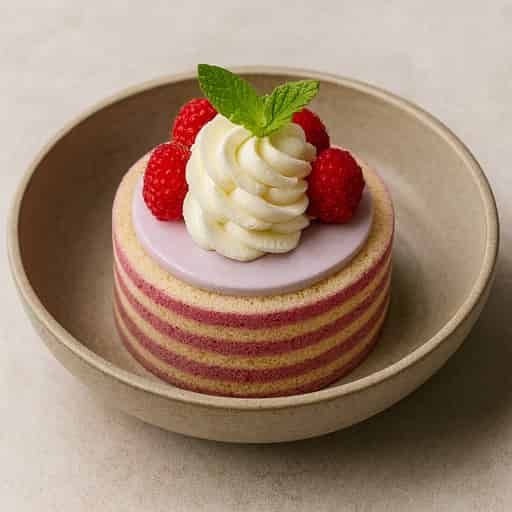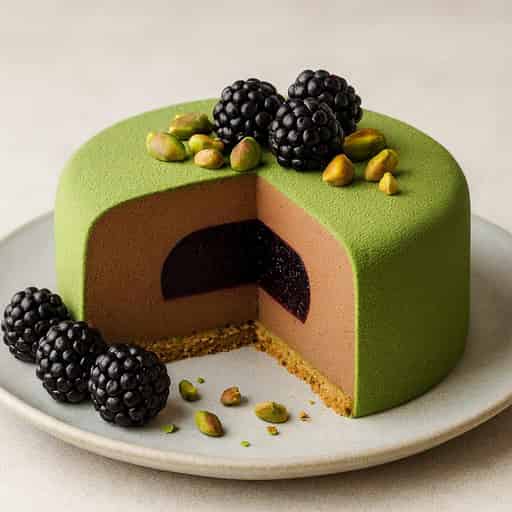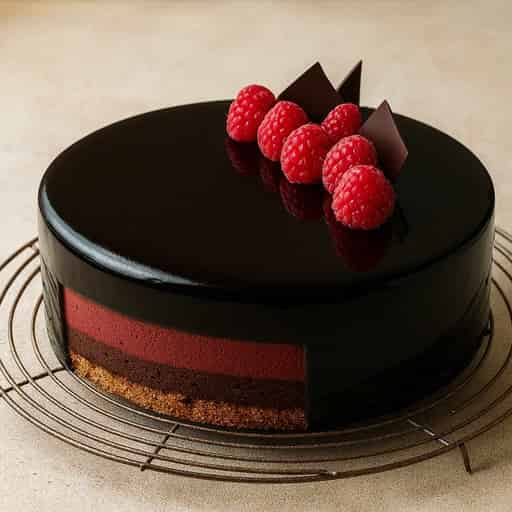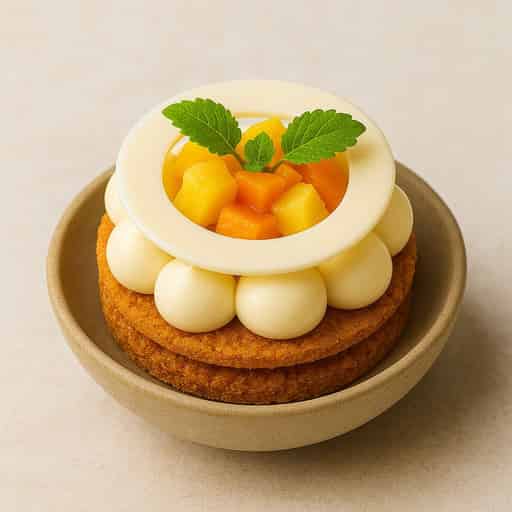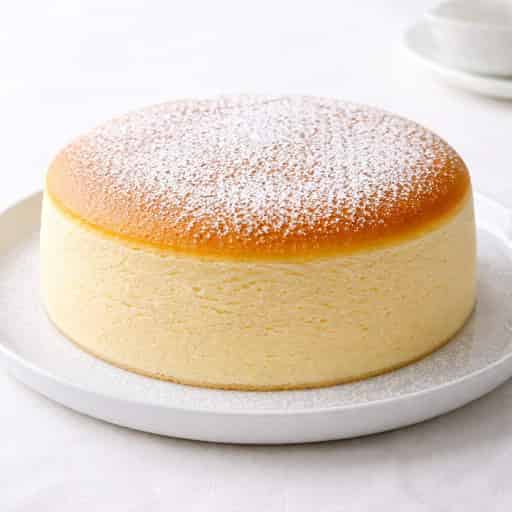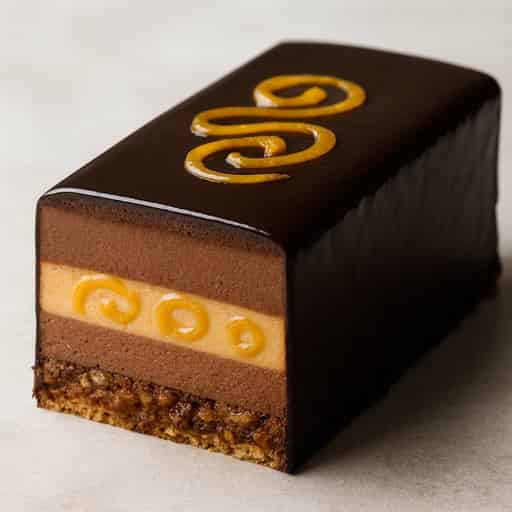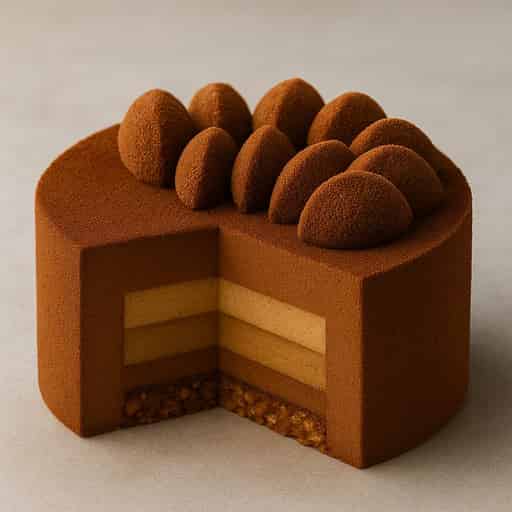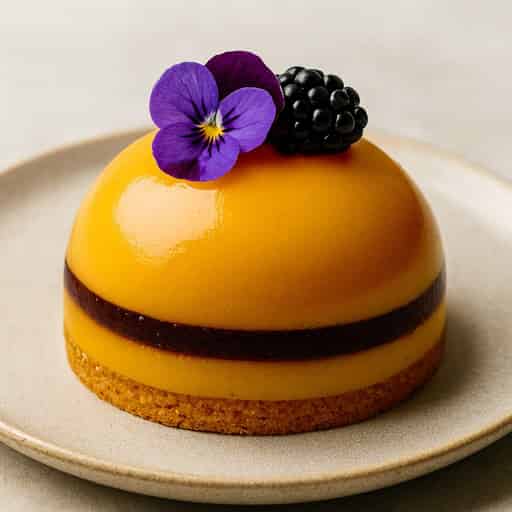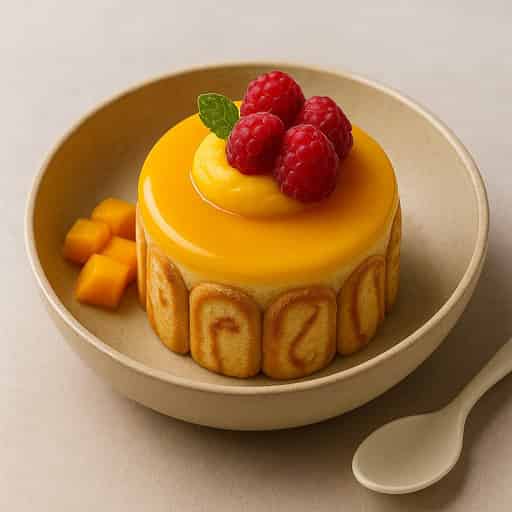
Mango basil mousse cake with light sponge, silky mango mousse, and a glossy mango glaze for a fresh tropical entremet with a clean herbal finish.
Prep time
2 hr
Cook time
15 min
Total time
4 hr
Servings
6
Chef's Tips
Infuse: Add basil to the hot mango–honey mixture, cover 5 minutes, then strain for a softer herbal note.
Leaf gelatin: 4 g ≈ 2 gold leaves; 6 g ≈ 3 gold leaves. Soften in ice-cold water, then squeeze well.
Chill for clean layers—freeze briefly before glazing for a smooth, glassy finish.
Alcohol-free: Soak mango cubes in orange juice instead of rum.
Bake the sponge on well-marked templates to keep the side ‘columns’ even.
Tools Used
Mixing Bowls(opens in a new tab)Hand Or Stand Mixer(opens in a new tab)Whisk(opens in a new tab)Wire Rack(opens in a new tab)
We use affiliate links, which may earn us a small commission at no extra cost to you.
Ingredients
Ingredients
Servings
6 servings1×
Scale
Ingredient amounts update instantly.
Mango Mousse
Sponge (Columns & Inserts)
Mango Glaze
Assembly & Garnish
Instructions
Make the Mango Mousse
- 1
In a saucepan, bring honey and mango purée just to a boil.
- 2
Stir in basil, then the squeezed gelatin until dissolved. Cover 5 minutes, optionally strain for a gentler herb note; cool until just lukewarm.
- 3
Fold in softly whipped cream. Keep chilled but still fluid for assembly.
Bake the Sponge Columns & Inserts
- 1
Separate eggs. Whip whites with sugar to soft peaks; whisk in yolks briefly, then sift and fold in flour.
- 2
On the back of baking paper, draw two rectangles 5×24 cm for side columns; pipe vertical 5 cm lines with equal gaps. Dust with icing sugar.
- 3
Draw a 14×28 cm rectangle for the insert; pipe parallel lines to form a sheet.
- 4
Bake both at 200 °C (400 °F) for ~8 minutes until golden. Transfer to a rack to cool quickly.
Cook the Mango Glaze
- 1
Boil mango purée, water, glucose, and sugar together; remove from heat and dissolve the squeezed gelatin.
- 2
Cool to a pourable, slightly thick consistency.
Assemble & Finish
- 1
Line a 15 cm cake ring with the sponge columns (trim to fit). Cut two 13 cm discs from the sponge sheet.
- 2
Place one disc as the base. Spread mousse, scatter rum-soaked mango, then add the second disc, level with the side columns.
- 3
Top with more mousse almost to the rim. Freeze ~1 hour or until set.
- 4
Spread or pour a thin layer of glaze over the top; unmould. Serve with mango salsa. Optional: garnish with a small dusted sponge disc, a dollop of mousse, berries, and a touch of gold leaf.
Plan This Recipe
Save this recipe to one of your meal plans or browse your existing plans.
Learn More
Everything you want to know about this recipe.
Mango Basil Mousse Cake
Mango Basil Mousse Cake
Mango Basil Mousse Cake is a tropical mousse cake built from light sponge, silky mango mousse, and a glossy mango glaze. The basil is there to sharpen the fruit and add a fresh herbal lift, not to make the dessert taste savory.
This style of cake works well when you want something lighter than a buttercream cake but still polished enough for a celebration. The layers stay clean, the finish is bright, and the mango remains the main flavor.
Why This Recipe Works
Why This Recipe Works
The mousse uses mango puree, honey, basil, and cream in a way that keeps the texture soft and stable without feeling heavy. A short basil infusion is enough to perfume the mousse without overwhelming the fruit.
The sponge layers give the cake structure, while the glaze adds a clean finish and reinforces the mango flavor on top. The result is an entremet-style dessert that looks refined but is still manageable at home.
Ingredients Overview
Ingredients Overview
Mango puree provides the main body of both the mousse and glaze, so using a ripe, flavorful puree matters more than adding extra sugar. Basil should be fresh and tender so the herbal note stays clean.
The sponge is intentionally light because the mousse and glaze already carry the main flavor. If you use the optional soaked mango pieces, they add texture and small bursts of fruit through the center.
How to Make Mango Basil Mousse Cake
How to Make Mango Basil Mousse Cake
Start by making the sponge pieces so they are fully cool before assembly. While they rest, prepare the mango base for the mousse, briefly infuse the basil, and fold in the whipped cream once the mixture is cool enough.
Assemble the cake with the sponge, mousse, and optional mango pieces, then chill or freeze until firm enough to glaze. Pour the glaze only once it has cooled to a fluid but slightly thick consistency so it settles smoothly over the top.
Tips, Variations, and Storage
Tips, Variations, and Storage
If you want a milder basil note, infuse the leaves in the warm mango mixture and strain them out before adding the gelatin. If you want the herb to be more visible, leave the basil finely chopped as written.
This cake is best made ahead because the mousse needs time to set properly and the glaze looks better on a thoroughly chilled cake. Store it cold and slice with a warm knife for cleaner portions.
Portion Guidance for Goals
Portion Guidance for Goals
Because this is a mousse cake, a modest slice is usually the right portion. One slice works well as a plated dessert after a meal or as part of a celebration table with other lighter desserts.
When to Eat
When to Eat
This is best for warm-weather dinners, birthdays, afternoon tea, or any occasion where you want a fruit-forward dessert that feels lighter than a classic frosted cake.
Balance Tip
Balance Tip
Serve it well chilled with coffee, plain tea, or fresh fruit on the side so the sweetness stays balanced and the basil note remains clear.
Nutrition Facts
Nutrition Facts
Serving Size: 1 slice (1/6 of cake)
Calories 28814%
% Reference Intake*
Total Fat 11.7g17%
Saturated Fat 6.7g34%
Trans Fat 0g
Cholesterol 93mg
Sodium 80mg
Total Carbohydrates 39.8g15%
Dietary Fiber 1.1g
Sugars 32.4g36%
Protein 5.2g10%
* Reference intakes are based on an average adult's 8,400 kJ / 2,000 kcal diet. Your needs may be higher or lower.
FAQs
Can I replace basil with another herb?
Yes—mint works, but use less (it’s stronger). Thai basil gives a lovely anise note if you prefer a bolder profile.
Can I use powdered gelatin?
Use 1:1 by weight with the leaves (e.g., 4 g leaf = 4 g powdered). Bloom in cold water (about 5× its weight), then melt into the hot mixture.
How do I get a smooth glaze?
Blend briefly to remove lumps, avoid incorporating air, and pour at a slightly thick, cool-but-fluid stage over a chilled cake.
Community Reviews
See how other home cooks made this recipe, then share your own experience.
4.7
6 ratings
5
67%
4
33%
3
0%
2
0%
1
0%
How would you rate this recipe?
Share your experience and help others.
Thomas
· 9 Jun 2026Clean slices and a nice finish once fully chilled. I skipped the rum and still got plenty of flavor from the mango and glaze.
Lara
· 18 Mar 2026The basil made the mango taste fresher rather than savory. Good balance for a mousse cake that still feels light after dinner.
Kenji
· 12 Oct 2025Next time I’ll add a touch more glaze for extra shine, but flavors were spot on.
Priya
· 12 Oct 2025Surprisingly simple for an entremet. The 6-inch size is perfect for dinner parties.
Marco
· 12 Oct 2025Used orange juice instead of rum for the mango cubes. Set beautifully and sliced clean.
Ella
· 12 Oct 2025The basil is so delicate—just a floral lift. I strained the mousse and loved the balance.
Create Your Own Recipe
Add your personal creations and build your own recipe collection.