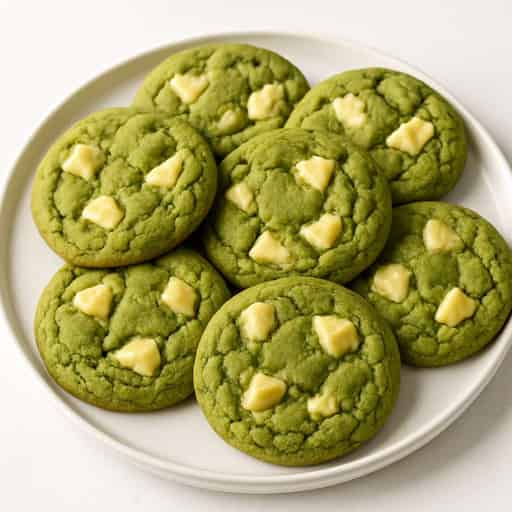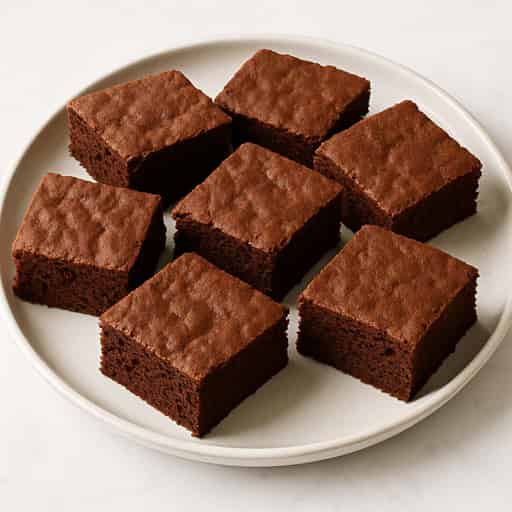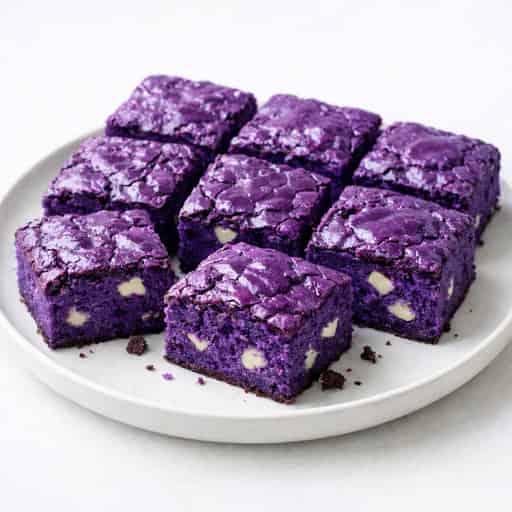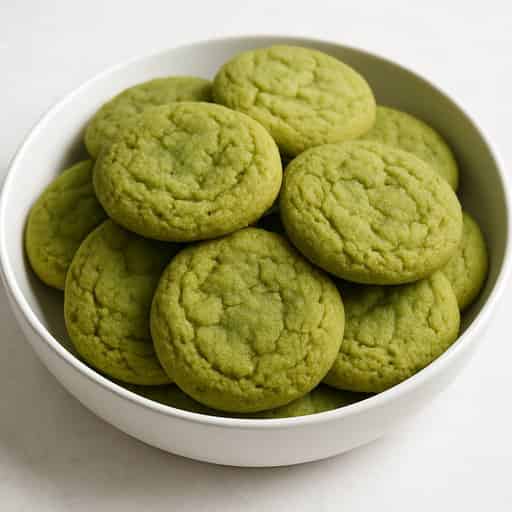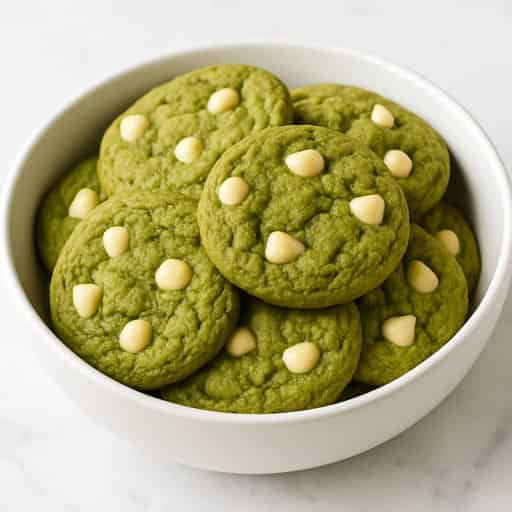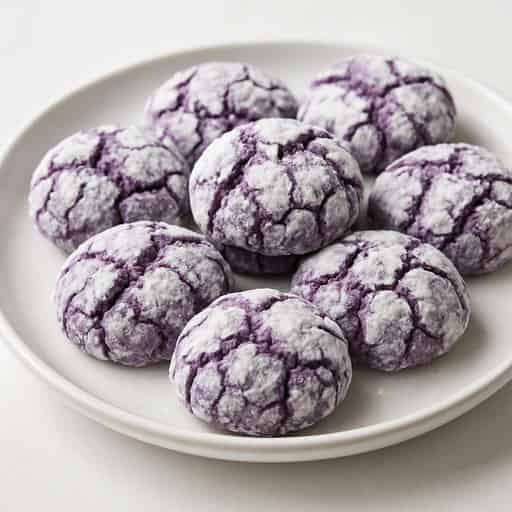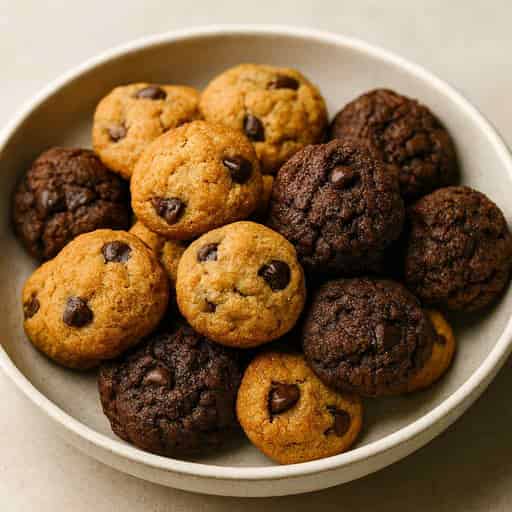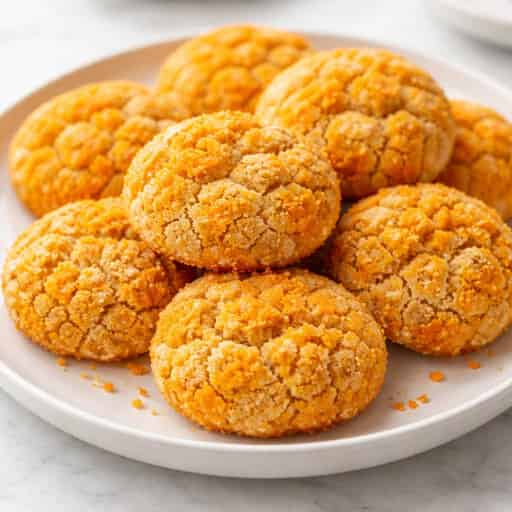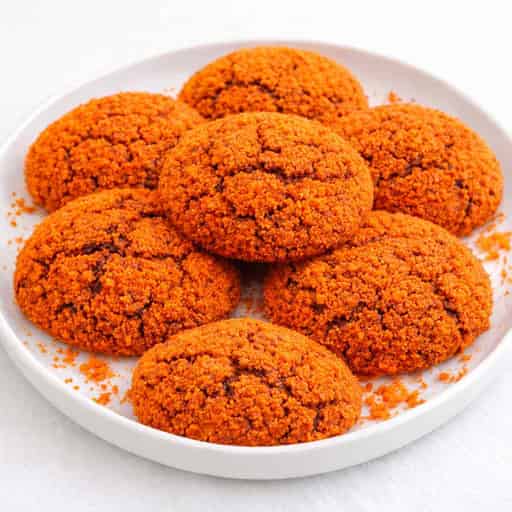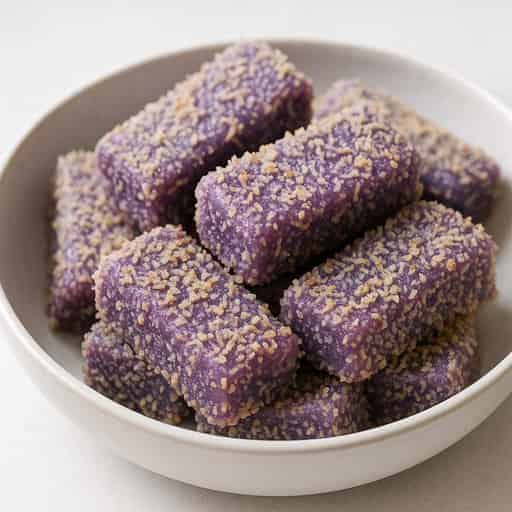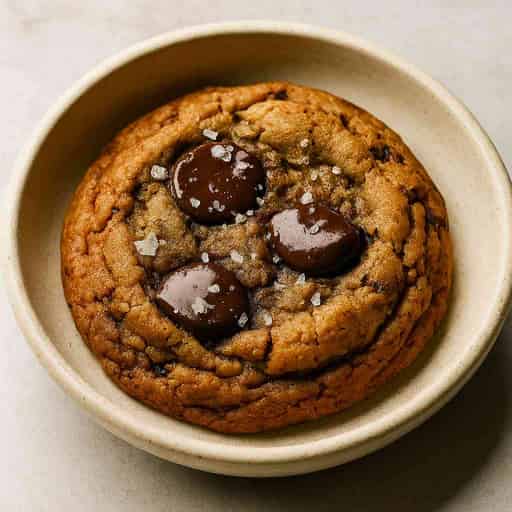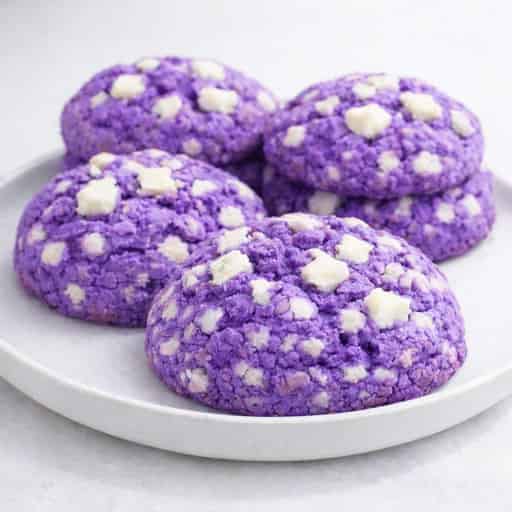
Bake thick Levain-style ube cookies with chewy edges and a soft center, stuffed with frozen ube halaya for a gooey bakery-style core in every bite.
Prep time
35 min
Cook time
16 min
Total time
3 hr 51 min
Servings
8
Chef's Tips
Freeze the ube halaya coins until fully solid to prevent filling leaks.
Shape each cookie into a tall mound instead of a smooth ball for better height.
Use a light-colored tray and bake from cold dough to limit browning and preserve color.
Tools Used
OvenStand Mixer Or Hand Mixer(opens in a new tab)Mixing Bowls(opens in a new tab)Baking Tray(opens in a new tab)Parchment Paper(opens in a new tab)Kitchen Scale(opens in a new tab)
We use affiliate links, which may earn us a small commission at no extra cost to you.
Ingredients
Ingredients
Servings
8 servings1×
Scale
Ingredient amounts update instantly.
Ube Halaya Center
Ube Cookie Dough
Optional Mix-Ins
Instructions
Freeze the Ube Halaya Centers
- 1
Line a tray with parchment paper.
- 2
Divide the ube halaya into 8 portions (about 30 g each).
- 3
Flatten each portion into a thick coin, about 1 to 1.5 cm thick.
- 4
Freeze for at least 2 to 3 hours, or overnight, until rock solid.
Make the Cookie Dough
- 1
In a bowl, whisk bread flour, all-purpose flour, ube powder, cornstarch, baking powder, baking soda, and salt.
- 2
In a mixer bowl, beat cold butter with brown sugar and granulated sugar until the mixture looks like coarse crumbs with creamy streaks.
- 3
Add eggs, vanilla extract, and ube extract. Mix just until combined.
- 4
Add the dry ingredients and mix only until no dry flour remains.
- 5
Fold in white chocolate chunks and toasted coconut flakes if using.
- 6
If the dough is very sticky, add 10 to 20 g all-purpose flour. If dry, mix in 1 tablespoon milk.
Stuff and Shape Levain-Style
- 1
Portion dough into 8 mounds, about 125 g each.
- 2
Split each mound into a larger and smaller piece (about two-thirds and one-third).
- 3
Flatten the larger piece into a cup, place a frozen ube halaya coin in the center, then cover with the smaller piece.
- 4
Pinch and seal seams well so no filling is exposed.
- 5
Shape into tall, rough mounds and chill 30 to 60 minutes in the freezer, or 2 to 3 hours in the refrigerator.
Bake and Cool
- 1
Heat the oven to 175°C fan (195°C conventional / 345°F fan).
- 2
Arrange 4 cookies per lined tray with generous spacing.
- 3
Bake 14 to 16 minutes from cold dough. For larger 140 g dough mounds, bake 16 to 19 minutes.
- 4
Remove when edges are set, tops are puffed, and centers still look slightly underbaked.
- 5
Cool on the tray for 15 to 20 minutes before serving.
Plan This Recipe
Save this recipe to one of your meal plans or browse your existing plans.
Learn More
Everything you want to know about this recipe.
Levain-style cookies are known for dramatic height, deep chew, and soft centers. This ube version keeps that bakery profile while adding a frozen ube halaya core that turns warm and creamy after baking. The method is straightforward, but timing and temperature control matter: freeze the filling hard, keep the dough cold, and shape each cookie tall before it hits the oven.
This recipe is ideal when you want a weekend bake that feels special but still repeats well. The dough is mixed in one bowl, the filling is pre-portioned, and the single-temperature fan bake keeps the method simple while still giving set edges and a soft middle. You get clear ube flavor from both ube powder and extract, plus optional white chocolate for extra richness.
Flavor Profile
Flavor Profile
These cookies are sweet, buttery, and vanilla-forward with a clear earthy ube note. The outer shell bakes up lightly crisp and chewy, while the center stays soft and almost molten around the halaya pocket. If you include white chocolate chunks, the sweetness increases and the purple ube notes taste creamier.
The final texture should feel heavy and bakery-style rather than thin and snappy. Think dense, tender crumb at the center and a structured edge that holds shape.
Ingredient Highlights
Ingredient Highlights
Ube halaya is the center of this recipe, so consistency matters. A thick halaya works best because it freezes into firm coins that are easy to wrap. If yours is runny, stir in a small amount of cornstarch before portioning and freezing.
Bread flour plus all-purpose flour is what gives you Levain-like structure without making the cookies tough. Bread flour adds strength and lift, while all-purpose flour keeps the crumb from getting bready.
Ube powder and ube extract play different roles. Powder adds aroma and color to the dough itself, while extract boosts the top-note flavor that can fade in the oven.
How It Comes Together
How It Comes Together
Start by freezing eight coins of ube halaya. While those freeze, whisk your dry ingredients and mix the dough with cold cubed butter and sugars until crumbly, not fluffy. This is different from cake creaming and helps prevent overspreading.
After adding eggs and extracts, fold in the dry ingredients just until combined. Overmixing at this stage can flatten the bake and reduce chew. Portion the dough, wrap each frozen ube coin fully, and shape each cookie into a tall rugged mound.
Bake at a steady fan temperature so the process is easier to repeat. Pull the tray once the edges are set and the center still looks soft; residual heat will finish the structure without losing chew.
Chef's Tips
Chef's Tips
Freeze the assembled mounds before baking. Even a short 30 to 60 minute freeze improves height and reduces filling blowouts.
Seal seams aggressively. If you see a thin patch, press on a small extra piece of dough. Exposed filling is the main reason for leaks.
Use visual doneness, not just time. Pull the cookies when the edges are set and tops are puffed but the center still looks slightly underdone. Carryover heat finishes the structure on the tray.
If your dough feels sticky from warm room temperature, chill it for 10 to 15 minutes before portioning. If it feels crumbly, add only a small splash of milk and remix briefly.
Easy Swaps
Easy Swaps
Use chopped macadamia nuts instead of coconut flakes for a richer crunch.
If you prefer lower sweetness, skip white chocolate and use only the ube base dough.
No bread flour available: use all-purpose flour only, then chill dough longer before baking to maintain height.
For milder color and flavor, keep ube powder at 25 g and ube extract at 1 teaspoon.
Make-Ahead & Meal Prep
Make-Ahead & Meal Prep
You can freeze the halaya coins and portioned dough mounds separately for up to 1 month. Assemble right before baking, or freeze already stuffed mounds and bake from frozen.
Baked cookies are best within 24 to 48 hours. For longer storage, wrap tightly and freeze. Reheat from frozen at 160°C for 8 to 10 minutes until the center is warm and soft again.
For events, bake one tray first as a calibration batch. Ovens vary, and one test tray helps dial in the exact total bake time for your kitchen.
Portion Guidance for Goals
Portion Guidance for Goals
This is a rich dessert cookie, so one large cookie is a practical serving. If you are tracking intake closely, split one cookie in half and pair with coffee or unsweetened tea. That gives you the same flavor experience with a lighter portion.
On days with lower activity, use the half-cookie option and add fruit for volume. On higher activity days, a full cookie can fit as an intentional dessert serving after a balanced meal.
When to Eat
When to Eat
Best timing is after lunch or dinner, when you already have protein and fiber from the meal. That helps with satiety and keeps this dessert from replacing a more balanced main meal.
If eaten as a snack, keep the portion small and pair with a protein source such as Greek yogurt or a glass of milk.
Balance Tip
Balance Tip
Treat this as a planned indulgence, not an everyday snack. Keep the cookie serving fixed, then balance the rest of the day with lean proteins, vegetables, and high-fiber carbs. This keeps overall intake steady while still making room for a bakery-style dessert.
Nutrition Facts
Nutrition Facts
Serving Size: 1 large cookie
Calories 62031%
% Reference Intake*
Total Fat 31g44%
Saturated Fat 19g95%
Trans Fat 0g
Cholesterol 102mg
Sodium 330mg
Total Carbohydrates 79g30%
Dietary Fiber 2g
Sugars 39g43%
Protein 7g14%
* Reference intakes are based on an average adult's 8,400 kJ / 2,000 kcal diet. Your needs may be higher or lower.
FAQs
Can I bake these cookies straight from frozen?
Yes. Bake from frozen for better height and shape. At 175°C fan, add 1 to 3 extra minutes only if the centers still look too raw.
Why did my filling leak out?
The ube halaya was likely too soft or the seams were not fully sealed. Freeze the filling solid and patch any thin spots with extra dough.
Can I make smaller cookies?
Yes. Make 12 smaller cookies and reduce baking time by about 2 to 3 minutes, checking for set edges and soft centers.
How long can I store baked cookies?
Keep airtight at room temperature for up to 2 days, or freeze for 1 month and reheat at 160°C until warm.
Community Reviews
See how other home cooks made this recipe, then share your own experience.
4.7
3 ratings
5
67%
4
33%
3
0%
2
0%
1
0%
How would you rate this recipe?
Share your experience and help others.
Kara T.
· 18 Feb 2026The two-stage bake gave me crisp edges and a soft middle. Best ube cookie I have made so far.
Paolo R.
· 18 Feb 2026I used white chocolate and macadamia nuts. Super bakery-style texture and really tall cookies.
Alyssa M.
· 18 Feb 2026Freezing the halaya coins made a huge difference. The centers stayed thick and gooey with no leaks.
Create Your Own Recipe
Add your personal creations and build your own recipe collection.