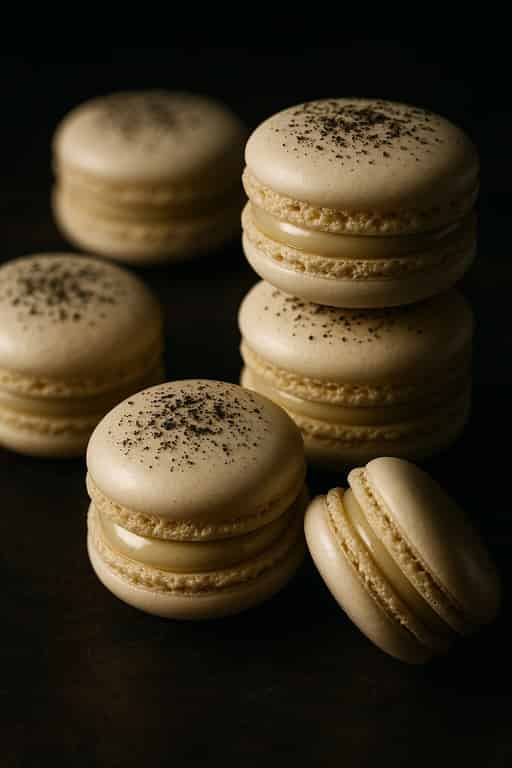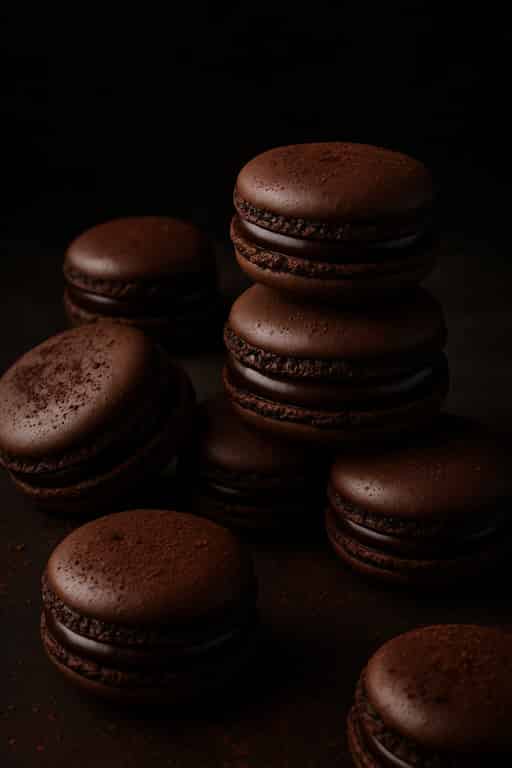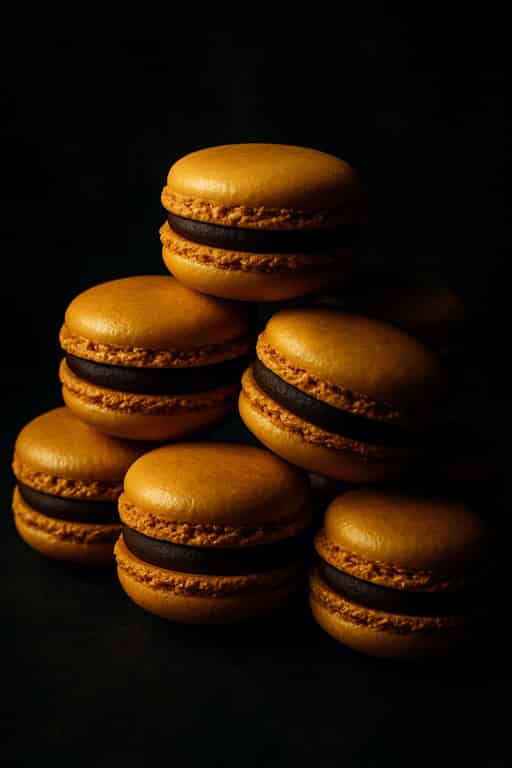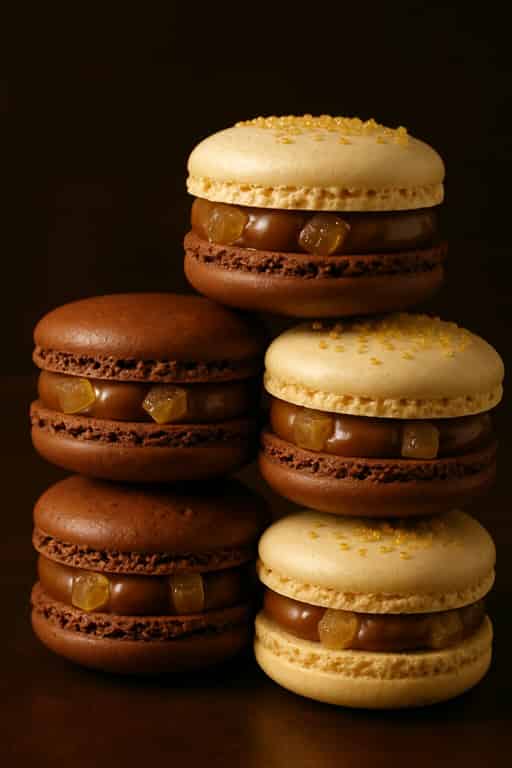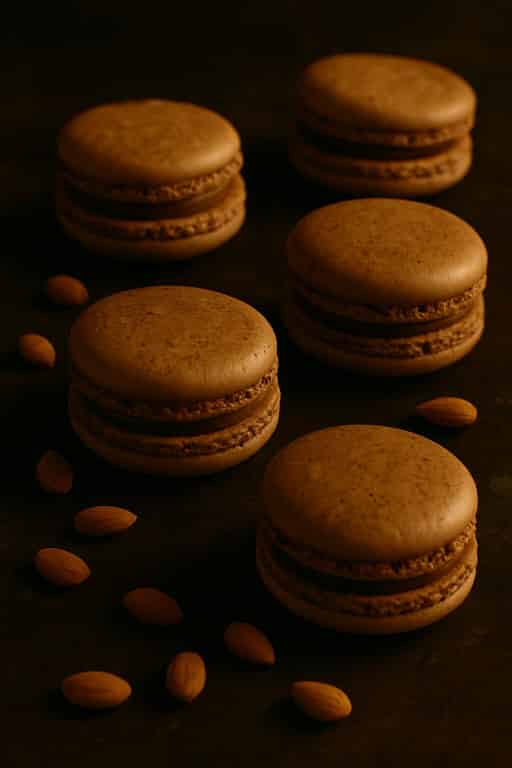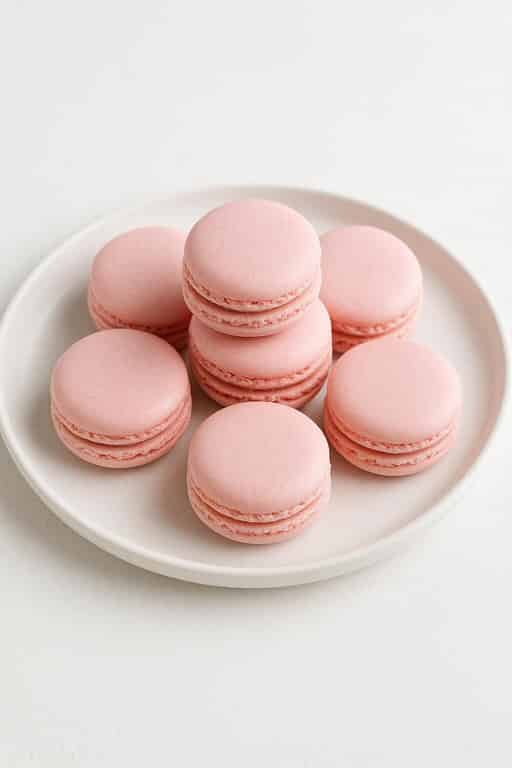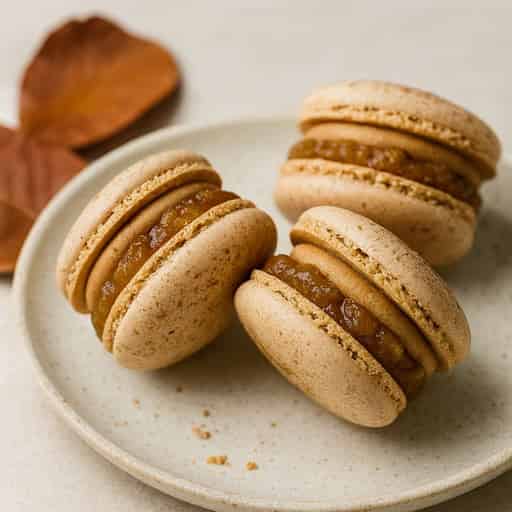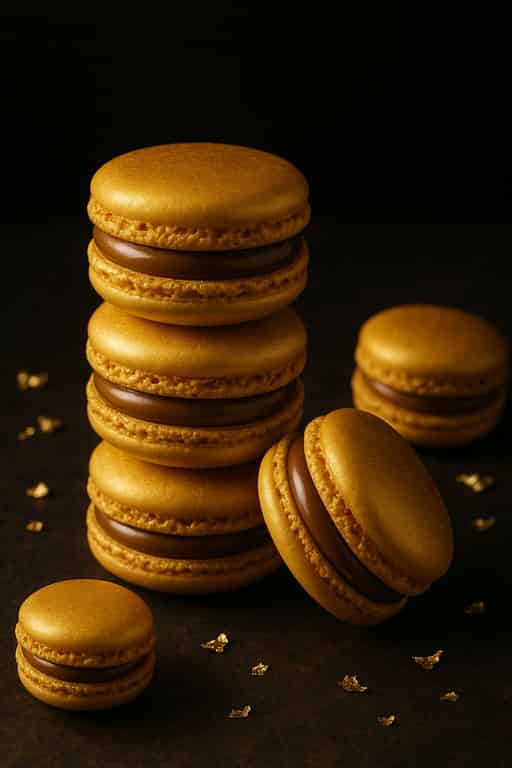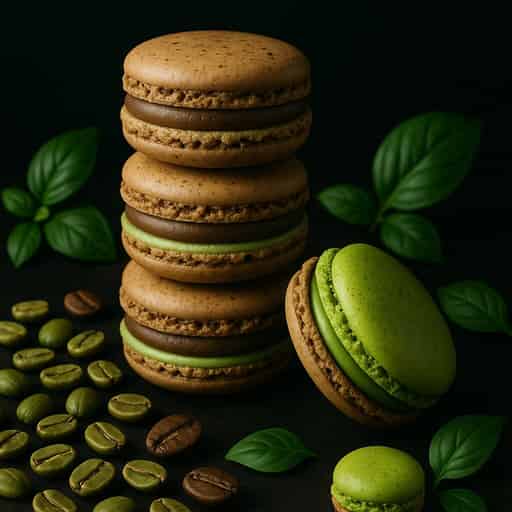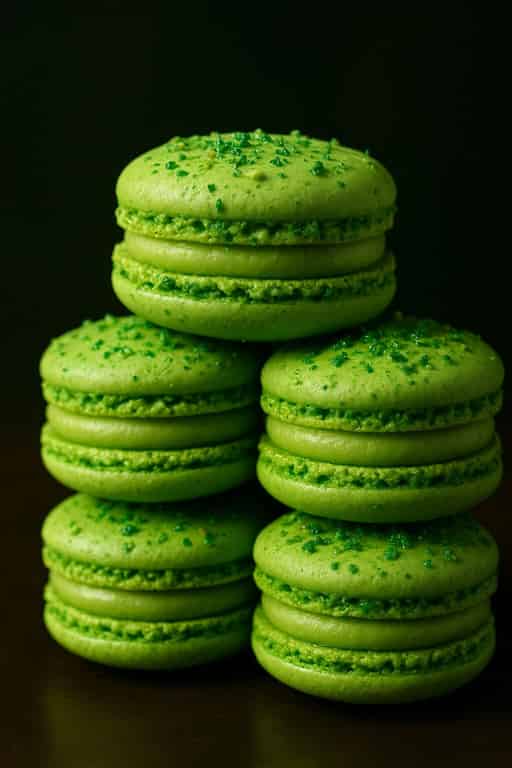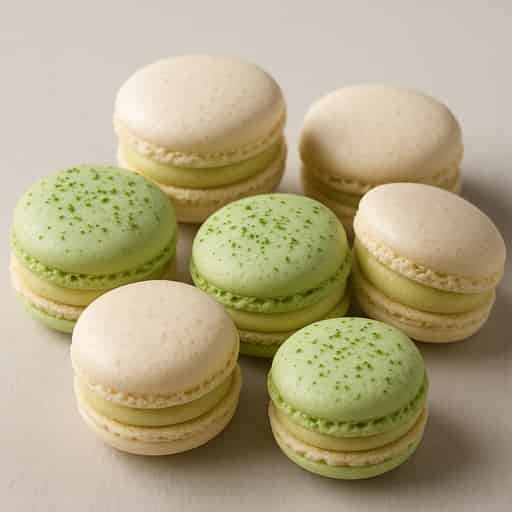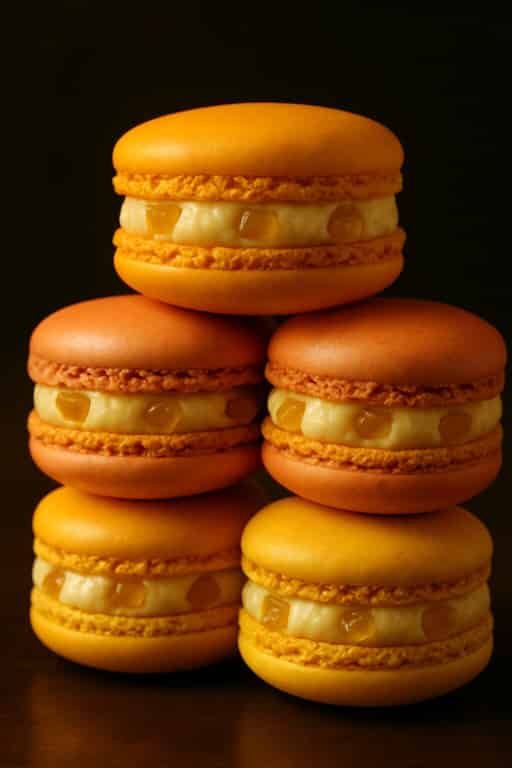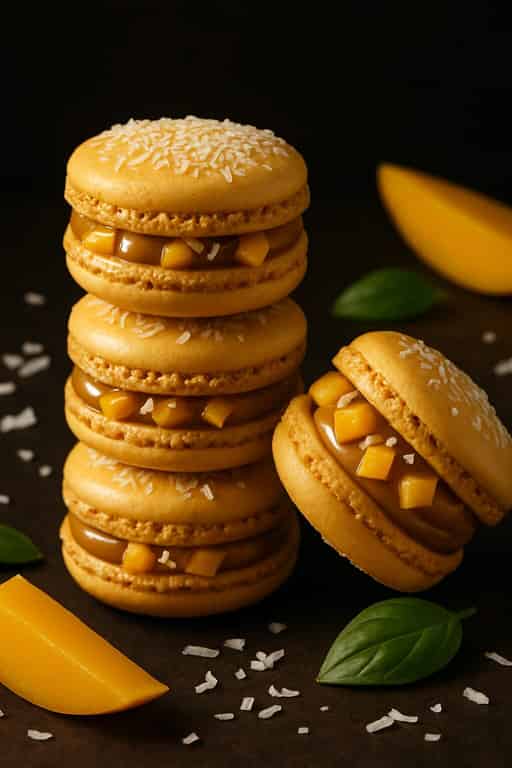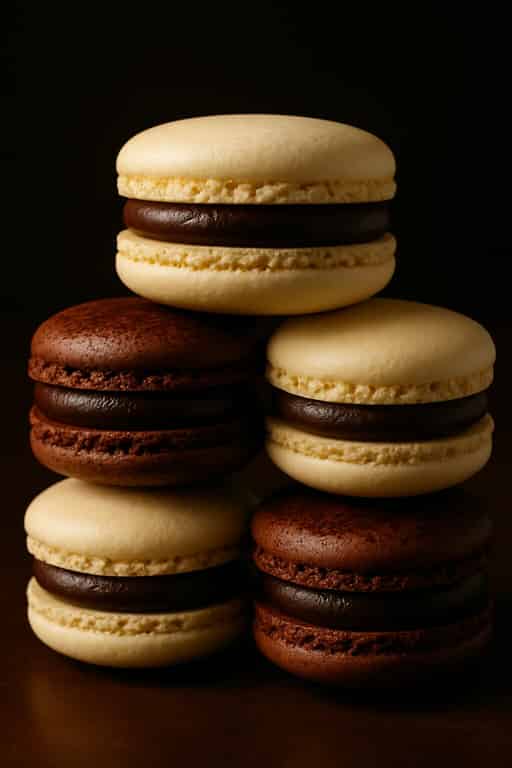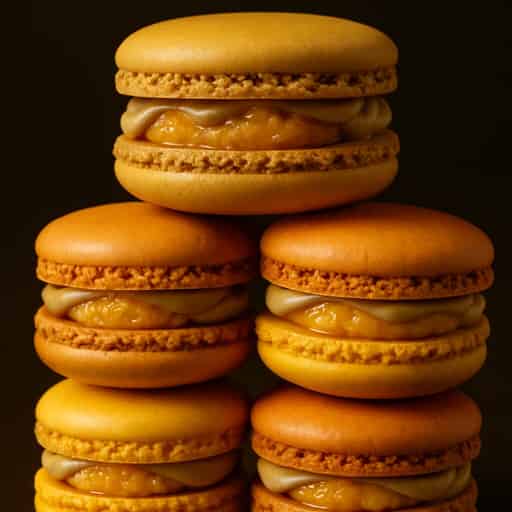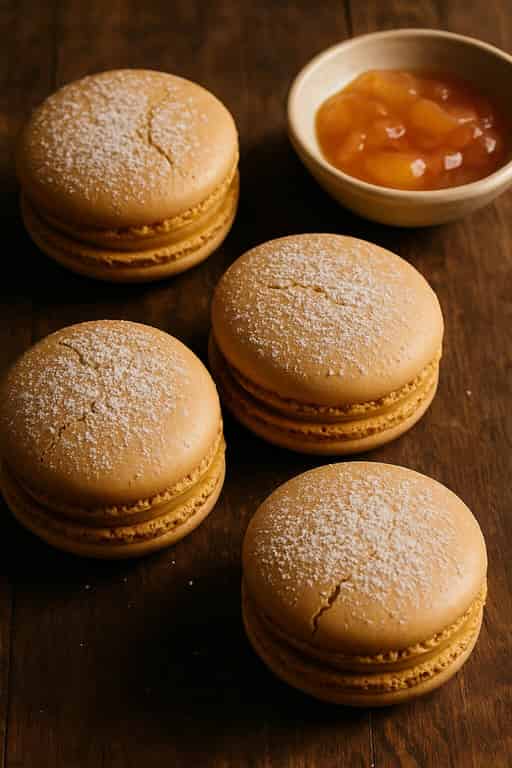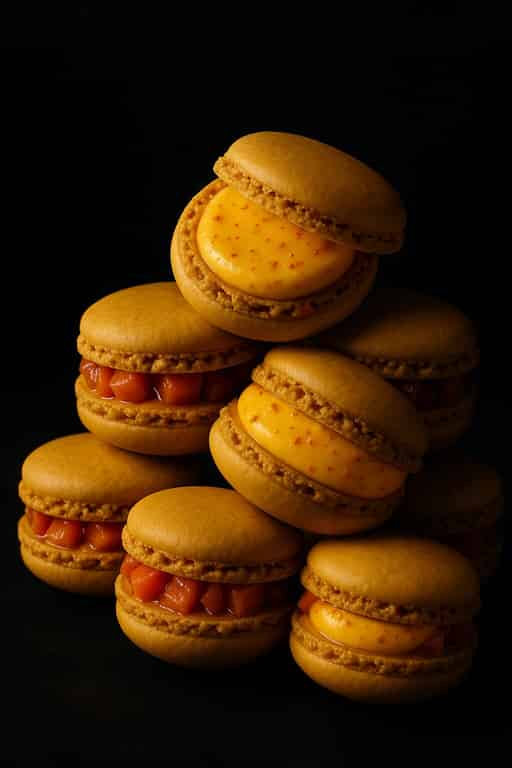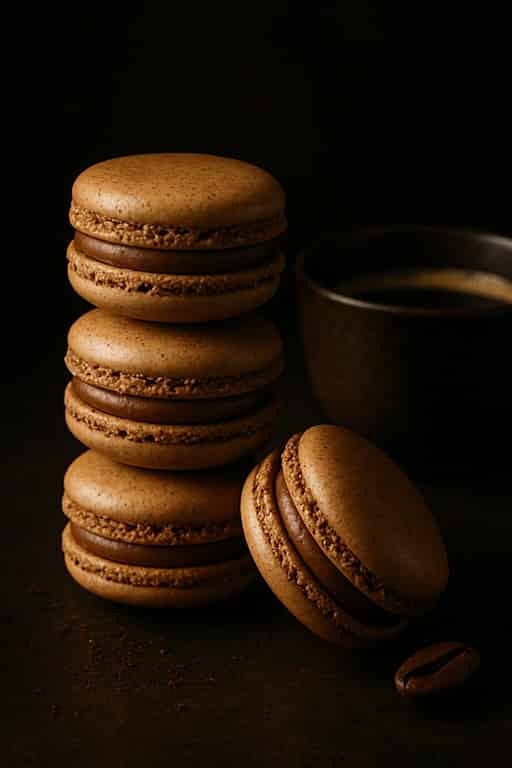
Coffee macarons with almond shells and a rich coffee white chocolate ganache. A French-style macaron recipe with a clear espresso profile, smooth shells, and a mature-after-filling texture that improves overnight.
Prep time
1 hr
Cook time
20 min
Total time
3 hr 50 min
Servings
72
Chef's Tips
Let the piped shells dry properly before baking so they form smoother tops and cleaner feet.
Mature the filled macarons for 24 hours in the fridge before serving. The texture is noticeably better after resting.
Strain the infused cream carefully so the ganache stays smooth rather than gritty.
Use a strong coffee ingredient such as Trablit or a proper coffee extract rather than brewed espresso, which adds more water than flavor.
Tools Used
Piping BagFine Mesh Sieve(opens in a new tab)Saucepan(opens in a new tab)Mixing Bowls(opens in a new tab)ThermometerSpatula(opens in a new tab)Baking Trays(opens in a new tab)Oven
We use affiliate links, which may earn us a small commission at no extra cost to you.
Ingredients
Ingredients
Servings
72 servings1×
Scale
Ingredient amounts update instantly.
Macaron Shells
Coffee Ganache
Instructions
Macaron Shells
- 1
Sift the ground almonds and icing sugar together.
- 2
Stir the coffee extract into the first portion of liquefied egg whites, then pour that over the almond and sugar mixture without mixing yet.
- 3
Heat the caster sugar and water to 118C.
- 4
When the syrup reaches around 115C, start whisking the second portion of egg whites to soft peaks.
- 5
Pour the 118C syrup into the whipping egg whites in a thin stream while whisking.
- 6
Continue whisking until the meringue cools to about 50C.
- 7
Fold the meringue into the almond mixture until the batter flows slowly and evenly.
- 8
Pipe rounds about 3.5 cm wide onto lined trays.
- 9
Tap the trays to release large air bubbles, then leave the shells to dry for about 30 minutes.
- 10
Bake at 180C fan for about 12 minutes, opening the oven briefly twice during baking.
- 11
Slide the baked shells onto a cool surface and let them cool fully.
Coffee Ganache
- 1
Melt the white chocolate gently until smooth.
- 2
Bring the cream to a boil, add the ground coffee, remove from the heat, cover, and let it infuse.
- 3
Strain the cream, then pour it gradually over the white chocolate in thirds.
- 4
Stir until smooth, then chill until the ganache thickens enough to pipe.
Assemble the Macarons
- 1
Pipe the ganache onto half of the shells.
- 2
Sandwich with the remaining shells.
- 3
Refrigerate the assembled macarons for 24 hours.
- 4
Bring them back toward room temperature before serving.
Plan This Recipe
Save this recipe to one of your meal plans or browse your existing plans.
Learn More
Everything you want to know about this recipe.
Coffee Macaron
Coffee Macaron
Coffee macarons work best when the coffee flavor is clear but controlled. You want enough bitterness and aroma to read as espresso, but not so much liquid or harshness that the shell texture suffers or the filling becomes muddy.
This version keeps that balance by using a concentrated coffee extract in the shells and an infused coffee cream for the ganache. The result is a macaron that tastes distinctly of coffee while still behaving like a proper French-style patisserie piece.
Why This Recipe Works
Why This Recipe Works
The shell uses the Italian meringue method, which gives you a more stable macaron batter for a large batch like this. That matters when you are adding a flavoring ingredient such as coffee extract and still want smooth shells with good feet.
The ganache works because the coffee is infused into the cream first, then strained before mixing with the chocolate. That approach gives you a rounded coffee flavor without leaving gritty grounds in the filling.
Ingredients Overview
Ingredients Overview
Ground almonds, icing sugar, and liquefied egg whites form the shell base, just as you would expect in a classic macaron. The coffee extract adds aroma without introducing the extra water you would get from brewed coffee.
For the filling, white chocolate gives sweetness and body, while the infused cream carries the coffee flavor. A higher-quality white chocolate helps the ganache stay smoother and less cloying.
How to Make Coffee Macarons
How to Make Coffee Macarons
Start by preparing the almond base and the Italian meringue, then fold the two together until the batter flows slowly and evenly. Pipe the shells, let them dry, and bake until set.
While the shells cool, infuse the cream with ground coffee, strain it, and make the ganache. Once thickened, pipe the filling, sandwich the shells, and mature the macarons in the fridge before serving.
Tips, Storage, and Serving
Tips, Storage, and Serving
These macarons are best after a full day of maturation. The shell settles, the ganache firms up properly, and the texture becomes more balanced overall.
Serve them at cool room temperature so the filling softens slightly. If you are making them ahead, they also freeze well once assembled.
Nutrition Facts
Nutrition Facts
Serving Size: 1 macaron
Calories 955%
% Reference Intake*
Total Fat 5.2g7%
Saturated Fat 2.9g14%
Trans Fat 0g
Cholesterol 10mg
Sodium 8mg
Total Carbohydrates 10.5g4%
Dietary Fiber 0.4g
Sugars 9.5g11%
Protein 1.6g3%
* Reference intakes are based on an average adult's 8,400 kJ / 2,000 kcal diet. Your needs may be higher or lower.
FAQs
Can I use brewed espresso instead of coffee extract?
It is better not to. Brewed espresso adds extra moisture and can throw off the shell batter more easily than a concentrated coffee extract.
Why do macarons taste better the next day?
The filling softens the inside of the shell slightly during maturation, which gives the classic crisp-outside, tender-inside macaron texture.
Can I freeze coffee macarons?
Yes. Freeze them well wrapped, then defrost in the fridge before bringing them to room temperature.
Community Reviews
See how other home cooks made this recipe, then share your own experience.
4.8
4 ratings
5
75%
4
25%
3
0%
2
0%
1
0%
How would you rate this recipe?
Share your experience and help others.
Leo
· 12 Aug 2026Strong enough for coffee lovers but still clearly a macaron, not just a sweet coffee shell. I would make these again.
Priya
· 19 Feb 2026Matured them overnight and the texture was much better the next day. The ganache stayed smooth after straining the cream properly.
Marcus
· 14 Oct 2025I liked that this explains the difference between coffee extract and brewed espresso. The shells stayed much more stable.
Elise
· 8 Jun 2025The coffee comes through clearly without tasting harsh. Good balance between the shell and the ganache.
Create Your Own Recipe
Add your personal creations and build your own recipe collection.