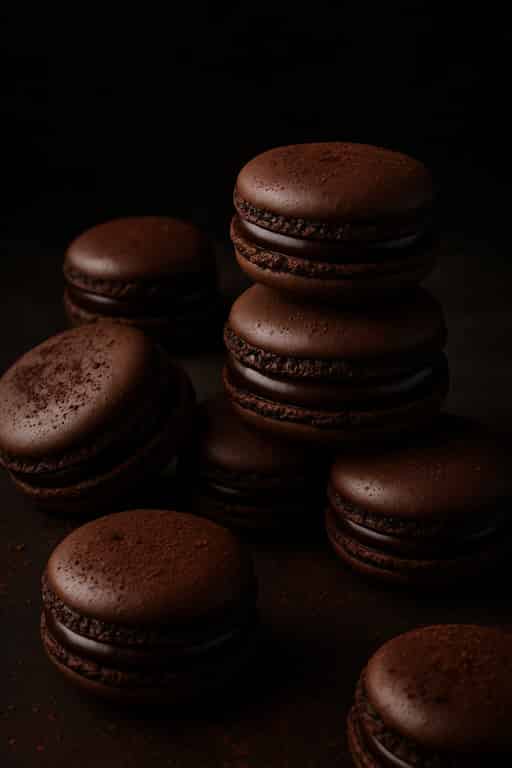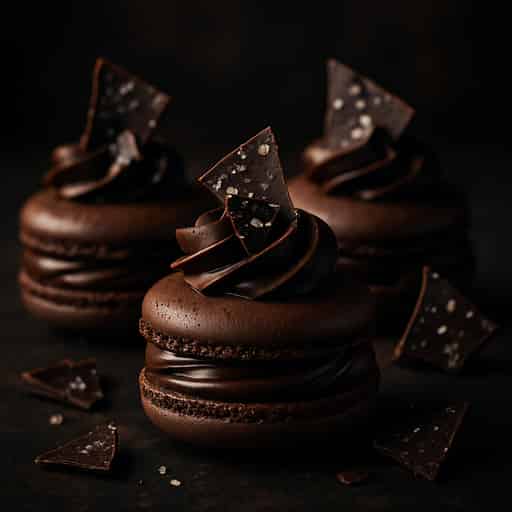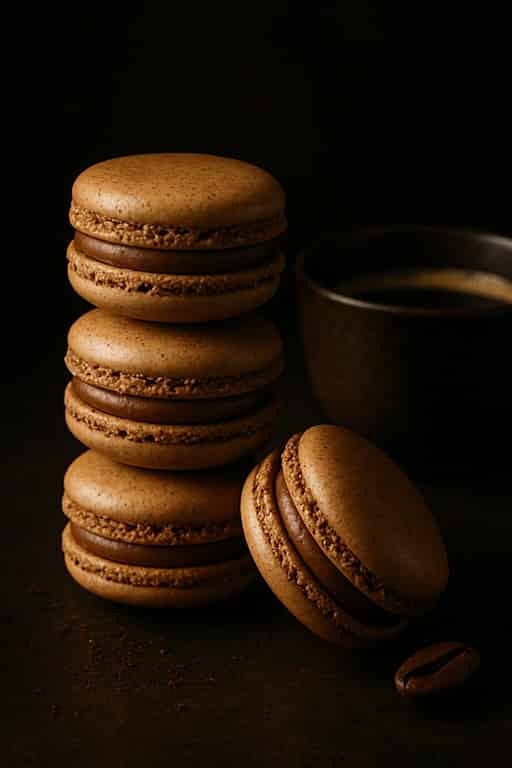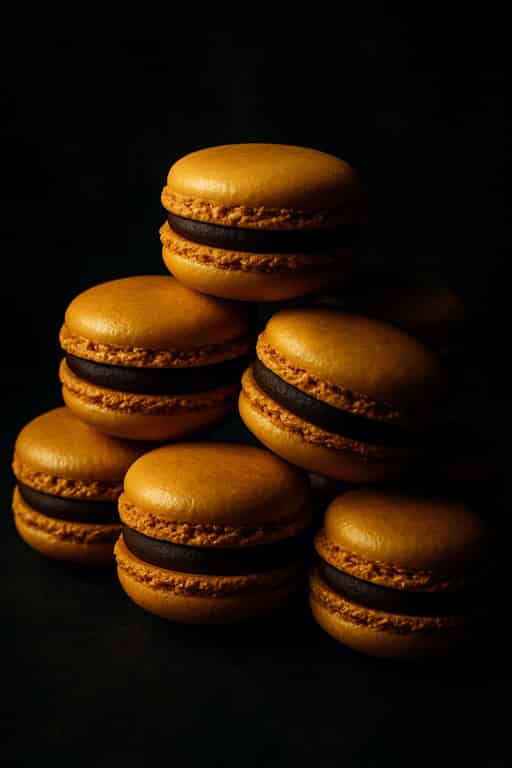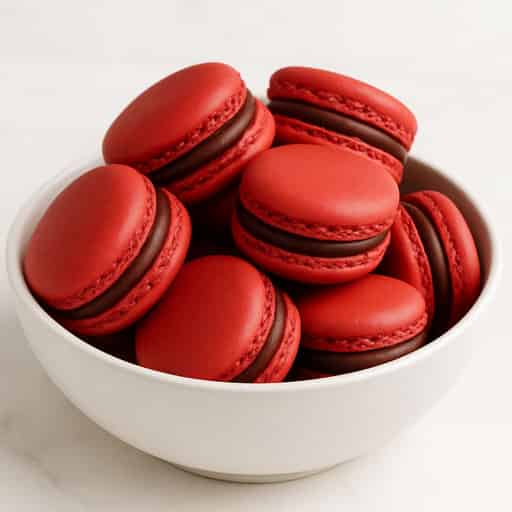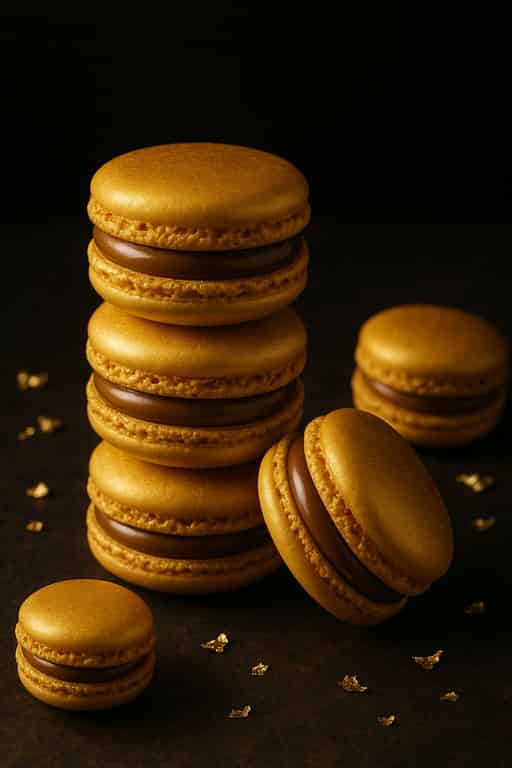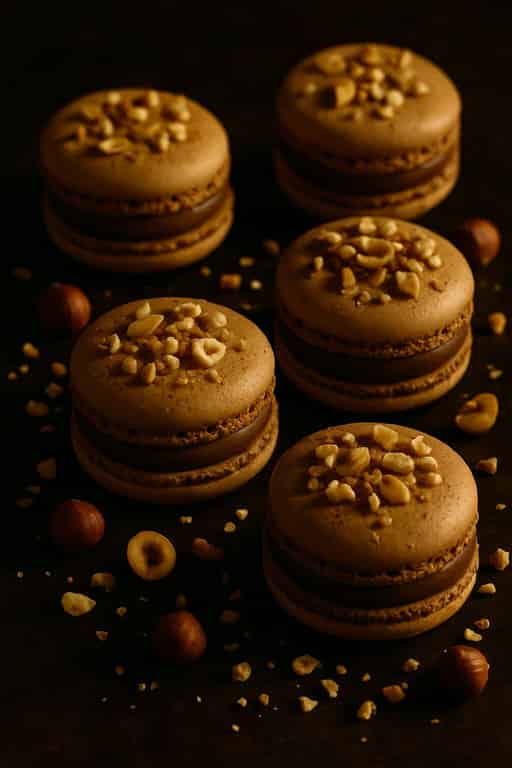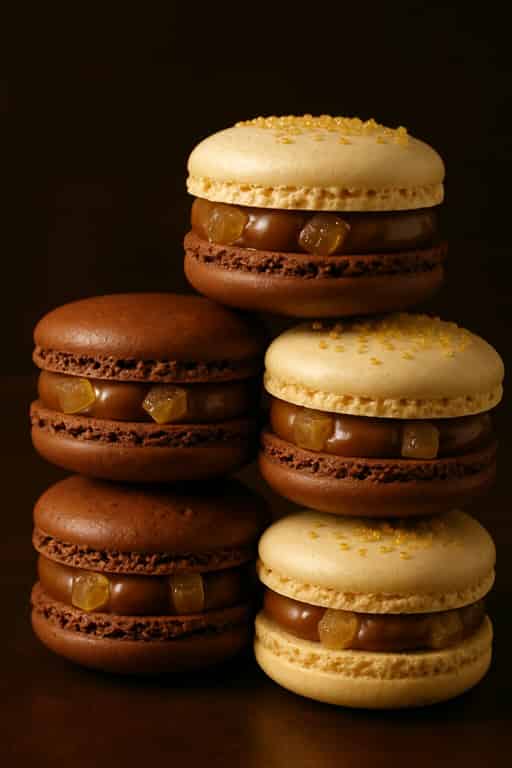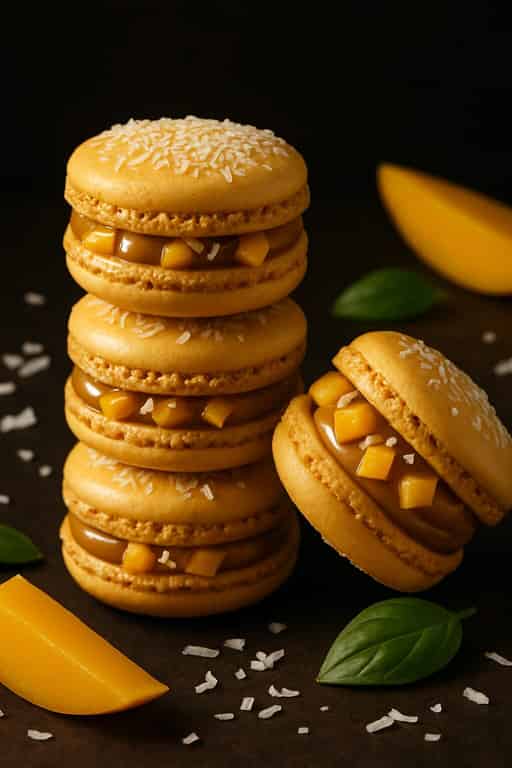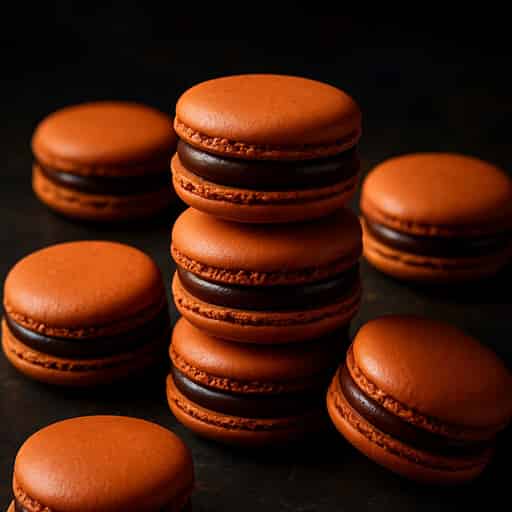
Classic chocolate macarons with crisp shells and a smooth dark chocolate ganache. A French macaron recipe with a balanced chocolate profile and traditional patisserie technique.
Prep time
1 hr
Cook time
35 min
Total time
2 hr 25 min
Servings
72
Chef's Tips
Let the peeled almonds dry thoroughly for 48 hours.
Open the oven door quickly twice during baking to release humidity.
Allow macarons to mature 24 hours in the fridge for best texture.
Tools Used
Food Processor(opens in a new tab)Hand Mixer(opens in a new tab)Piping BagPlain Round Piping Tip #11Baking Trays(opens in a new tab)Parchment Paper(opens in a new tab)Immersion Blender(opens in a new tab)
We use affiliate links, which may earn us a small commission at no extra cost to you.
Ingredients
Ingredients
Servings
72 servings1×
Scale
Ingredient amounts update instantly.
Macaron Shells
Macaron Shells Finishing
Chocolate Ganache
Instructions
Preparation of Almonds
- 1
Two days in advance, boil whole almonds for 2 minutes, drain, peel, and dry for 48 hours on absorbent paper.
Macaron Batter
- 1
Blend the peeled almonds with a little powdered sugar. Add remaining powdered sugar.
- 2
Add 70g fresh egg whites, apricot pulp, cocoa powder diluted in water with food coloring.
- 3
Whip 110g fresh egg whites until slightly frothy and fold into the batter.
- 4
Pipe 3.5 cm rounds onto parchment-lined baking trays, spaced 2 cm apart.
- 5
Let shells dry at room temperature for at least 1 hour.
Baking Macaron Shells
- 1
Preheat oven with fan to 150°C (300°F).
- 2
Bake for 15 minutes, opening oven door briefly twice during baking to release moisture.
- 3
After baking, slide parchment with shells onto the work surface.
Making the Chocolate Ganache
- 1
Melt chopped chocolate at 45–50°C (113–122°F).
- 2
Boil the milk and add to the chocolate in three parts, mixing from center outward each time.
- 3
Blend with an immersion blender until smooth.
- 4
Add butter in pieces and blend again until smooth.
- 5
Cover ganache with cling film and refrigerate 2 hours until creamy.
Assembling the Macarons
- 1
Flip half of the macaron shells.
- 2
Pipe ganache onto flipped shells and top with remaining shells.
- 3
Refrigerate assembled macarons for 24 hours.
- 4
Bring macarons to room temperature 2 hours before serving.
Plan This Recipe
Save this recipe to one of your meal plans or browse your existing plans.
Learn More
Everything you want to know about this recipe.
Classic Chocolate Macarons
Classic Chocolate Macarons
These classic chocolate macarons are positioned as the main broad-intent page for the chocolate macaron cluster. The goal is a proper French-style macaron with clear chocolate flavour, crisp shells, a tender centre after maturation, and a ganache that feels rich without tipping too far into extreme bitterness.
The method leans on traditional patisserie technique, including preparing the almond base from whole almonds and giving the finished macarons time to mature in the fridge. The result is more classic and crowd-friendly than the darker specialist pages in the same cluster.
If you specifically want a sharper, less-sweet variation, see our Extra-Dark Chocolate Macarons. This page is the more general chocolate version.
Flavor Profile
Flavor Profile
The flavour sits in the middle ground that most people expect from a classic chocolate macaron. The shells have cocoa depth and almond fragrance, while the ganache brings smooth dark chocolate richness without feeling aggressively bitter.
There is also a subtle old-school patisserie touch from the apricot pulp, which rounds the chocolate slightly and helps the overall flavour feel more polished than flat. It should not read as fruity. It simply softens the darker edges.
Ingredient Highlights
Ingredient Highlights
The whole-almond base is one of the clearest things that makes this page feel classic. Peeling and drying the almonds is more work than using ready almond flour, but it gives the shells a more traditional texture and aroma.
Cocoa powder gives the shells their chocolate tone, while the ganache uses a 61 percent extra-bitter chocolate that still feels balanced enough for a broad chocolate macaron audience.
Apricot pulp is a more unusual detail, but it belongs here because it is part of the classic character of the recipe rather than an arbitrary modern add-on.
How It Comes Together
How It Comes Together
First, the almonds are prepared and dried ahead so the shell base can be ground properly. The batter is then mixed, piped, and rested before baking. Once the shells are baked and cooled, the ganache is made and chilled until it reaches a pipeable texture.
After assembly, the macarons still need their overnight rest. That maturation step is what gives you the classic macaron texture where the shell stays neat outside but softens slightly toward the filling.
Chef's Tips
Chef's Tips
Give the almonds their full drying time. Rushing that stage makes the shell base harder to grind cleanly and affects the final texture.
Do not skip the oven venting step. Briefly releasing humidity helps the shells bake more evenly and supports better feet.
Let the ganache chill only until creamy and pipeable. If it firms too much, the filling becomes harder to portion and can crack the shells during assembly.
Easy Swaps
Easy Swaps
If you do not want to prepare whole almonds, almond flour is the practical shortcut, but the final result will feel a little less distinctive.
If you prefer a darker profile, increase the bitterness in the ganache by using a more assertive chocolate, or move to the extra-dark variant page instead of trying to turn this one into a different recipe.
Portion Guidance for Goals
Portion Guidance for Goals
These are rich French pastries, so one to two macarons is a reasonable portion for most dessert occasions.
When to Eat
When to Eat
Serve them as a planned dessert, part of an afternoon pastry spread, or with coffee when you want a classic chocolate macaron rather than a novelty flavour.
Balance Tip
Balance Tip
Because the filling uses chocolate, milk, and butter, keep the rest of the day lighter if you are trying to fit them into a more cholesterol-aware pattern.
Nutrition Facts
Nutrition Facts
Serving Size: 1 macaron
Calories 905%
% Reference Intake*
Total Fat 5g7%
Saturated Fat 3g15%
Trans Fat 0g
Cholesterol 10mg
Sodium 5mg
Total Carbohydrates 10g4%
Dietary Fiber 1g
Sugars 8g9%
Protein 2g4%
* Reference intakes are based on an average adult's 8,400 kJ / 2,000 kcal diet. Your needs may be higher or lower.
FAQs
What makes this a classic chocolate macaron?
This version aims for a balanced chocolate flavour with traditional shell technique and a smooth ganache, rather than pushing strongly toward a very bitter or highly specialised variation.
Can I use almond flour instead of preparing whole almonds?
Yes, but the flavour and texture will be a little different. The whole almond method gives the shells a more old-school patisserie character.
Is this the same as the extra-dark chocolate macaron?
No. This is the broader, more classic page in the cluster. The extra-dark version is more bitter and more cocoa-forward.
Community Reviews
See how other home cooks made this recipe, then share your own experience.
5.0
3 ratings
5
100%
4
0%
3
0%
2
0%
1
0%
How would you rate this recipe?
Share your experience and help others.
May
· 9 Aug 2026I would use this as the broad chocolate version and the extra-dark page for stronger dark chocolate flavour. This one is more crowd-friendly.
Julian
· 18 Apr 2025The ganache matured beautifully overnight and the shells stayed delicate. Good main chocolate macaron recipe to keep on hand.
Elise
· 18 Apr 2025This is the kind of chocolate macaron I expect from a classic pastry recipe. Rich enough to taste like chocolate, but still balanced.
Create Your Own Recipe
Add your personal creations and build your own recipe collection.