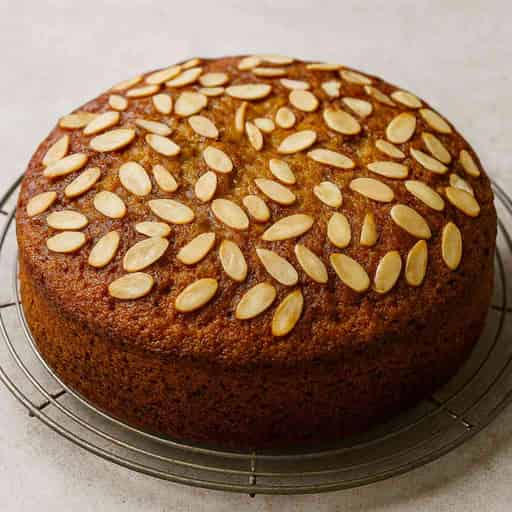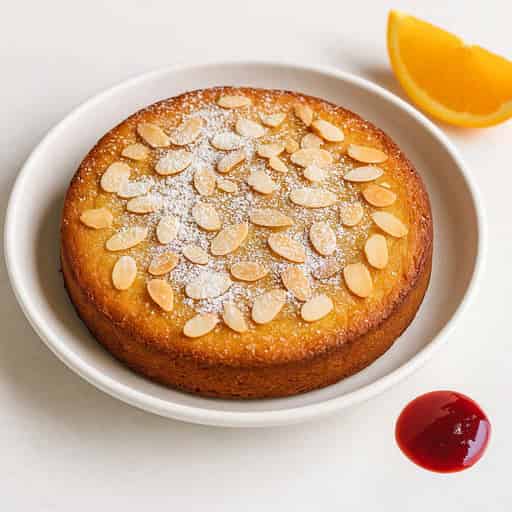
This moist flourless orange almond cake uses measured fresh orange juice, ground almonds, and a simple one-bowl method for a tender gluten-free dessert.
Prep time
15 min
Cook time
35 min
Total time
50 min
Servings
8
Recipe Snapshot
DifficultyMedium
MealDessert
Freezer FriendlyYes
Family FriendlyYes
Chef's Tips
Measure the orange juice instead of adding an entire orange. Extra liquid can leave the center too weak to hold the rise.
Fold the almond mixture in gently and stop as soon as the batter is even. Overmixing can deflate the eggs.
Let the cake cool fully before slicing; the almond crumb firms as it cools.
Tools Used
20cm Round Cake TinElectric Mixer(opens in a new tab)Mixing Bowls(opens in a new tab)Parchment Paper(opens in a new tab)
We use affiliate links, which may earn us a small commission at no extra cost to you.
Ingredients
Ingredients
Servings
8 servings1×
Scale
Ingredient amounts update instantly.
Cake Batter And Baking
Topping And Serving
Instructions
Cake batter and baking
- 1
Heat the oven to 170°C conventional or 160°C fan. Line the base of a 20cm round cake tin with parchment paper.
- 2
Whisk the eggs, sugar, orange zest, and measured orange juice for 2 to 3 minutes, until pale and slightly thickened. Do not whip to a very stiff ribbon stage.
- 3
In a separate bowl, stir together the ground almonds, baking powder, and salt. Fold this mixture into the egg mixture in two or three additions, stopping as soon as no dry patches remain.
- 4
Pour the batter into the prepared tin. Bake for 30 to 38 minutes, until the center is set and springs back lightly when pressed. Cover loosely with foil if the top browns before the center is ready.
- 5
Cool in the tin for 15 minutes, then transfer to a rack and cool completely before decorating or slicing.
Topping and serving
- 1
Scatter with sliced almonds before baking if using them, then dust the cooled cake with icing sugar. Cut into 8 slices and serve with Greek yogurt or fruit coulis if desired.
Plan This Recipe
Save this recipe to one of your meal plans or browse your existing plans.
Learn More
Everything you want to know about this recipe.
Flourless Orange Almond Cake
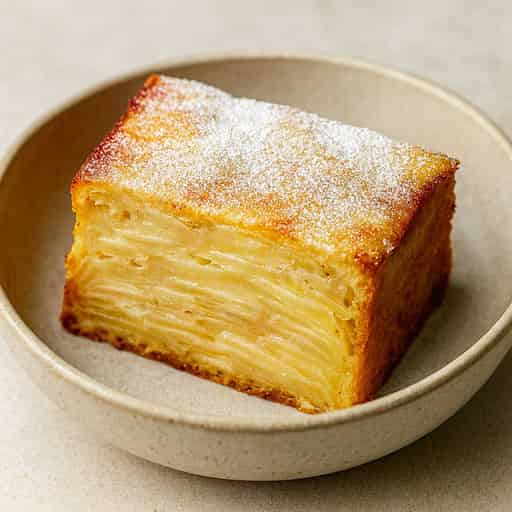
This flourless orange almond cake is moist, fragrant, and easy to make with ground almonds instead of wheat flour. Fresh orange zest provides the strongest citrus aroma, while a measured 45 ml of juice adds flavor without making the batter too loose. The result is a tender cake with a lightly crisp edge and a soft, sliceable center.
Why This Formula Works
Why This Formula Works
The recipe uses 175 g of ground almonds to give the eggs enough structure to support the cake as it cools. The orange juice is measured rather than taken from an entire orange, because the amount of juice can vary widely. Too much free liquid can leave the center weak, especially when the eggs have been whipped to a very airy ribbon stage.
The eggs, sugar, zest, and juice are whisked together only until pale and slightly thickened. The almond mixture is then folded in gently. This gives the cake some lift without making it dependent on a fragile foam. A small amount of baking powder supports the rise without creating an overly tall dome that can collapse.
Ingredient Notes
Ingredient Notes
- Use room-temperature eggs so they combine smoothly with the sugar.
- Zest the orange before squeezing it. The colored outer peel contains the aromatic oils; avoid grating deeply into the bitter white pith.
- Measure the juice in a jug or measuring spoon. Do not substitute the juice of a whole orange without checking the volume.
- Almond flour and finely ground almonds both work. A very coarse meal will give the cake a more textured crumb.
- The sliced almonds and icing sugar are optional. Greek yogurt or a sharp fruit coulis balances the sweetness when serving.
How to Make It
How to Make It
Whisk the eggs, sugar, orange zest, and orange juice together for 2 to 3 minutes. The mixture should look paler and a little thicker, but it does not need to reach a stiff ribbon stage. Separately combine the ground almonds, baking powder, and salt, then fold them into the wet mixture in two or three additions.
Spread the batter in a parchment-lined 20 cm tin. Bake at 170°C conventional or 160°C fan for about 30 to 38 minutes. The center should be set and spring back lightly. If the top is coloring quickly, cover it loosely with foil rather than increasing or extending the heat. Let the cake cool in the tin for 15 minutes before moving it to a rack; the crumb becomes firmer as it cools.
Troubleshooting a Sunken Center
Troubleshooting a Sunken Center
If the cake domes and then drops, the center was probably still too fluid to support the risen edges. Common causes are too much orange juice, aggressive mixing after the eggs were aerated, or removing the cake before the center had set. Use the specified 45 ml of juice, fold only until combined, and check the center rather than relying on the edges or the dome.
A 20 cm cake made with this quantity may be ready well before the original 55-minute estimate, especially if the batter is shallow or the oven runs hot. Start checking around 28 to 30 minutes, but remove it only when the center is lightly springy. A clean knife is not the only useful cue for an almond cake because the finished crumb remains moist.
Serving, Portions, and Storage
Serving, Portions, and Storage
Cut the cake into 8 slices. One slice makes a practical dessert portion, particularly when served with Greek yogurt or fruit rather than several sweet toppings. It is suitable as an after-dinner treat or with tea or coffee. If having it on a day with other rich foods, keep the rest of the day's snacks lower in saturated fat.
Store the cooled cake in an airtight container for up to 3 days at room temperature or up to 5 days in the refrigerator. For longer storage, freeze the undecorated cake, well wrapped, for up to 3 months. Thaw it overnight in the refrigerator and bring it to room temperature before serving.
Frequently Asked Questions
Frequently Asked Questions
Is this cake gluten-free?
It is made without wheat flour, using ground almonds instead. Check the labels on the almond flour and baking powder if you need to avoid gluten because facility handling varies by brand.
Can I reduce the sugar?
A small reduction is possible, but sugar contributes to moisture and helps stabilize the egg mixture. Reducing it by more than about 15 to 20 percent may make the cake drier and less tender.
Can I use another nut meal?
Finely ground hazelnuts can replace some or all of the almonds, although the flavor will be stronger and the texture may be slightly more delicate. Avoid coarse chopped nuts in the batter because they do not provide the same structure.
Nutrition Facts
Nutrition Facts
Serving Size: 1 slice (1/8 cake)
Calories 22011%
% Reference Intake*
Total Fat 13g19%
Saturated Fat 1.2g6%
Trans Fat 0g
Cholesterol 70mg
Sodium 70mg
Total Carbohydrates 20g8%
Dietary Fiber 3g
Sugars 17g19%
Protein 7g14%
* Reference intakes are based on an average adult's 8,400 kJ / 2,000 kcal diet. Your needs may be higher or lower.
FAQs
Why did my flourless orange cake sink in the middle?
A sunken center usually means the batter was over-aerated, the juice was added after the foam was formed, or the center was not fully set. Measure 45 ml of juice, fold gently, and bake until the center springs back.
Can I use bottled orange juice?
Fresh juice gives the best flavor, but plain unsweetened bottled juice can work when measured. Keep the orange zest for a brighter citrus taste.
How should I store this almond cake?
Store the cooled cake in an airtight container for up to 3 days at room temperature or up to 5 days in the refrigerator. Bring chilled slices to room temperature before serving.
Can I freeze flourless orange cake?
Yes. Wrap the cooled, undecorated cake well and freeze for up to 3 months. Thaw it overnight in the refrigerator, then bring it to room temperature.
Community Reviews
See how other home cooks made this recipe, then share your own experience.
4.7
9 ratings
5
67%
4
33%
3
0%
2
0%
1
0%
How would you rate this recipe?
Share your experience and help others.
RecipeShare Test Kitchen
· 24 Aug 2026The recipe now uses a measured amount of orange juice and more ground almonds for a steadier crumb. Mixing the juice with the eggs before folding in the dry ingredients helps prevent a sunken center.
Hana
· 24 Jul 2025Made this for my mum's birthday - everyone loved it. I added a honey drizzle for extra shine.
Lara
· 23 Jun 2025Such an easy recipe and it impresses every time. Great texture even without flour!
Tom
· 22 Apr 2025Perfect balance of citrus and sweetness. I added a teaspoon of orange blossom water - absolutely heavenly.
Sophia
· 21 Mar 2025This cake has become my go-to gluten-free dessert! I love how it stays moist for days and the almond flavor is divine.
Mei Lin
· 20 Feb 2025A hit at our family brunch! Even those who don't usually like almond-based cakes enjoyed this. I used a blood orange for a twist - so good!
Daniel
· 19 Dec 2024Mine came out a bit too moist in the center, maybe I underbaked it. Still tasted delicious, especially with a dollop of Greek yogurt!
Priya
· 18 Sept 2024Great recipe for a gluten-free option. The almonds give it a rich, nutty flavor. I reduced the sugar slightly and it was still sweet enough.
Marcus
· 17 Aug 2024Very easy to make and turned out beautifully. I added a bit more orange zest for an extra citrus kick. Will definitely bake again.
Olivia
· 16 Feb 2024This cake was so moist and flavorful! I love that it's gluten-free and still has a great texture. Served it with raspberry coulis - divine!
Create Your Own Recipe
Add your personal creations and build your own recipe collection.