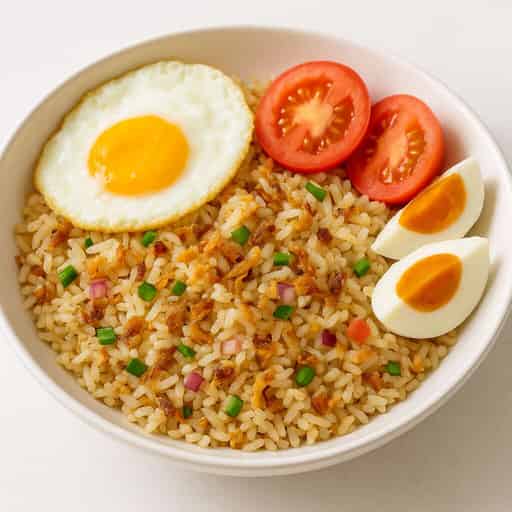
A simple egg fried rice recipe with cold jasmine rice, garlic, shallot, spring onions, soy sauce, and optional MSG. Hot-pan technique keeps the grains separate and savoury, never wet.
Prep time
10 min
Cook time
8 min
Total time
18 min
Servings
2
Recipe Snapshot
DifficultyEasy
MealLunch / Dinner
Family FriendlyYes
Chef's Tips
Cold, refrigerated rice is easiest to fry because its surface is drier and the grains separate instead of turning soft in the pan.
Break apart cold rice before heating the pan. This prevents hard clumps from making you overwork the rice while the egg and aromatics overcook.
Start with the smaller amount of soy sauce and taste before adding more. Soy sauce and optional MSG both season the rice, so extra salt is usually unnecessary.
Add toasted sesame oil after turning off the heat so its aroma stays clear rather than cooking away in the hot pan.
Tools Used
Small BowlMeasuring Spoons
We use affiliate links, which may earn us a small commission at no extra cost to you.
Ingredients
Ingredients
Servings
2 servings1×
Scale
Ingredient amounts update instantly.
Prepare Before Frying
Fry The Rice
Finish
Instructions
Prepare the Rice and Seasoning
- 1
Use cold rice that has been refrigerated, ideally overnight. Gently break apart any clumps with clean hands or a spoon. Separate the spring onion whites from the greens, then whisk the egg and yolk together.
- 2
Measure the soy sauce and optional MSG. Start with 10 g soy sauce; keep the remaining 5 g nearby so you can adjust after tasting. Do not add extra salt at this stage.
Cook the Egg and Aromatics
- 1
Heat a wok or wide frying pan over medium-high heat until thoroughly hot. Add the neutral oil, then fry the shallot and spring onion whites for about 1 minute until softened. Add the garlic and stir for 20 to 30 seconds, just until fragrant but not browned.
- 2
Push the aromatics to one side. Add the whisked egg and yolk to the empty space and let it set briefly, then stir into soft, small curds. Do not cook it until dry; the rice will finish cooking the egg.
Fry and Finish the Rice
- 1
Add the cold rice and spread it across the pan. Toss and press gently to separate the grains for 2 to 3 minutes, keeping the heat high enough for a steady sizzle without scorching the garlic.
- 2
Drizzle in the 10 g soy sauce around the hot edge of the pan, then toss quickly until the rice is evenly seasoned and dry-looking again. Stir in the optional MSG, taste, and add the remaining soy sauce only if needed.
- 3
Turn off the heat. Fold through the spring onion greens, toasted sesame oil, and optional chilli. Serve straight away while the rice is hot and the grains are separate.
Plan This Recipe
Save this recipe to one of your meal plans or browse your existing plans.
Learn More
Everything you want to know about this recipe.
A Simple Egg Fried Rice Recipe
A Simple Egg Fried Rice Recipe
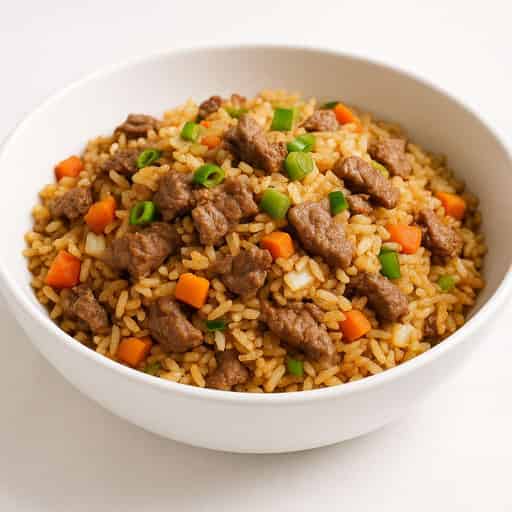
This is a foundational egg fried rice: cold rice, soft egg curds, a little garlic and shallot, then spring onions and sesame oil at the end. It is not a saucy rice dish or a substitute for a fully loaded fried rice. The goal is separate grains with enough seasoning to taste savoury without burying the egg.
The recipe makes two light servings, or can be stretched as a side alongside a stir-fry. It uses one whole egg plus an extra yolk for a richer colour and a slightly silkier coating on the rice. The yolk is useful, not compulsory: a second whole egg also works if that is more convenient.
Cold Rice, Hot Pan, Separate Grains
Cold Rice, Hot Pan, Separate Grains
Jasmine or another long-grain white rice works well, but the condition of the rice matters more than the variety. Refrigerated rice dries a little and firms up, allowing the grains to separate quickly in a hot pan. Break up clumps before you start so you do not have to mash the rice while the garlic is cooking.
Fresh rice can work when needed. Spread it out straight after cooking so steam escapes, then chill it until cold. Cool cooked rice promptly and keep it refrigerated; do not leave it on the counter overnight for the sake of texture.
Keep the Seasoning Light and the Pan Dry
Keep the Seasoning Light and the Pan Dry
Soy sauce adds both salt and liquid. Starting with 10 g, then tasting before adding the final 5 g, keeps the rice from becoming too salty or wet. Optional MSG adds savoury depth, so there is no need to add salt automatically. Drizzling the soy around the side of a hot wok or pan helps it sizzle before it reaches the rice, but a wide frying pan works well too.
Use medium-high heat rather than maximum heat if the garlic is colouring too fast. Add the garlic only after the shallot and spring onion whites have softened, then cook the egg just to soft curds before the rice goes in. Finish with sesame oil off the heat for its fresh aroma.
Common Egg Fried Rice Problems
Common Egg Fried Rice Problems
Mushy or clumpy rice: the rice was too warm or wet. Chill it fully and break up clumps before frying.
Rice sticking to the pan: preheat the pan, add enough oil, and let the rice heat before moving it constantly. A wok is useful but not required; a large well-heated frying pan is enough.
Rice tastes too salty: use only the first 10 g soy sauce, taste, and stop there if it is seasoned enough. Soy sauce brands vary, and optional MSG adds seasoning too.
What to Serve with Egg Fried Rice
What to Serve with Egg Fried Rice
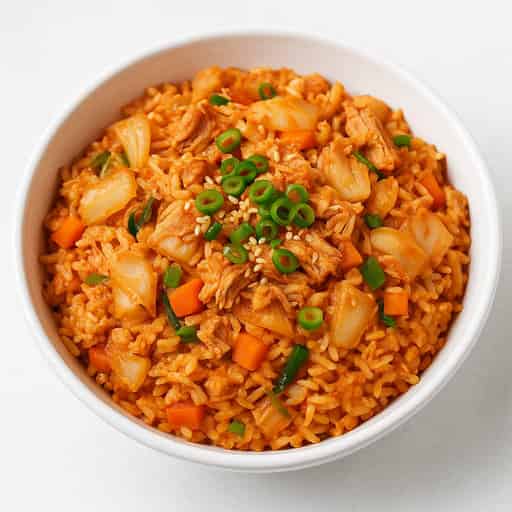
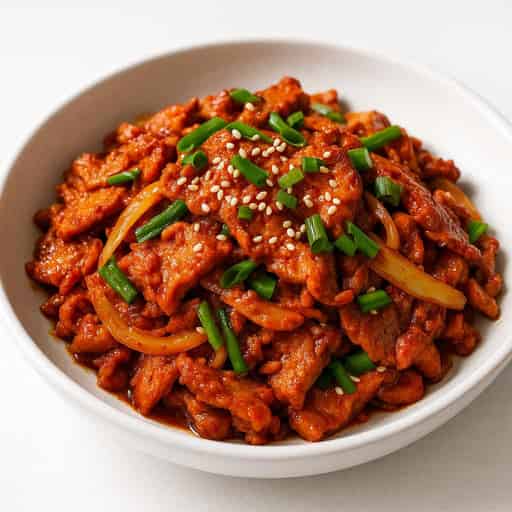
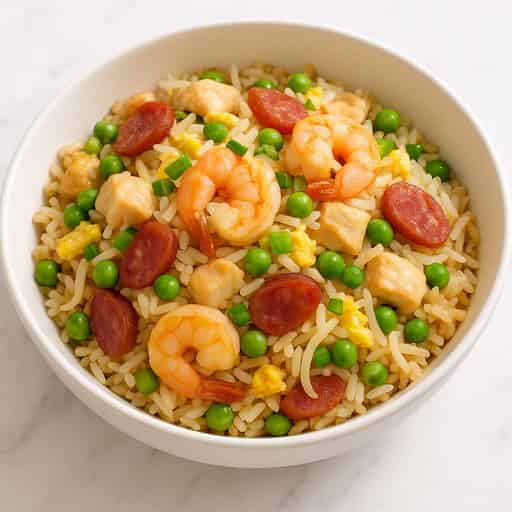
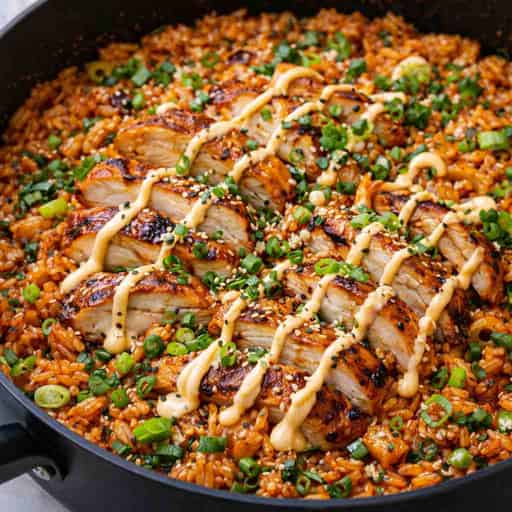
Keep this as the simple rice component beside a savoury main such as Kung Pao chicken or gochujang bulgogi. For more variations built around leftover rice, browse the fried rice recipes collection.
Nutrition Facts
Nutrition Facts
Serving Size: 1 serving (half the recipe)
Calories 36518%
% Reference Intake*
Total Fat 14g20%
Saturated Fat 2g10%
Trans Fat 0g
Cholesterol 160mg
Sodium 560mg
Total Carbohydrates 50g19%
Dietary Fiber 2g
Sugars 3g3%
Protein 9g18%
* Reference intakes are based on an average adult's 8,400 kJ / 2,000 kcal diet. Your needs may be higher or lower.
FAQs
Why is cold rice better for egg fried rice?
Refrigerated rice is firmer and has less surface moisture, so the grains separate more easily instead of clumping or steaming in the pan.
Can I use freshly cooked rice?
Yes. Spread it on a tray or large plate so steam can escape, then chill it until cold before frying. Do not leave cooked rice at room temperature for hours.
Can I make egg fried rice without MSG?
Yes. MSG is optional; it adds savoury depth, but the rice is still well seasoned with soy sauce, garlic, shallot, and sesame oil.
Why did my fried rice stick to the pan?
The pan may not have been hot enough, the rice may have been wet, or the sauce may have been added too early. Preheat well, use cold separated rice, and add soy only once the rice is already hot.
How should I store leftover egg fried rice?
Cool leftovers promptly, refrigerate in a covered container, and eat within 1 day. Reheat in a hot pan until steaming throughout; do not repeatedly reheat the same portion.
Community Reviews
See how other home cooks made this recipe, then share your own experience.
4.4
19 ratings
5
58%
4
26%
3
16%
2
0%
1
0%
How would you rate this recipe?
Share your experience and help others.
Marco T.
· 28 Aug 2026Finishing with sesame oil and the spring onion greens off the heat gave it much more aroma than adding everything at the start.
Helen C.
· 9 Jun 2026The fresh-rice workaround was useful when I had not planned ahead. I spread the rice out, chilled it, and it still fried up well.
Daniel R.
· 22 Mar 2026I used a large frying pan rather than a wok and followed the preheating note. No sticking, and the egg stayed in small soft pieces throughout.
Priya M.
· 18 Jan 2026Starting with the smaller amount of soy sauce made a real difference. It was savoury without tasting salty, and the grains stayed separate.
George S.
· 27 Jul 2025Not bad, but the rice stuck to my pan. Might need a better wok or more oil?
Mei Lin
· 26 Jun 2025I doubled the garlic and added some peas-turned out AMAZING!
Thomas E.
· 25 Jun 2025Tastes good, but I prefer using butter instead of sesame oil. Just a personal preference.
Anya Petrova
· 24 Mar 2025I didn’t grow up with MSG, but this changed my mind. Just the right amount!
Carlos D.
· 23 Feb 2025Made it for my girlfriend and she was impressed. Thanks for the clear instructions!
Yuki M.
· 22 Jan 2025Simple and quick dinner-exactly what I needed after work. The method was easy to repeat on a busy night.
Ben Carter
· 21 Nov 2024It was okay, but a bit too salty for my taste. Maybe reduce soy sauce next time.
Lily Rose
· 20 Sept 2024I didn’t have spring onions so I used leeks-not quite the same, but still tasty.
Tim Nguyen
· 20 Jul 2024Very authentic flavor! Reminded me of my grandma’s fried rice in Hanoi.
Sofia J.
· 19 May 2024My kids actually loved this! They usually hate anything with garlic or shallots.
Ella B.
· 18 Feb 2024Great base recipe. I made it spicier with more chili-so good!
Ravi Kumar
· 18 Nov 2023I was skeptical about the MSG, but wow-it really enhanced the flavor.
Marcus L.
· 17 Aug 2023Super easy and flavorful. I added a bit of shrimp for protein-highly recommend!
Aimee Chan
· 16 May 2023Tried this with leftover rice and it turned out perfect. Really good use for rice from the day before.
JohnnyD
· 15 Mar 2023Delicious! The MSG really makes a difference.
Browse this topic

Create Your Own Recipe
Add your personal creations and build your own recipe collection.