18 July 2026
Lemon and Avocado Macarons
RecipeShare Test Kitchen

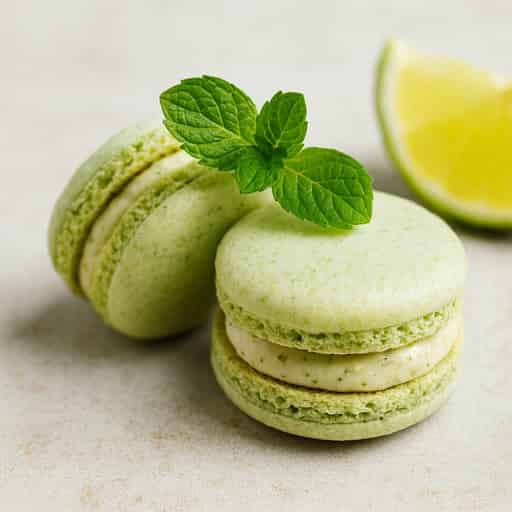
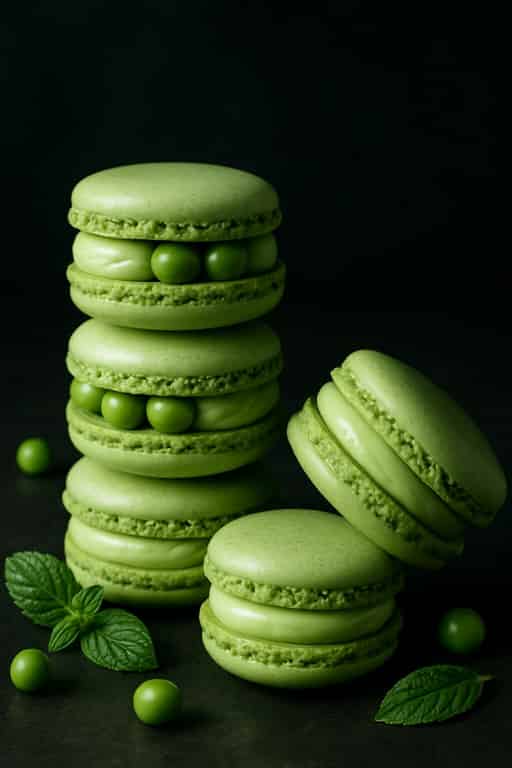
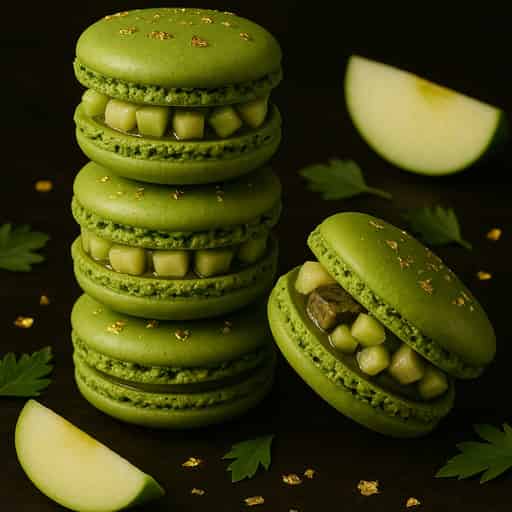
Lemon and avocado macarons with citrus-bright ganache, candied lemon pieces, and crisp shells. A refined dessert project with a fresh, creamy filling.
Prep time
1 hr 30 min
Cook time
1 hr 50 min
Total time
3 hr 20 min
Servings
36
Chef's Tips
Age or rest the egg whites if that is part of your usual macaron workflow.
Let the shells dry before baking so they develop smooth tops and proper feet.
Mature the filled macarons overnight for the best texture.
Tools Used
Saucepan(opens in a new tab)Blender(opens in a new tab)Sieve(opens in a new tab)Piping BagsBaking Trays(opens in a new tab)Spatula(opens in a new tab)Food Thermometer(opens in a new tab)
We use affiliate links, which may earn us a small commission at no extra cost to you.
Ingredients
Ingredients
Servings
36 servings1×
Scale
Ingredient amounts update instantly.
Candied Lemon
Macaron Shells
Lemon Avocado Ganache
Instructions
Candy the Lemon
- 1
Cut away the peel and pith, then dice the lemon flesh into small cubes.
- 2
Blanch the lemon pieces three times, refreshing in cold water after each boil.
- 3
Simmer with water, sugar, vanilla bean, star anise, peppercorns, and lemon juice for 60 to 75 minutes.
- 4
Chill overnight, then drain well before using.
Make the Shells
- 1
Sift the almond flour and icing sugar together.
- 2
Divide the egg whites into two equal portions.
- 3
Mix one portion of egg whites into the almond mixture with the chosen food coloring.
- 4
Cook the caster sugar and water to 118C, then pour it into the second portion of whipping egg whites.
- 5
Fold the meringue into the almond mixture until the batter flows in a thick ribbon.
- 6
Pipe small rounds, tap the trays, rest until dry to the touch, and bake at 160C to 170C until set.
Make the Ganache
- 1
Blend the avocado with the lemon juice until completely smooth.
- 2
Warm the puree gently.
- 3
Heat the cream with the lemon zest until steaming, then pour over the white chocolate.
- 4
Stir until smooth, then blend in the avocado mixture.
- 5
Chill until pipeable.
Assemble
- 1
Pair similar-sized shells.
- 2
Pipe ganache onto half the shells and press a few pieces of candied lemon into the center.
- 3
Sandwich with the remaining shells and chill for 24 hours before serving.
Plan This Recipe
Save this recipe to one of your meal plans or browse your existing plans.
Learn More
Everything you want to know about this recipe.
Flavor Profile
Flavor Profile
These lemon and avocado macarons are bright, creamy, and unexpectedly elegant. The shells stay sweet and almond-forward, while the filling brings a softer, rounder citrus profile than a standard lemon curd macaron. Avocado does not make the filling taste savory. Instead, it adds body and a buttery texture that helps the lemon feel smooth instead of aggressive.
The candied lemon pieces are what give the final cookie real complexity. They add a concentrated sweet-tart burst in the middle and stop the ganache from reading as a single-note cream filling.
Chef's Tips
Chef's Tips
- Sift the almond flour and icing sugar thoroughly. Cleaner dry ingredients help produce smoother shells.
- Stop mixing the batter once it falls in a slow ribbon and settles back into itself after a few seconds. Overmixed batter spreads too far and bakes flat.
- Keep the avocado puree completely smooth before adding it to the chocolate. Any fibers left behind will show up in the ganache.
- Mature the macarons overnight. Freshly assembled shells can feel crisp and separate from the filling, while rested macarons soften into the classic texture.
Ingredient Highlights
Ingredient Highlights
Almond flour gives the shells their signature tenderness and subtle nutty
flavor.
White chocolate stabilizes the ganache and carries the citrus without
turning the filling runny.
Avocado acts more like a creamy textural ingredient than a dominant flavor.
Candied lemon adds chew, brightness, and a more layered finish than juice
or zest alone can deliver.
How It Comes Together
How It Comes Together
This recipe works best when broken into stages. First, candy the lemon so the pieces have time to chill and firm up. Then make the shells using an Italian meringue method, which gives you a little more stability for a project-style macaron.
Once the shells are baked and cooled, make the lemon-avocado ganache. The key here is using ripe avocado and blending it very smoothly with the lemon juice before it meets the melted chocolate. That keeps the texture glossy rather than grainy. Assemble the macarons by piping ganache, adding a few small cubes of candied lemon, and sandwiching them gently. After an overnight rest, the shells soften slightly and the filling settles into the center.
Easy Swaps
Easy Swaps
- If you do not want two colors of shells, make a single pale yellow batch.
- Use finely chopped candied lemon peel if you do not want to candy lemon flesh.
- For a slightly sharper citrus finish, add a little more zest instead of extra juice so the ganache stays stable.
Make-Ahead and Storage
Make-Ahead and Storage
Shells can be baked a day or two ahead and stored airtight once fully cooled. The candied lemon can be made several days in advance and kept refrigerated. Filled macarons are best after a 24-hour rest and usually hold well in the fridge for up to 3 days.
For the cleanest serving texture, let them sit at room temperature for about 20 minutes before eating. That softens the ganache and brings back the citrus aroma.
FAQ
FAQ
Do the macarons taste strongly of avocado?
No. The avocado mainly contributes richness and texture. Lemon and white
chocolate stay in the foreground.
Can I use French meringue instead?
Yes, if that is your standard method, but the Italian meringue version is more
forgiving for a large batch.
Why did my shells crack?
Usually the shells were not rested long enough, the oven ran too hot, or the
batter still had too much air trapped inside.
Portion Guidance for Goals
Portion Guidance for Goals
One macaron is a modest dessert serving, while two feels appropriate for a special occasion or plated dessert course. Because they are sugar-forward and filling-rich, these are best treated as a small luxury rather than a routine snack.
When to Eat
When to Eat
These fit best as a celebration bake, dinner-party dessert, afternoon tea sweet, or holiday pastry project. They are ideal when you want a polished, small-format dessert that still feels distinctive.
Balance Tip
Balance Tip
Keep the portion small and let the technique do the work. Macarons already deliver a lot of intensity in a few bites, so serving them with tea, coffee, or fresh berries is usually enough to make dessert feel complete.
Nutrition Facts
Nutrition Facts
Serving Size: 1 macaron
Calories 1347%
% Reference Intake*
Total Fat 7g10%
Saturated Fat 3g15%
Trans Fat 0g
Cholesterol 4mg
Sodium 14mg
Total Carbohydrates 16g6%
Dietary Fiber 1g
Sugars 14g16%
Protein 2g4%
* Reference intakes are based on an average adult's 8,400 kJ / 2,000 kcal diet. Your needs may be higher or lower.
Community Reviews
See how other home cooks made this recipe, then share your own experience.
—
0 ratings
5
0%
4
0%
3
0%
2
0%
1
0%
How would you rate this recipe?
Share your experience and help others.
Create Your Own Recipe
Add your personal creations and build your own recipe collection.