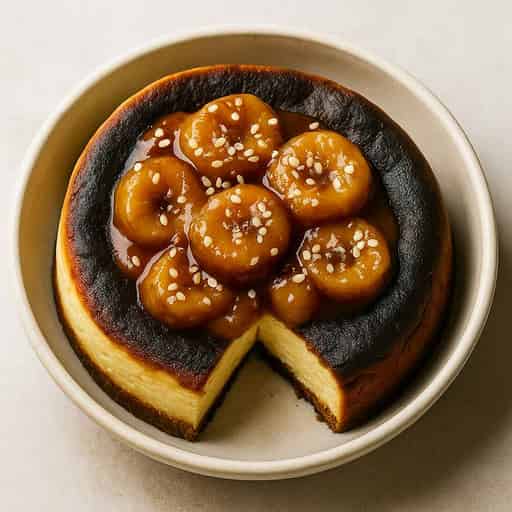
Why Caramelising Banana Changes Basque Cheesecake
Caramelising banana before it goes into Basque cheesecake gives you deeper flavour, better texture, and a cleaner custardy centre without raw fruit notes.
Banana sounds easy in cheesecake until it tastes flatter than expected. The fruit is naturally fragrant, but in a high-fat batter it can come across as raw, watery, or oddly muted unless you concentrate it first.
Dek: Caramelising banana before it goes into Basque cheesecake does more than make it sweeter. It changes the water content, deepens the flavour, and helps the finished cake keep the dark-top, custardy-centre contrast people want from this style.
Raw banana is often too soft a flavour for cheesecake
Cream cheese, cream, eggs, and sugar are all heavy flavours. Banana can disappear behind them unless it is pushed further before mixing. That is why a Caramelised Banana Burnt Basque Cheesecake tastes more defined than a version made with plain mashed fruit.
Raw banana also brings a faint starchy note. In a baked custard, that can read as unfinished rather than fresh.
Caramelising banana concentrates flavour before the batter even starts
Once banana hits heat with butter and sugar, it stops tasting like sliced fruit and starts tasting like a fuller dessert component. Water cooks off, sugars deepen, and the fruit moves closer to caramel, toffee, and soft jam rather than smoothie sweetness.
That deeper flavour matters in Basque cheesecake because the batter is intentionally simple. If the banana is weak, the whole cake tastes like ordinary cheesecake with a vague fruit note instead of a deliberate variation.
It also improves the texture of the finished cheesecake
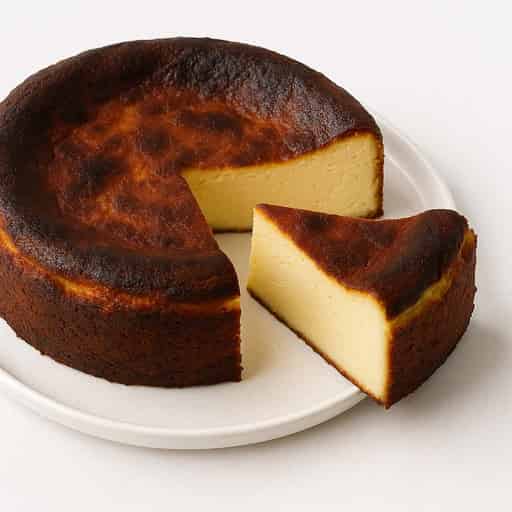
Basque cheesecake depends on contrast: dark top, set edges, and a centre that stays soft and custardy. Raw fruit pieces can interrupt that by releasing moisture in uneven pockets as the cake bakes.
Caramelised banana behaves differently. Once cooked down and mashed, it folds into the batter more evenly, so the centre stays creamy instead of streaky or patchy. That is especially useful in small-format cheesecakes, where a little extra moisture can change the bake quickly.
Why the dark top and banana work so well together
Basque cheesecake already leans toward bitter caramel notes because of the high-heat bake. Caramelised banana moves in the same direction, which is why the flavour feels coherent instead of layered on top.
That is also why the method fits classic and gooier versions well, including a simpler Burnt Basque Cheesecake or a softer Gooey Basque Cheesecake. The banana is not there to make the cake taste fruity first. It is there to deepen the caramel side of the profile.
The goal is not more sweetness
Caramelising banana does make it taste sweeter, but that is not the main reason to do it. The better reason is control. You get a flavour that is rounder, a puree that is easier to distribute, and a result that feels intentional.
That distinction matters because good Basque cheesecake is less about adding flavours than about making sure every flavour belongs in the same texture system.
Why this small step changes the final impression
A banana Basque cheesecake should still taste like Basque cheesecake first: burnished top, creamy middle, and a slight bitter edge from the bake. Caramelising the fruit is what lets banana join that structure without softening it into something vague.
It is a small extra step, but it changes the cake from a novelty variation into one that tastes properly built.
If you want the classic Basque cheesecake foundation behind this technique, see Burnt Basque Cheesecake. If you want to use the banana variation directly, see Caramelised Banana Burnt Basque Cheesecake.
Related recipes