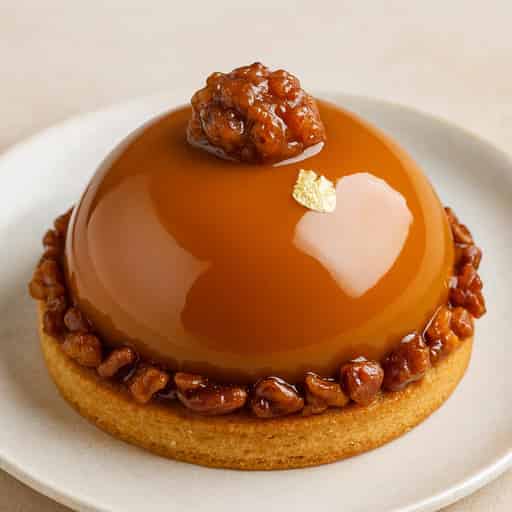
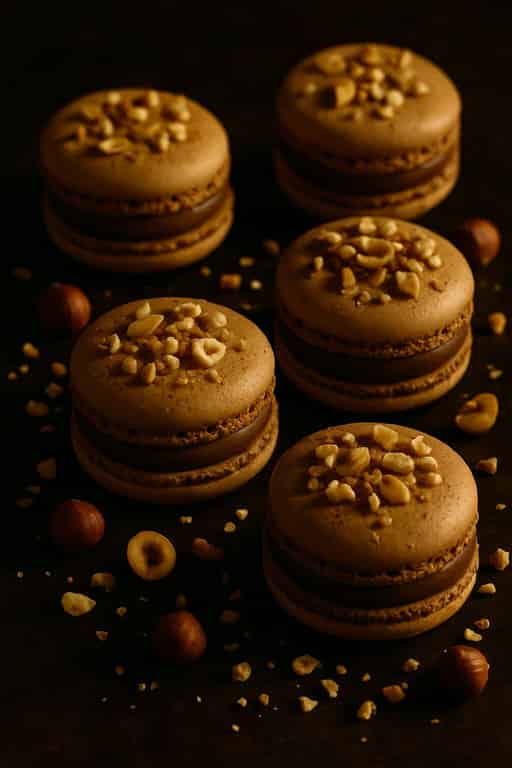
Hazelnut praline with cocoa butter and feuilletine for inserts, tart bases, cake layers, or a crunchy spread.
Prep time
20 min
Cook time
20 min
Total time
40 min
Servings
20
Chef's Tips
Toast the hazelnuts until fragrant and lightly golden for the best flavour depth.
Keep a close eye on the dry caramel so it turns amber but does not burn or taste bitter.
Mix the praline while still warm so the cocoa butter and feuilletine distribute evenly.
Spread the mixture in an even layer between sheets of parchment if using as a cake or tart insert.
Tools Used
Baking Tray(opens in a new tab)Parchment Paper(opens in a new tab)Saucepan(opens in a new tab)Stand Mixer(opens in a new tab)Cooling Rack(opens in a new tab)Sharp Knife(opens in a new tab)
We use affiliate links, which may earn us a small commission at no extra cost to you.
Ingredients
Ingredients
Servings
20 servings1×
Scale
Ingredient amounts update instantly.
Hazelnut Praline Crunch
Instructions
Toast the Hazelnuts
- 1
Preheat the oven to 160°C (320°F). Line a baking tray with parchment paper.
- 2
Spread the hazelnuts in a single layer and toast for 15 minutes until golden and fragrant.
- 3
If using skin-on hazelnuts, rub warm nuts in a kitchen towel to remove skins.
Make the Dry Caramel
- 1
Place superfine sugar in a clean, dry saucepan in an even layer.
- 2
Heat without stirring until edges melt, then gently swirl to melt evenly.
- 3
Cook to a deep amber caramel, then pour over toasted hazelnuts. Cool completely.
Mix the Praline Feuilletine Crunch
- 1
Break cooled hazelnut caramel into chunks and transfer to a stand mixer with flat beater.
- 2
Add fleur de sel and beat until a coarse praline paste forms.
- 3
Add cocoa butter while mixture is warm; beat until melted and incorporated.
- 4
Add feuilletine flakes and mix briefly to keep flakes intact.
- 5
Use warm as an insert layer or spread to set and cut once firm.
Plan This Recipe
Save this recipe to one of your meal plans or browse your existing plans.
Learn More
Everything you want to know about this recipe.
Ultra-Crunchy Hazelnut Praline Feuilletine
Ultra-Crunchy Hazelnut Praline Feuilletine
This mixture combines toasted hazelnuts, caramel, cocoa butter, and feuilletine flakes for a crisp insert or base layer. It is used most often under mousse layers, inside tarts, or in plated dessert components that need added crunch.
Main Components
Main Components
The hazelnuts and caramel create the praline base, the cocoa butter binds the mixture while warm, and the feuilletine keeps the final texture brittle rather than dense.
Uses
Uses
- Spread under mousse cakes
- Layer into tart shells
- Add between sponge layers
- Chill and cut into crisp inserts
Storage Notes
Storage Notes
Use while warm for spreading, or chill until firm before cutting. Store chilled if making ahead so the flakes stay crisp.
Texture Control
Texture Control
The final texture depends on how finely the praline base is processed before the feuilletine is mixed in. A rougher paste gives a more brittle, obvious crunch, while a smoother paste holds together more evenly in thin layers. Once the flakes are added, mix only until combined so they keep their structure instead of dissolving into the warm praline.
Best Applications
Best Applications
This component is especially useful when a mousse, tart, or soft cream dessert needs a firmer contrast underneath. It can be spread in rings, pressed into tart shells, or cut into thin inserts once cold. Because it is rich and concentrated, thinner layers usually give better balance than thick slabs.
If you are building a frozen entremet, keep the crunch layer relatively even so it thaws at the same rate as the rest of the dessert. Uneven thick spots can make slicing harder and pull softer layers out of place.
Nutrition Facts
Nutrition Facts
Serving Size: 40 g
Calories 24512%
% Reference Intake*
Total Fat 19g27%
Saturated Fat 5g25%
Trans Fat 0g
Cholesterol 0mg
Sodium 200mg
Total Carbohydrates 17g7%
Dietary Fiber 2g
Sugars 15g17%
Protein 4g8%
* Reference intakes are based on an average adult's 8,400 kJ / 2,000 kcal diet. Your needs may be higher or lower.
Community Reviews
See how other home cooks made this recipe, then share your own experience.
4.7
3 ratings
5
67%
4
33%
3
0%
2
0%
1
0%
How would you rate this recipe?
Share your experience and help others.
Daniel
· 18 Sept 2025Keeps well in the fridge. Slightly softer at room temp but still crunchy.
Marie
· 2 Jun 2025Great texture and very easy. Half hazelnut and half almond also worked well.
Alex
· 10 Apr 2025Used this in a hazelnut mousse entremet. It stayed crisp with a good sweet-salty balance.
Create Your Own Recipe
Add your personal creations and build your own recipe collection.