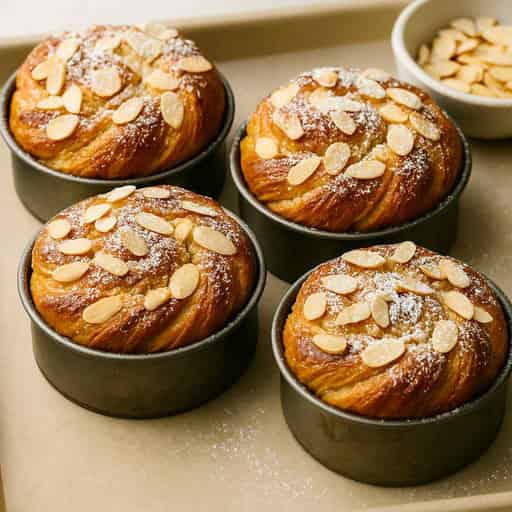
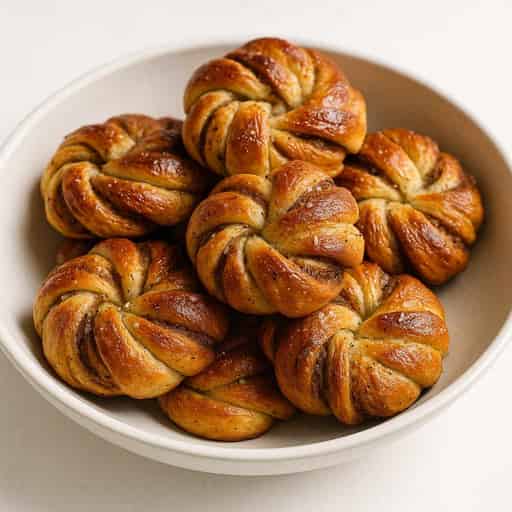
A flaky citrus brioche crown made with laminated dough, orange and lemon zest, and a sugared pan for a golden caramelised finish.
Prep time
3 hr 30 min
Cook time
25 min
Total time
6 hr 25 min
Servings
8
Time Plan
2 hr active · 6 hr 25 min total
- Let the dough rise1 hr
- Chill between lamination turns30 min
- Proof the shaped crown1 hr 30 min
Recipe Snapshot
DifficultyAdvanced
MealBreakfast / Dessert
Family FriendlyYes
CuisineFrench
Chef's Tips
Keep the dough and citrus butter at a similar firmness so the butter rolls into layers instead of breaking or melting.
Chill the dough whenever it starts to resist the rolling pin; forcing it can crush the layers.
Use strong white bread flour for enough gluten strength to support the enriched dough and lamination.
Unmould the crown while it is still warm so the caramelised sugar does not set it firmly to the pan.
Tools Used
Stand Mixer(opens in a new tab)Dough HookMixing Bowls(opens in a new tab)Rolling PinPastry BrushSharp Knife(opens in a new tab)Kitchen Scale(opens in a new tab)Plastic Wrap
We use affiliate links, which may earn us a small commission at no extra cost to you.
Ingredients
Ingredients
Servings
8 servings1×
Scale
Ingredient amounts update instantly.
Citrus Butter Block
Brioche Dough
Pan Finish
Instructions
Make the Citrus Butter
- 1
Beat the softened dry butter with the lime, lemon, grapefruit, and orange zests for about 3 minutes, until evenly combined.
- 2
Shape the butter into a flat rectangle, wrap it, and chill until firm but still pliable.
Mix and Chill the Dough
- 1
Mix the flour, salt, and sugar in the stand mixer bowl. Crumble in the fresh yeast, or dissolve the active dry yeast in the lukewarm milk first.
- 2
Add the eggs and milk, then knead with the dough hook until smooth and elastic. Add the softened dough butter gradually and continue kneading until the dough is glossy and pulls cleanly from the bowl.
- 3
Cover and let the dough rise at room temperature until lightly expanded, about 1 hour. Press out excess gas, wrap, and chill until firm enough to roll.
Laminate the Dough
- 1
Roll the chilled dough into a rectangle large enough to enclose the citrus butter. Place the butter in the centre, fold the dough over it, and seal the edges.
- 2
Roll into a long rectangle and complete one letter fold. Wrap and chill for 20–30 minutes, then repeat the roll and letter fold once more.
- 3
Chill the laminated dough again until firm, then roll it to about 3–4 mm thick for shaping.
Shape, Proof, and Bake
- 1
Grease a 20cm round cake pan with the pan butter and coat it evenly with the pan sugar.
- 2
Cut the laminated dough into pieces about 5 x 12 cm. Roll each piece into a loose spiral and arrange the spirals around the pan to form a crown.
- 3
Cover and proof at about 26°C for 1 hour 30 minutes, or until visibly puffy and the layers move slightly when the pan is nudged.
- 4
Heat the oven to 180°C (356°F). Bake for about 25 minutes, until deeply golden and caramelised.
- 5
Unmould the crown while warm and cool it on a rack before slicing.
Plan This Recipe
Save this recipe to one of your meal plans or browse your existing plans.
Learn More
Everything you want to know about this recipe.
Citrus Puff Pastry Brioche Crown
Citrus Puff Pastry Brioche Crown
This citrus brioche crown combines an enriched brioche dough with puff-pastry-style lamination. A block of citrus-scented butter is folded into the dough, then the layers are rolled into spirals and baked in a sugared round pan. The result is flaky at the edges, tender through the centre, and bright with lime, lemon, grapefruit, and orange zest.
It is a project pastry rather than a quick loaf. The dough needs chilling between turns, and the shaped crown needs a full final proof, but the work can be spread over two days for an easier brunch bake.
Why The Layers Work
Why The Layers Work
The dough contains eggs, milk, and a large amount of butter, giving the interior a soft brioche crumb. The separate citrus butter block creates the thin layers that puff in the oven. Keeping both dough and butter cool but pliable is more important than rolling to an exact speed or pressure.
Strong white bread flour helps the dough hold its shape during the folds. If the dough springs back or feels tight, stop rolling and chill it rather than adding more flour, which can make the finished crown dry.
Lamination Troubleshooting
Lamination Troubleshooting
The butter breaks through the dough
The butter is probably too firm or the dough is too soft. Let the butter warm slightly until it bends without cracking, or chill the dough briefly before continuing. Patch small breaks with a piece of dough and keep rolling gently.
The layers disappear
This usually happens when the butter melts into the dough or the turns are rolled without enough chilling. Refrigerate between folds and brush away excess flour before each fold.
The crown is pale or greasy
A cool oven or an under-proofed crown can bake unevenly. Preheat fully, wait for the shaped dough to become puffy, and bake until the top and sugared base are deeply golden.
Make-Ahead And Storage
Make-Ahead And Storage
For the easiest schedule, mix and chill the dough, laminate and shape the crown, then cover and refrigerate it overnight. Bring it back toward room temperature before the final proof and bake.
The baked crown is best on the day it is made, but it keeps covered at room temperature for up to 2 days. Reheat at 150°C (300°F) for 5–7 minutes to refresh the crisp layers. It can also be sliced and frozen, then rewarmed from thawed.
For the standalone dough method, see Puff Pastry Brioche Dough.
Nutrition Facts
Nutrition Facts
Serving Size: 1/8 crown
Calories 98049%
% Reference Intake*
Total Fat 90g129%
Saturated Fat 50g250%
Trans Fat 0g
Cholesterol 320mg
Sodium 600mg
Total Carbohydrates 110g42%
Dietary Fiber 2g
Sugars 30g33%
Protein 22g44%
* Reference intakes are based on an average adult's 8,400 kJ / 2,000 kcal diet. Your needs may be higher or lower.
FAQs
Can I use regular unsalted butter instead of dry butter?
Yes, but regular butter contains more water and may soften faster during lamination. Keep it cold and chill the dough whenever the butter starts to feel greasy or the layers become difficult to define.
Can I prepare the crown the night before?
Yes. Complete the lamination and shaping, cover the pan, and refrigerate it overnight. Let it sit at room temperature until puffy before baking.
Why is the crown dense?
It may have been under-proofed, overworked during rolling, or baked before the shaped dough had become visibly puffy. Give the final proof enough time and chill the dough between turns.
Community Reviews
See how other home cooks made this recipe, then share your own experience.
4.7
3 ratings
5
67%
4
33%
3
0%
2
0%
1
0%
How would you rate this recipe?
Share your experience and help others.
Camille
· 7 Sept 2026I used active dry yeast and the conversion was helpful. The dough was much easier to laminate after a proper chill.
Anita
· 18 Oct 2025The sugared pan gave the base a lovely caramelised edge. I unmoulded it warm and had no trouble getting the crown out.
Leo
· 2 Jul 2025The grapefruit keeps the pastry from tasting too sweet. Chilling between folds took patience, but the layers were worth it.
Marie
· 10 Apr 2025Made this for brunch and the citrus butter made the whole kitchen smell wonderful. The layers were flaky but the middle stayed tender.
Create Your Own Recipe
Add your personal creations and build your own recipe collection.