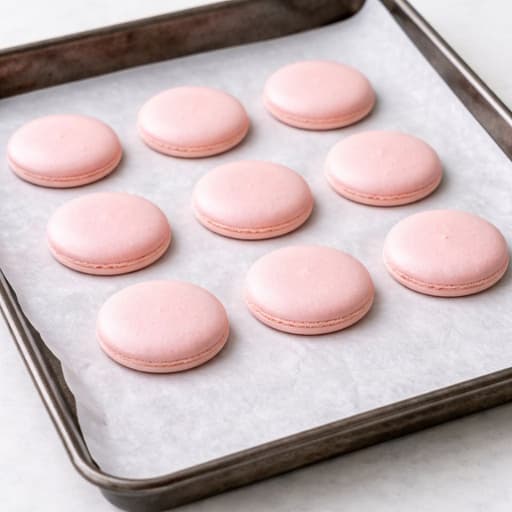
Why Macarons Have No Feet and How to Fix It
Macarons with no feet usually point to weak drying, weak batter structure, or oven heat that never creates enough lift. Here is what that problem often means.
Macarons with no feet are one of the clearest signs that the shell never expanded the way it was supposed to. Instead of lifting slightly at the base and forming that frilly edge, the batter stays flatter and the shells look smooth but structurally incomplete.
Dek: When macarons bake without feet, the problem usually starts in drying, batter structure, or oven energy. This guide explains why feet form in the first place, what prevents them, and how to get more reliable lift next time.
Quick answer
The most common reason macarons have no feet is that the shells never built the right balance between surface strength and upward pressure. If the tops did not dry enough, the batter was too loose, or the oven heat was too weak or uneven, the shells may spread and set without lifting at the base.
Feet form when the shell rises in a controlled way
Macaron feet are not decorative extras. They are the visible result of the shell expanding downward and outward while the top stays intact. For that to happen, the shell needs enough structure on top, enough stability in the batter, and enough oven energy to push the base upward before the whole round sets flat.
That is why missing feet usually point to a structural issue, not just a cosmetic one.
Weak drying often leaves the shell too soft to lift properly
If the piped shells are still tacky when they go into the oven, the surface may not be firm enough to guide expansion. Instead of holding shape while the base pushes up, the shell can simply spread and settle.
This is one reason feet can disappear on humid days or in kitchens where the resting stage is inconsistent. The top may look nearly ready, but if it still lacks a proper skin, the shell often bakes flatter than expected.
Batter that is too loose can spread before it ever gets the chance to rise
Macarons also lose feet when the batter flows too easily after piping. That often happens when the macaronage goes a little too far. The rounds look smooth, but the structure is already too relaxed to hold a strong lift once heat hits them.
In that case, the oven does not have much to work with. The shell spreads, the base stays shallow, and the finished macarons come out tidy-looking but without that proper ruffled edge.
Weak meringue can reduce lift before the tray even reaches the oven
Feet depend on controlled expansion, and that starts with the meringue. If the meringue is underbuilt or unstable, the batter may never develop the internal strength needed to rise well. Even with decent drying, the shells can still bake low and flat because the interior does not push with enough discipline.
This is one reason no-feet macarons often overlap with other symptoms such as spread, weak tops, or uneven shape. The shell is telling you the structure was never strong enough to support the full bake.
Oven heat has to be strong enough to create lift, but not so harsh that it breaks the shell
Macarons need enough early heat to push the base upward. If the oven is running too cool, the shells may dry and set before feet have the chance to form clearly. If it is too aggressive, you can get other problems instead, like cracks or hollows.
That balance is why macaron troubleshooting often comes down to relationships rather than single variables. Drying, batter consistency, and oven heat all have to cooperate. A shell can miss feet even when only one of those stages is slightly off.
How to fix no-feet macarons next time
The most useful corrections are usually simple:
- Let the piped shells rest until the tops feel dry, not tacky.
- Stop the macaronage before the batter becomes too loose.
- Build a stable meringue with enough body before folding.
- Check whether the oven is baking too cool or unevenly.
- Test one tray at a time if the oven is inconsistent.
These fixes work because they help the shell hold shape long enough for the base to rise instead of spreading first.
How to prevent the problem more consistently
The most reliable batches come from treating feet as a sign of balanced structure, not as a magic effect. When the meringue is sound, the batter is not over-relaxed, and the drying stage matches the oven, feet tend to appear naturally.
That is why reference recipes such as Lemon Macarons, French Pistachio Macarons, and Matcha Uji Macaron with Seasoned Azuki Filling are useful. Different flavours still rely on the same shell logic. If the structure is right, the feet follow.
If you are working through a broader macaron cluster, it also helps to compare this issue with Why Macarons Crack, Why Macarons Are Hollow, and the more dessert-led Desserts With Matcha and White Chocolate topic where macaron formats show up in a more polished pastry context.
The main takeaway
Macarons with no feet usually mean the shell never achieved the right combination of top strength, batter stability, and oven lift. Once you treat missing feet as a structural signal instead of random bad luck, the problem becomes much easier to diagnose and correct.
Related recipes

