How to Fix Split Ganache Without Starting Over
Split ganache usually means the fat and liquid stopped emulsifying. Here is what that break often signals and why some ganaches come back more easily than others.
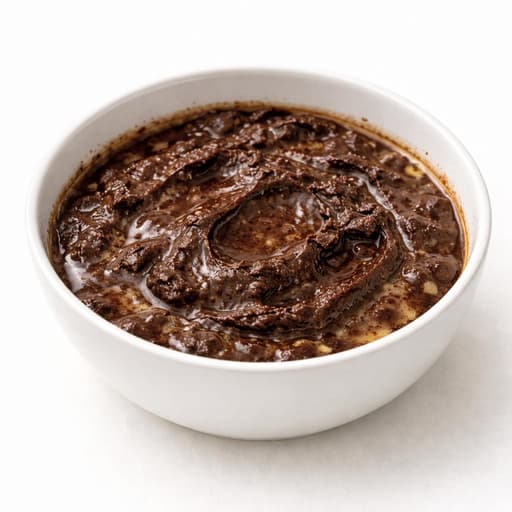
Split ganache looks like a disaster because it goes from glossy to greasy in seconds. The texture turns loose, grainy, or oily, and it feels as if the whole bowl has crossed a line it cannot come back from.
Dek: A split ganache usually means the emulsion broke under stress: too much heat, poor ratio balance, or movement at the wrong stage. This guide explains what that break often means and why some ganaches are easier to recover than others.
Ganache Splits When Fat and Liquid Stop Holding Together
At its best, ganache is an emulsion: chocolate solids, cocoa butter, cream, and any added liquids suspended in a smooth, stable mixture. When it splits, that structure gives way. Instead of one glossy body, you start seeing separation, dullness, or an oily sheen that tells you the components are no longer moving together.
That is why split ganache feels so abrupt. The problem is not just appearance. The entire texture logic of the mixture has shifted.
Too Much Heat Is One of the Fastest Ways to Break It
Ganache often splits because the temperature climbs past the point where the emulsion can stay calm. Chocolate is forgiving in some contexts, but ganache is less tolerant when cream, chocolate, and agitation all meet at the wrong heat level. What looks like “just warming it a little more” can turn into a texture break almost immediately.
This is especially true with richer or more delicate applications, where the balance between fluidity and structure is already narrow.
Ratio Problems Usually Show Up as Weak Structure
Some ganaches are also unstable because the ingredient ratio never gave them much room to succeed. Too much liquid, too little chocolate, or an off-balance fat level can leave the mixture looking smooth for a moment but unable to stay emulsified as it cools or gets stirred further.
That is why two ganaches can respond differently to the same technique. One was built on solid footing; the other was fragile from the start.
Overworking Can Finish Off a Ganache That Was Already Vulnerable
Ganache does not only split from heat. It also breaks when a mixture that is already on edge gets pushed too far by whisking, blending, or repeated reheating. Once the emulsion weakens, extra movement can make the separation more obvious instead of bringing it back together.
This is one reason bakers often feel confused by the moment it goes wrong. They are trying to smooth it out, but the ganache is already past the point where more force helps.
Some Ganaches Split Because Add-Ins Change the Balance
Tea infusions, fruit elements, flavor pastes, syrups, butter, and other additions can all change how stable a ganache is. Even when the flavor is excellent, the emulsion can become less forgiving if those add-ins shift the water, fat, or temperature balance too far.
That is especially relevant in filled desserts and macarons, where the ganache may look simple but is carrying more variables than a basic dark chocolate-and-cream base.
Recovery Depends on How the Break Happened
Not all split ganaches are equally broken. Some are only beginning to lose their texture and can be coaxed back because the emulsion is stressed but not fully gone. Others are clearly separated and need more deliberate rebalancing. The important thing is that a split does not always mean the batch is ruined; it means the mixture needs stability more than force.
That is what makes ganache different from a simple sauce problem. The fix is not usually about stirring harder. It is about restoring a relationship the mixture can hold.
The First Fix Is Usually Gentler Than People Expect
When a ganache has only just started to split, the best correction is often a calmer one: steady warmth, less agitation, and a small attempt to bring the mixture back into one body instead of forcing it into submission. A ganache that looks a little dull or slightly oily can often recover if the temperature comes back into a workable range before the texture fully collapses.
What usually makes things worse is panic. More whisking, more reheating, or aggressive blending can push a stressed ganache further away from the stable zone it needed.
A Small Amount of Warm Liquid Can Sometimes Pull It Back
One of the most reliable recovery patterns is giving the ganache a small amount of warm liquid so the emulsion has a chance to re-form. Not a flood, and not cold liquid. Just enough warmth and moisture to help the fat and liquid start moving together again.
This is why some split ganaches recover surprisingly well while others stay greasy. The ones that come back usually were not wildly off-ratio to begin with. They just needed the emulsion to be encouraged back into place.
Blending Helps Only When the Temperature Is Right
A blender or immersion blender can help a split ganache look smooth again, but only if the mixture is already close to the right state. If the ganache is too hot, too cold, or seriously unbalanced, more blending just makes the break more efficient. The tool is not the fix on its own. It only helps once the ganache has a reasonable chance of emulsifying again.
That is why bakers sometimes get opposite results from the same advice. The method was not necessarily wrong. The ganache simply was not in the right condition to respond to it.
Some Ganaches Should Be Restarted Instead of Rescued
There is a point where rescue becomes wasteful. If the ganache is visibly oily, grainy, and repeatedly separating after gentle rebalancing, the smarter move may be to stop forcing the issue and start again with a cleaner ratio and better temperature control. Not every split is worth chasing, especially if the ganache is meant for a polished filling where texture matters as much as flavor.
That is not failure. It is just recognizing that ganache recovery has limits, and that some batches are better treated as information for the next one.
Why Reference Recipes Still Matter Here
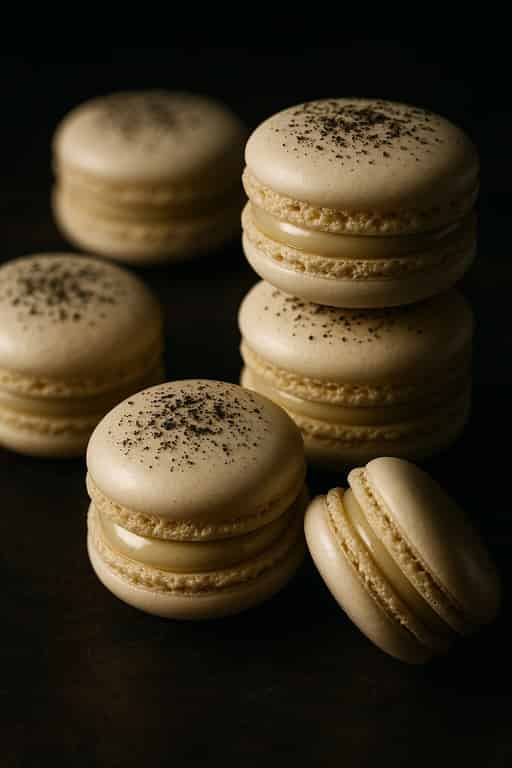
Filled desserts like Milk Chocolate and Earl Grey Tea Macaron, Peach Macarons with White Chocolate Ganache, or Mini Sacher Cakes with Dark Chocolate Ganache are reminders that ganache is not just a flavor component. It is a structural one. When it works, the filling feels silky, stable, and intentional. When it breaks, the whole dessert loses polish.
That is why ganache problems matter so much in pastry. They are rarely contained to one spoonful in a bowl.
What a Split Ganache Is Really Telling You
Most split ganaches are signs of imbalance, not bad luck. The mixture was pushed past its stable range, whether by heat, ratio, agitation, or an ingredient that changed the emulsion more than expected. Once you read it that way, the texture problem becomes easier to diagnose.
The bowl is not being dramatic. It is telling you the emulsion stopped trusting the conditions you gave it.
Closing Insight
Ganache does not ask for much, but it does ask for control. When it splits, the problem is almost never random. It is the visible result of an emulsion that lost its footing, and the most useful fixes begin by restoring balance rather than fighting the mixture harder.
Related recipes